

View Full Version : Steve Jobs Met with Light Field Camera (Lytro) Company's CEO
MacRumors
Jan 23, 2012, 10:20 PM
http://images.macrumors.com/im/macrumorsthreadlogo.gif (http://www.macrumors.com/2012/01/23/steve-jobs-met-with-light-field-camera-lytro-companys-ceo/)
http://images.macrumors.com/article-new/2012/01/lytro-camera-500x232.png
(http://images.macrumors.com/article-new/2012/01/lytro-camera.png)
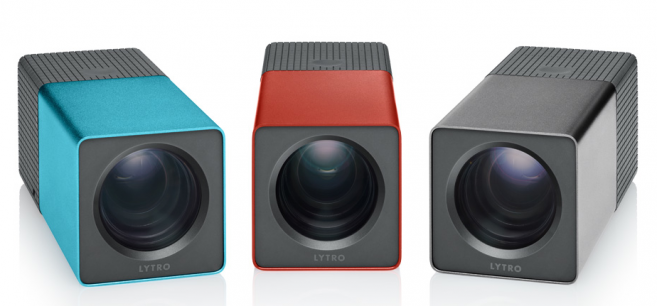
In the upcoming Inside Apple (http://www.amazon.com/dp/145551215X) book by Adam Lashinsky (http://www.macrumors.com/2011/09/07/adam-lashinsky-writing-high-profile-inside-apple-book/), it's revealed that Steve Jobs had expressed interest and subsequently met with the CEO of Lytro (http://www.lytro.com/), the makers the first light field camera. The relevant book quote posted (http://9to5mac.com/2012/01/23/steve-jobs-looked-to-reinvent-apples-iphone-photography-with-instant-capture-system-advanced-light-field-sensors/) by 9to5Mac states:The company's CEO, Ren Ng, a brilliant computer scientist with a PhD from Stanford, immediately called Jobs, who picked up the phone and quickly said, "if you're free this afternoon maybe we would could get together." Ng, who is thirty-two, hurried to Palo Alto, showed Jobs a demo of Lytro's technology, discussed cameras and product design with him, and, at Jobs's request, agreed to send him an email outlining three things he'd like Lytro to do with Apple.Lytro received a lot of press last year when the first of its light field cameras went on sale in October. The product even received Popular Science's 2011 Innovation of the Year (http://www.popsci.com/bown/2011/product/second-digital-photo-revolution).
Light field cameras are a different take on photography by capturing "the entire light field" and saving all that information into a single file. Photographers can then edit the file afterwards in a number of unique ways -- including refocusing the image. This video walks through this unique ability:
7babcK2GH3I
One of the limitations in the early light field cameras is a relatively low resolution. The first Lytro camera produces final photos of only 1.2 megapixels (1,080x1,080). The cameras also don't take any video and start at $399 for an 8GB model. The camera carries an elongated (https://www.lytro.com/science_inside) form factor that seems to be a result of the unusual optics required.
Given the hype surrounding the technology, it's perhaps no surprise that Steve Jobs found interest in meeting with the young company. That meeting, however, is getting special attention due to the fact that Walter Isaacson had said (http://bits.blogs.nytimes.com/2011/11/18/one-on-one-walter-isaacson-biographer-of-steve-jobs/) that Jobs wanted to reinvent television, textbooks and photography.
Apple just released their first digital textbooks (http://www.macrumors.com/2012/01/19/apple-launches-ibooks-2-with-interactive-textbooks/) for the iPad, and is expected to get into the television space. Apple's future goals for photography, however, remain unclear. Apple includes a digital camera its iPhones and has made progressive improvements in camera quality over the past few generations. While Apple no longer makes a standalone digital camera, they were one of the first (http://en.wikipedia.org/wiki/Apple_QuickTake) to product a consumer targeted digital camera back in 1994.
Given the popularity of smartphones and the subsequent decline (http://gigaom.com/apple/flickr-data-suggests-apples-next-victim-is-the-point-and-shoot/) of point and shoot camera popularity, we'd expect any future Apple movement into photography would be centered around the iPhone.
Article Link: Steve Jobs Met with Light Field Camera (Lytro) Company's CEO (http://www.macrumors.com/2012/01/23/steve-jobs-met-with-light-field-camera-lytro-companys-ceo/)
marcusj0015
Jan 23, 2012, 10:27 PM
I'm still more interested in that other camera tech, the non-mosiac filter one.
Dreamer2go
Jan 23, 2012, 10:27 PM
iPhone's camera's next feature: Optical zoom, not just software zoom...
If that happens, iPhone's camera is the best point and shoot. (Alongside DOZENS of camera apps)
Tortri
Jan 23, 2012, 10:28 PM
I can see why apple is going to have a hard time with leaked info like this. yeah cool and all but not as cool when you leak this and give your competitors a possible advantage.
Zaqfalcon
Jan 23, 2012, 10:33 PM
iPhone's camera's next feature: Optical zoom, not just software zoom...
If that happens, iPhone's camera is the best point and shoot. (Alongside DOZENS of camera apps)
Dreamer by name...
Mr. Gates
Jan 23, 2012, 10:35 PM
I need this.
Not sure why but I do
Anaemik
Jan 23, 2012, 10:39 PM
Potentially a very interesting new technology. However, one thing is kind of bugging me with respect to the video demo of the refocusing: the "depth of field" looks incredibly fake and processed from the very short example in the video, and it certainly doesn't seem like a natural, photographic depth of field response - more like the image has somehow been separated into "depth layers" and then had selective blurring applied to one or more layers. This feels pretty artificial as far as first impressions go, but I'm more than happy to reserve judgement until a more revealing demo of the technology is made available.
nagromme
Jan 23, 2012, 10:39 PM
Since I got my iPhone 4, I abandoned my standalone camera and never thought I’d go back. Sometimes I do wish for powerful telephoto, but never when I’m expecting—and I’m not going to lug a big camera everywhere I go for that one occasional purpose.
Lytro's is the first camera that tempts me to own a dedicated camera again! Maybe version 2, but this is really cool tech—and useful. Especially if you can do a lot with exposure after the fact (I understand that’s limited now, compared to what you can do with white balance and focus). HDR post-processing from a single moment in time would be great, for instance.
The best thing about re-adjusting focus later: NO focus delay before the shot!
RalfTheDog
Jan 23, 2012, 10:41 PM
Photography is all about controlling depth of field. Choosing what is in focus and what is not. Do you want just the models nose in focus or do you want the model and the car three blocks away. By controlling depth of field you make the image seem more three dimensional and you draw the viewers attention to what you want them to see.
This is a very good technology that if used properly will be revolutionary. If abused, it will lead to endless fields of bad pictures.
splashman
Jan 23, 2012, 10:44 PM
Okay, let's have a show of hands: How many people here have taken photos where they wish they could re-focus at will to emphasize one element of the photo?
Wait, before you raise your hands, let's limit it to those people who take such photos often enough to pay extra for the capability. And lug around a bigger device.
And let's limit it to those who aren't professional photographers, since this $399 1.2MP model would be useless for such.
Okay, so now let's see all those raised hands.
Anyone?
Buehler?
nagromme
Jan 23, 2012, 10:45 PM
Potentially a very interesting new technology. However, one thing is kind of bugging me with respect to the video demo of the refocusing: the "depth of field" looks incredibly fake and processed from the very short example in the video...
Yeah, they did some wacky too-clever moving-video effects there; don’t look at that as a true example of their still output. Their camera does seem to work as claimed, and they have some nice still shots to show the actual output:
http://www.lytro.com/living-pictures
Even so, those are examples of still output but NOT examples of live re-focussing. That, I believe, has to be “faked” (simulated) to some extent in the web gallery, because you’re viewing the re-focus in Flash, not in Lytro’s own software that decodes the light field. It may be close to the real experience, though—and the output (once the re-focus motion is over) is probably accurate and taken from their software. It doesn’t stand out as “weird” the way that video does!
ABernardoJr
Jan 23, 2012, 10:47 PM
Okay, let's have a show of hands: How many people here have taken photos where they wish they could re-focus at will to emphasize one element of the photo?
Wait, before you raise your hands, let's limit it to those people who take such photos often enough to pay extra for the capability. And lug around a bigger device.
And let's limit it to those who aren't professional photographers, since this $399 1.2MP model would be useless for such.
Okay, so now let's see all those raised hands.
Anyone?
Buehler?
lol Just as it is with much of basically every newer piece of technology, it's going to cost a lot more in the beginning. Just like Blu-Ray players, SSDs, etc. I think what's a bigger story is that this is at least starting to develop, in a few years maybe things will be more reasonably priced and well-featured.
RalfTheDog
Jan 23, 2012, 10:48 PM
Okay, let's have a show of hands: How many people here have taken photos where they wish they could re-focus at will to emphasize one element of the photo?
Wait, before you raise your hands, let's limit it to those people who take such photos often enough to pay extra for the capability. And lug around a bigger device.
And let's limit it to those who aren't professional photographers, since this $399 1.2MP model would be useless for such.
Okay, so now let's see all those raised hands.
Anyone?
Buehler?
This is a first generation product. I can picture a later version that is much more professional friendly. Would I use it every day? No. Would I spend $5,000 or $10,000 for a version that I could use when I needed it? Yes. I am assuming that a professional version would come with much better tools, have many more layers (perhaps 1024 or 2048) and give you much more control.
Give it five or ten years and this will be fantastic!
nagromme
Jan 23, 2012, 10:50 PM
Okay, let's have a show of hands: How many people here have taken photos where they wish they could re-focus at will to emphasize one element of the photo?
Wait, before you raise your hands, let's limit it to those people who take such photos often enough to pay extra for the capability. And lug around a bigger device.
And let's limit it to those who aren't professional photographers, since this $399 1.2MP model would be useless for such.
Okay, so now let's see all those raised hands.
Anyone?
Buehler?
How many people—NON-professionals, please--have ever taken a photo with bad focus?
Wait, before you raise your hands, how many of you would be willing to carry a still-very-small device, that’s also fun and cool?
A see a certain niche raising their hands!
Thank goodness for niche products: imagine a world where no products existed except those that appealed to all people? You’d never find what you wanted...
And those early adopters can lead the way to higher-res versions to come :)
splashman
Jan 23, 2012, 10:53 PM
lol Just as it is with much of basically every newer piece of technology, it's going to cost a lot more in the beginning. Just like Blu-Ray players, SSDs, etc. I think what's a bigger story is that this is at least starting to develop, in a few years maybe things will be more reasonably priced and well-featured.
I'm sure you're right, but that wasn't my point. Lytro's tech solves a problem most people don't have. It's a gimmick that demos well, but most people won't use it after the novelty wears off. Like video chat.
If the Lytro tech can be added to a cellphone without significant size/cost/weight penalties, then sure, what the heck, add it in. But the fact remains, it's a gimmick that most people won't use.
japanime
Jan 23, 2012, 10:58 PM
This article seems to imply that Jobs' desire to reinvent photography has not yet been achieved.
I think it's safe to say that Jobs and Apple already have reinvented photography — with the iPhone 4 (and 4s).
With the assistance of some amazing editing applications, serious photography is being done with the iPhone's camera. Books featuring images taken with the iPhone 4 are being published. Professional photographers have embraced it. And millions of amateur photographers are developing their skills and taking amazing pictures with it.
Just as kludgy tablet computers had been around for a decade (or more) before Apple's released the iPad and reinvented that segment of the computer industry, lousy camera phones had also been around for years before the iPhone 4 made the photography world sit up and take notice.
splashman
Jan 23, 2012, 11:00 PM
How many people—NON-professionals, please--have ever taken a photo with bad focus?
The correct question is "How many people have enough focusing problems with their current camera to warrant purchasing an additional device?"
Wait, before you raise your hands, how many of you would be willing to carry a still-very-small device, that’s also fun and cool?
Sounds like a Ballmer ad for Zune.
A see a certain niche raising their hands!
Yep, those for whom money is less important than their Dweebs of America cred.
MisterK
Jan 23, 2012, 11:02 PM
I'm looking forward to what this tech could eventually do when it's used with 3D. Part of the problem with 3D, as I see it, is that the camera forces the focal point of all the shots. I'd love if I could have depth of field based on where my eyes were focusing. I know this is a ways off and that we'd need some serious processing power, but I dare someone to say computers will never be that powerful. This idea isn't perfect, but there's something here.
splashman
Jan 23, 2012, 11:06 PM
This article seems to imply that Jobs' desire to reinvent photography has not yet been achieved.
I think it's safe to say that Jobs and Apple already have reinvented photography — with the iPhone 4 (and 4s).
Yep. Apple pushed the industry forward with iPhone 4, and even further with the 4s. If not for Apple's big push, and emphasis on photo quality, the industry would still be stuck in the "more megapixels is better" moronity. (Actually, most of them still are, since they can't make their own software.)
kockgunner
Jan 23, 2012, 11:09 PM
Dreamer by name...
Maybe for an iPhone and its thin profile it's a dream, but I remember when Nokia came out with the N93 with optical zoom. It even had video editing capabilities, but it was a huge phone.
TrentS
Jan 23, 2012, 11:12 PM
Ummmmm.... No thanks.
ABernardoJr
Jan 23, 2012, 11:14 PM
I'm sure you're right, but that wasn't my point. Lytro's tech solves a problem most people don't have. It's a gimmick that demos well, but most people won't use it after the novelty wears off. Like video chat.
If the Lytro tech can be added to a cellphone without significant size/cost/weight penalties, then sure, what the heck, add it in. But the fact remains, it's a gimmick that most people won't use.
It's definitely arguable that everyday people don't really worry about focusing incorrectly with photos, and at its current state this product seems to be aimed at the everyday people in a way, since pros might not find much use for a camera with considerably limited features for a high price at the moment. That's a reasonable point, but again, it goes back to the idea that in a few years, the price will go down and the feature set will increase, which would then cater to pros who are more likely to worry about focus issues than point and shooters.
Dizzy11523
Jan 23, 2012, 11:16 PM
Wow this rumor is so ****in awesome.
MattInOz
Jan 23, 2012, 11:28 PM
I'm looking forward to what this tech could eventually do when it's used with 3D. Part of the problem with 3D, as I see it, is that the camera forces the focal point of all the shots. I'd love if I could have depth of field based on where my eyes were focusing. I know this is a ways off and that we'd need some serious processing power, but I dare someone to say computers will never be that powerful. This idea isn't perfect, but there's something here.
My interest would be for Photomontage work from 3D models.
Have a lightfield virtual camera to drop in your model at same location and the two images should be able to crop themselves together, then play with the depth of field for the production shots.
BTW: It was pretty obvious Apple was taking interest, given the number of Apple employees twittering lust for it.
Friscohoya
Jan 23, 2012, 11:39 PM
I could see lots of everyday users using this technology. Particularly on a phone. Think of all the times that you take a flic and it comes out blurry or unfocused. If you could change that and just take quick shots that the phone could then "fix" later you could never take a bad picture...
wikus
Jan 23, 2012, 11:45 PM
I hope to god this won't become an 'apple exclusive' technology. I'm tired of hearing about all their lawsuits against everyone else.
danahn17
Jan 23, 2012, 11:51 PM
Cool technology (and camera form factor). I can see it becoming very huge in the future if it's implemented properly.
However, maybe I'm a bit old fashioned but it does also kind of make me sad. For me, part of the appeal of photography is to be able to catch the right moment in time and using your tools (i.e. depth of field, aperture, etc) to emphasize and deemphasize certain aspects of your shot. By making it easier to adjust those things after the photo has been taken kind of takes away from the art of photography IMO.
But then again, most people take photos to upload on Facebook and not necessarily for art :o
MattInOz
Jan 23, 2012, 11:54 PM
Cool technology (and camera form factor). I can see it becoming very huge in the future if it's implemented properly.
However, maybe I'm a bit old fashioned but it does also kind of make me sad. For me, part of the appeal of photography is to be able to catch the right moment in time and using your tools (i.e. depth of field, aperture, etc) to emphasize and deemphasize certain aspects of your shot. By making it easier to adjust those things after the photo has been taken kind of takes away from the art of photography IMO.
But then again, most people take photos to upload on Facebook and not necessarily for art :o
Don't worry... there is always room for storytelling.
Renzatic
Jan 24, 2012, 12:02 AM
I need this.
Not sure why but I do
Cuz it's awesome? :eek:
admanimal
Jan 24, 2012, 12:16 AM
The correct question is "How many people have enough focusing problems with their current camera to warrant purchasing an additional device?"
Yep, those for whom money is less important than their Dweebs of America cred.
I feel like the point of this camera is that even if you can focus with a traditional camera, doing so takes time- time in which the scene you are trying to capture might be changing. With this camera you just have to make sure you have framed everything correctly and then you shoot and worry about focusing later.
I'm not saying that the camera is going to be a huge success, but the technology does have some practical benefits that apply even to a competent photographer.
knewsom
Jan 24, 2012, 12:17 AM
I love the Lytro - what a truly amazing and unique invention.
As for the notion of it ending up in an iPhone. :rolleyes: *roflmao* No. Chance.
flynndean
Jan 24, 2012, 12:22 AM
Wirelessly posted (Mozilla/5.0 (iPhone; CPU iPhone OS 5_0_1 like Mac OS X) AppleWebKit/534.46 (KHTML, like Gecko) Mobile/9A405)
The people calling this niche or a gimmick are missing the bigger picture (if you'll excuse the unintentional pun).
Look forwards past mk1 and imagine you could point and shoot and TRULY capture a moment without thought for light levels, focus etc. This tech is going to create an entirely new market for Professionals/Artists to interpret/edit photos to useable form AFTER they've been taken so that fewer moments/memories are lost to the Dustbin. That moment the winning goal was scored?...or the moment the bouquet was thrown at your wedding?...or the exact moment that shark's teeth clamped down on that seal? Instead of those "once in a lifetime" moments being left to chance or requiring a skilled professional; all of this would move legitimately within the hands of an amateur to be navigated to some degree by the person viewing it "after the fact" or to be "corrected" in the future by a person with the correct skills into the perfect conventional image that matches the taker's intention...
I also almost immediately thought of combining this tech with the prospect of multiple-lensed cameras allowing for some degree of adjustable depth for 3D photography (rather than the approximated left-eye/right-eye illusion we have for 3D Photography now). Think the Photo-tech from 'Blade Runner' where Deckard was able to subtlety adjust the Photograph to change the focus on an 'already taken' image and even change angles to effectively see round corners!
We're talking about dynamic, adjustable Photography with potential beyond the singularly-focused, 2D convention of Photography that has existed for over a Century.
Allow your mind to take you beyond this version & you will begin to think of all sorts of possibilities!
Peace
Jan 24, 2012, 12:23 AM
Look past the camera and think about the software Apple could make to take advantage of this.
thekev
Jan 24, 2012, 12:27 AM
I'm still more interested in that other camera tech, the non-mosiac filter one.
If you mean Foveon, Sigma bought them out years ago. It hasn't turned out anything interesting. I wish Sony had purchased it instead. They actually have a fair amount of experience producing digital camera sensors. This is another one of those misunderstood things. Everyone is interested in the sensor type just like with lcd displays where they're interested in the panel or panel technology. In both cases it only brings you halfway (at most) to a functional product. Many companies have implemented the same ccd and cmos chips with varying results. Had Canon, Sony, or Nikon implemented such technology, it might be in a better place today.
I can see why apple is going to have a hard time with leaked info like this. yeah cool and all but not as cool when you leak this and give your competitors a possible advantage.
They're different competitors, and I don't see a lot of potential for Apple in such a thing. Apple thrives on compact devices with good usability. The iphone and other smartphones have really driven down point and shoot sales, and the funding has really pushed the tiny cameras implemented in such devices forward. This technology is described poorly here. When you read about things such as "refocusing" that's generally not what is happening in the conventional sense. I'm not going into all of it. The diagram is a bit deceptive. I thought they were going with a ridiculously short focal length (real focal length, not dslr retrofocus type design which is basically a reverse telephoto) and doing distortion correction via software. The microlens array makes sense. It's been used by other companies to collimate the incoming light rays from the edges. This was a problem encountered when increasing the size of previous digital camera chips. Phase One uses something similar (they have for years). My guess would be that it has some kind of system for determining point distance much like with an auto focus system (assuming it focuses) so that it could emulate focusing adjustments in post of anything which was initially captured in sharp focus. Just saying it takes in all light doesn't make a lot of sense in optical terms. I think that's more just packaged marketing speak.
Pillbury
Jan 24, 2012, 01:30 AM
Sorry peeps.
I am not a professional photographer, however dabble a little.
This advert is pushing forward the advantage of having everyone in focus in the frame and not just the person in front.
But all cameras have this function do they not. A photo can be taken with a single point of focus with the backdrop blurred (Which is what most people do with a point and click) as part of start of advert, but SLR's and a probably most point and clicks can simply be adjusted to have everything in focus!.
I get the idea of new technology but the thing they are saying is a bonus in the advert, is nothing new.
dethmaShine
Jan 24, 2012, 01:35 AM
Okay, let's have a show of hands: How many people here have taken photos where they wish they could re-focus at will to emphasize one element of the photo?
Wait, before you raise your hands, let's limit it to those people who take such photos often enough to pay extra for the capability. And lug around a bigger device.
And let's limit it to those who aren't professional photographers, since this $399 1.2MP model would be useless for such.
Okay, so now let's see all those raised hands.
Anyone?
Buehler?
This is what this forum has really become.
Constant bitching about any new technology or implementation or experiment. It's like you people cannot appreciate any effort.
kevinkt
Jan 24, 2012, 02:04 AM
This technology is.... How do I say........ Whatever.
Renzatic
Jan 24, 2012, 02:23 AM
This is what this forum has really become.
Constant bitching about any new technology or implementation or experiment. It's like you people cannot appreciate any effort.
Either that, or they believe being dismissive and jaded about everything makes them look smarter than they actually are. What is this? Something new? Yawn. Pass. Whatever.
Or they have no imagination whatsoever. Which is even more tragic.
admanimal
Jan 24, 2012, 02:45 AM
Sorry peeps.
I am not a professional photographer, however dabble a little.
This advert is pushing forward the advantage of having everyone in focus in the frame and not just the person in front.
But all cameras have this function do they not. A photo can be taken with a single point of focus with the backdrop blurred (Which is what most people do with a point and click) as part of start of advert, but SLR's and a probably most point and clicks can simply be adjusted to have everything in focus!.
I get the idea of new technology but the thing they are saying is a bonus in the advert, is nothing new.
You missed what the ad is actually trying to describe (not that it does a great job describing it). It's not about having everything in focus in one shot. It's about being able to take a picture in an instant, without any consideration of how it is focused, and then choose how to focus the image as a post-processing step. The real benefit of this for the average person is that you can take a picture and only have to deal with the framing. This means that you don't spend any time trying to focus and have a better chance at actually capturing the moment you want to.
harrisondavies
Jan 24, 2012, 03:40 AM
Wirelessly posted (Mozilla/5.0 (iPhone; CPU iPhone OS 5_0_1 like Mac OS X) AppleWebKit/534.46 (KHTML, like Gecko) Version/5.1 Mobile/9A405 Safari/7534.48.3)
No disrespect, but I may as well not buy this book as macrumors seem keen on revealing the entire contents, leaving nothing to read. Bit of an exaggeration I agree, but feels like it.
justperry
Jan 24, 2012, 04:15 AM
I guess it's only because of advances in technology that this is even possible in such a small camera, it seems to me you need a very fast processor to do all of this.
And if I am right one picture is more than 20 MB, if one needs to take multiple pictures in a row(1 second) you also need very fast memory.
Nice stuff but for now a bit pricy, the resolution is a bit low but if you only make small prints it shouldn't be a problem.
Edit : 1080 X 1080 is not a standard, why not made it standard so you could get 10X15 cm pictures from it?
rangen
Jan 24, 2012, 05:18 AM
this could be interesting
varera
Jan 24, 2012, 06:22 AM
do they actually capture holographic 3d info???
according to the info they have on their website, they do, or they pretend to do :-)
physics of this image capture is unclear though. To capture "vector" lighting they need 3d sensor.
samcraig
Jan 24, 2012, 06:44 AM
I have an issue with people suggesting that Apple REINVENTED photography. Maybe it's semantics - but they didn't reinvent anything. They have a good camera on a phone. But they weren't the first. And there are millions of people using digital cameras not on phones and have been long before the iPhone. They didn't reinvent PHOTOGRAPHY. They evolved the digital experience on a phone.
george-brooks
Jan 24, 2012, 06:45 AM
As a real photographer using real cameras for real work, I think this camera sucks (obviously). Now, put it in my iPhone and THERE's a useful gadget!!
Philsy
Jan 24, 2012, 08:07 AM
Sorry peeps.
I am not a professional photographer, however dabble a little.
This advert is pushing forward the advantage of having everyone in focus in the frame and not just the person in front.
But all cameras have this function do they not. A photo can be taken with a single point of focus with the backdrop blurred (Which is what most people do with a point and click) as part of start of advert, but SLR's and a probably most point and clicks can simply be adjusted to have everything in focus!.
I get the idea of new technology but the thing they are saying is a bonus in the advert, is nothing new.
That's effectively what you get but, actually, a camera lens can only focus on one distance at a time. By setting a small lens aperture, you increase the depth of field which means that more of the image is 'acceptably' sharp. It is not all in focus.
As for this new camera, I've no idea how it works! :)
I'll get my anorak... ;)
mutantteenager
Jan 24, 2012, 08:08 AM
This is really interesting technology, am not surprised Apple were interested in it. It does prove a point that for all the talk of Apple's innovation, what they're really good at is integrating existing tech into their products and spinning it as if they invented it! 'Retina' display anyone?
erzeszut
Jan 24, 2012, 08:22 AM
Wirelessly posted (Mozilla/5.0 (iPhone; CPU iPhone OS 5_0_1 like Mac OS X) AppleWebKit/534.46 (KHTML, like Gecko) Version/5.1 Mobile/9A405 Safari/7534.48.3)
This camera also won the "Last Gadget Standing" competition at CES earlier this month. A huge room full of geeks and IT execs picked the Lytro camera as the winner out of 10 pretty cool products.
handsome pete
Jan 24, 2012, 09:20 AM
Sorry peeps.
I am not a professional photographer, however dabble a little.
This advert is pushing forward the advantage of having everyone in focus in the frame and not just the person in front.
But all cameras have this function do they not. A photo can be taken with a single point of focus with the backdrop blurred (Which is what most people do with a point and click) as part of start of advert, but SLR's and a probably most point and clicks can simply be adjusted to have everything in focus!.
I get the idea of new technology but the thing they are saying is a bonus in the advert, is nothing new.
No, that's not how this works at all. Think of it this way...
There's a field of light that hits the lens of a traditional camera. The light bends and is focused to the camera sensor dependent on aperture, shutter speed, etc. Those settings determine things like depth of field. Now what if we could capture that entire light field before it hits and is manipulated by the lens itself? By doing that, then we are not bound to our original camera's aperture, shutter settings. We could just worry about framing a shot and just snap away, taking care of all that other stuff later.
Of course on today's cameras you can use selective focus and experiment with different levels of DOF. But once that image is captured by the sensor, then it's set in stone. You can't bring something that's out of focus back in focus in post. This new technology however, will allow you to do just that.
(disclaimer: my discription probably isn't the way this technology works at all, but was more for theoretical explanation purposes)
Apple Key
Jan 24, 2012, 09:47 AM
Everyone wants their images to be "in focus". Most won't be willing to pay $400 for a camera that does this.
They'd be better off spending the money getting a point and shoot with face detection (because, well people are the most photographed thing in the world) with a nice burst rate, and shooting off 5 or so shots of a scene.
paul4339
Jan 24, 2012, 09:58 AM
I guess it's only because of advances in technology that this is even possible in such a small camera, it seems to me you need a very fast processor to do all of this....
True, but the processing is done on Lytro's server's; and (I think) if you want to share the photos you need Lytro's servers . This fit's well with Apple's business model and adds value to their ecosystem.
.
Apple Key
Jan 24, 2012, 10:15 AM
True, but the processing is done on Lytro's server's; and (I think) if you want to share the photos you need Lytro's servers . This fit's well with Apple's business model and adds value to their ecosystem.
.
If that is true, it is really quite disappointing, as there should be no reason for the processing to need to be done on their servers. Even Apple doesn't restrict your photos like this.
locust76
Jan 24, 2012, 10:32 AM
True, but the processing is done on Lytro's server's; and (I think) if you want to share the photos you need Lytro's servers . This fit's well with Apple's business model and adds value to their ecosystem.
.
What? Where in the hell do you get this? If you youtube search for Lytro review, you can find a review where someone demonstrates the image refocussing straight on the camera. I highly doubt that the camera is loaded with 3G/WiFi.
Seriously, it would be far easier to process this locally than in the cloud.
Tarzanman
Jan 24, 2012, 10:43 AM
This article seems to imply that Jobs' desire to reinvent photography has not yet been achieved.
I think it's safe to say that Jobs and Apple already have reinvented photography — with the iPhone 4 (and 4s).
Lol. Sure.... if you don't know jack squat about cameras or photography then I could see some gullible yokel actually believing that.
You might want ask a competent photographer if they feel that Apple has reinvented (sic) photography.
Don't be surprised if they laugh in your face
paul4339
Jan 24, 2012, 10:55 AM
What? Where in the hell do you get this? If you youtube search for Lytro review, you can find a review where someone demonstrates the image refocussing straight on the camera. I highly doubt that the camera is loaded with 3G/WiFi.
Seriously, it would be far easier to process this locally than in the cloud.
Sorry, to clarify, I think Lytro provides Mac only Lytro photo processing software to manipulate the picture you take (to make 'living pictures', as they call it).
But for others to view it (outside of the Lytro software, of course), you have to use Lytro's patented algorithms (by posting to their Flickr-like site or a plug-in that is created by them... such as a facebook plug-in).
IMO, it makes sense since part of their business model is not just to license or sell camera tech, but to also create a photo viewing/sharing site that depends on their algorithm. It's their patents that they revolve the model around (otherwise it's very hard to attract investors to fund your start-up).
=======
Excerpt from their terms of use:
"Users
Users are those of our customers register to use Lytro.com. Users may, subject to these Terms of Use, (1) create and maintain their own picture gallery where they can upload, store, display, and share their pictures taken with the Lytro camera (which we call "living pictures"), (2) view other users’ living pictures, and (3) use other services which we may provide to Lytro.com users. ..."
"Visitors
Visitors may, subject to these Terms of Use, access and browse Lytro.com and use the other Lytro.com services provided to visitors, such as viewing, commenting on, and sharing others’ living pictures. Visitors may, but are not required to, give us their email address. If you do so, you agree that the email address you provide is valid and yours. ..."
======
I did a quick Google on the business model, and got this from Camera Technica:
"Viewing “Living Images”
This brings up one of the more controversial parts of the business model . Although you can manipulate the light field files on your own computer to your heart’s content, sharing with others requires more work. Since viewing the files takes special algorithms and lots of processing power, sharing is not as simple as emailing jpegs off to Grandma. In order to share a “photo” with others which can be viewed interactively, it must be hosted on a server (presumably Lytro’s own) and viewed with the appropriate browser or Facebook plugin. For those used to the infinite number of ways that a standard jpeg file can be viewed and shared, this may be unnerving. But this may just be part of the adjustment to a new way of experiencing photographs."
.
Apple Key
Jan 24, 2012, 11:13 AM
Sorry, to clarify, I think Lytro provides Mac only Lytro photo processing software to manipulate the picture you take (to make 'living pictures', as they call it).
But for others to view it (outside of the Lytro software, of course), you have to use Lytro's patented algorithms (by posting to their Flickr-like site or a plug-in that is created by them... such as a facebook plug-in).
IMO, it makes sense since part of their business model is not just to license or sell camera tech, but to also create a photo viewing/sharing site that depends on their algorithm. It's their patents that they revolve the model around (otherwise it's very hard to attract investors to fund your start-up).
=======
Excerpt from their terms of use:
"Users
Users are those of our customers register to use Lytro.com. Users may, subject to these Terms of Use, (1) create and maintain their own picture gallery where they can upload, store, display, and share their pictures taken with the Lytro camera (which we call "living pictures"), (2) view other users’ living pictures, and (3) use other services which we may provide to Lytro.com users. ..."
"Visitors
Visitors may, subject to these Terms of Use, access and browse Lytro.com and use the other Lytro.com services provided to visitors, such as viewing, commenting on, and sharing others’ living pictures. Visitors may, but are not required to, give us their email address. If you do so, you agree that the email address you provide is valid and yours. ..."
======
I did a quick Google on the business model, and got this from Camera Technica:
"Viewing “Living Images”
This brings up one of the more controversial parts of the business model . Although you can manipulate the light field files on your own computer to your heart’s content, sharing with others requires more work. Since viewing the files takes special algorithms and lots of processing power, sharing is not as simple as emailing jpegs off to Grandma. In order to share a “photo” with others which can be viewed interactively, it must be hosted on a server (presumably Lytro’s own) and viewed with the appropriate browser or Facebook plugin. For those used to the infinite number of ways that a standard jpeg file can be viewed and shared, this may be unnerving. But this may just be part of the adjustment to a new way of experiencing photographs."
.
So you are referring solely to the ability of other people to view and adjust the focus of the photo after the fact?
flashsg
Jan 24, 2012, 11:21 AM
The light field technology by LYTRO is poised for the smartphone market..... especially the iPhone5. I can't tell you the number people I've seen who have simply no clue to touch the area of their screen to focus the picture. The LYTRO technology will eliminate this all together. Being "focused" on the moment before you is key. Having the ability to focus after the image is taken is a much better way to approach an image.
I've actually had the pleasure of a hands on demonstration of the LYTRO camera. You can read about that experience on my blog post http://www.spencergordon.com/2011/12/15/lytro-camera-a-pro-or-a-con/
LYTRO - as a camera I'd have to say NO, however as a technology LYTRO's breakthrough will be a welcomed feature in any digital camera or imaging device.
paul4339
Jan 24, 2012, 11:50 AM
So you are referring solely to the ability of other people to view and adjust the focus of the photo after the fact?
Yes.. I thought that processing that makes the 'living photo' was on Lytro's servers, but's it is indeed on the Mac (there's no PC software yet).
Which means that if Apple is endeavoring towards more of a post-PC world, they would have to either have to make iphone/ipad software (assuming that it is has the processing power); Or have people rely on their PC/Mac; Or off-load some of the processing to their servers.
I assume if they (Apple or Lytro) wants to move towards more of a 'near-real-time' like twitter, photostream, facebook photosharing, they would have to allow a user to take a picture, process it, and post it, share it, without going back home to their PC's.
.
RalfTheDog
Jan 24, 2012, 12:00 PM
Sorry peeps.
I am not a professional photographer, however dabble a little.
This advert is pushing forward the advantage of having everyone in focus in the frame and not just the person in front.
But all cameras have this function do they not. A photo can be taken with a single point of focus with the backdrop blurred (Which is what most people do with a point and click) as part of start of advert, but SLR's and a probably most point and clicks can simply be adjusted to have everything in focus!.
I get the idea of new technology but the thing they are saying is a bonus in the advert, is nothing new.
A good photographer does not want everything in focus. That would be a very flat image. Infinite depth of field is bad.
A good photographer uses lens aperture to control depth of field so, only the things they want in focus are in focus. Limiting depth of field gives a picture a 3d feel that you can't get with a point and shoot. Depth of field lets you draw the viewers attention to what you want them to look at and away from what you don't.
This is why full frame sensors are much better than smaller ones. Small sensors put everything into focus giving you little control of depth of field. Big sensors give you far more control letting you have a small part of the image be sharp. (This is a gross simplification as it is a ratio between the sensor size and the F-stop but you get the idea.)
I have an issue with people suggesting that Apple REINVENTED photography. Maybe it's semantics - but they didn't reinvent anything. They have a good camera on a phone. But they weren't the first. And there are millions of people using digital cameras not on phones and have been long before the iPhone. They didn't reinvent PHOTOGRAPHY. They evolved the digital experience on a phone.
I think HDR has a shot (bad cow pun) of putting a dent into the way we do photography. I don't think HDR needs to be used in all shots. I think it looks bad 90% of the time. For technical photography or when you need it, HDR rocks. HDR is a very important tool that will change the way much of photography is done.
SockRolid
Jan 24, 2012, 12:22 PM
I'm not convinced that the light field technology will have all that much consumer appeal. Yet. Yes, it's revolutionary, but it's not quite mature enough.
No video. That's a deal-breaker for smartphones, even if the lens were shrunk down enough to fit. No way Apple (or most other phone manufacturers) would put separate back-facing still and video cameras into a smartphone. And consumers are gradually expecting still and video capability in point-and-shoot cameras.
Too big for smartphones. The f/2 constant-aperture zoom is unbelievably cool technology. But it will take a lot of engineering to shrink that down enough to fit into an area smaller than a square centimeter for smart phone use. But the current size is fine for point-and-shoot cameras.
Big file sizes (presumably.) It looks like the light field technology uses a 3-dimensional sensor. And from what I gather from the Lytro web site, it records much more than just one sharply-focused "focal plane" of the scene. All of which would cause file sizes to be much larger than for conventional 2-d images.
Of course, all of these problems will be resolved over time. I'm just saying that the light field technology is still in its infancy, much like D-SLRs were about 10 years ago.
mdelvecchio
Jan 24, 2012, 12:52 PM
This is a very good technology that if used properly will be revolutionary. If abused, it will lead to endless fields of bad pictures.
the same as it ever was for *any* photography technology -- hand helds, point and shoot, cell phone, etc... accessibility means more crap, and more good work. its all in the users' hands.
----------
You might want ask a competent photographer if they feel that Apple has reinvented (sic) photography.
Don't be surprised if they laugh in your face
...im not laughing. my $4,000 set up barely gets used anymore...as all good photographers know, the best camera is the one you have with you. the iphone4 spelled the demise for many, many point-and-shoots. theres a reason its the most-used camera on Flickr.
flynndean
Jan 24, 2012, 01:11 PM
Wirelessly posted (Mozilla/5.0 (iPhone; CPU iPhone OS 5_0_1 like Mac OS X) AppleWebKit/534.46 (KHTML, like Gecko) Version/5.1 Mobile/9A405 Safari/7534.48.3)
Yet another discussion thread killed by people with plenty to say but no room for imagination or joy in their lives.
Surely it's better and easier to be positive, to dream of possibilities and be amazed than to be constantly negative and bogged-down by technological semantics & pessimism?
amarcus
Jan 24, 2012, 01:17 PM
...im not laughing. my $4,000 set up barely gets used anymore...as all good photographers know, the best camera is the one you have with you. the iphone4 spelled the demise for many, many point-and-shoots
I'm completely with you. I was so close to pulling the trigger on a dSLR but then when the iPhone 4S came out I ended up upgrading and haven't looked back since. Sure the picture quality is far from the same but it's the camera is always on me!
Adam
blow45
Jan 24, 2012, 01:26 PM
what a s*it ad...
NAG
Jan 24, 2012, 01:27 PM
Think Pixar University had a talk about this tech a while back so this makes a degree of sense (long term).
TSEliotLives
Jan 24, 2012, 02:44 PM
We've spent the last 50 years having the camera/film/computer industry tell us smaller, simpler, lighter, sharper, faster. Now, we have bigger, more limited, more complicated (in ways), and extremely lo-res. I mean, like go back in your desk drawer, pull out your old RAZR, and take some pictures. Remember those days? That's the resolution of the Lytro sensor.
I'm not trying to be Debbie Downer, I promise. I applaud Apple for putting a really nice camera module in the 4s -- good enough that you can actually eek some low-light performance out of it, and at close focus distance, you get nice shallow depth of field. I love what app designers have done -- Instagram, SnapSeed, 6x6 have changed the way I share "snapshots" with friends. But the distinction to be made here is that those all affect the static look of a photo -- not the depth of field, focus, or composition. In order to use the one novel feature of a Lytro, you need to view it on a device capable of decoding it.
If the point of the Lytro is to "shoot first, ask questions later," well, then I say you need to start looking at a different camera, or a different subject. There already exists camera technology to overcome the problems the Lytro proports to fix: shooting in RAW gives you oodles of latitude for white balance/levels and the like. Bracketing allows you to shoot multiple frames with different exposure for each. HDR builds a shot out of vastly different exposures. Mirrorless and SLR cameras have lighting-quick focus to catch the moment as it happens, and with a range of different lenses, the photographer has all the control in the world over depth of field.
No, I don't buy it. I don't entirely understand the physics of a light field camera, but what I do understand is that the pictures you can take with it are small, lo-res proprietary files that allow you to futz with focus after the fact, but are otherwise the same as a traditional digital photo.
And let's not even start on how HUGE the optics are for this camera... how on Earth do you pack that into our ever-thinning iDevices?
flynndean
Jan 24, 2012, 04:12 PM
Wirelessly posted (Mozilla/5.0 (iPhone; CPU iPhone OS 5_0_1 like Mac OS X) AppleWebKit/534.46 (KHTML, like Gecko) Version/5.1 Mobile/9A405 Safari/7534.48.3)
If you don't want one or don't believe in the potential of the tech...Don't buy one and don't concern yourself with letting strangers know (at length) how much you don't believe in the application of the tech.
If there are people out there who think image capture has reached it's zenith to the point that future innovation will exist only as refinement...I invite them to continue to use their existing technologies...But then wasn't there once an (admittedly disputed) public assertion in 1899 from the US Patent office that "Everything that can be invented, has been invented"?
Yes these cameras are currently too large with miniaturisation seemingly somewhat limited by Physics...but then Computers with the processing power of a calculator used to be the size of houses and Moore's Law has consistantly been on the verge of being disproven for longer than my lifetime. If it's possible and there is a market for it, mankind has a knack of innovating & overcoming such irksome obstacles as Physics!
blow45
Jan 24, 2012, 05:53 PM
Wirelessly posted (Mozilla/5.0 (iPhone; CPU iPhone OS 5_0_1 like Mac OS X) AppleWebKit/534.46 (KHTML, like Gecko) Version/5.1 Mobile/9A405 Safari/7534.48.3)
If you don't want one or don't believe in the potential of the tech...Don't buy one and don't concern yourself with letting strangers know (at length) how much you don't believe in the application of the tech.
so I guess anyone who's not enthralled with the tech should shut up? Fascist much?:rolleyes:
If it's possible and there is a market for it, mankind has a knack of innovating & overcoming such irksome obstacles as Physics!
yeah like the law of gravity for example. :rolleyes:
Justinf79
Jan 24, 2012, 06:31 PM
The light field technology by LYTRO is poised for the smartphone market..... especially the iPhone5. I can't tell you the number people I've seen who have simply no clue to touch the area of their screen to focus the picture. The LYTRO technology will eliminate this all together. Being "focused" on the moment before you is key. Having the ability to focus after the image is taken is a much better way to approach an image.
I've actually had the pleasure of a hands on demonstration of the LYTRO camera. You can read about that experience on my blog post http://www.spencergordon.com/2011/12/15/lytro-camera-a-pro-or-a-con/
LYTRO - as a camera I'd have to say NO, however as a technology LYTRO's breakthrough will be a welcomed feature in any digital camera or imaging device.
You won't see this tech in phones for quite awhile, as the cameras require a couple inches of depth to physically work.
Navdakilla
Jan 24, 2012, 11:12 PM
iPhone's camera's next feature: Optical zoom, not just software zoom...
If that happens, iPhone's camera is the best point and shoot. (Alongside DOZENS of camera apps)
agreed.. I hate that there is only digital zoom right now..
flynndean
Jan 25, 2012, 12:00 AM
so I guess anyone who's not enthralled with the tech should shut up? Fascist much?:rolleyes:
yeah like the law of gravity for example. :rolleyes:
I didn't suggest that anyone should 'shut-up'. I merely suggested that people shouldn't 'concern' themselves with arguing against the idea of there possibly being a positive application of a technology just because they can't see it. For me it's kind of an oxymoron to spend so much time letting people know how little you care about something. If someone truly didn't care, then surely their nonchalance would be better served by ignoring this thread?
Ergo, your apparent compulsion to label me without grounding or justifiable motivation leads me to believe that you have more in common with the Führer than I ever will.
Furthermore, your only example for something that man has failed to overcome is essentially you pointing out that man hasn't invented a switch that can turn off a fundamental law of Physics in a way that has been deemed impossible under Standard Relativity unless we at some future date discover negative matter that re-writes the rulebook on everything we know about Physics?
Besides...with Commercial air-travel, MAGLEV trains, reaching space, trips to the moon, sending probes beyond our solar system etc. I'm going to be so brazen as to suggest that man is doing fairly well with dealing with the 'problems' that gravity is presenting.
Quit picking fights and find some joy in your life.
flynndean
Jan 25, 2012, 12:17 AM
agreed.. I hate that there is only digital zoom right now..
I would also love some Optical Zoom on the "Camera I have with me" (which is usually the iPhone 4S). We're not going to see any kind of meaningful Optical Zoom in a device as thin as an iPhone any time soon, but if you don't mind some additional bulk, then there are already several clip-on style after-market products that can add this functionality if you're desperate for it...
It's by being open to innovations such as the one in this article that Apple will likely be at the front of the queue when it comes to approximating your vision of the perfect picture-taking experience in a pocket-sized device. At least they're actively encouraging innovation and refusing to settle on the Status Quo.
blow45
Jan 25, 2012, 04:11 AM
I didn't suggest that anyone should 'shut-up'. I merely suggested that people shouldn't 'concern' themselves with arguing against the idea of there possibly being a positive application of a technology just because they can't see it. For me it's kind of an oxymoron to spend so much time letting people know how little you care about something. If someone truly didn't care, then surely their nonchalance would be better served by ignoring this thread?
Ergo, your apparent compulsion to label me without grounding or justifiable motivation leads me to believe that you have more in common with the Führer than I ever will.
Furthermore, your only example for something that man has failed to overcome is essentially you pointing out that man hasn't invented a switch that can turn off a fundamental law of Physics in a way that has been deemed impossible under Standard Relativity unless we at some future date discover negative matter that re-writes the rulebook on everything we know about Physics?
Besides...with Commercial air-travel, MAGLEV trains, reaching space, trips to the moon, sending probes beyond our solar system etc. I'm going to be so brazen as to suggest that man is doing fairly well with dealing with the 'problems' that gravity is presenting.
Quit picking fights and find some joy in your life.
Save me the condescension about my life for which you know nothing of, you directly picked a fight when you attacked another poster who happened to not be thrilled by this technlogy to not post and "don't concern yourself with letting strangers know (at length) how much you don't believe in the application of the tech."
flynndean
Jan 25, 2012, 04:50 AM
Save me the condescension about my life for which you know nothing of, you directly picked a fight when you attacked another poster who happened to not be thrilled by this technlogy to not post and "don't concern yourself with letting strangers know (at length) how much you don't believe in the application of the tech."
Apologies if you feel I was being condescending, it certainly wasn't my intention. I just failed to see why you took issue with my post, certainly as I in no way "attacked another poster". I can only imagine that you misunderstood my use of the verb "to concern":
http://bit.ly/xVF9rp
You see, I felt a genuine and heartfelt pang of worry at the mental state of a couple of posters (now sadly including yourself) who felt the need to show how much they don't care about an article by "contributing" to its discussion. A little like somebody with no love of football attending games just to let everyone in the crowd know how much they don't care about the game. I sympathise with your condition and wish you the very best of health.
Painful as it is to drag myself away from this riveting diversion, I was wondering if anybody "in the know" out there knew when Lytro might begin shipping outside the US or the timeline for bringing Windows Compatibility? I can't find any info on this elsewhere...
blow45
Jan 25, 2012, 05:21 AM
You see, I felt a genuine and heartfelt pang of worry at the mental state of a couple of posters
You are not condescending, you define condescension. Good luck with that...:rolleyes:
flynndean
Jan 25, 2012, 06:38 AM
You are not condescending, you define condescension. Good luck with that...:rolleyes:
I wish I understood what you were trying to say. How can I not be condescending and yet define condescension? Isn't condescension the exhibiting of behaviour that is condescending? I'm very confused.
In any case, I made a point in good faith, attempted to apologise and move back on-topic and have no desire to get involved in any spat/quarrel with you. Once again, if you interpreted what I said in a way that caused you offence then I apologise wholeheartedly. You appear to have missed the sarcasm contained within much of what I said and I endeavour to express myself more clearly in the future. Can we now please kiss & make up?
PS. My question from my previous post still stands. If anybody has more information than I can find on the Lytro webpage around international release and Windows Compatibility, I'd be very grateful. I'm actually pretty interested in having a play with one of these but would prefer not to import (and would like the freedom of editing on PC as well as Mac). Thanks in advance.
Tarzanman
Jan 25, 2012, 07:45 AM
...im not laughing. my $4,000 set up barely gets used anymore...as all good photographers know, the best camera is the one you have with you. the iphone4 spelled the demise for many, many point-and-shoots. theres a reason its the most-used camera on Flickr.
Then you probably don't know how to use a camera properly.
The iphone4 camera is just slightly better than a modern low end (~$100) ultra-compact point and shoot camera.
$150 will buy you a considerably better camera. You know... one that has optical zoom, removable storage, a flash that can illuminate subjects farther than ~6 ft away. Then there's the optical clarity that a larger objective lens and larger sensor deliver..... I'm sorry... what exactly in photography did Apple revolutionize?
This ( http://usa.canon.com/cusa/consumer/products/cameras/digital_cameras/powershot_elph_310_hs ) will easily beat the pants off of any camera Apple manages to cram into an iphone, and it only costs $200.
Don't even get me started on the really nice ultracompacts... ( http://usa.canon.com/cusa/professional/products/professional_cameras/pro_ps_digital_cameras/powershot_s100 )
flynndean
Jan 25, 2012, 09:30 AM
Then you probably don't know how to use a camera properly.
The iphone4 camera is just slightly better than a modern low end (~$100) ultra-compact point and shoot camera.
That's not really his point.
Most of us don't have pockets to accommodate a bulky camera everywhere we go (even the smallest compacts are inconvenient to carry around in addition to wallet, keys, phone etc.) and the real triumph of the iPhone 4/iPhone 4S is that the included camera is of the quality that the convenience of device convergence has outweighed the benefits of carrying around an additional dedicated camera.
I'm sure mdelvecchio is perfectly capable of using a camera, but now that the cameras inside phones are of a level that they can compete with most compacts...the decision now is whether he wants to drag that expensive SLR out to the park, or to a bar etc. on the off-chance that he might want to take a photo...or whether to save his bulky dedicated camera for special occasions like Holidays, Weddings, Baby Photos etc. and do the vast majority of his picture-taking with his phone.
Call me sad but I actually skimmed Lytro's CEO's Stanford dissertation last night and found something particularly intriguing. The technology relies on ray-tracing and as such does not require the optical zoom element to capture the necessary information to allow for post editing of focus (although zoom is included in this first model). To use his words:
"The light field sensor comprising the microlens array and the photosensor can be constructed as a completely passive unit if desired"
The camera effectively focuses on the "infinity point" at all times, negating the need for zoom. So to my mind...in these cameras the zoom is not for focussing and more for determining what resides in the frame. So...from what I can see from the engineering diagrams for the prototype units and this 1st Release, there is NO reason why the iPhone's existing microlens array couldn't be used and I see no reason why the processing couldn't take place on the main CPU. From the diagrams on the site, it appears that almost half of the length of the camera is taken up by the Optical Zoom element, while the Light Field Engine takes up most of the rest of it's size. All you would have to do is to incorporate the already very thin Light Field Sensor behind the iPhone's Microlens array and we're talking about this technology being viable TODAY.
Where the problem lies is in the technology's dependence on Directional Resolution (which affects overall Spatial Resolution). In order to maximise the effect of the focus-editing in post...you need high Directional Resolution. Essentially, how this light-field photography works is that there's a trade-off in pixels if you want the advertised depth-of-field effects. The dissertation talks about 4x6 being the most common photo size today and that anything above 2MP is essentially wasted. All of the theory he talks about is dependant on a final goal resolution of around 2MP (although this was written in 2006)
I don't think this tech in it's current form is designed to replace SLR Cameras. Photographers will not want to compromise on pixels to gain flexibility of focus in editing. I think it's more to bring some of the freedoms and features of an SLR to a smaller device...for those point-and-shoot moments where the person taking the photo didn't quite get it right at the time. It's for snapshots rather than professional photography and I for one like the idea of having a Light Field Photo as a toggled option in future Apple devices for those moments when you CAN sacrifice a little resolution for the sake of ending up with a usable final image.
Apologies for the length of the post. :)
Tarzanman
Jan 25, 2012, 01:02 PM
That's not really his point.
Yes, that was exactly his point. Have you read the thread?
Most of us don't have pockets to accommodate a bulky camera everywhere we go (even the smallest compacts are inconvenient to carry around in addition to wallet, keys, phone etc.)
The Canon 310HS is certainly not bulky. You obviously haven't ever seen one.
iPhone4s: 115 x 59 x 9.3mm
Canon 310HS: 96 x 57 x 22mm
The Canon is a tad shorter, less than 1-inch thick vs 3/8-inch thick. Thicker than the iPhone but thinner than your average wallet/bill fold.
Lets not ignore the truth to try to make a point. If you have a pocket to hold an iphone then you have another pocket to hold this camera.
and the real triumph of the iPhone 4/iPhone 4S is that the included camera is of the quality that the convenience of device convergence has outweighed the benefits of carrying around an additional dedicated camera.
Uh, no. People have been using their cell phones to snap pictures for over 10 years already. Nokia had the first phone with a point-and-shoot-quality camera ~ 4 years ago. Again I ask... how exactly has the 4s 'revolutionized' photography? (answer: it hasn't)
I'm sure mdelvecchio is perfectly capable of using a camera, but now that the cameras inside phones are of a level that they can compete with most compacts...the decision now is whether he wants to drag that expensive SLR out to the park, or to a bar etc. on the off-chance that he might want to take a photo...or whether to save his bulky dedicated camera for special occasions like Holidays, Weddings, Baby Photos etc. and do the vast majority of his picture-taking with his phone.
So basically....nothing has changed. People still use their phones to take pictures when/where they don't have dedicated cameras (as they have for 10+ years) and cell phones still take inferior photos to point and shoot cameras (as they have for 10+ years).
There's no revolution. The iphone 4S takes better photos than the 3G, but the Canon 310HS takes *way* better photos than the Canon S410.
Anyone who suggests that Apple has had some kind of breakthrough in photography clearly doesn't know much about photography and certainly doesn't keep up with the latest tech in cameras. Reality distortion field ahoy.
Perhaps fan-boys should actually learn what they are talking about before they make inaccurate posts...? Or would actual facts/the truth contradict their world view too much?
flynndean
Jan 25, 2012, 05:44 PM
Wirelessly posted (Mozilla/5.0 (iPhone; CPU iPhone OS 5_0_1 like Mac OS X) AppleWebKit/534.46 (KHTML, like Gecko) Version/5.1 Mobile/9A405 Safari/7534.48.3)
You really are missing the point entirely.
Have you never heard of the expression that "the best camera is the one you have with you"? Our esteemed friend was NOT claiming that the iPhone had a better camera than all dedicated compacts or SLRs...simply that the progression that's taken place in the last few years means that the occasions where he feels the need to fall back on his more expensive equipment are becoming fewer and farther between. He has a camera on his phone that will adequately perform to the level that he requires in most situations. It is not the best camera because of its specifications...it's the best camera BECAUSE of the fact that he has it with him (the inference being that his SLR is useless because it's likely in a cupboard at home 99% of the time). I fear you may have taken the expression LITERALLY.
I didn't at any point claim that the iPhone had revolutionised camera technology...What Apple did succeed in doing was putting a good camera in a device that I wanted in my pocket at all times. I'm sure Nokia did attach a decent camera to one of their phones years ago...but unfortunately I'd abandoned them around about the time of their Symbian acquisition due to the fact that they'd forgotten how to incorporate a decent UI and so I didn't have that particular device with me.
The rest of your post was irrelevant rambling & quoting of model numbers I care nothing for...so I'm choosing to let you get angry all on your own and not show you the courtesy of response.
PS. I can fit Wallet, Keys & Phone in my trousers at a push. I REFUSE to wear MC Hammer pants to accommodate a camera that's slightly better than my iPhone 4S (because I'm not a complete idiot)...no matter how small it is.
fertilized-egg
Jan 25, 2012, 06:13 PM
I don't think many have mentioned it but I personally see a limited use for Lytro's technology on an iPhone simply because of physics.
Looking at the focal length, it seems the sensor size is around ~1/2.5", the typical small P&S sensor size. This means at the wide angle, the depth of field is pretty vast - i.e. there'll be very little out of focus background blur in each shot unless you're taking macro shots.
Yes there will be some usage for it on the telephoto end where depth of field is shallower if you can plonk a 200-300mm equivalent telephoto lens into the camera like Lytro but for a phone camera with a fixed wide angle lens, the utility of the camera just isn't there because the depth of field is so limited. Worse when you're talking about 10 times the resolution hit compared to the amount of processing it takes. You could play with macroshots, but I'd bet that will get old fast.
So basically....nothing has changed. People still use their phones to take pictures when/where they don't have dedicated cameras
When the phone camera becomes better, there's less reason to use a separate camera and iPhone offers other advantages. My family use our DSLR far less with an iPhone 4S because 1) it's always there 2) sharing is so much easier with it. One good thing about iPhone's camera is that there are so many apps for manipulating images and videos. Coupled with iCloud Photostream, iPhone really does make things so much easier to manage taken photos. No more fiddling around with the memory card after taking photos.
When I had my Nokia Symbian phone, I didn't feel like manipulating photos on the phone and there was no good Flickr app so it didn't have as much utility. With iPhone & iPad, I rarely use my desktop computer to manipulate photos.
kalsta
Jan 27, 2012, 07:10 AM
Photography is all about controlling depth of field. Choosing what is in focus and what is not.
It has a little bit to do with lighting and composition too. Just a little bit. ;)
I'm sure you're right, but that wasn't my point. Lytro's tech solves a problem most people don't have. It's a gimmick that demos well, but most people won't use it after the novelty wears off. Like video chat.
A gimmick? You've never taken a photo where the subject ended up out of focus and you wished you could fix it?
Man, I'm blown away by this technology. I don't think it's an overstatement to say this has the potential to revolutionise digital photography. It never ceases to amaze me how some people judge a new technology by its current limitations, and lack the imagination to fathom its potential. This, like any technology, will improve over time, and people will come to wonder how they ever did without it. One day you will be explaining to your grandkids how in the old days you had to focus your photos before you took them!
vBulletin® v3.8.6, Copyright ©2000-2013, Jelsoft Enterprises Ltd.