

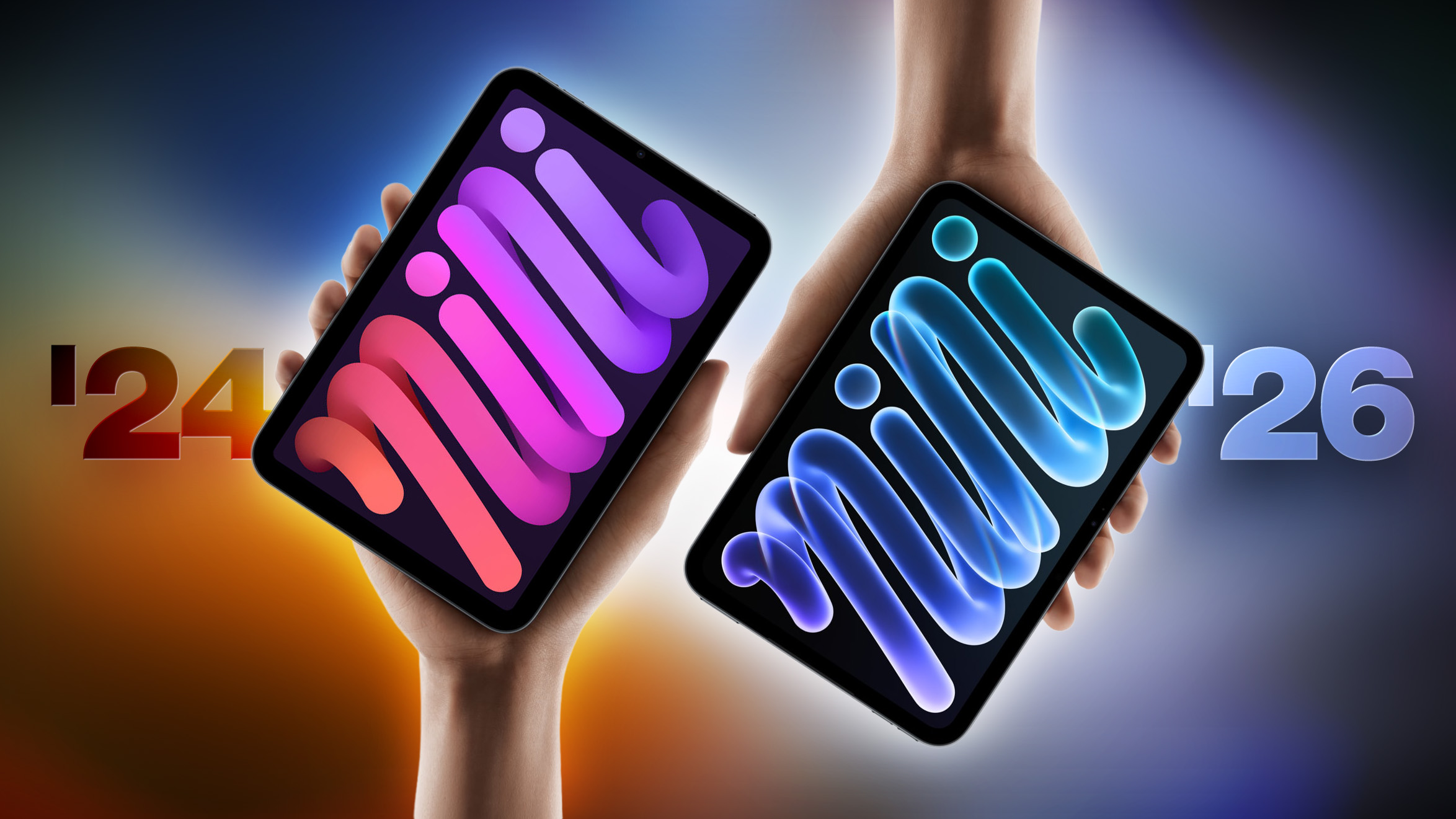
Apple today announced the eighth-generation iPad mini, introducing a larger OLED display, a thinner and lighter design, the A20 Pro chip, and water and dust resistance, but how much does it differ from the previous model?


Well, it already seems like it may be using a binned version of the A20 Pro on the lower storage tiers, so you never know what they might be doing with the RAM on those models.Why is unified memory listed as "unknown"? Aren't all A20 Pro chips equipped with 12GB of LPDDR5X memory?

We don’t know if they all are. There could also be a situation like with the M4 iPad Pro that only part of the physical memory is made available.Why is unified memory listed as "unknown"? Aren't all A20 Pro chips equipped with 12GB of LPDDR5X memory?


Should you upgrade from a dead iPad? I don't understand your question or what you see as the choices are?I have a 64gb 5th gen from 2019 that no longer works bc I accidentally ran it through the washing machine over the weekend. Should I upgrade? Not seeing any relevant info in article.
Upgrading from the mini gen 6 is the comparison article you should have written. Those are the most likely buyers for the gen 8.
Apple today announced the eighth-generation iPad mini, introducing a larger OLED display, a thinner and lighter design, the A20 Pro chip, and water and dust resistance, but how much does it differ from the previous model?
The new iPad mini starts at $699 for the 128GB Wi-Fi model and $849 with cellular connectivity. With the prior generation now discontinued, buyers also face a choice between paying for the new features and finding a cheaper A17 Pro model. Both offer the same storage capacities, advertised battery life, Touch ID authentication, and USB-C transfer speeds, so the new model does not improve every aspect of the experience.
Here are the key differences between the iPad mini with the A17 Pro chip from 2024 and the iPad mini with the A20 Pro chip from 2026:
iPad mini (seventh generation, 2024) iPad mini (eighth generation, 2026) 8.3-inch display 8.5-inch display Liquid Retina display with LED backlighting and IPS technology Super Retina XDR OLED display with 1-nit minimum brightness and 2,000,000:1 contrast ratio 2266-by-1488 resolution 2316-by-1512 resolution Wider display borders 24% thinner display borders 500 nits maximum brightness 600 nits maximum SDR and full-screen HDR brightness; 1,200 nits peak HDR brightness Optional nano-texture display glass on 256GB and 512GB models for an additional $100, supplied with a polishing cloth Extended external display mode with iPadOS 27.2 IP67 water and dust resistance, rated for a maximum depth of 1 meter for up to 30 minutes A17 Pro chip A20 Pro chip, with CPU and Neural Engine configurations varying by storage capacity Portrait front camera Landscape front camera Center Stage front camera with ƒ/2.4 aperture Center Stage front camera with ƒ/2.0 aperture True Tone rear flash Adaptive True Tone rear flash Landscape stereo speakers with external speaker holes Acoustic Display with display-coupled woofers and concealed tweeters, without external speaker holes Third-party wireless module Apple N1 wireless networking chip Wi-Fi 6E connectivity Wi-Fi 7 connectivity Bluetooth 5.3 connectivity Bluetooth 6 connectivity Thread networking technology Qualcomm Snapdragon X70 5G modem (Cellular models only) Apple C2 5G modem; up to 50% faster cellular data speeds according to Apple (Cellular models only) U.S. cellular model (A2995) supports 5G band n76 U.S. cellular model (A3596) supports LTE band 106 UMTS/HSPA/HSPA+/DC-HSDPA cellular support UMTS/HSPA/HSPA+ cellular support 19.3Wh battery 18.9Wh battery Fast charging up to 50% in around 30 minutes with a 35W or higher USB-C power adapter Available in Space Gray, Starlight, Purple, and Blue Available in Midnight and Starlight Previous polyurethane Smart Folio design Redesigned two-panel TechWoven Smart Folio with adjustable viewing angles, available separately in Navy Blue and Taupe for $79 More than 25% recycled content overall 35% recycled content overall Originally started at $499 (Wi-Fi) or $649 (Wi-Fi + Cellular); Wi-Fi starting price subsequently increased to $599; now discontinued Starts at $699 (Wi-Fi) or $849 (Wi-Fi + Cellular)
A17 Pro vs. A20 Pro
Unlike the previous model, the new iPad mini's chip hardware now varies according to storage capacity:
iPad mini (seventh generation, 2024) iPad mini (eighth generation, 2026) Chip Apple A17 Pro Apple A20 Pro Manufacturing process 3-nanometer 2-nanometer CPU 6 cores 128GB and 256GB: 5 cores
512GB: 6 coresHigher-performance CPU cores 2 performance cores 2 super cores Efficiency CPU cores 4 cores 128GB and 256GB: 3 cores
512GB: 4 coresGPU 5 cores 7 cores GPU Neural Accelerators Dedicated Neural Accelerators in each GPU core Neural Engine 16 cores on all storage configurations 128GB and 256GB: 16 cores
512GB: Dual 16-core Neural Engine, totaling 32 coresUnified memory 8GB Increased capacity, according to Apple; exact amount not yet known Unified memory bandwidth 51.2 GB/s 115.2 GB/s
Apple also claims that the new model has the following maximum improvements over the previous model with the A17 Pro chip:
- Up to 60% faster multithreaded CPU performance.
- Up to 2.7 times faster graphics performance.
- Up to 4.5 times faster AI performance.
Dimensions and Weight
iPad mini (seventh generation, 2024) iPad mini (eighth generation, 2026) Height 7.69 inches (195.4 mm) 7.69 inches (195.3 mm) Width 5.3 inches (134.8 mm) 5.22 inches (132.6 mm) Thickness 0.25 inch (6.3 mm) 0.21 inch (5.4 mm) Weight (Wi-Fi) 0.65 pound (293 grams) 0.56 pound (255 grams) Weight (Wi-Fi + Cellular) 0.66 pound (297 grams) 0.58 pound (263 grams)
The new model is approximately 14% thinner, with the Wi-Fi model approximately 13% lighter and the cellular model approximately 11% lighter.
Should You Upgrade?
Most A17 Pro iPad mini owners can comfortably keep their current device. The new model offers the same advertised battery life, storage capacities, Apple Pencil support, and USB-C transfer speeds. If your iPad mini still meets your needs, there is little reason to upgrade for everyday performance alone.
The slightly larger display now with OLED technology may be the strongest reason to consider replacing it, particularly if you frequently use your iPad mini for watching videos or reading. The thinner and lighter design may also make a worthwhile difference if you spend long periods holding it.
For users who regularly encounter distracting reflections or enjoy reading on their device, nano-texture glass could provide a more specific reason to upgrade. It does raise the cost considerably, since it requires at least 256GB of storage as well as the additional $100 display option.
The landscape camera, water resistance, and fast charging are useful additions, but are highly unlikely to justify replacing a A17 Pro model on their own. An upgrade makes more sense when several of these changes address things you find limiting about your current device.
Which Model Should You Buy?
For most new buyers, the A20 Pro model should be the starting point. The OLED display and new design are its main advantages, and both largely matter more to the everyday experience than the chip.
The A17 Pro model may still be worth considering when it offers substantial savings. It retains many of the same capabilities and remains a sensible choice for reading, browsing, taking notes, and watching videos, even if it uses the design of an older device.
For the A20 Pro model, it is important to remember that the 256GB version makes nano-texture glass available, while the 512GB version adds a CPU core and a second Neural Engine.
Article Link: iPad Mini 2024 vs. 2026 Buyer's Guide: Should You Upgrade?

Highly doubt that. Most likely buyers are people who upgrade every generation or people that have really old Minis on the old body, that have come to face the truth that they don’t get updates or their device has become too slow or it is their only device left where they have to pull put a lightning cable.Upgrading from the mini gen 6 is the comparison article you should have written. Those are the most likely buyers for the gen 8.

* 5 years, the iPad Mini 7's wallpapers were the same as those for the iPad Mini 6. At least this time they updated the style to use liquid glass...Looks enticing but not enough. After two years they didn’t even bothered to redesign the wallpaper.


u dont know macrumors. they will do at least 3 separate articles comparing different generationsUpgrading from the mini gen 6 is the comparison article you should have written. Those are the most likely buyers for the gen 8.


Given they had articles for several previous generation iPhone Pro models comparing them to the 18 Pro models, I'm going to say... wait until tomorrow if you want to see that article lol.Upgrading from the mini gen 6 is the comparison article you should have written. Those are the most likely buyers for the gen 8.

Still no 120 hz at these prices ☠️
Apple today announced the eighth-generation iPad mini, introducing a larger OLED display, a thinner and lighter design, the A20 Pro chip, and water and dust resistance, but how much does it differ from the previous model?
The new iPad mini starts at $699 for the 128GB Wi-Fi model and $849 with cellular connectivity. With the prior generation now discontinued, buyers also face a choice between paying for the new features and finding a cheaper A17 Pro model. Both offer the same storage capacities, advertised battery life, Touch ID authentication, and USB-C transfer speeds, so the new model does not improve every aspect of the experience.
Here are the key differences between the iPad mini with the A17 Pro chip from 2024 and the iPad mini with the A20 Pro chip from 2026:
iPad mini (seventh generation, 2024) iPad mini (eighth generation, 2026) 8.3-inch display 8.5-inch display Liquid Retina display with LED backlighting and IPS technology Super Retina XDR OLED display with 1-nit minimum brightness and 2,000,000:1 contrast ratio 2266-by-1488 resolution 2316-by-1512 resolution Wider display borders 24% thinner display borders 500 nits maximum brightness 600 nits maximum SDR and full-screen HDR brightness; 1,200 nits peak HDR brightness Optional nano-texture display glass on 256GB and 512GB models for an additional $100, supplied with a polishing cloth Extended external display mode with iPadOS 27.2 IP67 water and dust resistance, rated for a maximum depth of 1 meter for up to 30 minutes A17 Pro chip A20 Pro chip, with CPU and Neural Engine configurations varying by storage capacity Portrait front camera Landscape front camera Center Stage front camera with ƒ/2.4 aperture Center Stage front camera with ƒ/2.0 aperture True Tone rear flash Adaptive True Tone rear flash Landscape stereo speakers with external speaker holes Acoustic Display with display-coupled woofers and concealed tweeters, without external speaker holes Third-party wireless module Apple N1 wireless networking chip Wi-Fi 6E connectivity Wi-Fi 7 connectivity Bluetooth 5.3 connectivity Bluetooth 6 connectivity Thread networking technology Qualcomm Snapdragon X70 5G modem (Cellular models only) Apple C2 5G modem; up to 50% faster cellular data speeds according to Apple (Cellular models only) U.S. cellular model (A2995) supports 5G band n76 U.S. cellular model (A3596) supports LTE band 106 UMTS/HSPA/HSPA+/DC-HSDPA cellular support UMTS/HSPA/HSPA+ cellular support 19.3Wh battery 18.9Wh battery Fast charging up to 50% in around 30 minutes with a 35W or higher USB-C power adapter Available in Space Gray, Starlight, Purple, and Blue Available in Midnight and Starlight Previous polyurethane Smart Folio design Redesigned two-panel TechWoven Smart Folio with adjustable viewing angles, available separately in Navy Blue and Taupe for $79 More than 25% recycled content overall 35% recycled content overall Originally started at $499 (Wi-Fi) or $649 (Wi-Fi + Cellular); Wi-Fi starting price subsequently increased to $599; now discontinued Starts at $699 (Wi-Fi) or $849 (Wi-Fi + Cellular)
A17 Pro vs. A20 Pro
Unlike the previous model, the new iPad mini's chip hardware now varies according to storage capacity:
iPad mini (seventh generation, 2024) iPad mini (eighth generation, 2026) Chip Apple A17 Pro Apple A20 Pro Manufacturing process 3-nanometer 2-nanometer CPU 6 cores 128GB and 256GB: 5 cores
512GB: 6 coresHigher-performance CPU cores 2 performance cores 2 super cores Efficiency CPU cores 4 cores 128GB and 256GB: 3 cores
512GB: 4 coresGPU 5 cores 7 cores GPU Neural Accelerators Dedicated Neural Accelerators in each GPU core Neural Engine 16 cores on all storage configurations 128GB and 256GB: 16 cores
512GB: Dual 16-core Neural Engine, totaling 32 coresUnified memory 8GB Increased capacity, according to Apple; exact amount not yet known Unified memory bandwidth 51.2 GB/s 115.2 GB/s
Apple also claims that the new model has the following maximum improvements over the previous model with the A17 Pro chip:
- Up to 60% faster multithreaded CPU performance.
- Up to 2.7 times faster graphics performance.
- Up to 4.5 times faster AI performance.
Dimensions and Weight
iPad mini (seventh generation, 2024) iPad mini (eighth generation, 2026) Height 7.69 inches (195.4 mm) 7.69 inches (195.3 mm) Width 5.3 inches (134.8 mm) 5.22 inches (132.6 mm) Thickness 0.25 inch (6.3 mm) 0.21 inch (5.4 mm) Weight (Wi-Fi) 0.65 pound (293 grams) 0.56 pound (255 grams) Weight (Wi-Fi + Cellular) 0.66 pound (297 grams) 0.58 pound (263 grams)
The new model is approximately 14% thinner, with the Wi-Fi model approximately 13% lighter and the cellular model approximately 11% lighter.
Should You Upgrade?
Most A17 Pro iPad mini owners can comfortably keep their current device. The new model offers the same advertised battery life, storage capacities, Apple Pencil support, and USB-C transfer speeds. If your iPad mini still meets your needs, there is little reason to upgrade for everyday performance alone.
The slightly larger display now with OLED technology may be the strongest reason to consider replacing it, particularly if you frequently use your iPad mini for watching videos or reading. The thinner and lighter design may also make a worthwhile difference if you spend long periods holding it.
For users who regularly encounter distracting reflections or enjoy reading on their device, nano-texture glass could provide a more specific reason to upgrade. It does raise the cost considerably, since it requires at least 256GB of storage as well as the additional $100 display option.
The landscape camera, water resistance, and fast charging are useful additions, but are highly unlikely to justify replacing a A17 Pro model on their own. An upgrade makes more sense when several of these changes address things you find limiting about your current device.
Which Model Should You Buy?
For most new buyers, the A20 Pro model should be the starting point. The OLED display and new design are its main advantages, and both largely matter more to the everyday experience than the chip.
The A17 Pro model may still be worth considering when it offers substantial savings. It retains many of the same capabilities and remains a sensible choice for reading, browsing, taking notes, and watching videos, even if it uses the design of an older device.
For the A20 Pro model, it is important to remember that the 256GB version makes nano-texture glass available, while the 512GB version adds a CPU core and a second Neural Engine.
Article Link: iPad Mini 2024 vs. 2026 Buyer's Guide: Should You Upgrade?

