Become a MacRumors Supporter for $50/year with no ads, ability to filter front page stories, and private forums.

Mac3Duser

macrumors regular
Original poster
Aug 26, 2021
215
171
Hi,
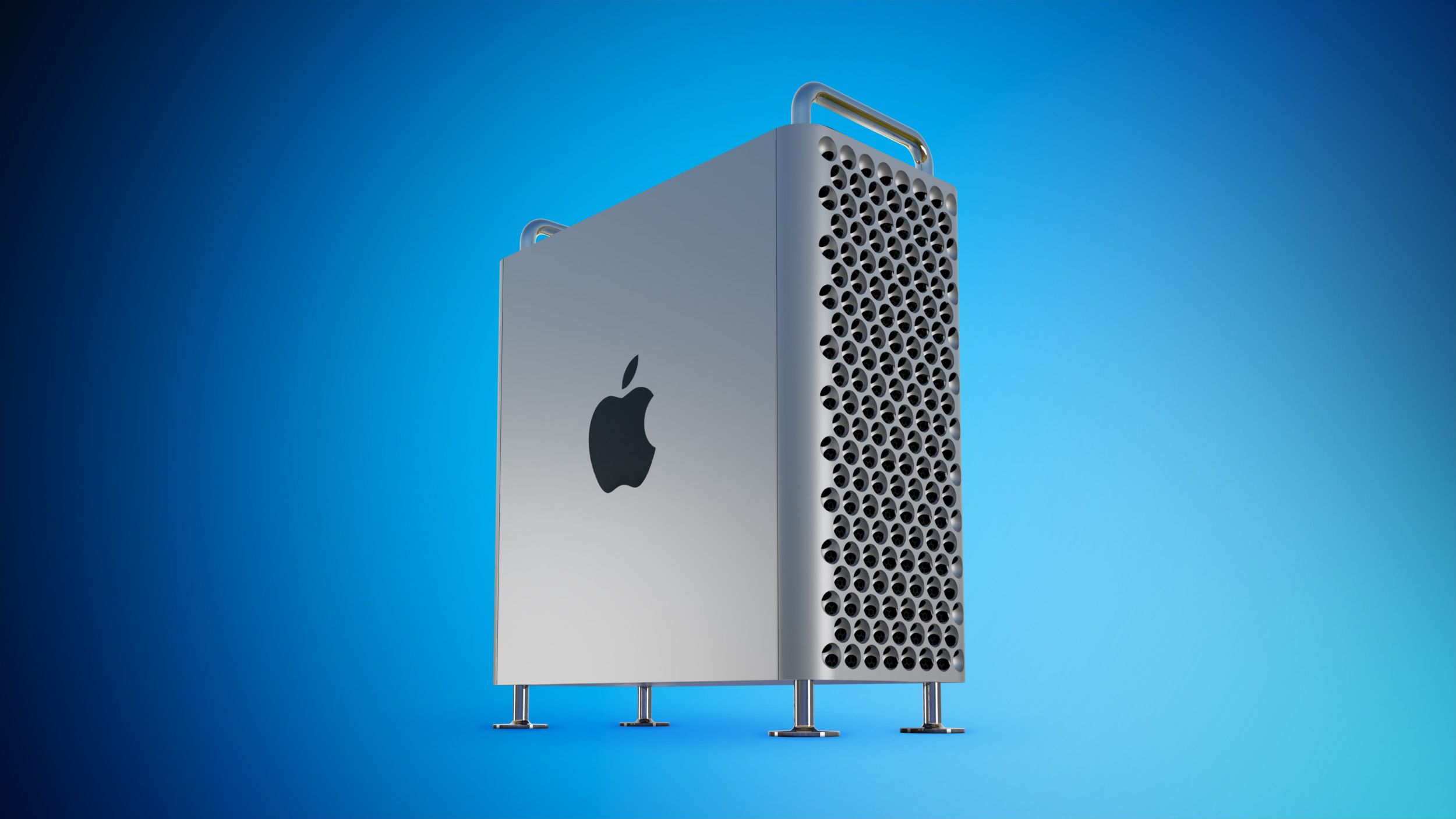
I read that Apple is discontinuing the Mac Pro and that the M.2 Ultra will be the last one in the upgradeable chassis. Apple will focus solely on the Mac Studio.
Also, if there's a chance anyone who works at Apple is reading this, I'd like to say that I regret having to abandon the Apple workstation when my 7.1 will become completely obsolete, which will be by next year.
I'll have to look at Lenovo ThinkStations with Nvidia Pro graphics, and that might be a good option. I'll put a small Mac Mini on my ThinkStation P7 to run macOS, and I'll do everything else on Windows.
I saw that the 128-core ARM Ampere Altra workstations can use RTX Blackwell and ECC memory.
Would it be possible for Apple to create a successor to the Mac Pro in a beautiful black chassis, with multiple PCIe lanes that could accommodate Nvidia graphics cards, several cards, and NVMe drives? Thank you, that would be great.
The Mac Studio isn't suitable for my needs. I need to clean inside, expand, and upgrade my storage and graphics capabilities.
If that's not feasible, okay, I'll get a Lenovo tower and a Mac mini M5.
 
  • Like
Reactions: BillyJoeJimBob
Would it be possible for Apple to create a successor to the Mac Pro in a beautiful black chassis, with multiple PCIe lanes that could accommodate Nvidia graphics cards, several cards, and NVMe drives?
Apple Silicon isn't designed to accommodate additional graphics units, so you're not going to see any kind of graphics card expansion -- not even external GPUs.

What sort of cards?

You can always more storage via Thunderbolt.

The Mac Studio isn't suitable for my needs

I'm curious what you do, for which the Studio wouldn't at least match the Intel MP. Presumably some kind of high-end 3D work? There are some specialist tasks where Intel hardware will be better suited, though they are getting fewer and fewer as time goes by.


I need to clean inside,

Is that an actual need...? :) What if you didn't have to clean inside a Mac ever again? Wouldn't that be better?
 
Last edited:
  • Like
Reactions: AlphaCentauri
Rumors or facts? Not that I would be surprised.

Fact: The only Intel-based Macs supported by macOS 26 are the Mac Pro 2019, 2 models of MacBook Pro, and 1 model of iMac and it will be the last version of macOS to support them.

macOS 26 will likely be supported for another 2 years after that but its expiration will conclude all supported configurations of the Mac Pro 7,1 (as well as the other Macs). Circa fall '28, Mac Pro 7,1 will be officially unsupported.

Companies like MS will likely stop releasing universal binaries shortly thereafter (and I wouldn't be surprised if some stop releasing them before that).

The future of Mac Pro as a concept (e.g. whether there will be a new one based on the rumored M5 Ultra) is TBD.

I do not foresee Macs that support external GPU (e.g. an Nvidia) within the life of the Apple Silicon architecture (i.e. the next 10-15 years). Apple could engineer ECC into their on-package RAM but I would not count on it.

Assuming the OP's constraints, the closest Apple will likely be able to do in the near future is a Studio with expansion boxes in a rack/chassis. An M5 Ultra (perhaps coming in the spring) will likely offer 1 TB of unified memory/VRAM and performance ~ previous single Nvidia. NVMe and Non-GPU PCIe cards would be connected to the main box via TB5 at 64Gbit and there could be up to 6 boxes counting the 2 on the front (my understanding 24 PCIe lanes available in total to support the 6x4 lanes needed for the 6xTB5).

Relative to the technology at the time, the MacPro7,1 was a higher capacity box than the foreseeable upcoming Mac boxes. Apple would probably tell the OP to get a nicely configured Mac Studio to run small stuff locally and then use cloud-hosted servers for anything bigger. Either that or that they are no longer competing in the the OP's market segment.
 
Last edited:
  • Like
Reactions: blob.DK
I read that Apple is discontinuing the Mac Pro and that the M.2 Ultra will be the last one in the upgradeable chassis. Apple will focus solely on the Mac Studio.
Just a rumour - although it's quite a plausible one, the Mac Pro is a shrinking niche that doesn't really use Apple Silicon to full advantage. I wouldn't be shocked if the M.2. Mac Pro is the last one.

Still, I wouldn't read too much into the fact that Apple didn't release a M3 Ultra Mac Pro though - it wouldn't have been a particularly compelling upgrade for a computer who's only point is to provide better PCIe bandwidth than you can get with Thunderbolt. An M5 Ultra (or later) would support faster internal PCIe.

Also, if there's a chance anyone who works at Apple is reading this, I'd like to say that I regret having to abandon the Apple workstation when my 7.1 will become completely obsolete, which will be by next year.
"Obsolete" doesn't mean that it will stop working or running the software versions you currently have. Apple's definition is of Obsolete is "Products are considered obsolete when Apple stopped distributing them for sale more than 7 years ago." (https://support.apple.com/en-gb/102772), Apple were distributing the Intel Mac Pro in 2023. While that doesn't mean they have to support the latest OS, not having a still supported OS would make it hard to fulfill the service/spare parts obligations they still have in some countries 5 to 7 years after sale.

Would it be possible for Apple to create a successor to the Mac Pro in a beautiful black chassis, with multiple PCIe lanes that could accommodate Nvidia graphics cards, several cards, and NVMe drives?

The current range of Apple Silicon chips simply can't provide the number of PCIe lanes needed for a Workstation-class PCIe tower. The '23 Mac Pro gets most of its internal PCIe lanes from the unused SSD interface on the second M2 Ultra die - which is great for a few specialist I/O cards or PCIe SSDs but not if you're going to run multiple high-end GPUs using 16 lanes each. Plus, a lot of the advantages of Apple Silicon come from having on-die CPU, GPU and NPU sharing unified RAM, and from speed vs. power consumption/heat rather than raw speed. Going for external PCIe GPUs/AI accelerators negates that advantage, and power consumption is such a huge advantage in a big tower format. Apple could invest a shedload of money in creating a true PCIe Workstation-class chip, but it would likely throw away what makes Apple Silicon a contender in the mobile/laptop/small-form-factor market.

The Ampere etc. server-class ARM chips may be ARM but they're not Apple Silicon and wouldn't have compatible GPUs/NPUs/Media engines etc. Those are aimed at the datacentre market, where power efficiency starts to become important again (once you got them racked up by the hundreds).

Sadly, Apple Silicon is great for mobile/laptop/SFF systems - which is where Apple make their money - but really isn't the tool for the job if you want a Big Box'o'Slots.
 
Would it be possible for Apple to create a successor to the Mac Pro in a beautiful black chassis, with multiple PCIe lanes that could accommodate Nvidia graphics cards, several cards, and NVMe drives? Thank you, that would be great.

This would be lovely, but likely will never happen. The Apple influencer/social media crowd will go ballistic.
 
Hi,
I read that Apple is discontinuing the Mac Pro and that the M.2 Ultra will be the last one in the upgradeable chassis. Apple will focus solely on the Mac Studio.
Also, if there's a chance anyone who works at Apple is reading this, I'd like to say that I regret having to abandon the Apple workstation when my 7.1 will become completely obsolete, which will be by next year.
I'll have to look at Lenovo ThinkStations with Nvidia Pro graphics, and that might be a good option. I'll put a small Mac Mini on my ThinkStation P7 to run macOS, and I'll do everything else on Windows.
I saw that the 128-core ARM Ampere Altra workstations can use RTX Blackwell and ECC memory.
Would it be possible for Apple to create a successor to the Mac Pro in a beautiful black chassis, with multiple PCIe lanes that could accommodate Nvidia graphics cards, several cards, and NVMe drives? Thank you, that would be great.
The Mac Studio isn't suitable for my needs. I need to clean inside, expand, and upgrade my storage and graphics capabilities.
If that's not feasible, okay, I'll get a Lenovo tower and a Mac mini M5.

Hi Mac3Duser.

In reference to your request,

HaHaHaHaHaHaHaHaHaHaHaHaHaHaHaHa.

No.

Please direct any further requests to the location helpfully circled on the image below.

Have a nice day.

Sincerely,

The Apple C-Suite

Cupertino.jpg
 
Last edited:
The current range of Apple Silicon chips simply can't provide the number of PCIe lanes needed for a Workstation-class PCIe tower. The '23 Mac Pro gets most of its internal PCIe lanes from the unused SSD interface on the second M2 Ultra die - which is great for a few specialist I/O cards or PCIe SSDs but not if you're going to run multiple high-end GPUs using 16 lanes each.

That isn't correct. "..most from Unused SSD Interface" is a bit of an oversell. Each chip has x16 lanes. Apple is not using 16 lanes for a single SSD. Apple feeds 16+8 PCI-e v4 lanes into the server switch included for backhaul (just like the MP 2019 has a switch for backhaul distribution. ) Most of the lanes ( 24/32 ... i.e., well over 50% ) are dedicated to this backhaul. The spin here is a bit backwards. That actual case that it is closer to there is a hefty amount of 'dead' PCI-e lanes when the Ultra capable Max is placed in the MBP or Mac Studio.

That's the bigger problem here. Very similar to the UltraFusion connector in a MBP ... a similar "bridge to nowhere" soaking up some on the die in that context. This 'extra' IO is being partially paid for ( 'subsidized' by people who can't even use it).


Apple could invest a shedload of money in creating a true PCIe Workstation-class chip, but it would likely throw away what makes Apple Silicon a contender in the mobile/laptop/small-form-factor market.

The problem is more so where does Apple make the money back. The Mac Pro is not a high volume system. If the 'shedload of money' has to be paid back by a relatively small set of buyers then the chip will be relatively more expensive. Raise the Mac Pro price substantially higher and even fewer folks will buy it.

There is also the unoptimized software stack. Apple has spent the last 5-9 years trying to get folks to write graphics stacks optimized to the unified model ( starting with iPhone/iPad and kicking in full blast the last 5 years ).


The Ampere etc. server-class ARM chips may be ARM but they're not Apple Silicon and wouldn't have compatible GPUs/NPUs/Media engines etc. Those are aimed at the datacentre market, where power efficiency starts to become important again (once you got them racked up by the hundreds).

At the moment the CPU power efficiency 'savings' are primarily being use to throw efficiency out the window on the GPU side. Most efficient AI compute is somewhat an afterthought these days ( "fear of missing out" has thrown miserly power consumption out the window. )

Apple is a member of UALink ( the open standard competitor to NVLink)
https://ualinkconsortium.org/members/


Apple could do something 'modular' here but it would be consumer , retail off the shelf PCI-e card like. And UALink could be just how Apple hooks to Broadcomm Networking 'half' of there rumored server chiplet/chip. Even if Apple does something there it is a sever ( non GUI running) context. The connector isn't there to help drive a monitor.

Apple's promotion of UALink is likely in part so that the whole industry doesn't go down the NVLink rabbit hole. It very likely isn't for their Mac product line up . Cloud Services is a bigger business than Mac is at this point.
 
  • Like
Reactions: Varmann
Hi,
I read that Apple is discontinuing the Mac Pro and that the M.2 Ultra will be the last one in the upgradeable chassis. Apple will focus solely on the Mac Studio.

Not quite.

" ... In his Power On newsletter today, Gurman said he heard that Apple has "largely written off" the Mac Pro, with the sentiment inside the company being that the Mac Studio represents the present and future of Apple's pro desktop computing. .."

Apple pretty much did the same thing in 2012-2013 ( the Mac Pro 2013 for the most part playing the role of the Mac Studio. Although could add 3rd party memory at the time. Largely Intel's idea since they design the memory subsystem. ). That lead to long 6 year Rip Van Winkle slumber before the Mac Pro 2019. Which lead to another 4 year slumber.

2023 + 4 => 2027. +5 => 2027 . If Apple intended an update about 2027-28 timeframe there wouldn't be much going on now.

Apple has apperanly designed their own chassis and design for their Private Cloud Compute. That system design and mindset (fill service compute) likely supersedes doing anything for customers in the racked compute node space. ( making stuff for themselves.)


Also, if there's a chance anyone who works at Apple is reading this, I'd like to say that I regret having to abandon the Apple workstation when my 7.1 will become completely obsolete, which will be by next year.

The 7,1 (MP 2019) will more so being 'ending a lifecycle' for many who have a 6-8 year timeline for when they bought it new. That is more 'retirement' than obsolesce.


I'll have to look at Lenovo ThinkStations with Nvidia Pro graphics, and that might be a good option. I'll put a small Mac Mini on my ThinkStation P7 to run macOS, and I'll do everything else on Windows.

Apple probably could sell quite a few "Mac on a PCI-e card" models. A plain Mn and Probably Mn Pro could likely fit on a PCI-e card. The plain Mn could clearly be just bus powered (75W ) and be self-contained and wire free.
But yeah. folks could put some velcro on the bottom on mini / to of tower and just stick it on top. Especially, in the even smaller enclosure it is in now.


I saw that the 128-core ARM Ampere Altra workstations can use RTX Blackwell and ECC memory.
Would it be possible for Apple to create a successor to the Mac Pro in a beautiful black chassis, with multiple PCIe lanes that could accommodate Nvidia graphics cards, several cards, and NVMe drives?

Possible? Is that technologically some rube goldberg contraption or possible in a economic sense (where Mac Pro earns a profit for a wide enough group to make it worth Apple's time)?

Apple dumped Nvidia GPUs before the Apple Silicon transition. Apple Silicon has little to do why there is no Nvidia solution on the macOS side for the 7,1., let alone the Apple Silicon follow on. Folks who start with an Nvidia card and design 'backwards' to wrap a contain around it, that boat sailed even before 2019.

Apple Private Cloud compute deals with empheral workloads. ( client sends in request to AI-cloud. answer computed and clients intermediate data is completely thrown away). That constant flushing of memory likely means Apple is disinterested in EEC. High tolerance for hallucingenic AI means dynamic inference getting 'wrong anwers' won't get much of an eye blink if Apple spits them back from PCC.

That decoupling drives not only different hardware , but different software as well. The Mac PRo running software that is substantially different from the rest of the Mac ecosystem is a economic problem more so than a technological one.

Thank you, that would be great.
The Mac Studio isn't suitable for my needs. I need to clean inside, expand, and upgrade my storage and graphics capabilities.

All of those but the last is viable on the Mac Pro 2023. The insistence of dragging Nvidia for GUI output into the mix likely only helps to increase Apple's disinterest.

If that's not feasible, okay, I'll get a Lenovo tower and a Mac mini M5.

Apple will likely check box the Mini M5 as a 'win'.
 
Assuming the OP's constraints, the closest Apple will likely be able to do in the near future is a Studio with expansion boxes in a rack/chassis. An M5 Ultra (perhaps coming in the spring) will likely offer 1 TB of unified memory/VRAM and performance ~ previous single Nvidia. NVMe and Non-GPU PCIe cards would be connected to the main box via TB5 at 64Gbit and there could be up to 6 boxes counting the 2 on the front

Racking Studio's already exists.


Other than 'Sherlocking' yet another Apple partner(s) , a racked Studio really wouldn't add much to the Mac ecosystem at all. I suspect there is a very low motivation for Apple to do this.

The double the enclosure development overhead for a single product , probably isn't helping the Mac Pro out much either. If Apple did keep a Mac Pro around probably should just do a rack version and "allow" folks to tip it over on its side if they want a "deskside' unit.

(my understanding 24 PCIe lanes available in total to support the 6x4 lanes needed for the 6xTB5).

The back-end PCI-e bandwidth for the integrated Thunderbolt does not come out of the 24 PCI-e budget. There are no discrete TB controllers here. The PCIe controller for the Thunderbolt is local to that subsystem and fed through the internal chip network. 'Logically' it may appear adjoined to the other provisioning, but it likely is not.
 
  • Like
Reactions: b17777
Apple sells iPads.

Some of those iPads lack a screen, and run a different UI skin, with an expanded processor, but architecturally the products called "Macs" are just iPads.
 
Is that an actual need...?

The ability of people to ignore the psychological needs certain aspects of product design are supposed to fill, never ceases to amaze me.

The reason SUVs are so popular, despite the fact no one ever actually uses the 4WD system, is because everyone has that nagging voice in the back of their head "what if there's a disaster, and we're trapped on a highway in gridlock, and there's a grassy shoulder?"

Why do we want computers capable of being opened up and cleaned? Because they will suck in dust, because no design from Apple has ever delivered on their claims about specially shaped airflows preventing dust, etc.

Do I need an Ultra processor? Maybe not. My actual workloads may not require it. Would it harm me psychologically to know that I could never have more than 4 displays in a desktop system unless I had an Ultra processor, that I couldn't work the way I wanted to work, and that I couldn't increase that hard limit in a lower-order system? Definitely.
 
  • Like
Reactions: bzgnyc2
The ability of people to ignore the psychological needs certain aspects of product design are supposed to fill, never ceases to amaze me.
Are you saying you buy Macs in order to fulfil your pre-existing need to clean things?

My Mac might need to be cleaned; but that's different from having a need to clean things as a criterion for what sort of Mac to buy, which was the point to which I was replying.

Sure, a Mac Pro may be easy to clean -- though perhaps that same spacious design is a factor in fluff accretion. I might have to clean out a Mac once in its lifetime; but even if I did it once a year, paying extra for the privilege seems a curious priority.

If a Mac needs less, or no cleaning, then surely that's better? If there is a psychological need, it's to keep things clean, rather than to do cleaning, surely?

But ok, each to their own... :)
 
Well, computers ingest a lot of dust. That's obviously a good reason to be able to easily open the machine and clean it.
Similarly, I like being able to replace a faulty SSD. Also, I never boot or use Apple SSDs in my Mac Pro 7.1 because they aren't easily replaceable. I have two NVMe SSDs on a Glotrends card, one for macOS and one for Windows, plus others for storage, and SATA SSDs and one USB SSD thanks to the Sonnet Fusion Flex.
I was also able to add a recent Nvidia card to run on Windows. I regret that it can't run on both systems like my AMD MPX card.
Opening, cleaning, changing my configuration, replacing faulty components, and having multiple systems in my machine is a luxury, obviously worth the price.
The large number of PCIe lanes is also a major advantage. Yes, that's a big reason. It's a feeling of freedom, but not only that. It's a necessity. The workstation is a comforting machine where nothing is hidden, everything is accessible, where the user is in control. With closed systems, you just have to trust and accept what's been decided for you.
That, for me, is the difference between a workstation and other apple desktop computers.
Also, yes, I'll probably continue to use a MacBook Pro in the future, but for my desktop computer, I'll choose a ThinkStation P7 or equivalent. There are some excellent Linux distributions that are perfectly suited to what I'll be doing on my machine, in addition to Windows, which will be required for certain softwares.
I hope Apple doesn't abandon Mac Pro and will create its own graphics cards to compete with Nvidia, thus maintaining a modular Mac Pro that's also more open to third-party cards.
I think that's important for Apple too, by the way. Not to limit everything to a system designed solely for iPhones and iPads.
 
That actual case that it is closer to there is a hefty amount of 'dead' PCI-e lanes when the Ultra capable Max is placed in the MBP or Mac Studio.
You say potato... The Studio seems to use some PCIe for 10G Ethernet, SD card etc. - I've never seen a breakdown of what comes from where. Anyway, I think we can agree that the spare PCIe lanes on the Ultra are a consequence of the UltraFusion concept rather than the Ultra being designed with a PCIe workstation in mind, which would need a lot more PCIe bandwidth - and that a 4x "extreme" chip wouldn't necessarily be an efficient way of getting PCIe bandwidth.

(I think a lot of people would love a Studio Ultra with a couple of M.2 slots bolted on - not gonna happen, but...)

It will be interesting to see whether Apple persist with the Ultrafusion concept - they've already dropped the idea of having the "Pro" die being effectively a Max die with a bit chopped off (maybe not literally how it is made - but the codename was "jade chop").
 
Are you saying you buy Macs in order to fulfil your pre-existing need to clean things?

No, but I bought Mac Pros specifically so as to not be hemmed in by Apple's choices about, for example, how many displays I could have.

My Mac might need to be cleaned; but that's different from having a need to clean things as a criterion for what sort of Mac to buy, which was the point to which I was replying.

You are failing to appreciate that other people's psychological needs, from which they derive comfort, are different to your own, yet no less valid.

Sure, a Mac Pro may be easy to clean -- though perhaps that same spacious design is a factor in fluff accretion. I might have to clean out a Mac once in its lifetime; but even if I did it once a year, paying extra for the privilege seems a curious priority.

It must certainly be a privilege to have an environment which does not feature dust. How lucky you are.

If a Mac needs less, or no cleaning, then surely that's better? If there is a psychological need, it's to keep things clean, rather than to do cleaning, surely?

Needs is a function of each person's individual circumstances. Cleaning is how one keeps things clean.

When Apple says a Mac needs "no" cleaning, that is a marketing statement, not a description of reality. Like saying a product is "Maintenance Free" because it can't be maintained, but is instead a consumable.

But ok, each to their own... :)

Yes, that's the point. What other people need may not be what you need, but that does not invalidate it as a need.
 
  • Like
Reactions: bzgnyc2 and b17777
Racking Studio's already exists.


Other than 'Sherlocking' yet another Apple partner(s) , a racked Studio really wouldn't add much to the Mac ecosystem at all. I suspect there is a very low motivation for Apple to do this.

The double the enclosure development overhead for a single product , probably isn't helping the Mac Pro out much either. If Apple did keep a Mac Pro around probably should just do a rack version and "allow" folks to tip it over on its side if they want a "deskside' unit.

Agree and should have been clearer. We both agree the rackmount/enclosure is unlikely to be an Apple product. Rather one could obtain 3rd party products to rack/stack a Studio and various enclosures.

The back-end PCI-e bandwidth for the integrated Thunderbolt does not come out of the 24 PCI-e budget. There are no discrete TB controllers here. The PCIe controller for the Thunderbolt is local to that subsystem and fed through the internal chip network. 'Logically' it may appear adjoined to the other provisioning, but it likely is not.

Not quite following the details here but the purpose of my statement was to suggest that a Studio can sustain 6x4 PCIe lanes of bandwidth (i.e. 6x64Gbps after overheard) to some combination of external boxes (e.g. boxes that then host PCIe slots for cards or NVMe drives) via TB5. Is that not true?
 
Of course, the important thing is the number of PCIe lanes. When recent Xeons have more than 100, not counting the chipset, you can easily install 3 graphics cards, and plenty of network cards, storage cards, etc., and even a BMC card.
 
Not quite following the details here but the purpose of my statement was to suggest that a Studio can sustain 6x4 PCIe lanes of bandwidth (i.e. 6x64Gbps after overheard) to some combination of external boxes (e.g. boxes that then host PCIe slots for cards or NVMe drives) via TB5. Is that not true?
Yes, but that’s a max. of 4 lanes per box - so the PCIe enclosures from Sonnet et. al. can’t provide the full 8 or 16 lanes that some cards can use.

Also, Thunderbolt consistently lags a generation or two behind the latest PCIe standard in terms of bandwidth - so I think TB4 only supported PCIe v3, TB5 supports PCIe v4 - while the M5 SiC already uses PCIe v5 on its actual PCIe lanes (for internal SSD etc.) and, industry wide, the first PCIe v6 devices launched this year…
 
Yes, but that’s a max. of 4 lanes per box - so the PCIe enclosures from Sonnet et. al. can’t provide the full 8 or 16 lanes that some cards can use.

Also, Thunderbolt consistently lags a generation or two behind the latest PCIe standard in terms of bandwidth - so I think TB4 only supported PCIe v3, TB5 supports PCIe v4 - while the M5 SiC already uses PCIe v5 on its actual PCIe lanes (for internal SSD etc.) and, industry wide, the first PCIe v6 devices launched this year…

Yes agree today's/near future Apple solution I mentioned as "closest" to what OP wanted doesn't match the relative performance of the Mac Pro 2019 to the technology at the time. I believe the Studio can sustain 6x64Gbps across it's 6xTB5 ports to 6 enclosures with some combination of PCIe (v4) slots (4 lanes active) and NVMe SSD but that's obviously not the same as what would be expected from a properly refreshed Mac Pro (e.g. multiple 16x PCIe (v5 or v6) slots and NVMe slots with PCIe v5 that wouldn't bottleneck the today's SSD). Similarly even the predicted Studio M5 Ultra configured to the max likely won't match 1.5TB max memory possible with the Mac Pro 2019.

Then I wasn't trying to sell OP on a racked/stacked Studio. Rather set expectations that that is likely the closet Apple is going to offer for his requirements in the near-term. It's possible there will be a whiz-bang Mac Pro M5 Ultra next year that comes closer to his requirements, but it almost certainly won't meet them all. If the gap is too large, he shouldn't waste time and mental energy holding out for more from Apple.
 
It seems that Apple is mostly interested in creating devices designed for shopping, social media navel-gazing, and lifestyle-oriented computation. This means that I will eventually simply airgap my main computer (a brute force Pro Tools machine). I've already experienced this path a couple times over the last 15 years, but I've finally learned the lesson. Have fun.

https://c4sif.org/2012/01/cory-doctorow-the-coming-war-on-general-computation/

https://boingboing.net/2012/08/23/civilwar.html
The Mac Studio can be configured to be a powerful workstation.
 
In my opinion, these days a workstation means a platform that let you add in multiple GPU for applications such as AI, 3D rendering & etc.

If you're not in this niche market segment, you likely don't need a workstation but that doesn't mean you aren't entitled to a workstation for what your workflows might marginally benefit from it.
 
Register on MacRumors! This sidebar will go away, and you'll see fewer ads.