Become a MacRumors Supporter for $50/year with no ads, ability to filter front page stories, and private forums.
It really depends on what you are shooting but you can see iPhone limitations super fast... For example for the telephoto the iPhone is smashed by a real telephoto lens... On night it's a pain for the iPhone, you need to use long exposure and there is noise and blabla...

Really yes your iPhone is always with you and useful to take pictures of somethings like documents but for photography it's not a good camera... Only some rare pictures can look ok but that's it...
Couldn’t disagree more. Yes I agree some rare pictures will cause trouble with capturing due to lighting, motion etc but the majority are fairly good.

If the majority your pictures are not usable there is something else going on.
 
It really depends on what you are shooting but you can see iPhone limitations super fast... For example for the telephoto the iPhone is smashed by a real telephoto lens... On night it's a pain for the iPhone, you need to use long exposure and there is noise and blabla...

Really yes your iPhone is always with you and useful to take pictures of somethings like documents but for photography it's not a good camera... Only some rare pictures can look ok but that's it...

Totally disagree. Some of my best photographs were made with iPhones. And that's true with many of my photographer friends (who also have expensive cameras).

Many people believe that excellent photography comes from having "the best" camera. When in reality it's about the photographer... his/her life experiences, imagination, ability to read light, recognizing the power of gesture, understanding how environmental context plays a role, knowing how/when to let some details drop into the shadows to provoke mystery, knowing techniques to stoke a viewer's imagination when looking at a photo, the photographer's education, and on and on and on.

In summary... great photographs come from the photographer, not the camera used.


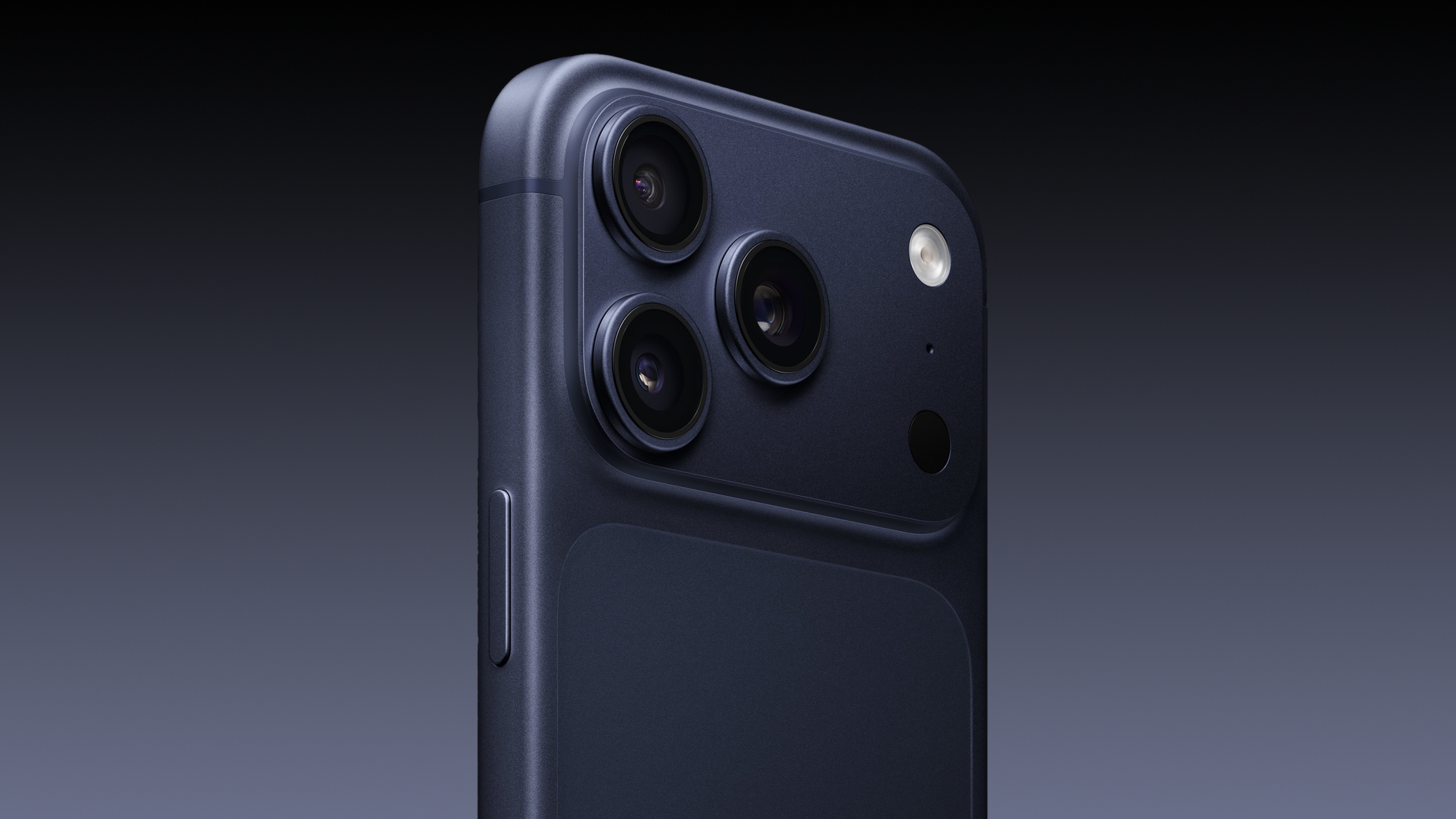
Apple's adoption of a 200-megapixel camera for a future iPhone is still some ways off, according to a prominent supply chain leaker who says such a sensor is not currently part of Apple's active prototype testing.

iphone-17-pro-dark-blue-1.jpg

In a post on Weibo, Chinese leaker Digital Chat Station said that 200-megapixel camera sensors are being discussed in the supply chain, but they have not appeared in iPhone engineering prototypes undergoing real-world imaging tests. Instead, Apple's current camera development work is said to remain focused on refining 48-megapixel systems, as per previous reports.

The leaker's comments follow a research note from Morgan Stanley this week that suggested Apple is working to bring a 200-megapixel camera to the iPhone as soon as 2028. Digital Chat Station's remarks don't rule out such a move – indeed, the leaker said last May that Apple was looking at future adoption – but they do indicate that engineering-stage development on the sensor has yet to begin.

Samsung introduced a 200-megapixel rear camera on its Galaxy S23 Ultra in 2023, and the follow-up models also have one. With a 200-megapixel camera, an iPhone would be able to shoot photos with greater detail. The increased megapixel count would also result in higher-resolution photos, which can be cropped further and printed at larger sizes without a loss of image quality.

However, Digital Chat Station says current Pro-series prototypes continue to test a 48-megapixel main camera with a variable aperture, alongside a 48-megapixel telephoto camera featuring a longer focal length and a larger aperture. The leaker says these changes will be introduced later this year in iPhone 18 Pro models, indicating Apple is continuing its emphasis on optical flexibility and low-light performance, rather than a jump in raw resolution.

The leaker adds that 200-megapixel sensors – reportedly supplied by Samsung – are currently only at a material or component evaluation stage. This typically refers to early feasibility checks within the supply chain, rather than integration into complete iPhone prototypes.

Digital Chat Station also notes that Apple has shown interest in "multispectral imaging technology", though testing has reportedly not yet begun. Multispectral imaging could theoretically enable improved material/object detection and image processing, but there is no suggestion that such features are anywhere close to shipping.

Article Link: 200MP iPhone Camera Not Yet in Active Prototype Testing, Says Leaker

I’m most excited about the longer focal length and larger aperture telephoto lens testing by Apple, vs 200MP. In fact, telephoto lenses should have higher megapixels so you can do deeper sensor crops.
There is solid technical backing for the claim that, EVEN on a 1‑inch‑type smartphone sensor, going much beyond roughly 50 MP brings severely diminishing benefits and can worsen noise characteristics in many real‑world conditions, especially low light.
It’s great that Apple R&D keep researching this, though.
 
  • Like
Reactions: Bungaree.Chubbins
Everyone will need 100TB phones (exaggerating but you get the point) and transfer rates 10X (again exaggerating) what we have now to get the pictures off the iPhones in a decent amount of time.
 
I guess I should throw away my Nikon Z9 since it only has a 45MP sensor. 🙄

Someone mentioned panoramas. You don’t need a larger sensor for panoramas as the camera takes multiple pictures and stitches them together.

There’s a technique called pixel shift where a camera takes multiple pictures and shifts the sensor slightly. This results in capturing more data for higher resolution pictures without needing a higher MP sensor. It really only works on still subjects (for now).

I can see Apple using a system that combines features of panorama and pixel shift to gather more data using an existing sensor (by automatically capturing multiple pictures and combining them), rather than simply going for a higher pixel count sensor.
 
  • Like
Reactions: citysnaps
200MP's will be milked to death as a selling point. No doubt it'll be touted as 'the best iPhone camera yet'! No one needs 200MP, FFS. My old Full Frame Nikon D700 has 12MP, and takes better pictures than anything I ever could with my 48Mp iPhone.

It's all about the sensor size, and you ain't going to get a full frame sensor in a iPhone. Sheeeesh.

^This
Unfortunately most people see higher megapixels and automatically think it means a better camera!
 
200MP looks good on a spec sheet in comparisons. It doesn't do anything to improve the actual photo.
It worsens it. Having x4 pieces (in this case: pixels) inherently creates more space taken up by, you know, the space between pixels. Meaning less light hits the surface area vs a sensor without this wasted space.

Everyone with a brained turned to On realizes this.

Edit: and I havent even started on the limitation of the glass. 200MP is ridiculous.
 
  • Love
Reactions: Bungaree.Chubbins
By the time they release this, Samsung already has 800MP and is able to zoom into a black hole in space.
 
Couldn’t disagree more. Yes I agree some rare pictures will cause trouble with capturing due to lighting, motion etc but the majority are fairly good.

If the majority your pictures are not usable there is something else going on.
Oh some people may think that their photos are good but wait until you try various lenses... For example for portraits, the sensor of the iPhone is too small to give you a good one so it uses AI to give a similar effect but it's not that good, you can see that it's shot with it and you have less control on it...

For the telephoto the iPhone is unusable...

So at the end it will give you like a kit lens but that's it... I would say even worse cause of small sensor so for example crop into the image hurts...
 
Totally disagree. Some of my best photographs were made with iPhones. And that's true with many of my photographer friends (who also have expensive cameras).

Many people believe that excellent photography comes from having "the best" camera. When in reality it's about the photographer... his/her life experiences, imagination, ability to read light, recognizing the power of gesture, understanding how environmental context plays a role, knowing how/when to let some details drop into the shadows to provoke mystery, knowing techniques to stoke a viewer's imagination when looking at a photo, the photographer's education, and on and on and on.

In summary... great photographs come from the photographer, not the camera used.
I agree in some point, you don't really need the "BEST" camera, you can pick a cheaper one but you need a minimum... The iPhone is not enough to give you something really good in many cases... For example even a noob will take a better photo of a bird with a camera and a telephoto than a pro max photographer with an iPhone !

But the pro max photographer will probably get a better picture if you give him a camera like a dslr with a telephoto...
 
I agree in some point, you don't really need the "BEST" camera, you can pick a cheaper one but you need a minimum... The iPhone is not enough to give you something really good in many cases... For example even a noob will take a better photo of a bird with a camera and a telephoto than a pro max photographer with an iPhone !

But the pro max photographer will probably get a better picture if you give him a camera like a dslr with a telephoto...

Still disagree. The strength of a photograph has very little to do with one's gear. It's about the photographer's skill, his/her eye, life experiences, knowledge, etc.

I've seen so many ho-hum/boring photographs shot by people with high-end cameras.

Whenever I encounter a photographer on the street who wants to talk, I'll eventually ask: "What do you like to shoot?" If the answer is something like I shoot with a "fill in the blank" high end camera, I'll say something like: "Oh that's great, have a nice day shooting", and move on. People that love to talk about gear doesn't interest me at all - it's boring.

If instead, someone replies with something like: "I like to photograph the gentrification of San Francisco, and it's impact and decline in certain neighborhoods, causing... I'd say let's have a beer somewhere and talk about our projects.

Some people like to talk about gear. I like to talk about photography. There's a difference.
 
It really depends on what you are shooting but you can see iPhone limitations super fast... For example for the telephoto the iPhone is smashed by a real telephoto lens... On night it's a pain for the iPhone, you need to use long exposure and there is noise and blabla...

Really yes your iPhone is always with you and useful to take pictures of somethings like documents but for photography it's not a good camera... Only some rare pictures can look ok but that's it...
Sure, interchangeable lenses give you more flexibility, but arguably that doesn’t help as many photographers as you would expect.

One of the things I learned when doing photography as an elective at uni was that I took better photos with my cheap 50mm prime than I did with my more expensive telephoto because the fixed lens made me think about my shot more, and move around to get a better picture.

When my final project was complete, and hung in the gallery, one of my photos had been taken on an iPhone 5 and no one could tell which one it was. iPhones are perfectly decent cameras. Either your is defective, or you don’t know how to use it effectively.
Still disagree. The strength of a photograph has very little to do with one's gear. It's about the photographer's skill, his/her eye, life experiences, knowledge, etc.

I've seen so many ho-hum/boring photographs shot by people with high-end cameras.

Whenever I encounter a photographer on the street who wants to talk, I'll eventually ask: "What do you like to shoot?" If the answer is something like I shoot with a "fill in the blank" high end camera, I'll say something like: "Oh that's great, have a nice day shooting", and move on. People that love to talk about gear doesn't interest me at all - it's boring.

If instead, someone replies with something like: "I like to photograph the gentrification of San Francisco, and it's impact and decline in certain neighborhoods, causing... I'd say let's have a beer somewhere and talk about our projects.

Some people like to talk about gear. I like to talk about photography. There's a difference.
I’m a bit of a nerd, so I’d be interested in hearing about their gear if they were a good photographer. That aside, I agree 100%. Vision and an eye for lighting and scene matter 1000% more than equipment.

One photographer I follow on social media takes brilliant photos on a variety of cheap cameras. Old digital point and shoots, low MP children’s cameras, etc.
 
This megapixel race is stupid.

It’s about the only thing they can market as a bigger number than the previous generation so they keep increasing it, with dubious benefit.
 
  • Like
Reactions: Bungaree.Chubbins
This megapixel race is stupid.

It’s about the only thing they can market as a bigger number than the previous generation so they keep increasing it, with dubious benefit.

I don't think it's stupid, providing there's a purpose and that it works well. I like hitting up strangers on the street, such as in San Francisco, for some conversation and a portrait. I also like to occasionally print large, such as 20" x 30". Which I currently wouldn't do with an iPhone and instead use one of my mirrorless cams (assuming I had one with me at the time). Someday... I'd also like to make even larger prints - such as those made by Richard Avedon. But that's a whole different discussion and off in the future for iPhone.

If Apple can pull off 60 (and more) MP along with a decent lens, that would open up some possibilities when I'm out with just my iPhone. And with that, reading that Apple is doing R&D for an image sensor with 20 stops of dynamic is also very interesting for low light and wide level of brightness subject matter.
 
  • Like
Reactions: I7guy
I don't think it's stupid, providing there's a purpose and that it works well. I like hitting up strangers on the street, such as in San Francisco, for some conversation and a portrait. I also like to occasionally print large, such as 20" x 30". Which I currently wouldn't do with an iPhone and instead use one of my mirrorless cams (assuming I had one with me at the time). Someday... I'd also like to make even larger prints - such as those made by Richard Avedon. But that's a whole different discussion and off in the future for iPhone.

If Apple can pull off 60 (and more) MP along with a decent lens, that would open up some possibilities when I'm out with just my iPhone. And with that, reading that Apple is doing R&D for an image sensor with 20 stops of dynamic is also very interesting for low light and wide level of brightness subject matter.

You mention your mirrorless cam. As far as I know, nearly all or all mirrorrless cams do not go over 50 MP so the 200 MP is not necessary for the large prints you mention.
 
You mention your mirrorless cam. As far as I know, nearly all or all mirrorrless cams do not go over 50 MP so the 200 MP is not necessary for the large prints you mention.

Not that it's important... but my Sony A7CR and A7RV have 61 MP image sensors. A Hasselblad and a Fuji medium format camera have 100 MP sensors.

My Sony cameras do have the ability to pixel shift, creating 240 MP images - but with the caveat that's only for static (ie not moving) subject matter such as landscapes. I wouldn't be shocked if future advances will permit non-static subject matter. Ditto with what Apple is working on in the future.

As an aside, Richard Avedon made prints up to 4 and 6 feet in length using his large format film cameras.
 
Last edited:
  • Like
Reactions: I7guy
It’s a physics issue not apple issue.

Every problem with a camera is a 'physics' issue. But it doesn't meant that there isn't a solution.

Internal reflections are a solvable problem and other camera manufacturers - including DJI, GoPro and Samsung - have solved them.

Only Apple has the problem with dozens of green dots all over the image - one for each point light source, sometimes two. It makes the 'pro' camera completely unusable at night.
 
Still disagree. The strength of a photograph has very little to do with one's gear. It's about the photographer's skill, his/her eye, life experiences, knowledge, etc.

I've seen so many ho-hum/boring photographs shot by people with high-end cameras.

Whenever I encounter a photographer on the street who wants to talk, I'll eventually ask: "What do you like to shoot?" If the answer is something like I shoot with a "fill in the blank" high end camera, I'll say something like: "Oh that's great, have a nice day shooting", and move on. People that love to talk about gear doesn't interest me at all - it's boring.

If instead, someone replies with something like: "I like to photograph the gentrification of San Francisco, and it's impact and decline in certain neighborhoods, causing... I'd say let's have a beer somewhere and talk about our projects.

Some people like to talk about gear. I like to talk about photography. There's a difference.
Look the camera doesn’t matter but get at least a camera! IPhone? Not a camera, you cannot even control iso and shutter speed without a third party app…
 
  • Haha
Reactions: Bungaree.Chubbins
Look the camera doesn’t matter but get at least a camera! IPhone? Not a camera, you cannot even control iso and shutter speed without a third party app…
As I mentioned earlier, I have two Sony mirrorless cameras. And an Arca-Swiss 4x5. But they don’t fit in my pocket when I’m out and about.

That’s why I have an iPhone and use its camera regularly. No complaints. And it gives me excellent results.
 
Couldn’t disagree more. Yes I agree some rare pictures will cause trouble with capturing due to lighting, motion etc but the majority are fairly good.

If the majority your pictures are not usable there is something else going on.
> Couldn’t disagree more. Yes I agree ...
Sounds like you could disagree more.
 
  • Haha
Reactions: I7guy
There's no way the iphone lenses are capable of resolving anything like that much detail on the sensor the size it is.
It'll mean it's just marketing. It might even look worse depending on how much noise they are having to deal with from the sensor and all those transistors etc
As it is with the sensors we have today they are really only capable of resolving about 20mp before diffraction at about 2–3 µm blur makes anything else meaningless.
I really don't want them to go down the path of meaningless number chasing with huge files sizes inevitable slowing of processing and a massive increase in sensor and processing noise
A much bigger sensor would be great. Better glass would be great.
Realistically, they might be able to put a 70% bigger sensor in a Max- by surface area-and that would give a true resolution max of about 50mp and a useable max of about 100mp with current optics.
 
Would have liked for it to be a part of 20th anniversary iPhone. But think Apple might decide to hold off for one more year considering that there are many changes with the 2027 model.
 
  • Like
Reactions: mganu
Register on MacRumors! This sidebar will go away, and you'll see fewer ads.