

Become a MacRumors Supporter for $50/year with no ads, ability to filter front page stories, and private forums.

MacRumors

macrumors bot
Original poster


Apple today added three Macs to its list of obsolete products. The 2018 Retina MacBook Air, the 13-inch 2018 MacBook Pro with four Thunderbolt 3 ports, and the 13-inch 2017 MacBook Pro with two Thunderbolt 3 ports are now considered obsolete.
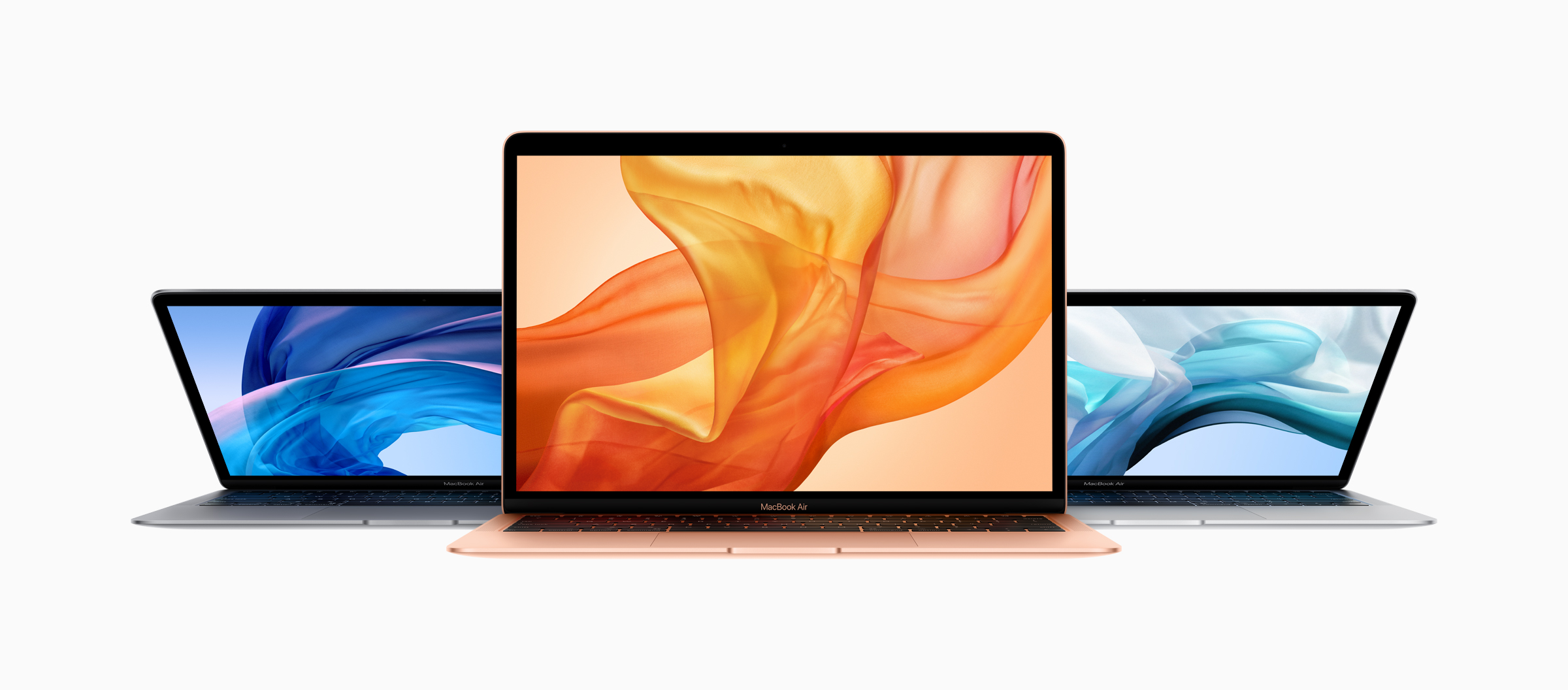
MacBook-Air-family-10302018.jpg

The three products were previously part of the vintage list, but have been moved. Apple adds a product to the vintage list when it's been five years since it was last distributed for sale, and it becomes obsolete at the seven-year mark.

Vintage products can still be repaired at Apple retail locations and by Apple Authorized Service Providers if Apple has the parts available. Devices that are obsolete are generally not eligible for repair, and Apple stops making repair components.

Apple has a battery-only repair policy for Mac laptops for up to 10 years after the Mac was last distributed for sale, so 2017/2018 MacBook Pro and 2018 MacBook Air owners may still be able to get battery replacements.

The 2018 MacBook Air was the first in the Air line with Touch ID and a Retina display. Prior MacBook Air models had a non-Retina display with much lower resolution and less vibrant colors. 2018 was also a redesign year for the MacBook Air, with Apple introducing smaller bezels and a thinner, lighter chassis.

Apple's 2017 MacBook Pro used Intel's Kaby Lake processors, and it was a minor processor update with few other changes. The 2018 refresh added True Tone display support for the first time and a third-generation keyboard with butterfly keys.

Article Link: Apple Adds Three More Macs to Obsolete Products List
 
I have one of those 2018 Macbook Airs, the first with retina display and touch ID. I really loved that machine when it came out.

I bought an M1 MBA when it came out, which was mainly just a spec bump. But what a game-changing spec bump!

Now I have an M4 MBA, which I love like the brother I never had.

But I never got rid of the 2018 MBA. It's obsolete now, but it's still very usable.

When I bought it, I bequeathed my 2013 MBA to my parents. It's running a much older version of macOS, but it still works great for them.
 
  • Like
Reactions: Wasp14 and wyrdness
Making perfectly good hardware obsolete shows care for the environment by making unnecessary electronic waste. 🥲

Fortunately, there is a very healthy and competitive used parts market around Macs. Instead of landfilling a broken machine, its viable parts are almost always used to keep old machines going.

If you have a 2018 MacBook Air that the dog partially ate, it can be fixed with ease. If you don’t want to fix it, you can sell the broken machine for parts for good money.
 
  • Like
Reactions: sos47
Making perfectly good hardware obsolete shows care for the environment by making unnecessary electronic waste. 🥲

That's not what obsolete means. It means you can't get updates (outside some rare security updates) nor repair parts at an Apple Store. This hardware is too old to get new OS features so it'll stay on whatever the last compatible OS is and work just fine.
 
Apple adds a product to the vintage list when it's been five years since it was last distributed for sale, and it becomes obsolete at the seven-year mark.
It’s going to be interesting to see what happens with the M1 Macs when they reach these deadlines… (most) M1 sales got cut off when the M2s came out in June 2022, so I think that means the first M1s will be declared vintage in June of next year?

The “vintage” label will definitely make sense, Apple shouldn’t be obligated to make parts for these forever… but I feel like the “obsolete” level should be expanded, possibly by quite a lot. With the exception of local AI — which for now is still a toy, and can be augmented by cloud models — there’s still nothing an M1 can’t do, or even not–do well.

I can accept end of OS support when a product no longer has the necessary hardware to run the OS (like CPU/GPU features, and the T1 security chips in the late-model Intel computers), but support should go on indefinitely for as long as the hardware can pull it off.
 
That's not what obsolete means. It means you can't get updates (outside some rare security updates) nor repair parts at an Apple Store. This hardware is too old to get new OS features so it'll stay on whatever the last compatible OS is and work just fine.
It'll go a little further with OCLP, but not beyond Sequoia .
 
It’s going to be interesting to see what happens with the M1 Macs when they reach these deadlines… (most) M1 sales got cut off when the M2s came out in June 2022, so I think that means the first M1s will be declared vintage in June of next year?

The “vintage” label will definitely make sense, Apple shouldn’t be obligated to make parts for these forever… but I feel like the “obsolete” level should be expanded, possibly by quite a lot. With the exception of local AI — which for now is still a toy, and can be augmented by cloud models — there’s still nothing an M1 can’t do, or even not–do well.

I can accept end of OS support when a product no longer has the necessary hardware to run the OS (like CPU/GPU features, and the T1 security chips in the late-model Intel computers), but support should go on indefinitely for as long as the hardware can pull it off.
I'm expecting Apple to pull the plug on M1 around 2028-2030. In that timeframe. And after it, a year or two later for M2 and so on....

M1 was still being sold on Walmart for a while, so it was in production for a good while. M2 and M3 not so much.

I think the next generation that might have enough numbers to last longer might be M4. M5 was a middle step at most.
 
I'm expecting Apple to pull the plug on M1 around 2028-2030. In that timeframe. And after it, a year or two later for M2 and so on....

M1 was still being sold on Walmart for a while, so it was in production for a good while. M2 and M3 not so much.

I think the next generation that might have enough numbers to last longer might be M4. M5 was a middle step at most.
So far, purely from the technical side, there would be no reason to cut off support for M chip based Macs, it would simply be a marketing decision. There's nothing in MacOS so far that wouldn't run on all M chips, although some new Apple Intelligence features won't / mightn't.

All the talk of the M7 chips having fundamentally new architecture might be a trigger for this, however.
 
  • Like
Reactions: Pezimak
That's not what obsolete means. It means you can't get updates (outside some rare security updates) nor repair parts at an Apple Store. This hardware is too old to get new OS features so it'll stay on whatever the last compatible OS is and work just fine.
Webster's dictionary: Obsolete means no longer in use or out of date
 
You may still benefit from their battery-only 10-year repair policy. Personally speaking, I never got a battery replacement from Apple. The last time I replaced a MacBook battery was with an aftermarket battery purchased on AliExpress.
 
Webster's dictionary: Obsolete means no longer in use or out of date

To be fair, "Obsolete" from Apple only means "obsolete" in terms of Apple's ( the company ) obligation to provide support, updates and repairs / maintenance. Their use of the word doesn't actually mean the hardware itself is useless.
 
So far, purely from the technical side, there would be no reason to cut off support for M chip based Macs, it would simply be a marketing decision. There's nothing in MacOS so far that wouldn't run on all M chips, although some new Apple Intelligence features won't / mightn't.

All the talk of the M7 chips having fundamentally new architecture might be a trigger for this, however.
Apple just dropped three generations of Watches, including the expensive Ultra and you think they wont drop a Macbook released in 2020 🥀
 
Apple just dropped three generations of Watches, including the expensive Ultra and you think they wont drop a Macbook released in 2020 🥀
No, that’s not quite what I’m saying.

I’m day thing that there is, so far, no technological rationale for dropping support.

There is a technological rationale for dropping intel support completely.

During the intel tears, some Macs were dropped from new version of maOS, but some were dropped for purely strategic / sales / marketing reasons.

If say, M1 Macs are no longer supported, but M2 Mac’s are, the obvious question is “is there a technological reason for the decision?” In that case, I’d there’s a 90%+ probability that the answer is “no”.

Of course Apple could drop support without any technological reason. Because they have done it in the past.

But it’s an important distinction, because if it was simply a marketing decision, not an issue with the technology, then it would be more likely we might see hacks that allow older M chip machines to spoof the install package that it is still a supported machine, and so have something similar to OCLP for AS macs in the future.

(I mean similar to OCLP in purpose, not in terms of it’s execution, of course).
 
Last edited:
No, that’s not quite what U’m saying.

I’m day thing that there is, so far, no technological rationale for dropping support.

There is a technological rationale for dropping intel support completely.

During the intel tears, some Macs were dropped from new version of maOS, but some were dropped for purely strategic / sales / marketing reasons.

If say, M1 Macs are no longer supported, but M2 Mac’s are, the obvious question is “is there a technological reason for the decision?” In that case, I’d there’s a 90%+ probability that the answer is “no”.

Of course Apple could drop support without any technological reason. Because they have done it in the past.

But it’s an important distinction, because if it was simply a marketing decision, not an issue with the technology, then it would be more likely we might see hacks that allow older M chip machines to spoof the install package that it is still a supported machine, and so have something similar to OCLP for AS macs in the future.

(I mean similar to OCLP in purpose, not in terms of it’s execution, of course).
I was thinking the other day that OCLP might come back in some form to the M machines, but idk. Even AsahiLinux is having a rough road on the M machines, with some stuff still inside the black box.

So until those guys move forward with porting stuff to Linux, we might not get moving at the OCLP thingy.

We will see, but these 4 years, will be interesting years at Apple. New CEO, new product strategy? The return of paid MacOS updates (subscription based)?
 
Register on MacRumors! This sidebar will go away, and you'll see fewer ads.