
Got a tip for us?
Let us know
Become a MacRumors Supporter for $50/year with no ads, ability to filter front page stories, and private forums.
Apple Could Be Working on 'Spatial iPhone' With Holographic Display
- Thread starter MacRumors
- Start date
- Sort by reaction score
You are using an out of date browser. It may not display this or other websites correctly.
You should upgrade or use an alternative browser.
You should upgrade or use an alternative browser.

TracerAnalog
macrumors 65816
I loved that show😁👍🏼


Dog Bone Malone
macrumors 6502a
Errr. No thanks. I'd much prefer a thinner lighter Pro Max with a 10,000mAh battery, and a stable IOS - in bottle green, a la 13PM.

drunkaviator
macrumors regular

SBlue1
macrumors 68020

macduke
macrumors G5
This technology has existed for at least a few years. I have a holographic display on my desk that I use to display spatial photos from my iPhone in 3D. It’s made by a company called Lookiny Glass. It actually works and is really cool, but the resolution is not very high since it has to send pixels in different directions for different perspectives. The effect is very convincing, though. But the primary barriers to adoption for an smartphone are thickness and resolution. In a smartphone, it might be a bit gimmicky. Especially because things aren’t exactly where you think they are when you tap them, so they’d have to crack that nut as well.
Putting on my Holography Pedantry hat for a moment:
- This isn't holography, it's just glasses-free stereoscopic imaging. 3D movie technology with slightly shifted parallax for each eye. And even that is just an illusion of depth, and you usually need to keep your head aligned correctly (somewhat corrected by dynamic eye tracking here).
- Holography = holo (whole) graph (image). A true hologram captures the entire light field of the subject, basically by capturing an interference pattern from a laser beam that's split to illuminate the subject and directly to a photographic glass plate.
- The developed plate needs to be re-illuminated by a laser to reconstruct the light field to see the true 3D image, which is monochromatic as the laser is one color; or it can be printed in a way that white light reflects back up through the film, decoding the hologram (most credit card holograms and printed ones). The diffraction pattern from these latter ones creates a rainbow effect that most people call "holographic" but it's just the backing acting like tiny prisms.
- The "holo" part of holography is the interesting bit: If you break a holographic photo plate into pieces, each one still has the complete light field (with a reduced field of view)!
- Even with laser holography, it can't free-project images into space. At the moment, nothing can do that. There are volumetric displays that rely on persistence of vision with spinning arrays of tiny picture elements, but that's about it.
- Stereoscopic imaging could be interesting, as a novelty, but keep in mind it would either require a standard display to have half the effective resolution in one axis as each stripe would be assigned left-right-left-right etc, or you need to double the resolution to preserve Retina density. Dynamically steering each half-frame to a specific eye would be a neat trick, but it's likely going to use a chunk of GPU power.
They were, however, the first to offer high pixel density screens in each device category.Considering Apple is like 7 years behind on folding phones and years behind on AI, years behind in some cases on putting OLED displays, years behind on some products having more than 60hz displays… I’ll expect something like this in 20 or 30 years (from Apple).

CATiNTHESTORE
Suspended
Bro you smoking a lotThat’s not a smartphone display, that’s the early-stage transition layer between 2D mobile interfaces and fully spatialized ambient computing ecosystems. If Samsung actually achieves viable holographic projection density and low-latency volumetric rendering in a consumer form factor, the industry could be approaching a major paradigm shift in human-device interaction architecture. I'm excited for this. Are you planning on lining up early as well if they release this in the Fall?
DamoTheBrave
macrumors regular
Someone used all their wordsThat’s not a smartphone display, that’s the early-stage transition layer between 2D mobile interfaces and fully spatialized ambient computing ecosystems. If Samsung actually achieves viable holographic projection density and low-latency volumetric rendering in a consumer form factor, the industry could be approaching a major paradigm shift in human-device interaction architecture. I'm excited for this. Are you planning on lining up early as well if they release this in the Fall?
Nobody cares that it isn't literally holographic film. The important part is that it's responsive to changes in viewing angle, unlike "3D" stereoscopic movies. Holographic is just a borrowed term to differentiate from "3D" display tech.Putting on my Holography Pedantry hat for a moment:
- This isn't holography, it's just glasses-free stereoscopic imaging. 3D movie technology with slightly shifted parallax for each eye. And even that is just an illusion of depth, and you usually need to keep your head aligned correctly (somewhat corrected by dynamic eye tracking here).
- Holography = holo (whole) graph (image). A true hologram captures the entire light field of the subject, basically by capturing an interference pattern from a laser beam that's split to illuminate the subject and directly to a photographic glass plate.
- The developed plate needs to be re-illuminated by a laser to reconstruct the light field to see the true 3D image, which is monochromatic as the laser is one color; or it can be printed in a way that white light reflects back up through the film, decoding the hologram (most credit card holograms and printed ones). The diffraction pattern from these latter ones creates a rainbow effect that most people call "holographic" but it's just the backing acting like tiny prisms.
- The "holo" part of holography is the interesting bit: If you break a holographic photo plate into pieces, each one still has the complete light field (with a reduced field of view)!
- Even with laser holography, it can't free-project images into space. At the moment, nothing can do that. There are volumetric displays that rely on persistence of vision with spinning arrays of tiny picture elements, but that's about it.
- Stereoscopic imaging could be interesting, as a novelty, but keep in mind it would either require a standard display to have half the effective resolution in one axis as each stripe would be assigned left-right-left-right etc, or you need to double the resolution to preserve Retina density. Dynamically steering each half-frame to a specific eye would be a neat trick, but it's likely going to use a chunk of GPU power.
I've collapsed my expectations from a company that once was on top of all their "projects" and while not perfect, they had a good handle on things.Considering Apple is like 7 years behind on folding phones and years behind on AI, years behind in some cases on putting OLED displays, years behind on some products having more than 60hz displays…
Recent developments or lack of development on said projects above have diminished my enthusiasm and ramped up my skepticism as to just what Apple is doing, what they value and unfortunately it's collapsed my trust.
Hello Apple? Anybody home that's willing to listen and respond to your loyal customers?


Mr_Ed
macrumors 68000
Basically what Johnny Lee was doing in 2007 with a Wii remote, facilitated by the face id sensors.Nobody cares that it isn't literally holographic film. The important part is that it's responsive to changes in viewing angle, unlike "3D" stereoscopic movies. Holographic is just a borrowed term to differentiate from "3D" display tech.

attila
macrumors 65816

Boil
macrumors 68040
Spatial iPhone... Pfff... Get back to me when it's integrated into an Apple Watch Ultra...
Dudes gonna be running a filter to increase length and girth, and remove genital warts...
Spending 5k to get 3D dick pics…
Dudes gonna be running a filter to increase length and girth, and remove genital warts...
I’m there for it. The spatial scene feature in Photos is really good and it’s about time somebody did something new with the 3DS tech. All these years later it’s glasses free 3D is still magical.
Where Apple would do well is to then let you use the depth sensor to let you use gestures on floating objects.
Where Apple would do well is to then let you use the depth sensor to let you use gestures on floating objects.

Paul1964
macrumors 6502
It already has. Red tried it as did Amazon with the FirePhone. Both were failures.this will never happen in our lifetime if you are over 30

OGdrknight
macrumors 6502
Give me a 7 day - solid state battery that only needs charging once a week and I might buy into this pie in the sky thinking!
Samsung is reportedly developing a holographic smartphone display that could be used in a rumored "Spatial iPhone."
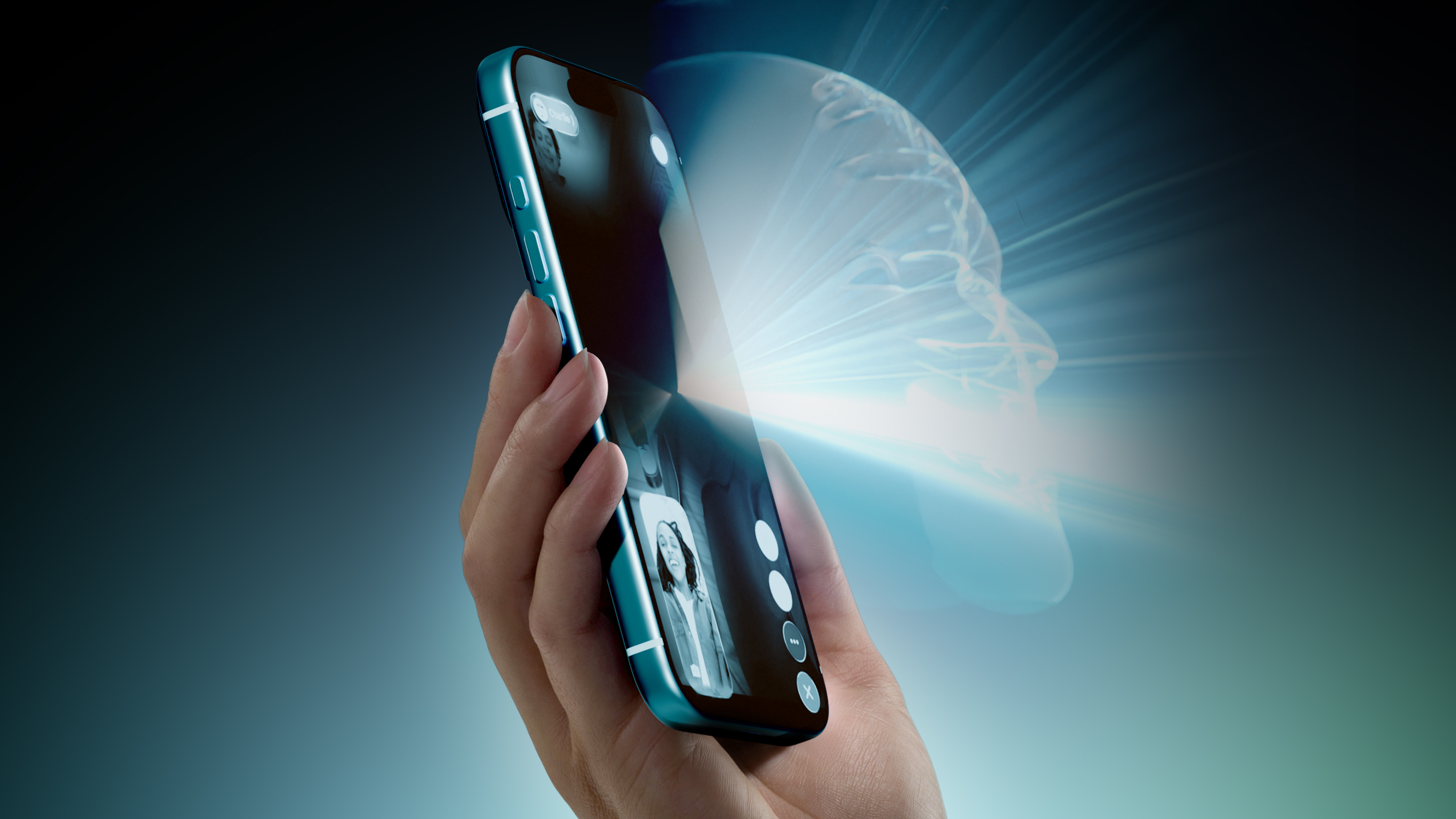
The claims come from the leaker known as "Schrödinger" on X, who shared screenshots of messages with an unnamed insider purportedly familiar with the project. Sources have apparently heard discussions about a "Spatial iPhone" in the supply chain, though no credible details about it have yet emerged. Since Apple does not manufacture its own displays, any such device would likely rely on other manufacturers like Samsung, which already supplies OLED panels for the iPhone lineup.
Codenamed "MH1" or "H1," the rumored display differs from earlier glasses-free 3D screens by pairing advanced eye-tracking with diffractive beam-steering, a technique that uses microscopic structures in the display layer to bend and redirect light toward the viewer's eyes at precise angles, creating the perception of depth without additional glasses. The display is also said to incorporate a nano-structured holographic layer integrated directly into the AMOLED stack, enabling spatial depth effects that appear to float above the glass surface. A patented algorithm would purportedly allow users to tilt the device to see around objects in a video, which the leaker described as "360-degree rotation," similar in concept to Samsung's existing 85-inch spatial displays but adapted for handheld use.
Samsung's Advanced Institute of Technology (SAIT) has published academic work on slim-panel holography since 2020, when it released a paper in Nature Communications detailing a steering-backlight unit that increased viewing angles for holographic video by 30 times compared to conventional designs, a key obstacle to making the technology viable in a thin handheld device. The prototype described at the time was approximately 1cm thick and capable of displaying 4K holographic video at 30 frames per second.
The H1 display is also said to maintain full 4K resolution for standard 2D tasks, with the holographic depth layer activating only for specific content, in what the leaker calls "Zero Clarity Loss," avoiding the image quality tradeoff associated with older lenticular lens-based 3D screens. In a follow-up post, Schrödinger noted that the MH1 project remains in phase 1 of R&D, with the leaker pointing toward an approximate 2030 timeframe for holographic smartphones broadly.
The posts also say that "Samsung isn't alone" in its wish to ship a holographic smartphone, and cites supply chain rumors of an Apple "Spatial iPhone" circulating among component suppliers. Samsung's advantage apparently lies in its manufacturing head start, with SAIT's published research forming the groundwork for what the H1 would attempt to productize.
Apple's interest in holographic and glasses-free 3D display technology stretches back almost two decades. In 2008, Apple filed a patent application for a glasses-free autostereoscopic display that tracked the viewer's position to deliver a personalized 3D image without special glasses, with Apple claiming the system could accommodate multiple viewers simultaneously. In 2014, Apple was rumored to be developing a glasses-free 3D iPhone display, the same year the U.S. Patent and Trademark Office granted Apple a patent for an "Interactive holographic display device" that used laser beams, micro lenses, and sensors to produce three-dimensional images on a touchscreen panel.
Of course, none of those efforts resulted in a iPhone with a holographic display, but Apple SVP of Hardware Engineering and future CEO John Ternus said as recently as last month that combining the digital and physical world is an "inevitability," describing spatial computing as being in the "early innings."
Schrödinger is a relatively new account with a limited but not unimpressive track record on Samsung hardware. The leaker has shared what appear to be internal documents and prototypes in the past. Some predictions have held up: in November 2025, Schrödinger claimed hands-on time with a Galaxy S26 Plus prototype, accurately revealing its Exynos 2600 chipset, 12GB of RAM, and One UI 8.5 software, all of which were confirmed upon its launch in February. The account has also correctly revealed device details such as 60W wired and 25W wireless charging for the Galaxy S26 Ultra ahead of its announcement.
Article Link: Apple Could Be Working on 'Spatial iPhone' With Holographic Display

Okay so when is this phone coming out? And how much will this cost over $2,000?
bl00dinmylungs
macrumors newbie
Why in a Phone before the Apple Watch?
Samsung is reportedly developing a holographic smartphone display that could be used in a rumored "Spatial iPhone."
The claims come from the leaker known as "Schrödinger" on X, who shared screenshots of messages with an unnamed insider purportedly familiar with the project. Sources have apparently heard discussions about a "Spatial iPhone" in the supply chain, though no credible details about it have yet emerged. Since Apple does not manufacture its own displays, any such device would likely rely on other manufacturers like Samsung, which already supplies OLED panels for the iPhone lineup.
Codenamed "MH1" or "H1," the rumored display differs from earlier glasses-free 3D screens by pairing advanced eye-tracking with diffractive beam-steering, a technique that uses microscopic structures in the display layer to bend and redirect light toward the viewer's eyes at precise angles, creating the perception of depth without additional glasses. The display is also said to incorporate a nano-structured holographic layer integrated directly into the AMOLED stack, enabling spatial depth effects that appear to float above the glass surface. A patented algorithm would purportedly allow users to tilt the device to see around objects in a video, which the leaker described as "360-degree rotation," similar in concept to Samsung's existing 85-inch spatial displays but adapted for handheld use.
Samsung's Advanced Institute of Technology (SAIT) has published academic work on slim-panel holography since 2020, when it released a paper in Nature Communications detailing a steering-backlight unit that increased viewing angles for holographic video by 30 times compared to conventional designs, a key obstacle to making the technology viable in a thin handheld device. The prototype described at the time was approximately 1cm thick and capable of displaying 4K holographic video at 30 frames per second.
The H1 display is also said to maintain full 4K resolution for standard 2D tasks, with the holographic depth layer activating only for specific content, in what the leaker calls "Zero Clarity Loss," avoiding the image quality tradeoff associated with older lenticular lens-based 3D screens. In a follow-up post, Schrödinger noted that the MH1 project remains in phase 1 of R&D, with the leaker pointing toward an approximate 2030 timeframe for holographic smartphones broadly.
The posts also say that "Samsung isn't alone" in its wish to ship a holographic smartphone, and cites supply chain rumors of an Apple "Spatial iPhone" circulating among component suppliers. Samsung's advantage apparently lies in its manufacturing head start, with SAIT's published research forming the groundwork for what the H1 would attempt to productize.
Apple's interest in holographic and glasses-free 3D display technology stretches back almost two decades. In 2008, Apple filed a patent application for a glasses-free autostereoscopic display that tracked the viewer's position to deliver a personalized 3D image without special glasses, with Apple claiming the system could accommodate multiple viewers simultaneously. In 2014, Apple was rumored to be developing a glasses-free 3D iPhone display, the same year the U.S. Patent and Trademark Office granted Apple a patent for an "Interactive holographic display device" that used laser beams, micro lenses, and sensors to produce three-dimensional images on a touchscreen panel.
Of course, none of those efforts resulted in a iPhone with a holographic display, but Apple SVP of Hardware Engineering and future CEO John Ternus said as recently as last month that combining the digital and physical world is an "inevitability," describing spatial computing as being in the "early innings."
Schrödinger is a relatively new account with a limited but not unimpressive track record on Samsung hardware. The leaker has shared what appear to be internal documents and prototypes in the past. Some predictions have held up: in November 2025, Schrödinger claimed hands-on time with a Galaxy S26 Plus prototype, accurately revealing its Exynos 2600 chipset, 12GB of RAM, and One UI 8.5 software, all of which were confirmed upon its launch in February. The account has also correctly revealed device details such as 60W wired and 25W wireless charging for the Galaxy S26 Ultra ahead of its announcement.
Article Link: Apple Could Be Working on 'Spatial iPhone' With Holographic Display

HazeAndHahmahneez
macrumors 6502a
liquid glass
It’s obv you’re trying to be funny and/or hate on Liquid Glass but the jokes on you fam, this idea is the culmination of Liquid Glass!!! Liquid spatial glass let’s go!
Liquid iPhone liquid Vision Pro liquid iOS liquid everything get with it or get lost.
It wouldn’t be any less private than a 2d display. You still need to be able to see the panel to see the contents. You won’t see content popping out from the display if you’re looking at it from the side.
To do tinted screen accessories would mean srsly insane tech here lol
Another gimmick. Just making a @$%@ing smaller iPhone Pro!
I’m only downvoting the “another gimmick” no Apple doesn’t do gimmicks, but I would thumb up smaller pro that would be real cool for those who like smaller form factors, they could design it then just make a few thousand of em to meet the smaller demand
Also a mowabb (moab?) style super durable iPhone would be good too, like for the wilderness, except they can’t use “ultra” like Apple watch since isn’t ultra going to be the new book iPhone?their naming schemes be a little out there sometimes but the tech is undeniable, that’s for sure
Obiwan you are our only hope …
Years ago you fought with me father in the clone wars…
So what problem is this solving?
The fact that you don’t have a spatial holographic iPhone, duh…
This technology has existed for at least a few years. I have a holographic display on my desk that I use to display spatial photos from my iPhone in 3D. It’s made by a company called Lookiny Glass. It actually works and is really cool, but the resolution is not very high since it has to send pixels in different directions for different perspectives. The effect is very convincing, though. But the primary barriers to adoption for an smartphone are thickness and resolution. In a smartphone, it might be a bit gimmicky. Especially because things aren’t exactly where you think they are when you tap them, so they’d have to crack that nut as well.
Oh it’ll be a mature device first gen that’s just how Apple likes to do things!
Putting on my Holography Pedantry hat for a moment:
- This isn't holography, it's just glasses-free stereoscopic imaging. 3D movie technology with slightly shifted parallax for each eye. And even that is just an illusion of depth, and you usually need to keep your head aligned correctly (somewhat corrected by dynamic eye tracking here).
- Holography = holo (whole) graph (image). A true hologram captures the entire light field of the subject, basically by capturing an interference pattern from a laser beam that's split to illuminate the subject and directly to a photographic glass plate.
- The developed plate needs to be re-illuminated by a laser to reconstruct the light field to see the true 3D image, which is monochromatic as the laser is one color; or it can be printed in a way that white light reflects back up through the film, decoding the hologram (most credit card holograms and printed ones). The diffraction pattern from these latter ones creates a rainbow effect that most people call "holographic" but it's just the backing acting like tiny prisms.
- The "holo" part of holography is the interesting bit: If you break a holographic photo plate into pieces, each one still has the complete light field (with a reduced field of view)!
- Even with laser holography, it can't free-project images into space. At the moment, nothing can do that. There are volumetric displays that rely on persistence of vision with spinning arrays of tiny picture elements, but that's about it.
- Stereoscopic imaging could be interesting, as a novelty, but keep in mind it would either require a standard display to have half the effective resolution in one axis as each stripe would be assigned left-right-left-right etc, or you need to double the resolution to preserve Retina density. Dynamically steering each half-frame to a specific eye would be a neat trick, but it's likely going to use a chunk of GPU power.
This seems like a project that pulls from all sorts of recent Apple tech (faceID , spatial video, spatial photography, awesome Liquid Glass iOS, Vision Pro, shoot even things like upcoming glasses and lessons learned from Apple Car etc etc, this is awesome and exciting stuff…now Apple just needs to ditch samsung and google and everyone else and just do it all
In-house no? Even Do manufacturing here and just be incredible?…
Bro you smoking a lot
On that good stuff! 💪🏽
Basically what Johnny Lee was doing in 2007 with a Wii remote, facilitated by the face id sensors.
interesting
Okay so when is this phone coming out? And how much will this cost over $2,000?
3.4k (being so much physically smaller than Vision Pro it simply can’t be more tthan 3.5, I feel, as far as entry level storage prices go…)

lovehateapple
macrumors 6502a
First thing that came to my mind was, "Help me Obi Wan Kenobi, you're my only hope."View attachment 2628217
Finally! Come on Holographic Chess with a Wookie! 😬 🤓