

Become a MacRumors Supporter for $50/year with no ads, ability to filter front page stories, and private forums.

MacRumors

macrumors bot
Original poster


The iPhone Duo's inner display uses a complicated, multi-layer structure that Apple says will hold up to wear and tear.
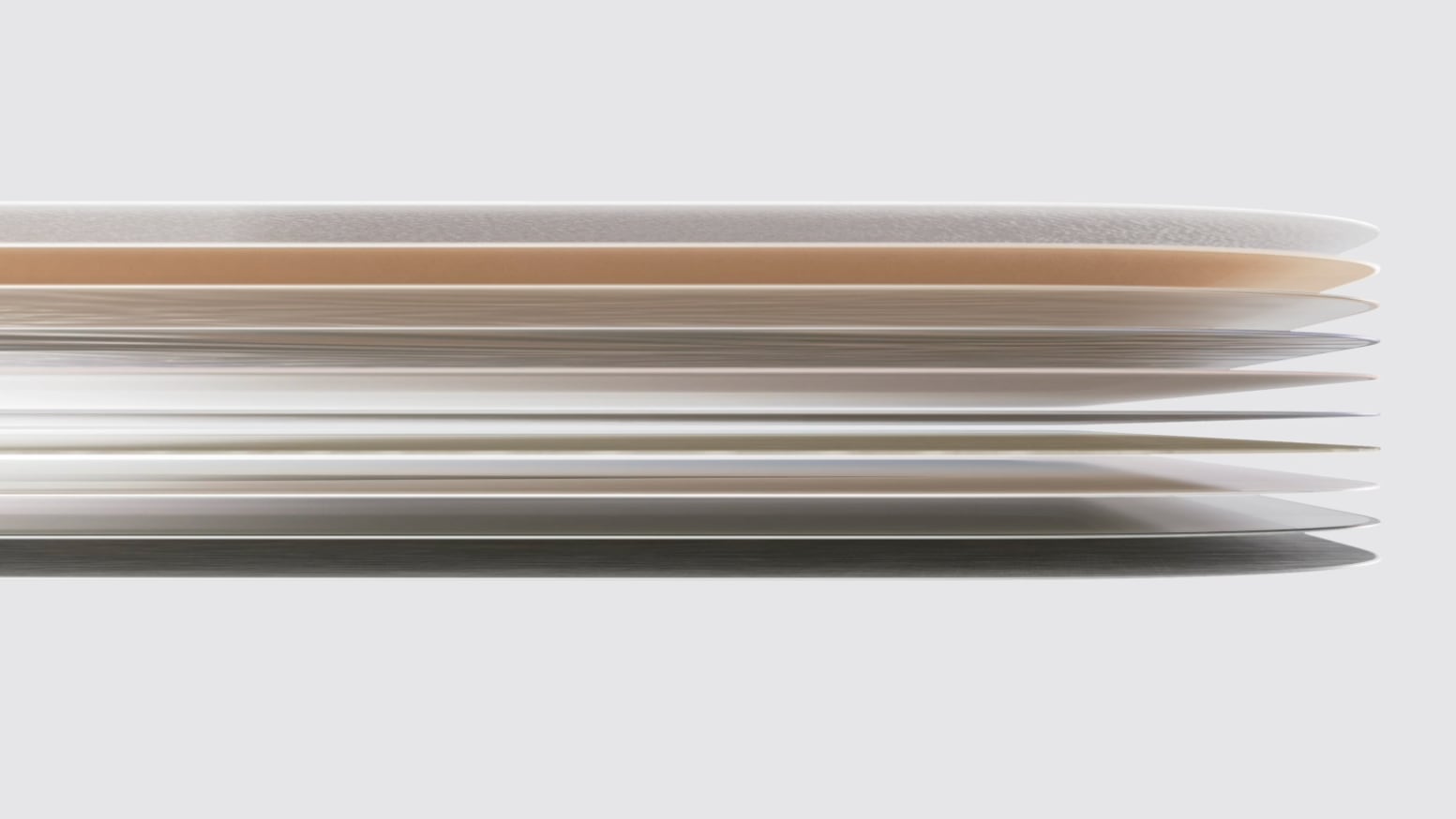
apple-iphone-duo-display.jpg

There are 10 ultrathin layers in total, including a nano-textured cover layer made from a custom polymer that Apple says is up to 40 percent stiffer than "other materials used in the industry," which presumably means other foldable devices.

Apple added high-strength glass above and below the folding display panel, along with a titanium plate at the bottom of the stack. Custom adhesives "allow the layers to glide past one another like the pages of a book, relieving bend stress," according to Apple.

The exterior nano-texture layer's finish is meant to reduce glare and minimize the visibility of the crease, and a scratch-resistant coating covers the nano-texture layer.

The outer display is protected by Ceramic Shield 2 like the iPhone 18 Pro models, while the back of the iPhone has Ceramic Shield. The inner display gets the custom polymer cover instead of Ceramic Shield.

Both of the iPhone Duo's displays support ProMotion, Always-On, and True Tone, and offer 3,000 nits of peak outdoor brightness.

Article Link: Apple Explains What's Inside the iPhone Duo's Folding Screen
 
I wish them luck, because the physics in any glass-like material that regularly bends… are miserable. And this has to look good 2-3 years later, not just 2-3 days of use.

A 2nd or 3rd gen of this phone will have many hardware lessons fixed. The Early Field Failure Analysis period for Elk Grove will be astounding.
 
Hope the screen and the hinge is durable. Repairs will be very costly. Crease might appear after repeated opening and closing. I prefer a glossy display instead of matte.
 
  • Like
Reactions: turbineseaplane
Inside iPhone Duo is the most advanced folding display Apple has ever created.

Which, technically, was not a difficult record to break.

At its core is an impossibly thin layer of flexible glass, developed through years of research, billions of dollars in engineering, and the revolutionary discovery that Samsung had been doing this for quite a while.

But we didn’t want to simply make a folding screen.

We wanted to reinvent the crease.

So Apple engineers took something the industry already understood, removed three ports, made it 11% thinner, gave every component a proprietary name, and pushed it light years ahead.

Introducing Ceramic Flex Pro™.

It’s our strongest flexible glass ever.
 
Why not make nano texture optional, if it was for the crease... then that inbuild camera is glossy and noticeable doesnt looks good.
 
Custom adhesives "allow the layers to glide past one another like the pages of a book, relieving bend stress," according to Apple.
This is of much interest to me. I am really looking forward to how these stand up in durability tests and over time with actual use. I have a friend picking one up so I'll follow up with him over months of use in the hot Texas heat lol.
 
  • Like
Reactions: Agile55
And there’s still a visible crease.

View attachment 2660584
The compositing used on the reveal was mildly infuriating tbh. You could clearly see it was just totally CG. The contrast is a lot lower than I had imagined, but losing the outer shell made of glass really hurts it in that regard. One thing I noticed with even adding glass to an LCD is just how vibrant it makes the display, even compared to OLED. The Studio Display looks almost identical in daytime to my LG C3 OLED panel! It's only at night when you see the blacks that the OLED start pulling away.

The glass panels on screens are doing a lot of heavy lifting when it comes to contrast and depth of colour!
 
First product I can’t wait to get my hands on in many years….. far better than I had thought it would be and cheaper!
 
Register on MacRumors! This sidebar will go away, and you'll see fewer ads.