

Become a MacRumors Supporter for $50/year with no ads, ability to filter front page stories, and private forums.

MacRumors

macrumors bot
Original poster


Wigmore Hall Live today relaunches as a digital-only platform in partnership with Apple Music Classical, with all recording royalties passed directly to artists, Gramophone reports.
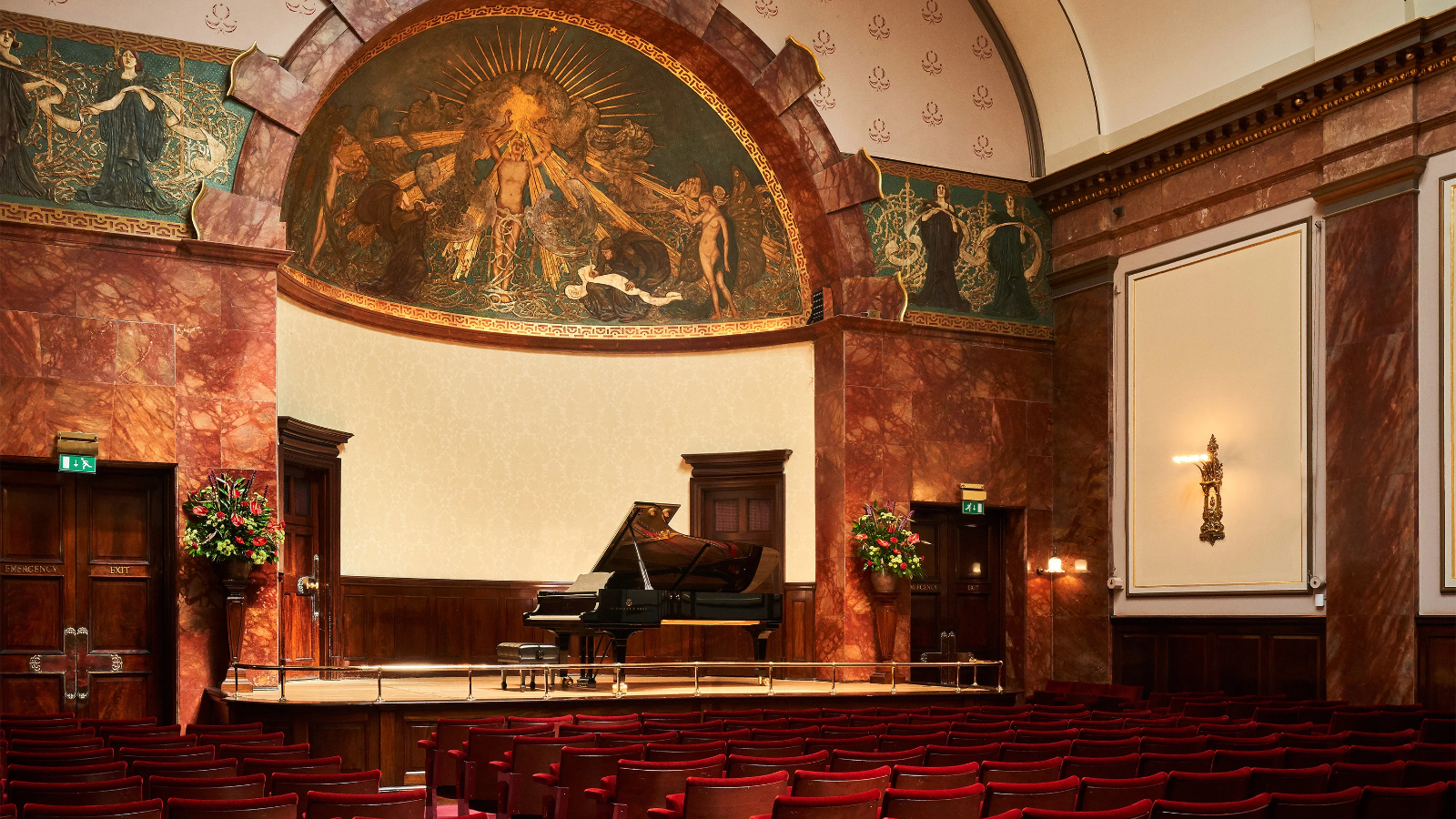
wigmore-hall.jpg

Wigmore Hall is a prestigious 550-seat concert hall on Wigmore Street in London's Marylebone, widely regarded as one of the world's foremost venues for chamber music, early music, and vocal recitals. Opened in 1901 and noted for its particularly good acoustics, the Grade II listed building hosts over 500 concerts each year. The new partnership with Apple was announced as part of the Hall's 125th anniversary celebrations this year.

Under the artist-first model, Wigmore Hall will cover all production costs for every release and take no share of recording income, passing 100% of royalties received directly to the performing artists. The platform will release four digital-only recordings per year, drawn from live performances at the Hall and developed in close collaboration with artists. Each new Wigmore Hall Live release will premiere exclusively on Apple Music Classical for three months.

Director John Gilhooly said the partnership would allow listeners "to experience Wigmore Hall concerts as close to the live event as possible," citing Apple Music Classical's sound quality as central to that goal.

The first release under the new model is Pianist Boris Giltburg's recording of Beethoven's Piano Sonatas Nos. 4, 8, 9, 20 ("Pathétique"), and 26 ("Les Adieux"), recorded live at Wigmore Hall in February 2025. The Piano Sonata No. 26 in E-flat major is available now, with the entire album to launch tomorrow. The release includes an artist commentary track in which Giltburg offers deeper insight into the repertoire.

Apple Music Classical has previously partnered with institutions including the Berlin Philharmonic, Carnegie Hall, the Chicago Symphony Orchestra, the London Symphony Orchestra, the Metropolitan Opera, the New York Philharmonic, and the Vienna Philharmonic. The app launched in most countries in March 2023 and is included with a standard Apple Music subscription at no additional cost, offering access to over five million classical music tracks. It is based on Primephonic, a classical music streaming service acquired by Apple in 2021.

Article Link: Apple Music Classical Announces New Partnership With London's Wigmore Hall
 
  • Haha
Reactions: Z-4195
Not sure this is enough to get me to switch back to Apple Music from Qobuz but it is enough to make me think about it. Especially now that the BBC, which often airs Wigmore Hall concerts, has axed the listen-on-demand BBC Sounds app for listeners outside the UK.
 
  • Like
Reactions: Siriosys
Not sure this is enough to get me to switch back to Apple Music from Qobuz but it is enough to make me think about it. Especially now that the BBC, which often airs Wigmore Hall concerts, has axed the listen-on-demand BBC Sounds app for listeners outside the UK.

I currently have both: Apple Music (due to Apple One subscription) and Qobuz. If only Apple were less stubborn and deploy a simpler way to feed a streamer/DAC with hi-res/bitperfect signal (enhance the sample rate of AirPlay for starters) or open to Roon...
 
I currently have both: Apple Music (due to Apple One subscription) and Qobuz. If only Apple were less stubborn and deploy a simpler way to feed a streamer/DAC with hi-res/bitperfect signal (enhance the sample rate of AirPlay for starters) or open to Roon...
I'm all Sonos and originally switched to Qobuz because it streamed to Sonos in hi-res and Apple Music didn't (does now). Also, 90% of the music I listen to is classical (in its widest sense) and, despite waiting for Apple Classical with bated breath, I was majorly disappointed with its user interface, finding it far inferior to Idagio's (which may have changed since).

My lack of enthusiasm for the interface continues but, I have to admit that when searching recently for recordings of works by an obscure early Baroque composer (Giovanni de Macque maybe?), Qobuz's search engine found only one or two while AM listed more than a dozen. Still, that's the exception rather than the rule.

Because I don't want to rebuild my favourites and playlists in Apple Music (last I checked, no conversion utility exists), I suspect I'll be staying with Qobuz.


Wigmore Hall Live today relaunches as a digital-only platform in partnership with Apple Music Classical, with all recording royalties passed directly to artists, Gramophone reports.

wigmore-hall.jpg

Wigmore Hall is a prestigious 550-seat concert hall on Wigmore Street in London's Marylebone, widely regarded as one of the world's foremost venues for chamber music, early music, and vocal recitals. Opened in 1901 and noted for its particularly good acoustics, the Grade II listed building hosts over 500 concerts each year. The new partnership with Apple was announced as part of the Hall's 125th anniversary celebrations this year.

Under the artist-first model, Wigmore Hall will cover all production costs for every release and take no share of recording income, passing 100% of royalties received directly to the performing artists. The platform will release four digital-only recordings per year, drawn from live performances at the Hall and developed in close collaboration with artists. Each new Wigmore Hall Live release will premiere exclusively on Apple Music Classical for three months.

Director John Gilhooly said the partnership would allow listeners "to experience Wigmore Hall concerts as close to the live event as possible," citing Apple Music Classical's sound quality as central to that goal.

The first release under the new model is Pianist Boris Giltburg's recording of Beethoven's Piano Sonatas Nos. 4, 8, 9, 20 ("Pathétique"), and 26 ("Les Adieux"), recorded live at Wigmore Hall in February 2025. The Piano Sonata No. 26 in E-flat major is available now, with the entire album to launch tomorrow. The release includes an artist commentary track in which Giltburg offers deeper insight into the repertoire.

Apple Music Classical has previously partnered with institutions including the Berlin Philharmonic, Carnegie Hall, the Chicago Symphony Orchestra, the London Symphony Orchestra, the Metropolitan Opera, the New York Philharmonic, and the Vienna Philharmonic. The app launched in most countries in March 2023 and is included with a standard Apple Music subscription at no additional cost, offering access to over five million classical music tracks. It is based on Primephonic, a classical music streaming service acquired by Apple in 2021.

Article Link: Apple Music Classical Announces New Partnership With London's Wigmore Hall
“This album is unavailable in your country or region.” Wtf. If Apple wants to win on services, play to win FFS.
 
Still waiting for "Apple Music Classical Announces New Mac App".

It remains a bizarre decision not to release one. But even the regular Music app on Mac feels clunky and in need of an overhaul. It's loaded with legacy iTunes features that have been removed in the iOS version. Apple loves to claim that they care about the Mac and aren't neglecting it, but when it comes to the Music apps, it really seems like they are leaving it behind.
 
And while they managed to adapt Liquid Glass quite ok in some apps, I think it's terrible in Apple Music. It's just visually very nervous.
 
More content is always appreciated. Another thing I would appreciate - audio normalization. One moment I'm listening to Clair de Lune by Claude Debussy...just totally relaxed. Then next minute I'm listening to Ligeti's The Devil’s Staircase...scrambling for the volume button.
 
Always a good news...but it won't make me go back to Apple Music for now.
I'm on Spotify for non classical (still much better discovery) and Idagio for classical (I personally liked Qobuz, but the searching and sorting by composers and other functions is much cleaner and closer to Apple Classical on Idagio).

Give me the option to hide all classical music from the standard Music app, to keep both worlds separate, and I will consider it (the Apple Music Classical interface and search function still are excellent).
 
I hope they release recordings in Dolby Atmos. Classical music is well suited to Dolby Atmos - live recordings that capture the acoustics of the venue. Nothing gimmicky. Just reproducing the acoustic space.
I'm actually not so sure about that (but also in no means an authority).

Atmos is a pretty artificial format - it's not like a binaural recording for example. A typical recording process would be more like having many close up microphones that then get placed "in the room" virtually during mixdown.

Also you have to keep in mind that concert halls are designed so the listener has the orchestra in front of him with some distance. This is already captured quite well with a proper stereo recording (see for example Decca Tree).

Last not least, Dolby Atmos as it is delivered by Apple Music (and Tidal etc.) is always lossy. It's using the Dolby Digital Plus JOC (E-AC-3) codec, not sure about the bitrate though. But it's not like Dolby TrueHD.
 
I currently have both: Apple Music (due to Apple One subscription) and Qobuz. If only Apple were less stubborn and deploy a simpler way to feed a streamer/DAC with hi-res/bitperfect signal (enhance the sample rate of AirPlay for starters) or open to Roon...
This times 1000. I *love* what Apple is doing for classical music, but their failure to offer Apple Music as a stand-alone streaming app means that on my home stereo, Apple Music sounds worse than its competitors.

Also, we know Apple *can* do this, because it offers Apple Music as a stand-alone app on certain car interfaces, for example Mercedes.
 
More content is always appreciated. Another thing I would appreciate - audio normalization. One moment I'm listening to Clair de Lune by Claude Debussy...just totally relaxed. Then next minute I'm listening to Ligeti's The Devil’s Staircase...scrambling for the volume button.
Okay, but make it an option because orchestras can be very loud and very soft within the same piece and many of us want to avoid "normalizing" the loudness in that situation.
 
  • Like
Reactions: brilliantthings

The first release under the new model is Pianist Boris Giltburg's recording of Beethoven's Piano Sonatas Nos. 4, 8, 9, 20 ("Pathétique"), and 26 ("Les Adieux"), recorded live at Wigmore Hall in February 2025. The Piano Sonata No. 26 in E-flat major is available now, with the entire album to launch tomorrow. The release includes an artist commentary track in which Giltburg offers deeper insight into the repertoire.
Apple Music Classic app, at least in the US, pops "This album is unavailable in your country or region" so you may need to wait a bit. The link opens fine as a web page though.
 
Add me to the "Why is there no macOS Apple Music Classical app?" mailing list.

The web version just goes to show Apple couldn't even be bothered to dogfood a Mac Classical app using Catalyst…
 
Register on MacRumors! This sidebar will go away, and you'll see fewer ads.