Become a MacRumors Supporter for $50/year with no ads, ability to filter front page stories, and private forums.

MacRumors

macrumors bot
Original poster


Apple reclaimed the leading position in China's smartphone market in the fourth quarter of 2025 as strong demand for the iPhone 17 lineup offset a contracting market and growing supply-chain pressure from memory chip shortages.
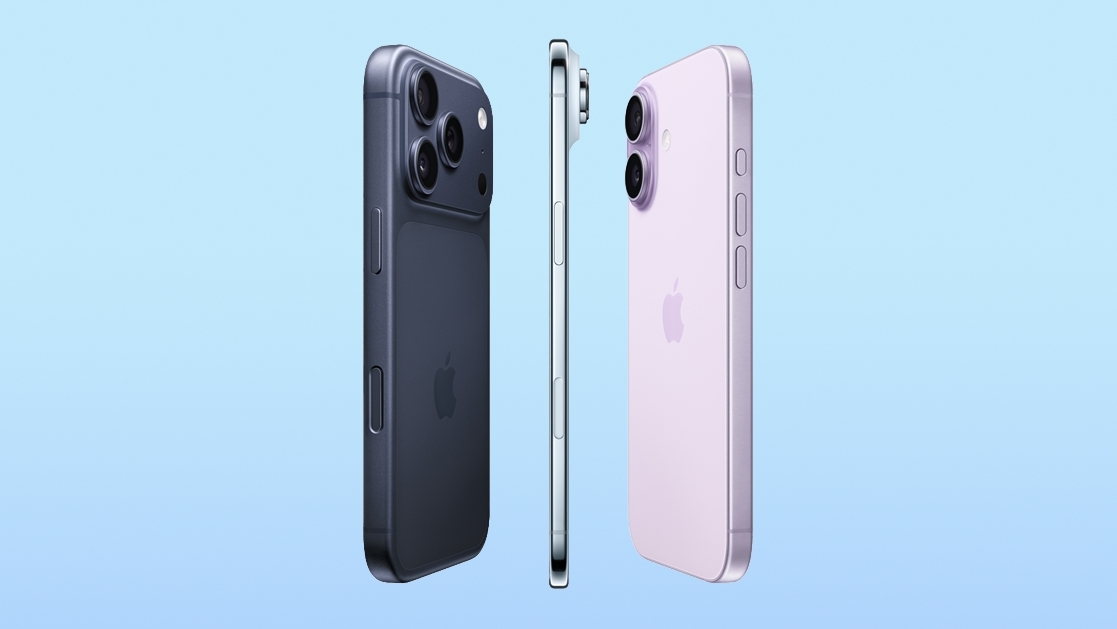
better-iphone-17-lineup.jpg

New data from Counterpoint Research shows that smartphone shipments in China declined 1.6% year over year in the fourth quarter of 2025 and fell 0.6% for the full year, reflecting weaker consumer demand driven primarily by rising prices linked to escalating memory costs. Within that environment, Apple's performance diverged sharply from the market as a whole. Counterpoint said Apple's shipments in China rose 28% year over year during the holiday quarter, allowing the company to rank first in the market with a 22% share in the fourth quarter.

The improvement marks a notable reversal from earlier in 2025, when Apple trailed domestic competitors in China. According to Counterpoint, the change was driven by strong demand for the iPhone 17 lineup, which accounted for roughly 20% of Apple's shipments in China during the quarter. The firm noted demand was particularly concentrated among the Pro models. Counterpoint added that Apple benefited from an accelerated supply ramp up late in the year, enabling it to meet holiday demand more effectively than some rivals that were constrained by component availability.

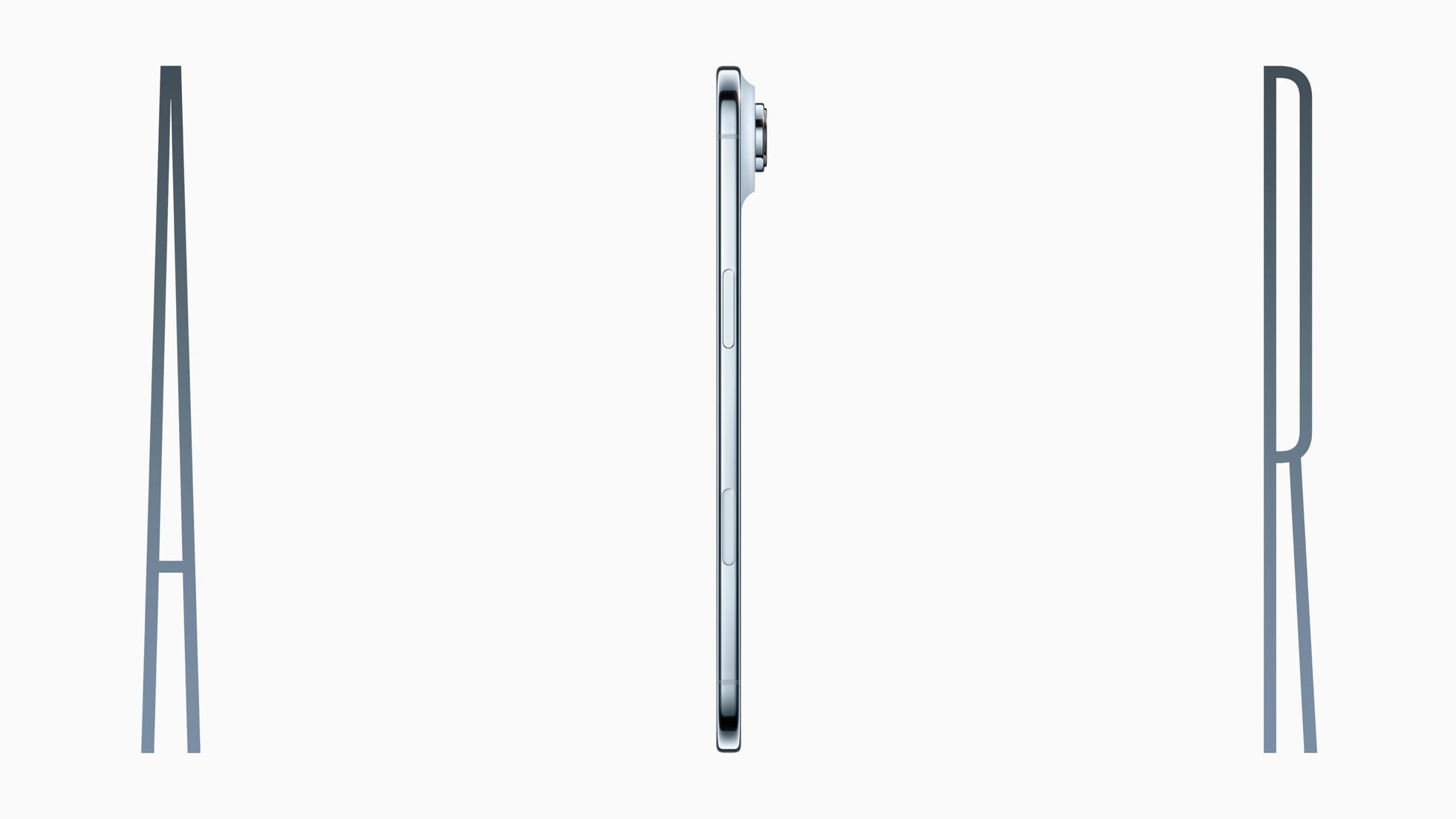
The notable exception within Apple's lineup was the iPhone Air. Counterpoint said the model captured only a low single-digit share of Apple's China shipments following its debut. This is attributed to a slower start due to the device's later launch compared with other regions and to perceived trade-offs between its ultra-thin design and overall feature set.

For the full year, Apple did not lead the Chinese market, but it narrowed the gap with domestic competitors. Counterpoint said Huawei ranked first in China for 2025 with a 16.4% market share, followed closely by Apple and vivo at around 16% each. Xiaomi and Oppo trailed slightly behind at roughly 15% each.

According to IDC's Worldwide Quarterly Mobile Phone Tracker, global smartphone shipments reached 1.26 billion units in 2025, up 1.9% year over year. Globally, Apple remained the largest smartphone vendor in 2025, shipping 247.8 million iPhones for a 19.7% market share. Apple's shipments grew 6.3% year over year. Samsung ranked second with 241.2 million units shipped and a 19.1% share, while Xiaomi placed third with 165.3 million units and a 13.1% share, despite a year-over-year decline.

Article Link: Apple Regains Top Spot in China's Smartphone Market
 
Apple is like avis. If you remember the commercials - they were #2 but they try harder. Whether they are first or second is largely irrelevant imo. It’s going to flip as time marches on.
 
Quite surprising, but I presume given the plethora of Chinese brands they make Apple stand out as the largest.
 
  • Haha
Reactions: chmania
Only #1 because China has so, so, so many more brands of phones than we get in the US. It's predominately Android, but very fragmented with... what do you call it? ...choice(?)
 
  • Like
Reactions: tongxinshe
This success doesn't silence longstanding concerns about innovation stagnation in Apple's R&D! Critics, including analysts like Daniel Newman (Futurum Group) around the iPhone 17 launch, have pointed to incremental upgrades—thinner designs like the underperforming iPhone Air, minor camera tweaks, and no major breakthroughs—as evidence Apple has been "playing it safe" rather than pushing boundaries, especially in AI where competitors have moved faster and now we are going to be forced to use google so they can spy on everything we do on our phones..
 
1 in 5 phones in China are Apple. 4 in 5 are not.
You may have misread the statistics. The article cited the top five phone vendors and their respective market shares -- but those five vendors make up less than 80% of the total. Apple's 16% is more like slightly less than 1 in 6 phones.
Why are we celebrating?
Are we? I thought we were just making interesting observations.
 
This success doesn't silence longstanding concerns about innovation stagnation in Apple's R&D! Critics, including analysts like Daniel Newman (Futurum Group) around the iPhone 17 launch, have pointed to incremental upgrades—thinner designs like the underperforming iPhone Air, minor camera tweaks, and no major breakthroughs—as evidence Apple has been "playing it safe" rather than pushing boundaries, especially in AI where competitors have moved faster and now we are going to be forced to use google so they can spy on everything we do on our phones..
What long standing concerns?
 
The notable exception within Apple's lineup was the iPhone Air. Counterpoint said the model captured only a low single-digit share of Apple's China shipments following its debut.
So the iPhone Air selling out during pre-order was just a fluke and wasn't indicative of actual demand.


I wonder how many of those pre-orders got returned for one reason or another, and how many were from people trying to flip it for a profit when they saw strong initial pre-order demand.
 
What long standing concerns?
He's probably referring to the various pundits over the past few years which have posed some variant of the question, "Is the smartphone industry stagnating?" and in some cases then proceeded to offer up their own opinion as an answer to the question.

A few example references, for your perusal:
AI also appears to echo this sentiment.
 
He's probably referring to the various pundits over the past few years which have posed some variant of the question, "Is the smartphone industry stagnating?" and in some cases then proceeded to offer up their own opinion as an answer to the question.

A few example references, for your perusal:
AI also appears to echo this sentiment.
Thanks. For my edification I will read those. As far as AI well it’s regurgitating imo what is already discussed.
 
  • Like
Reactions: zarmanto
What long standing concerns?
The iPhone lineup for multiple years has been criticized for offering “more of the same,” with incremental tweaks rather than bold leaps forward. This sentiment is widespread among critics and users alike. Specific areas where the iPhone 17 lacks innovation compared to Samsung and Google Pixel include:

  • No built-in telephoto lens on the base iPhone 17
  • Weaker AI capabilities and a slower rollout
  • The still-unfulfilled promise of Apple Intelligence
  • No foldable option or experimental form factor
  • Battery and charging limitations
  • Less hardware flexibility and customization
Don’t get me wrong—the iPhone 17 excels at ecosystem integration, long-term software support, and reliable performance. But competitors push harder on cameras, AI, form factors, and raw hardware specs. Apple’s approach has felt more like safe evolution than the exciting innovation that was the norm under Jobs. If you’re locked into iOS like I am, it’s still a solid phone—but for those chasing cutting-edge features, the gaps are real.
 
"Is the smartphone industry stagnating?"
Yes.

And that's not a bad thing.

It's a mature platform. It doesn't need a big year-over-year improvement. People shouldn't be buying new phones every year anyway. We don't need breakthroughs. We just need to accept the boredom and realize that a gadget doesn't need to impress us. Apple puts on a good presentation and tries to build the FOMO, but it's all just marketing. If it doesn't get your blood pumping, that's not a problem with the industry.

Also, none of this has to do with the phone's popularity in China.
 
... As far as AI well it’s regurgitating imo what is already discussed.
Wholeheartedly concur -- but in order for AI to regurgitate, it has to have been fed something in the first place. LLM-based AI being what it is, sometimes the regurgitation gets the facts wrong or makes crap up, but the majority of the time it's just parroting. To me, it falls into the "trust -- but always verify" category; I'll read the AI summary provided by the search engine and than scroll to the links below and (at a minimum) read the headlines to see if they match up to the summary.
 
  • Like
Reactions: I7guy
A truly amazing accomplishment considering Apple doesn’t play in the high-volume, low-priced market.

Apple completely dominates the flagship market.
For the full year, Apple did not lead the Chinese market, but it narrowed the gap with domestic competitors.
The words "accomplishment" and "dominate" are doing some heavy lifting there. They had a good holiday quarter. That's it. I don't see any metrics breaking out flagships, but no one really dominates in China. There are too many brands. OPPO, Huawei, vivo, Xiaomi, and HONOR are all huge there. I was listening to the Vergecast this morning and they were saying there are over 100 car brands in China. Can anyone really dominate with that kind of fragmentation?
 
Last edited:
  • Disagree
Reactions: HazeAndHahmahneez
I was listening to the Vergecast this morning and they were saying there are over 100 car brands in China. Can anyone really dominate with that kind of fragmentation?
There might be a lot of car brands, but you have to remember that quite a few of them are owned by a larger corporation. For instance, Geely owns Zeekr, Volvo, Lotus, etc.

It's similar to how General Motors has/had brands like Chevrolet, GMC, Cadillac, Buick, Oldsmobile, Pontiac, Saturn, Geo, etc.

Eventually some Chinese brands will slowly wither away and disappear just like in the U.S. (e.g. Pontiac, Oldsmobile, Saturn, Geo).
 
The words "accomplishment" and "dominate" are doing some heavy lifting there. They went from 15.4% market share to 16.7%. I don't see any metrics breaking out flagships, but no one really dominates in China. There are too many brands. OPPO, Huawei, vivo, Xiaomi, and HONOR are all huge there. I was listening to the Vergecast this morning and they were saying there are over 100 car brands in China. Can anyone really dominate with that kind of fragmentation?

I’ve posted this before, but Counterpoint also produces charts of phone sales by selling price.

This is for phones over $600, well below the ASP for iPhones. When Counterpoint used higher selling prices, the iPhone had an even larger market share.

Apple does, in fact, completely dominate the flagship market.

IMG_9644.jpeg


IMG_9645.jpeg
 
The iPhone lineup for multiple years has been criticized for offering “more of the same,” with incremental tweaks rather than bold leaps forward. This sentiment is widespread among critics and users alike. Specific areas where the iPhone 17 lacks innovation compared to Samsung and Google Pixel include:

  • No built-in telephoto lens on the base iPhone 17
  • Weaker AI capabilities and a slower rollout
  • The still-unfulfilled promise of Apple Intelligence
  • No foldable option or experimental form factor
  • Battery and charging limitations
  • Less hardware flexibility and customization
Don’t get me wrong—the iPhone 17 excels at ecosystem integration, long-term software support, and reliable performance. But competitors push harder on cameras, AI, form factors, and raw hardware specs. Apple’s approach has felt more like safe evolution than the exciting innovation that was the norm under Jobs. If you’re locked into iOS like I am, it’s still a solid phone—but for those chasing cutting-edge features, the gaps are real.
I reject much of spec criticism. There is no penultimate phone. Only a phone one wants to buy. There is no one phone that “has it all”, so to speak. As far as AI that is more like a unicorn.

I agree about exciting innovations until the iPhone 4. To me while Apple did exciting things in the last many years based on totally subjective criteria I can claim after the iPhone 4 it was steady improvement. No real cutting edge features.

And these comments apply to Samsung and Google as well.
 
A comparison of Samsung (arguably the most successful Android smartphone vendor) and Apple.

Last quarter Samsung MX Division had $23 billion in revenue.

That’s for sales of: smartphones, tablets, wearables (watches, earbuds, rings), laptops and 5G cellular infrastructure equipment. Samsung doesn’t break out revenue by source within MX.

Last quarter the iPhone had $49 billion in revenue.


The iPhone, by itself, had more than double the revenues of the entire MX Division at Samsung. It’s not even close.
 
  • Like
Reactions: Kengineer and I7guy
Register on MacRumors! This sidebar will go away, and you'll see fewer ads.