Become a MacRumors Supporter for $50/year with no ads, ability to filter front page stories, and private forums.

MacRumors

macrumors bot
Original poster


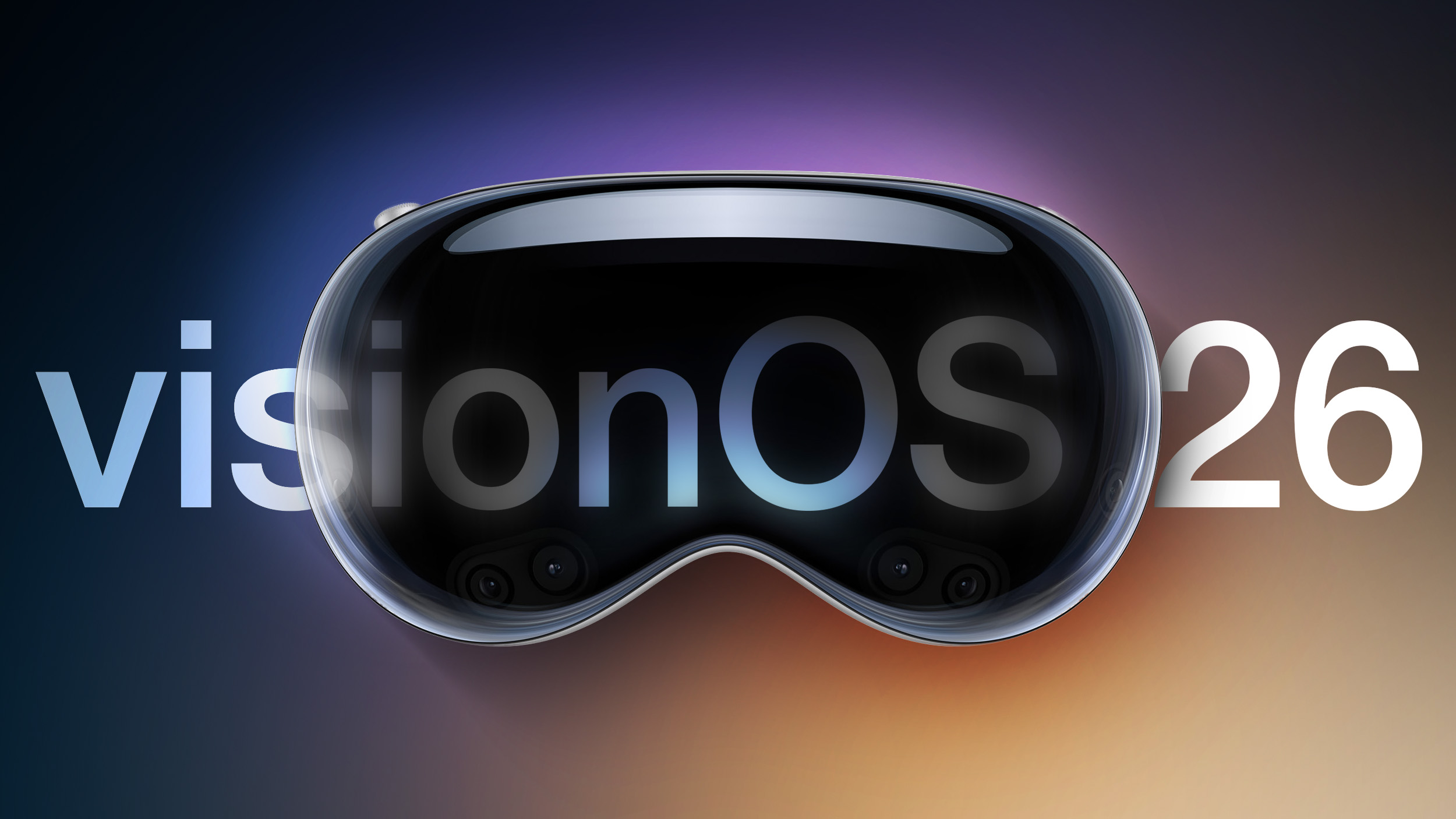
Apple today released visionOS 26.3, the third update to the visionOS 26 operating system that launched in September. visionOS 26.3 comes a month after Apple released visionOS 26.2.

visionOS-26-Feature.jpg

‌visionOS 26‌.3 can be downloaded on all Vision Pro headsets by navigating to the Settings app, selecting the General section, and choosing the Software Update option. To install an update, the Vision Pro headset needs to be removed, and there is a software progress bar available on the exterior EyeSight display.

Apple's release notes say that visionOS 26.3 includes bug fixes and security improvements, and that the software is recommended for all Vision Pro users.

Article Link: Apple Releases visionOS 26.3
 
Bug fixes and security improvements, that's all? I really hope / can't wait until the tabletop game watching feature that is available for the NBA comes to the NFL and golf.
 
  • Like
Reactions: shurcooL
This story has been live for a while now, and it has just 4 comments. Tells you everything you need to know about Vision Pro.

Compare that to the newer MacRumors story about Siri, that has 300+ comments already.

Here's the thing. Virtual reality is a poisoned product category. Even Apple can't suck out the poison. And Apple is a company that creates entire product categories from scratch, steamrolling everything that went before.

No company has ever had mass market success with VR. And over the last few decades, so many have tried. So many failed products. Meta even renamed itself to try and create a VR product category, and has pumped hundreds of millions into it. They've received zero reward and are now pivoting away from it.

Before you comment, yes, VR is popular in gaming. But it remains a niche within that category. It is not mainstream. You will not find VR equipment in every kids' bedroom, or every household.

How about industrial uses? Well, again there's niche applications. But it's not being worn by every warehouse worker, or in every design studio.

The huge question becomes: Why? What's so wrong with VR/AR?

Is it just the clunky hardware? Is it that people don't understand the value proposition? Or is it that there simply isn't a value proposition? Famously, there isn't a killer app for the Vision Pro. It's just a series of impressive technical demos (which is a criticism you can also easily make about Apple's implementation of AI—whether this is a broader issue with Apple right now is a whole different discussion).

Or is there a deeper human reason that people don't want their reality being messed around with? Is our literal lived reality a hard line when it comes to handling over personal data to Zuckerberg and co—and that letting him take control of our reality is equally vomit-inducing? Nobody trusts Zuckerberg. I mean, he's one of the least trustworthy people on the planet. We simply put up with him because we get Insta and Facebook.

I personally think the failure of VR/AR is many of these things. Fundamentally, I think we all fear losing control of reality—which is the purpose of VR or AR. We fear illnesses like this, like brain damage. And VR/AR wants us to opt into it.

The concept of sitting in a location with other people, in my own reality separated from them, is genuinely anxiety inducing to me. I need to know what's happening around me. There cannot be any risk this is removed.

And I think it's also that there isn't a killer app. There's just no reason to use VR/AR for most of us. Furthermore, I don't think there ever will be a killer app because, if there was one, it would have arrived by now. Some very clever people have been thinking about VR/AR. And... nothing. Nada. Outside of gaming.

 
Last edited:
  • Like
Reactions: 01cowherd
This story has been live for a while now, and it has just 4 comments. Tells you everything you need to know about Vision Pro.

Compare that to the newer MacRumors story about Siri, that has 300+ comments already.

Here's the thing. Virtual reality is a poisoned product category. Even Apple can't suck out the poison. And Apple is a company that creates entire product categories from scratch, steamrolling everything that went before.

No company has ever had mass market success with VR. And over the last few decades, so many have tried. So many failed products. Meta even renamed itself to try and create a VR product category, and has pumped hundreds of millions into it. They've received zero reward and are now pivoting away from it.

Before you comment, yes, VR is popular in gaming. But it remains a niche within that category. It is not mainstream. You will not find VR equipment in every kids' bedroom, or every household.

How about industrial uses? Well, again there's niche applications. But it's not being worn by every warehouse worker, or in every design studio.

The huge question becomes: Why? What's so wrong with VR/AR?

Is it just the clunky hardware? Is it that people don't understand the value proposition? Or is it that there simply isn't a value proposition? Famously, there isn't a killer app for the Vision Pro. It's just a series of impressive technical demos (which is a criticism you can also easily make about Apple's implementation of AI—whether this is a broader issue with Apple right now is a whole different discussion).

Or is there a deeper human reason that people don't want their reality being messed around with? Is our literal lived reality a hard line when it comes to handling over personal data to Zuckerberg and co—and that letting him take control of our reality is equally vomit-inducing? Nobody trusts Zuckerberg. I mean, he's one of the least trustworthy people on the planet. We simply put up with him because we get Insta and Facebook.

I personally think the failure of VR/AR is many of these things. Fundamentally, I think fear losing control of reality, which is the purpose of VR or AR. We all fear illnesses like this, like brain damage. And VR/AR wants us to opt into it.

The concept of sitting in a location with other people, in my own reality separated from them, is genuinely anxiety inducing to me. I need to know what's happening around me. There cannot be any risk this is removed.

And I think it's also that there isn't a killer app. There's just no reason to use VR/AR for most of us. Furthermore, I don't think there ever will be a killer app because, if there was one, it would have arrived by now. Some very clever people have been thinking about VR/AR. And... nothing. Nada. Outside of gaming.

It is still early in the cycle. I truly believe VR will eventually become more mainstream once the hardware prices come down and more content becomes available. It's sort of a chicken and egg situation at present. And unfortunately (I think) a lot of content will have to be ad supported since people won't want to pay for it. That being said, sports and other live entertainment will someday be the killer app. And that means everyone in a household will have to have their own headset to make it more social.

It might be a long road ahead, but sooner or later there will be a convergence of price, technology advancement and acceptance, and content availability that will lead to more adoption. VR might remain niche, but it's never going to go away entirely. (I know you didn't say it was.)

I'm not a gamer either, just a fan of immersive content.
 
It is still early in the cycle. I truly believe VR will eventually become more mainstream once the hardware prices come down and more content becomes available. It's sort of a chicken and egg situation at present. And unfortunately (I think) a lot of content will have to be ad supported since people won't want to pay for it. That being said, sports and other live entertainment will someday be the killer app. And that means everyone in a household will have to have their own headset to make it more social.

It might be a long road ahead, but sooner or later there will be a convergence of price, technology advancement and acceptance, and content availability that will lead to more adoption. VR might remain niche, but it's never going to go away entirely. (I know you didn't say it was.)

I'm not a gamer either, just a fan of immersive content.
But it isn't early in the cycle. That's the whole point I was making.

Companies have been trying and failing at VR for decades. Every big tech company has had a try, from Nintendo to Microsoft. All walked away. OK, so the goggles might've been lower resolution. But there was some surprisingly sophisticated tech, not a million miles away from what Apple's doing.

Have a guess right now as to how old the Vision Pro is.

It's nearly three years old. Apple revealed the Vision Pro at its Worldwide Developers Conference on June 5, 2023. That's when it went out to developers... who pretty much all shrugged their shoulders and said "meh".

This is not early in the cycle by any measure. Apple hasn't created anything new. They just did it better. There's a fundamental issue here that's stopping people embracing VR/AR.
 
But it isn't early in the cycle. That's the whole point I was making.

Companies have been trying and failing at VR for decades. Every big tech company has had a try, from Nintendo to Microsoft. All walked away. OK, so the goggles might've been lower resolution. But there was some surprisingly sophisticated tech, not a million miles away from what Apple's doing.

Have a guess right now as to how old the Vision Pro is.

It's nearly three years old. Apple revealed the Vision Pro at its Worldwide Developers Conference on June 5, 2023. That's when it went out to developers... who pretty much all shrugged their shoulders and said "meh".

This is not early in the cycle by any measure. Apple hasn't created anything new. They just did it better. There's a fundamental issue here that's stopping people embracing VR/AR.
I guess whether it's early in the cycle is relative to your perspective. I just did a quick google search on the tv and here is what I found. The tv was invented in 1927. Only .5% of American households owned one in 1946. By 1955, adoption reached 50% of American households and then 90% by 1960.

According to google, the personal computer came out in 1977. But it wasn't until roughly the year 2000 that 50% of American households owned one. So that is what I mean by it being early in the cycle.
 
Last edited:
I guess whether it's early in the cycle is relative to your perspective. I just did a quick google search on the tv and here is what I found. The tv was invented in 1927. Only .5% of American households owned one in 1946. By 1955, adoption reached 50% of American households and then 90% by 1960.

According to google, the personal computer came out in 1977. But it wasn't until roughly the year 2000 that 50% of American households owned one. So that is what I mean by it being early in the cycle.
You're constructing arguments and ignoring key facts (e.g. the rise of the internet driving PC ownership in the 1990s).

But, OK, let's play the same game.

The first VR headset was invented in 1968. Ivan Sutherland and Bob Sproull created the first head-mounted display system, nicknamed “The Sword of Damocles.” It displayed simple wireframe graphics and was suspended from the ceiling. But it also tracked head movements, just like our favourite Apple gadget.

So, measuring against your example of the TV that was invented in 1927, but not adopted by the majority until 1960... That's 33 years.

We would expect VR headsets to have been in 60% of American homes by... 2001.

I was around in 2001, as a young(er) man. I did not visit 60% of American homes. But I think you know where I'm going with this.

I tell you, VR and AR are poisoned technologies. Meta’s Reality Labs, which includes VR headset development (like the Oculus/Meta Quest series) and related tech, has accumulated losses of roughly $83.6 billion. In 2025 alone, Reality Labs lost about $19.1 billion while still investing heavily in VR hardware and software.
 
You're constructing arguments and ignoring key facts (e.g. the rise of the internet driving PC ownership in the 1990s).

But, OK, let's play the same game.

The first VR headset was invented in 1968. Ivan Sutherland and Bob Sproull created the first head-mounted display system, nicknamed “The Sword of Damocles.” It displayed simple wireframe graphics and was suspended from the ceiling. But it also tracked head movements, just like our favourite Apple gadget.

So, measuring against your example of the TV that was invented in 1927, but not adopted by the majority until 1960... That's 33 years.

We would expect VR headsets to have been in 60% of American homes by... 2001.

I was around in 2001, as a young(er) man. I did not visit 60% of American homes. But I think you know where I'm going with this.

I tell you, VR and AR are poisoned technologies. Meta’s Reality Labs, which includes VR headset development (like the Oculus/Meta Quest series) and related tech, has accumulated losses of roughly $83.6 billion. In 2025 alone, Reality Labs lost about $19.1 billion while still investing heavily in VR hardware and software.
Even though the first VR headset was invented in 1968, the first commercially available VR headset in the modern era was the Oculus Rift Development kit in 2013. IMO that is when the clock really starts. Time will tell if VR remains completely niche or gains more mainstream traction. Like I said before, it is never going to go away completely. And like I said before I think the technology's success will largely depend on hardware prices coming down, and the availability and price of quality content.
 
This story has been live for a while now, and it has just 4 comments. Tells you everything you need to know about Vision Pro.

Compare that to the newer MacRumors story about Siri, that has 300+ comments already.

Here's the thing. Virtual reality is a poisoned product category. Even Apple can't suck out the poison. And Apple is a company that creates entire product categories from scratch, steamrolling everything that went before.

No company has ever had mass market success with VR. And over the last few decades, so many have tried. So many failed products. Meta even renamed itself to try and create a VR product category, and has pumped hundreds of millions into it. They've received zero reward and are now pivoting away from it.

Before you comment, yes, VR is popular in gaming. But it remains a niche within that category. It is not mainstream. You will not find VR equipment in every kids' bedroom, or every household.

How about industrial uses? Well, again there's niche applications. But it's not being worn by every warehouse worker, or in every design studio.

The huge question becomes: Why? What's so wrong with VR/AR?

Is it just the clunky hardware? Is it that people don't understand the value proposition? Or is it that there simply isn't a value proposition? Famously, there isn't a killer app for the Vision Pro. It's just a series of impressive technical demos (which is a criticism you can also easily make about Apple's implementation of AI—whether this is a broader issue with Apple right now is a whole different discussion).

Or is there a deeper human reason that people don't want their reality being messed around with? Is our literal lived reality a hard line when it comes to handling over personal data to Zuckerberg and co—and that letting him take control of our reality is equally vomit-inducing? Nobody trusts Zuckerberg. I mean, he's one of the least trustworthy people on the planet. We simply put up with him because we get Insta and Facebook.

I personally think the failure of VR/AR is many of these things. Fundamentally, I think we all fear losing control of reality—which is the purpose of VR or AR. We fear illnesses like this, like brain damage. And VR/AR wants us to opt into it.

The concept of sitting in a location with other people, in my own reality separated from them, is genuinely anxiety inducing to me. I need to know what's happening around me. There cannot be any risk this is removed.

And I think it's also that there isn't a killer app. There's just no reason to use VR/AR for most of us. Furthermore, I don't think there ever will be a killer app because, if there was one, it would have arrived by now. Some very clever people have been thinking about VR/AR. And... nothing. Nada. Outside of gaming.

You know what, until about 3 days ago I would have 100% agreed with you.

I am (I guess was) a poster boy for the hating apple products team. Yes, I'm that Windows and Android guy that refuses to use use any Apple products. I always hated the control they put around their products and because I worked in corporate enterprise I.T, we forever are up against users demanding MacBooks and us having to find every work around under the sun to make it work on a Windows server domain where window systems work immediately.

But anyway, I've also dreamed of the day where virtual reality would live up to my expectations. I bought the kickstarter Oculus rift 10 plus years ago And realize we were a long way off and I decided to leave it for years until I then tried the PlayStation 2 VR. Playstation VR showed the industry had made improvements but the dream was still a long way off. I even recently bought the pimax Crystal super in the hope that technology has finally reached where it needs to be for AR/VR to be what I wanted it to be. Nope, I sent the pimax super Crystal back within 12 hours.

Last week I walked past an Apple store that wasn't ridiculously crowded and noticed a big vision pro poster... I decided to take a deep breath and set foot in the forbidden store to try the Apple vision pro as I heard they had an updated version and I had never even tried the original.

When I put that thing on I can tell you that the Vision Pro is shockingly far ahead of every other product I've experienced. Everything from the visuals to the physical design to the simplicity was embarrassingly better than all of the others.

It was so good that I spent nearly $4,000 on my first Apple product. It hurt my soul signing up for that AppleID in the store but I swallowed my pride and created one.

As much as I hate to say it, they know how to make a good product and they have renewed my faith in the AR/VR future.

I'm now on the other side of the fence trying to make this Apple vision pro work with any of my windows and Android devices lol.

I think when the next version of the Apple vision pro comes out and if they improve the few bigger things that need improvement such as more vibrant colors, better resolution, better Pass-Through view, smaller form factor and of course price...it will become more mainstream
 
You know what, until about 3 days ago I would have 100% agreed with you.

I am (I guess was) a poster boy for the hating apple products team. Yes, I'm that Windows and Android guy that refuses to use use any Apple products. I always hated the control they put around their products and because I worked in corporate enterprise I.T, we forever are up against users demanding MacBooks and us having to find every work around under the sun to make it work on a Windows server domain where window systems work immediately.

But anyway, I've also dreamed of the day where virtual reality would live up to my expectations. I bought the kickstarter Oculus rift 10 plus years ago And realize we were a long way off and I decided to leave it for years until I then tried the PlayStation 2 VR. Playstation VR showed the industry had made improvements but the dream was still a long way off. I even recently bought the pimax Crystal super in the hope that technology has finally reached where it needs to be for AR/VR to be what I wanted it to be. Nope, I sent the pimax super Crystal back within 12 hours.

Last week I walked past an Apple store that wasn't ridiculously crowded and noticed a big vision pro poster... I decided to take a deep breath and set foot in the forbidden store to try the Apple vision pro as I heard they had an updated version and I had never even tried the original.

When I put that thing on I can tell you that the Vision Pro is shockingly far ahead of every other product I've experienced. Everything from the visuals to the physical design to the simplicity was embarrassingly better than all of the others.

It was so good that I spent nearly $4,000 on my first Apple product. It hurt my soul signing up for that AppleID in the store but I swallowed my pride and created one.

As much as I hate to say it, they know how to make a good product and they have renewed my faith in the AR/VR future.

I'm now on the other side of the fence trying to make this Apple vision pro work with any of my windows and Android devices lol.

I think when the next version of the Apple vision pro comes out and if they improve the few bigger things that need improvement such as more vibrant colors, better resolution, better Pass-Through view, smaller form factor and of course price...it will become more mainstream
I hope the next generation AVP has a wider FOV. Also the eyesight feature needs to be greatly improved or killed. If the latter, I think it would bring the cost down some.
 
I am a big fan of VR. I even did some apps and own several generations of Quests.

I tried Apple Vision Pro (of course) but it’s just too expensive. Yes the technology is top notch but we need an Apple Vision (without Pro) version. To get people used to it. To see their spatial photos, to get more devs to tried to support it.

Even I don’t own an Apple Vision Pro yet because it’s not officially available in my EU country. Three years after announcing they still don’t support every EU country with AVP.
 
Register on MacRumors! This sidebar will go away, and you'll see fewer ads.