Become a MacRumors Supporter for $50/year with no ads, ability to filter front page stories, and private forums.
This is a financial decision. Turning Intel into a viable competitor against Taiwan Semi means Taiwan Semi has less pricing leverage over its customers. Taiwan Semi might think twice before raising prices too much over the next 4 years.


TSMC Is Experiencing A Tight Supply For 2nm Wafers Due To The AI Boom, Will Reportedly Raise Prices Of Its Advanced Nodes For Four Consecutive Years, Starting From New Year’s Day

Dec 28, 2025

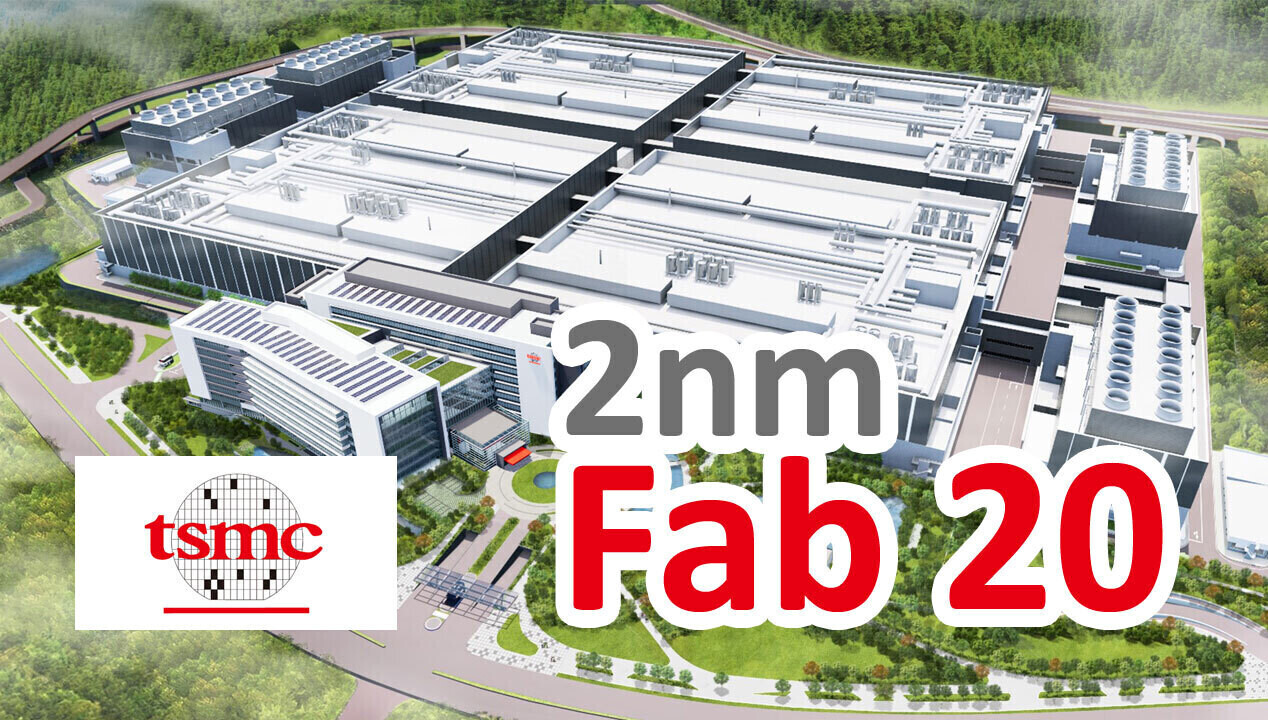
Demand for TSMC’s 2nm wafers has forced a supply choke, as the Taiwanese semiconductor manufacturing giant’s capacity is booked until the end of 2026. As the company benefits from the raging AI boom, customers of TSMC’s advanced processes have been notified that they will have to bear price increases for four consecutive years, starting from 2026. While the first quarter of next year is generally slow, analysts are optimistic that these price hikes will help TSMC maintain adequate momentum, but clients should prepare their finances because the first round of increases is expected to take effect from New Year’s Day.

Despite sub-3nm wafers experiencing price bumps for four consecutive years, TSMC’s customers do not appear to take a backseat, even though they have the option to place orders with Samsung and its 2nm GAA process. According to the Economic Daily News, TSMC will introduce a single-digit price increase in 2026, though the actual figure will depend on the customer’s order level and contractual agreements.


Apple giving business to Intel would give other companies (e.g. AMD, NVidia, Qualcomm, Broadcom, etc) the confidence to do the same.

Other companies will never have the same level of confidence of Intel they way they did of TSMC.

One of the main reasons why TSMC is so successful and beat Intel and Samsung is because there is no conflict of interest. TSMC only makes stuff on contract. With Intel, AMD and Nvidia worry about Intel engineers prioritizing their own Intel chips and eventually making competitive products.
 
If Intel processes were better, cheaper in any way, Intel would have committed customers for 18A.
Unless something has since changed, Microsoft


Recently, Intel has made significant progress in the chip foundry field, with its advanced 18A process technology gaining favor from tech giants. According to industry sources, Intel has signed a large-scale semiconductor foundry contract with Microsoft, which will utilize Intel's 18A process. In addition, Intel has also held in-depth talks with Google, who is expected to follow Microsoft's lead and sign a similar foundry agreement. Nvidia had already reached out to Intel earlier to explore the possibility of using the 18A process for its gaming GPUs. These developments mark a major breakthrough in Intel's foundry business (IFS) strategy and further solidify its competitiveness in the global semiconductor manufacturing sector.


and Amazon will be using Intel's 18A node


In a new press release, Intel has confirmed it will manufacture chips for Amazon Web Services (AWS) on its 18A node. Furthermore, the chipmaker will also produce special Intel Xeon CPUs on Intel 3. Exactly which chip gets the 18A treatment is unknown, but it is likely proprietary hardware from Amazon. Both companies plan to set shop in Ohio, where Amazon plans to invest an additional $7.8 billion on top of the existing $10.3 billion it invested since 2015. Matt Garman, CEO at AWS, had the following to say,

"By co-developing next-generation AI fabric chips on Intel 18A, we continue our long-standing collaboration, dating back to 2006 when we launched the first Amazon EC2 instance featuring their chips. Our continued collaboration allows us to empower our joint customers with the ability to run any workload and unlock new AI capabilities."
 
It's not misleading at all, just a lot of uneducated people making assumptions.

The chip design and fab process are intertwined. You don't just design a chip and toss it over the fence for fabrication. There are engineering trade-offs, design constraints, yield, PPA, related to the process. Intel is a partner.

This is the same with iPhone and AirPods. Luxshare helps design AirPods so it can be manufactured. Luxshare is a partner.

Apple is responsible for their processor designs and, BY FAR, the reason they are so good.

Saying they’re partners is like saying the worker pouring concrete or bolting together steel beams is a “partner” with the team of engineers who did endless calculations/simulations on a 100 story building to make sure it would be safe in earthquakes or hurricanes.
 
Assuming this is true, and there's a good likelihood, it will be interesting to see how Apple will approach foundry choices, imho some chips TSMC and others Intel. To produce the same chip in both places makes neither financial nor performance sense
 
Intel has to get revenue somehow, not a horrible idea to be a manufacture.

Intel's stock price dropped 15% today. Correction, 16% and still falling.

1769190406750.png
 
This is a financial decision. Turning Intel into a viable competitor against Taiwan Semi means Taiwan Semi has less pricing leverage over its customers. Taiwan Semi might think twice before raising prices too much over the next 4 years.


TSMC Is Experiencing A Tight Supply For 2nm Wafers Due To The AI Boom, Will Reportedly Raise Prices Of Its Advanced Nodes For Four Consecutive Years, Starting From New Year’s Day

Dec 28, 2025

Demand for TSMC’s 2nm wafers has forced a supply choke, as the Taiwanese semiconductor manufacturing giant’s capacity is booked until the end of 2026. As the company benefits from the raging AI boom, customers of TSMC’s advanced processes have been notified that they will have to bear price increases for four consecutive years, starting from 2026. While the first quarter of next year is generally slow, analysts are optimistic that these price hikes will help TSMC maintain adequate momentum, but clients should prepare their finances because the first round of increases is expected to take effect from New Year’s Day.

Despite sub-3nm wafers experiencing price bumps for four consecutive years, TSMC’s customers do not appear to take a backseat, even though they have the option to place orders with Samsung and its 2nm GAA process. According to the Economic Daily News, TSMC will introduce a single-digit price increase in 2026, though the actual figure will depend on the customer’s order level and contractual agreements.


Apple giving business to Intel would give other companies (e.g. AMD, NVidia, Qualcomm, Broadcom, etc) the confidence to do the same.
Your scenario is correct.

Except for one teensie, weensie point.

Intel hasn’t been able to execute a product launch, a new internal initiative or a new chip node in 15 years.

Quite literally if Apple and Nvidia do not find that Intel’s 1.4A node (1.4 nm) is any better or viable as Intel’s 1.8A node (2nm) which they both have rejected, then Intel is cooked and out of the cutting edge foundry business.

Intel CEO Lip-Bu Tan has already gone on record to state that 1.4A is the last frontier node Intel will pursue if they don’t get at least 2 global chip designer contracts. Guess who those two are ??
Hint….read the above section.
 
I hope you are not confusing buying Intel designed processors with hiring Intel to fab Apple chips, just like it’s currently the case with TSMC.
Did you read the very first sentence of the article?

The first sentence stokes confusing the two at least as much as is supposedly dispels it .

If I buy a car from Honda, Honda and I are not in a “car making partnership” . Buying an iPhone does not put me in the “phone making “ business partnership with Apple.

You can only ‘revive’ something that had already existed. Apple was not in any substantive chip making partnership with Intel before. At best they were a customer that Intel took feedback from ,but aging sending comments to feedback@apple.com does not put you in the partnership status.

Apple had a ( customer) relationship with Intel before, not a partnership.


P.S. ‘partnership’ might be applicable in the computer system context since Intel provided Apple with reference designs , OS-initial-boot-up , and other design assistance. However, that is not chip making.
 
Last edited:
  • Like
Reactions: noraa
Apple has designed all their processors in-house since 2013. Why would anyone expect that to ever change with Intel?

There’s no way Apple will ever go back to buying processors from another company for any their products. Why go backwards?
Read the article. They aren't talking about buying Intel designed chips, they are talking about using Intel foundries to manufacture Apple designed chips. In this case Intel would act as the chip manufacturer only in the same way that TSMC does currently (and Samsung has in the past).
 
Right now this is more to appease political pressure but I think it coincidentally helps Apple diversify away from TSMC due to their AI demand. I also wonder if this is a precursor to Apple acquiring Intel.
 
Right now this is more to appease political pressure but I think it coincidentally helps Apple diversify away from TSMC due to their AI demand. I also wonder if this is a precursor to Apple acquiring Intel.

More likely this:


In a research note today, obtained by MacRumors, GF Securities analyst Jeff Pu reiterated his expectation that Intel will begin supplying some Apple chips using its future 14A process, which will reportedly be ready for mass production in 2028.

There is no indication that Intel would play a role in designing the iPhone chips, with its involvement expected to be strictly limited to fabrication.

Apple's return to Intel might also involve some Mac and iPad chips. Last year, Tianfeng Securities analyst Ming-Chi Kuo said he expected Intel to begin shipping Apple's lowest-end M-series chip for select Mac and iPad models as early as mid-2027. For this, Kuo said Apple planned to utilize Intel's 18A process. He did not mention the iPhone.

Kip’s rumors was that Apple got the 18A-P ( or 18-AP . I have seen both ways in writes . It is another variant ) PDK ( process design kit ).

The PDK does not do the bulk of the designing, but it does place significant constraints on the design . So it has influence. If it is missing or poorly implemented the implement-and-test-validation process is going to have substantial problems.

It would make some sense for Apple to get the Intel 14A PDK and send over some R&D evaluation chips done just to do a first hand evaluation of Intel’s abilities ( e.g., a relatively small die. Or small revision to some demo example to take on more Apple blend of logic versus cache versus I/O blending . )

However this AppLe A21/A22 could be a “bridge to nowhere” project that counts toward Apple’s pledge investment spending inside the USA ( design twice , build once )

This phone thing doesn’t make sense though. Intel on the latest conference call says that the are wafer limited ( so going to prioritize data center product over consumer products on 18A . ) Given that context how are the suppose to soak up Apple’s highest volume product when can’t even handle their own volume . ( they can get more effective wafer volume by producing better yield , but that will only be an incremental improvement. )

Samsung does some phones with a Qualcomm chip for USA models and a Samsung chip for rest of the world . An iPhone 20e USA only version with just Intel fabbed might be externally driven upon Apple with tariff threats ,but that is a dubious position . ( might be dead on next Supreme Court decision ) .

And if Apple is moving to direct bonding ram onto the die then might need 14e to be in compliance with design constraints . ( similar to mutating 18A-P info into Appl3 using 18A via the ‘telephone game” ) .
 
History shows (ironically via Intel's near x86 monopoly) that having all your eggs in one basket is a very undesirable situation. Intel faceplanted in 2015 and it took until the arrival of Apple Silicon Macs in 2020 for meaningful performance per watt improvements to reappear in personal computers. TSMC presents a similar risk if they hit a major roadblock. Just because they haven't yet, doesn't mean they never will.
 
  • Like
Reactions: ikir
I'd love to know why Intel kept on doubling down on x86 all of these years, when it was clear that RISC was driving the huge growth market of mobile devices.

When you're in a hole, stop digging right?

Not in Intel's case.
 
Register on MacRumors! This sidebar will go away, and you'll see fewer ads.