I know little about multi-CPU and how to spread computing over multiple systems. But, as a layman, it seems to me that AI computing is about how many computing units (CPU/GPU) you can throw at it. We know NVIDIA is the name of the game in AI. However, Apple Silicon delivers more power per watt, which is not only important for environmental reasons, but for heat dissipation which I imagine is important in datacenters.
Relative to other datacenter targeted solutions, Apple Silicon's I/O bandwidth capabilities are substantively lagging. So the cluster's internodal communication would be seriously limited versus other options. Apple's Silicon is more largely aimed at local "AI inference" rather than non local training and/or accommodating the largest possible model.
Additionally, the datacenter folks are drifting to a delusion that power consumption doesn't matter. ( just rent out a whole nuclear plant if you need too). If not sucking every last drop out of the local energy grid then you are "being left behind". I strongly suspect Apple isn't going to 'give in' to the 'fear of missing out' mania and chase max power consuming data centers for themselves. There are have been a couple of AI hardware startups whose funding dried up because they were following the 'power efficient' product tract. But also don't think they are going to drive "max power consuming" products for general customers either.
There are some rumors that Apple is going to make a purely self consumption chip.
" ... At least a trio of companies are believed to be involved with the chip. Apple is said to be handling the overall design of the chip, while Broadcom is said to be providing some networking technology for it. TSMC is expected to begin mass production of the chip in 2026, using its third-generation 3nm process, known as N3P. ..."
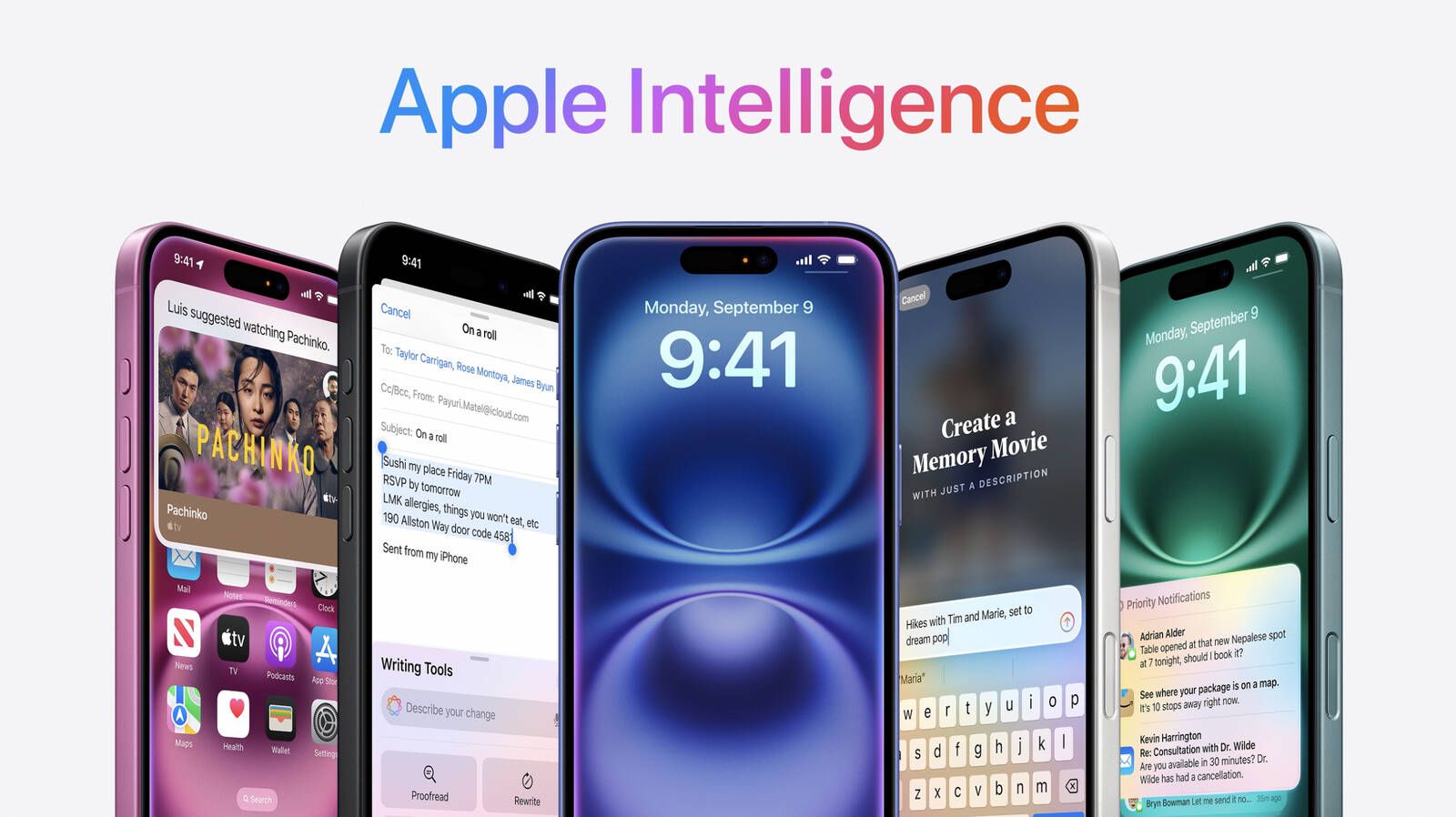
Apple Intelligence servers are currently powered by the M2 Ultra chip, and they are expected to start using M4 series chips next year. In an eventual move away from Mac chips for server use, The Information today reported that Apple is developing a new server chip that will offer even faster...

www.macrumors.com
Something specialized for private cloud compute nodes. Google has had a similar arrangement with Broadcom for their datacenter Tensor chips (which have relatively high node-to-node communication paths for cluster building).
At Hot Chips 2025, Google went into its Ironwood TPU packages and deployment in an awesome glimpse of the company's AI hardware prowess

www.servethehome.com
If Apple does a datacenter SoC with Broadcom, then most likely end up with a custom motherboard just like the Google Tensor. It isn't "card's for boxes with slots" , it is a specific logic board for server deployment. Not generic customer sales ( it won't be a 'prop' for Mac Pro sales. Or extremely coupled to the Mac Pro system component reuse at all. ).
Bringing the base communication bus of the 200-400 GbE ethernet ( or equivalent ) onto the SoC package itself also saves power. If power saving is a priority , it doesn't make sense to lend extra hard on general PCI-e connectors. (that isn't going to save you power consumption).
This got me thinking: Could Apple be designing future Apple Silicon generations to functions as clusters, so that you could have a Mac Pro hold one or more boards with a bunch of Apple Silicon chips? Kind of similar to the Afterburner card, but stacked with AS chips?
The Afterburner card has no aux power connectors. ( very much fits in with Apple's 'hate' of wires ). If cap this add-in card at 75 Watts then pushed into only getting the lower end Apple silicon dies. Those dies have the most restrictive I/O bandwidth ( minimalistic ports on Mac laptops , iPads , etc. is the primary focus. )
An 8-pin connector would easily open things up for a Max-class M-series chip. (maybe an Ultra). A 6-pin would need to combine the bus 75W with the molex, aux 75W to perhaps cover a M-series with incrementally more complicated power delivery infrastructure.
The current Mac Pro is a bit scaled back on aux power delivery though
"...
300W auxiliary power available:
- Two 6-pin connectors delivering 75W of power each
- One 8-pin connector delivering 150W of power
..."
https://support.apple.com/en-us/111343
If used a 8-pin , then you only get one card. Even with 6-pin only pragmatically getting 3 cards. ( which probably is enough for small clusters in a lab, but not particularly "datacenter" sized clusters. ). The MP 2019 had four 8-pin connectors [***] . ( the rumored "extreme" SoC likely was suppose to be the recipient of that missing power. ).
For bus power only 75W, you are more likely constrained to something at the "Pro" class M-series. By time you put a Ethernet port , one (maybe 2) Thunderbolt USB-C , cooling subsystem , Wi-Fi/Bluetooth, SSD drive , etc on the card then have used up power budget. They could trim some power by dropping most of that ( Wi-Fi , cooling system , Thunderbolt qualification ) , but would be missing out on a "Mac on a card" business that could span into the retail (non-datacenter only) space.
There are a number of folks who left Mac space to follow "box with slots" path on Windows. An card that could work independently in non-Apple system would likely sell more units. If it is a self-contained system with full MacOS there is no good reason why it could not work in heterogeneous contexts. Capping at Mn Pro SoC would also help to control costs ( so could sell more). Afterburner was priced so high that it only had a deeply niche market ( that evaporated once ProRes processing got mainstreamed in the line up. )
A Mac Pro only ( or primarily targeted ) card is likely doomed. The Mac Pro form factors are not a good data center solution , so won't work particularly well there either. If need a 'card' form factor OAM would be better than legacy PCI card form factor. Datacenter liquid cooling solutions are skewed in that form factor direction.
It seems logical to me that Apple would go that way, and it would provide an interesting use case for Mac Pro, but are there techical reasons this would be a Bad Idea™️?
There is a decent chance that Apple will do their own datacenter specific SoC. ( unless they completely punt medium-to-higher level Apple Intelligence out to 3rd party ( Gemini , Claude , etc). If they don't have largish inference models to run then not sure what revenue source they are going to fund that R&D with. ) . I don't buy the "doom and gloom" around Apple AI that is being pitched. So I suspect their internal model building will continue.
[****] Four cards , each with 3-4 Thunderbolt ports could replicate the clustering set up Apple already enables for the Mac Studio grouped in a pod of four. (each Mac Studio gets a point-to-point link with each of the other 3 in the cluster with no expensive cluster switch hardware required. That is more an "affordable lab" solution than a high scale datacenter solution. )
Not holding my breath for that. If Apple did do a "Mac on a Card" system then it likely would only be one of them. The 75W solution has more product breath.