
Got a tip for us?
Let us know
Become a MacRumors Supporter for $50/year with no ads, ability to filter front page stories, and private forums.
Apple Turns 50 Today: Reflecting on Each Decade's Biggest Moments
- Thread starter MacRumors
- Start date
- Sort by reaction score
You are using an out of date browser. It may not display this or other websites correctly.
You should upgrade or use an alternative browser.
You should upgrade or use an alternative browser.


Parowdy
macrumors 68000
I think Apple Pay should get a small mention as well. It’s not a product you think of when talking Apple, but it’s so far from any other service Apple ever introduced, it’s very interesting Apple felt the need to basically be a financial institution for people that would otherwise get far worse conditions at other (real) banks. Nothing much came of it so far, and it’s limited to the US I think, but it’s still a very notable service.
Parowdy
macrumors 68000
Im pretty sure the Apple 1 and II did happen without VisiCalc.None of this would have been possible without Visicalc...
But you’re right that Apple would have never become the computer power house it was and is without it, kinda like with the computer mouse.
Fallforward
macrumors regular

switz
Contributor
I remember that CP/M was the operating system in the 1970's we were using trying to get a hodge podge of back planes and cards to get along. It was an art, not a science, to get an early PC up and running. The cards in the backplane had to play musical chairs until one found the correct combination of card locations with the jumpers in the correct location on each card for that specific motherboard. The phrase was Plug - n - Pray for we early folks.
There was a sense of pride getting an empty metal box, a backplane motherboard, power supply and a bunch of I/O cards to all work together.
Today's users are clueless of the history and actually could care less. Too Bad.
There was a sense of pride getting an empty metal box, a backplane motherboard, power supply and a bunch of I/O cards to all work together.
Today's users are clueless of the history and actually could care less. Too Bad.
theluggage
macrumors G3
Yup - Xerox PARC invented half of modern computing but spectacularly failed to commercialise it.Lesser known are the fundemental innovations from Apple developed at then Xerox PARC in Palo Alto.
The story of Apple has been pretty much "Apple didn't actually invent x but they were the first to turn it into a successful, attractive product".
I wonder what would have happened if Xerox had actually made an effort and leveraged their position in the corporate reprographics market to really push back against IBM...
Of course, going further back to 1968 you have the famous "Mother of All Demos" which introduced a lot of now-familiar tech:
theluggage
macrumors G3
Just to stickle - I don't think that actual phrase "Plug'n'Pray" came into use until the phrase "Plug and Play" was popularised (but not always delivered) by Windows 95.The phrase was Plug - n - Pray for we early folks.

UliBaer
macrumors 6502a
^Exactly!^Just to stickle - I don't think that actual phrase "Plug'n'Pray" came into use until the phrase "Plug and Play" was popularised (but not always delivered) by Windows 95.
I once tried to mount two Plug'n'Play soundcards (Gravis Ultrasound Plug'n'Play and SoundBlaster AWE 32 Plug'n'Play) into one ASUS mainboard. Tried all possible slot combinations and nothing worked, not even one card! So I changed the SoundBlaster AWE 32 to a non Plug'n'Play version and was finally able to configure the interrupts manually on the SoundBlaster and immediately the Gravis took their part in configuring itself and I got the system to really work as intended! 😎
[edit]
I still have this system running on Windows 98 SE with Voodoo 3 for the occasional retro gaming session! 😁
Last edited:

SnowLeoMac
macrumors newbie
Thank you!Updated the Apple II photo to an older model.
Remember the 'other' Steve who co-founded Apple. It's as if he's a Politburo member airbrushed out of a May Day photo.
Apple was founded on April 1, 1976, meaning the company is officially 50 years old as of today. To honor the occasion, we have reflected on some of Apple's biggest moments of each decade, from the 1970s through to the 2020s.
Apple has an extensive history, so this list is far from comprehensive, but it captures some of the pivotal events over the company's first 50 years.
1970s
While the Apple-1 was released in 1976, it was the Apple II in 1977 that became the company's first successful, mass-market computer.
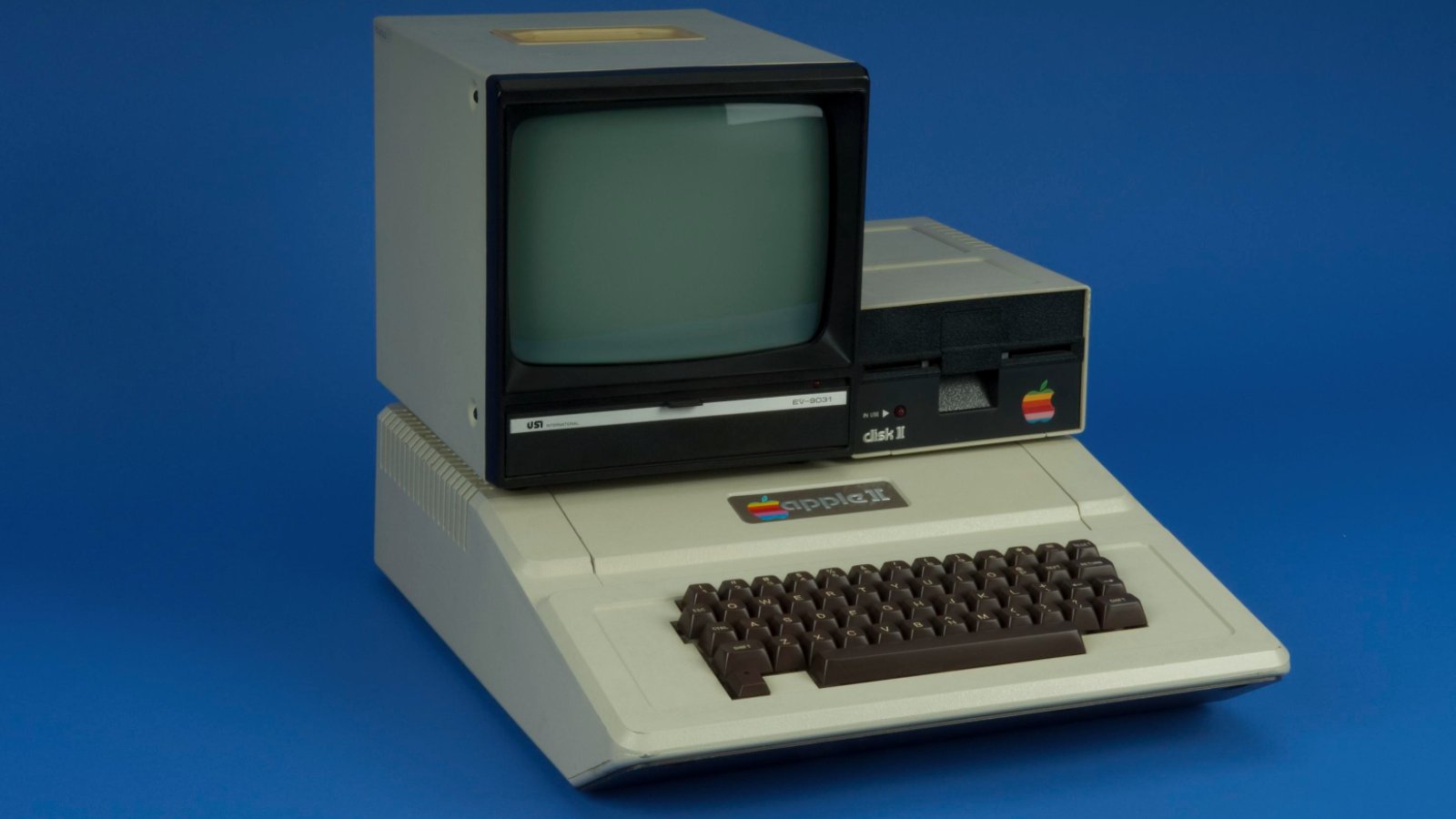
Unlike the Apple-1, the Apple II came fully assembled in a plastic case with a keyboard, and Apple sold millions of units of the computer over the years. This product gave Apple sustained cash flow, allowing it to become a major company.
1980s
In 1984, Steve Jobs introduced the Macintosh, the world's first successful mass-marketed computer with a graphical user interface (GUI).
The original Macintosh popularized the computer mouse, allowing users to control an on-screen pointer. This point-and-click method of computer navigation was still a novel concept to most people at the time, as personal computers in this era typically had text-based command-line interfaces controlled with a keyboard.
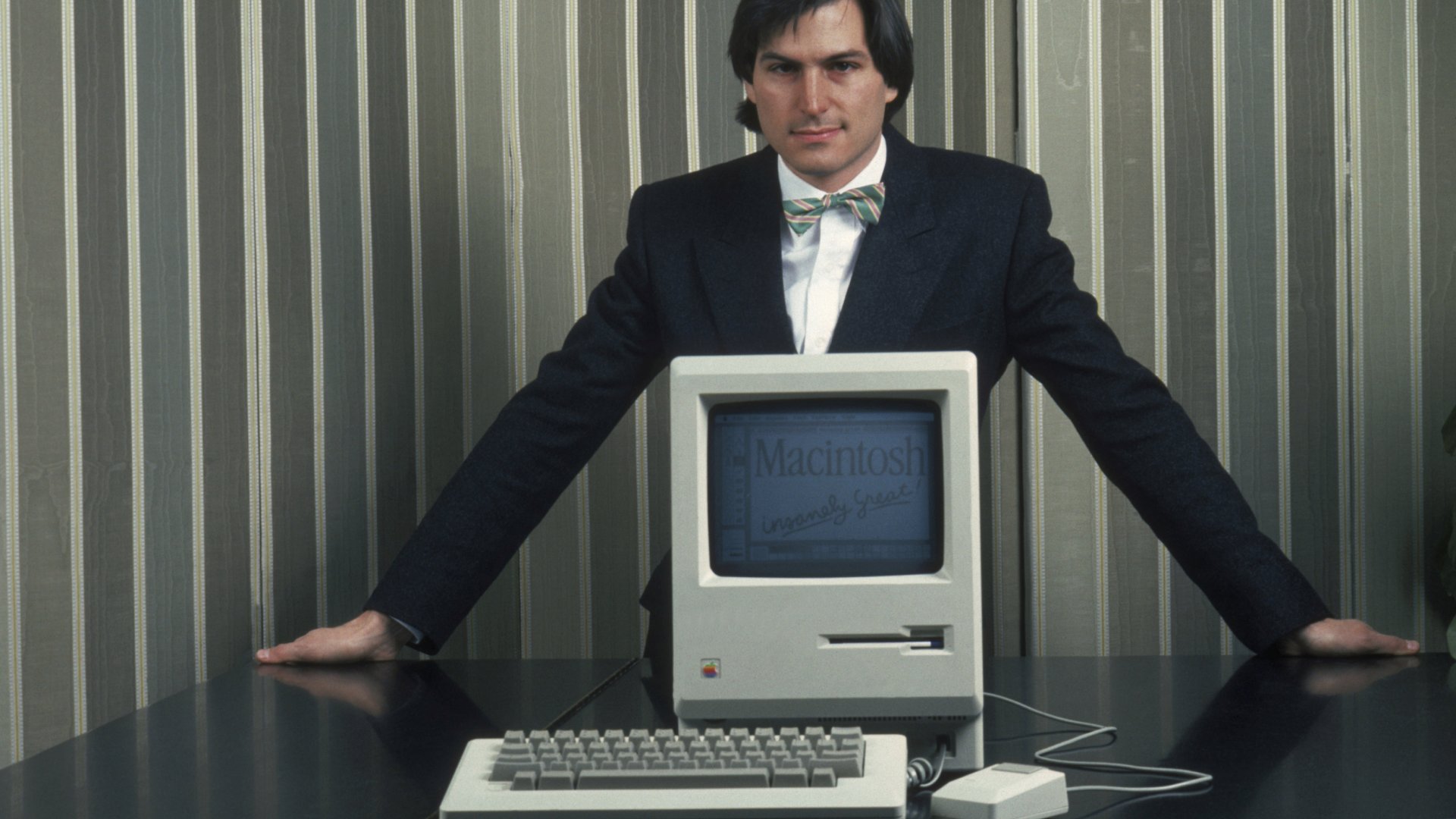
Apple said the Macintosh typically took "only a few hours to learn," and it touted what are now basic computer features, such as a desktop with icons, the ability to use multiple programs in windows, drop-down menus, and copy and paste.
Pricing for the original Macintosh started at $2,495, equivalent to nearly $8,000 today. Key specs and features included an 8 MHz processor, 128 KB of RAM, a 400 KB floppy disk drive for storage, and serial ports for connecting a printer and other accessories.
In 1985, Apple released the LaserWriter, one of the first mass-market laser printers.
1990s
By the 1990s, Apple had largely lost its way. That changed when Jobs returned to the company in 1997, as part of Apple's acquisition of NeXT, another computer company founded by Jobs after he was ousted from Apple in the mid-1980s.
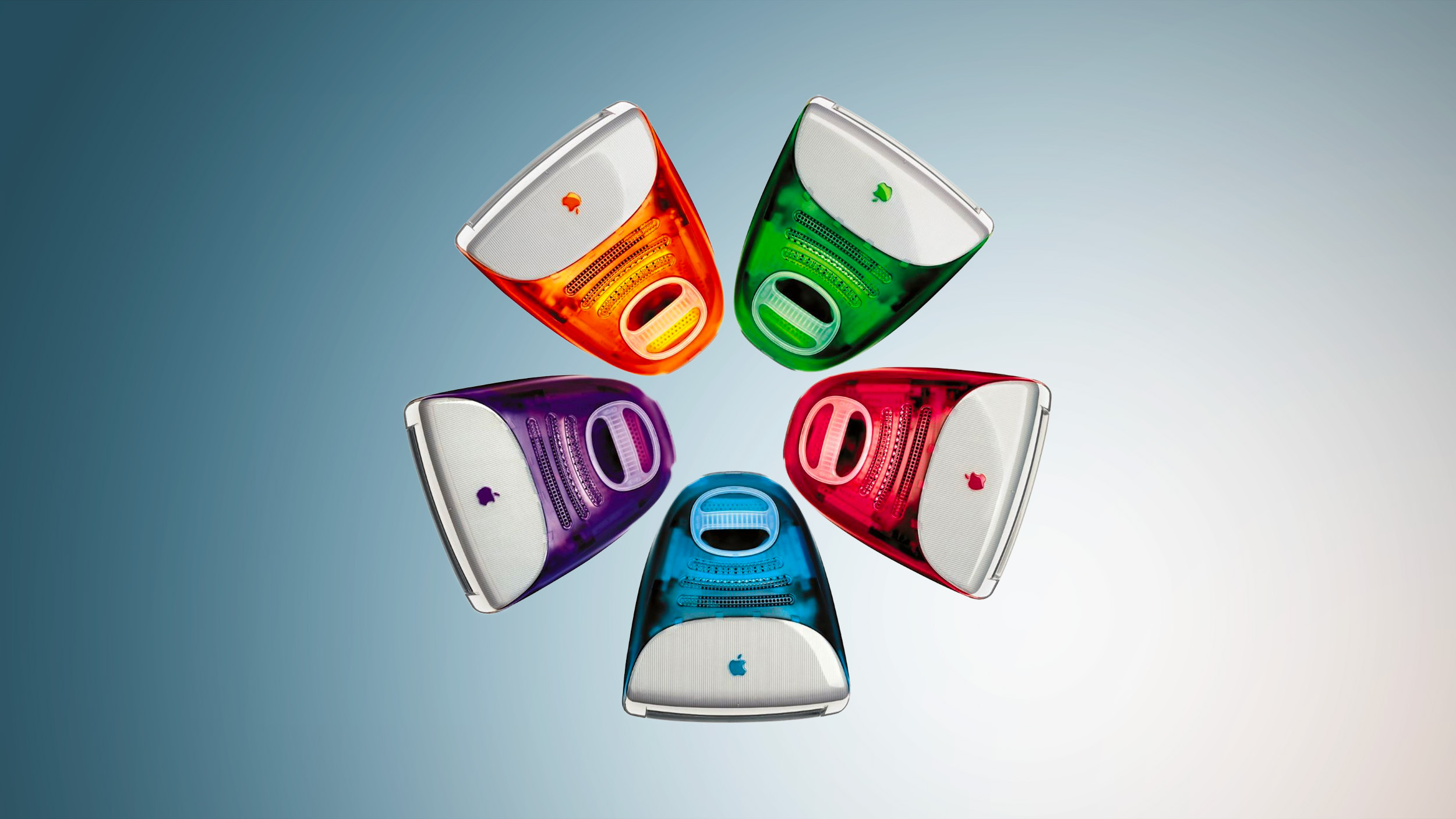
Apple did release some unique products in the 1990s, ranging from the Newton personal assistant to the QuickTake digital camera to the Pippin video game console, but Jobs' return was easily the company's pinnacle moment of the decade. He quickly simplified and improved Apple's product lineup, with the turnaround beginning in earnest with the colorful iMac in 1998.
Apple's acquisition of NeXT also gave it NeXTSTEP, the UNIX-based operating system that ultimately became Mac OS X, the successor to classic Mac OS.
2000s
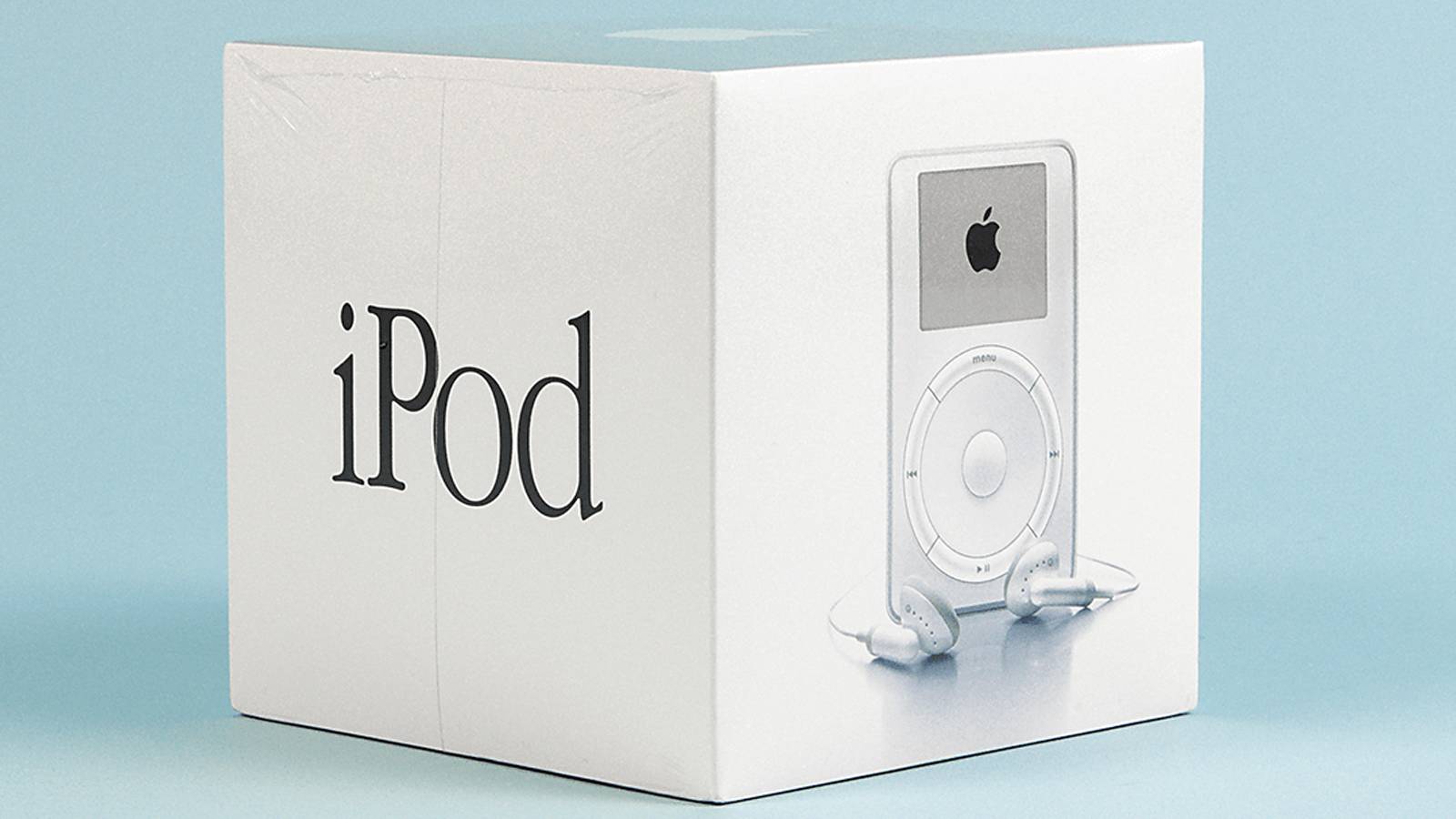
Apple's renaissance continued into the 2000s with the launch of the iPod in 2001. The portable music player was extremely popular and helped turn Apple into a consumer electronics company rather than merely a computer company.
Six years later, Apple combined an iPod with a mobile phone. Enter the iPhone.
Jobs famously introduced the original iPhone as if it were three separate products: a widescreen iPod with touch controls, a revolutionary mobile phone, and a breakthrough internet communications device. The crowd at Macworld San Francisco erupted with cheerful applause upon realizing that Jobs was referring to a single device.
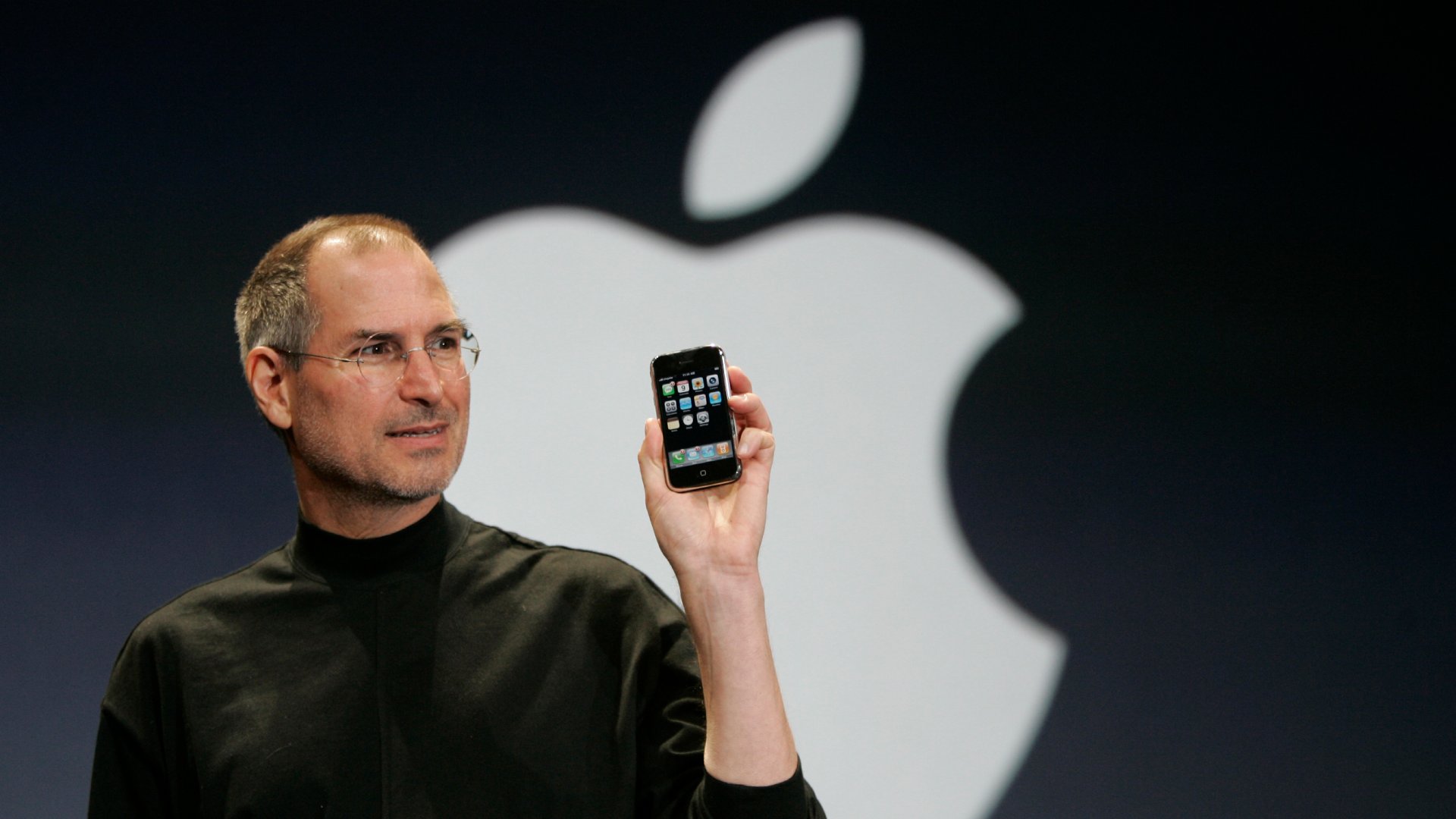
While the iPod was hugely successful, the iPhone is absolutely massive, and it is now one of the most successful products of any kind ever released. Last year, Apple announced that it had shipped its three billionth iPhone. That is 3,000,000,000.
2010s
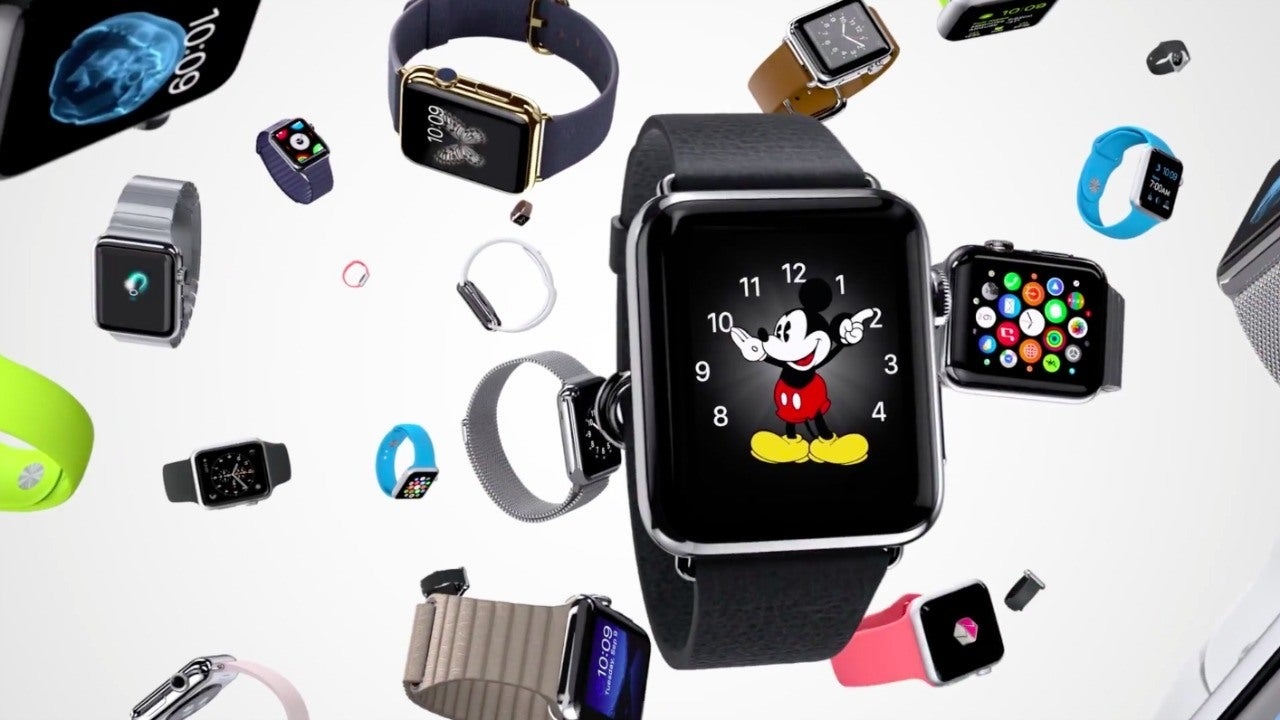
Three major Apple products launched throughout the 2010s, including the iPad in 2010, the Apple Watch in 2015, and the AirPods in 2016.
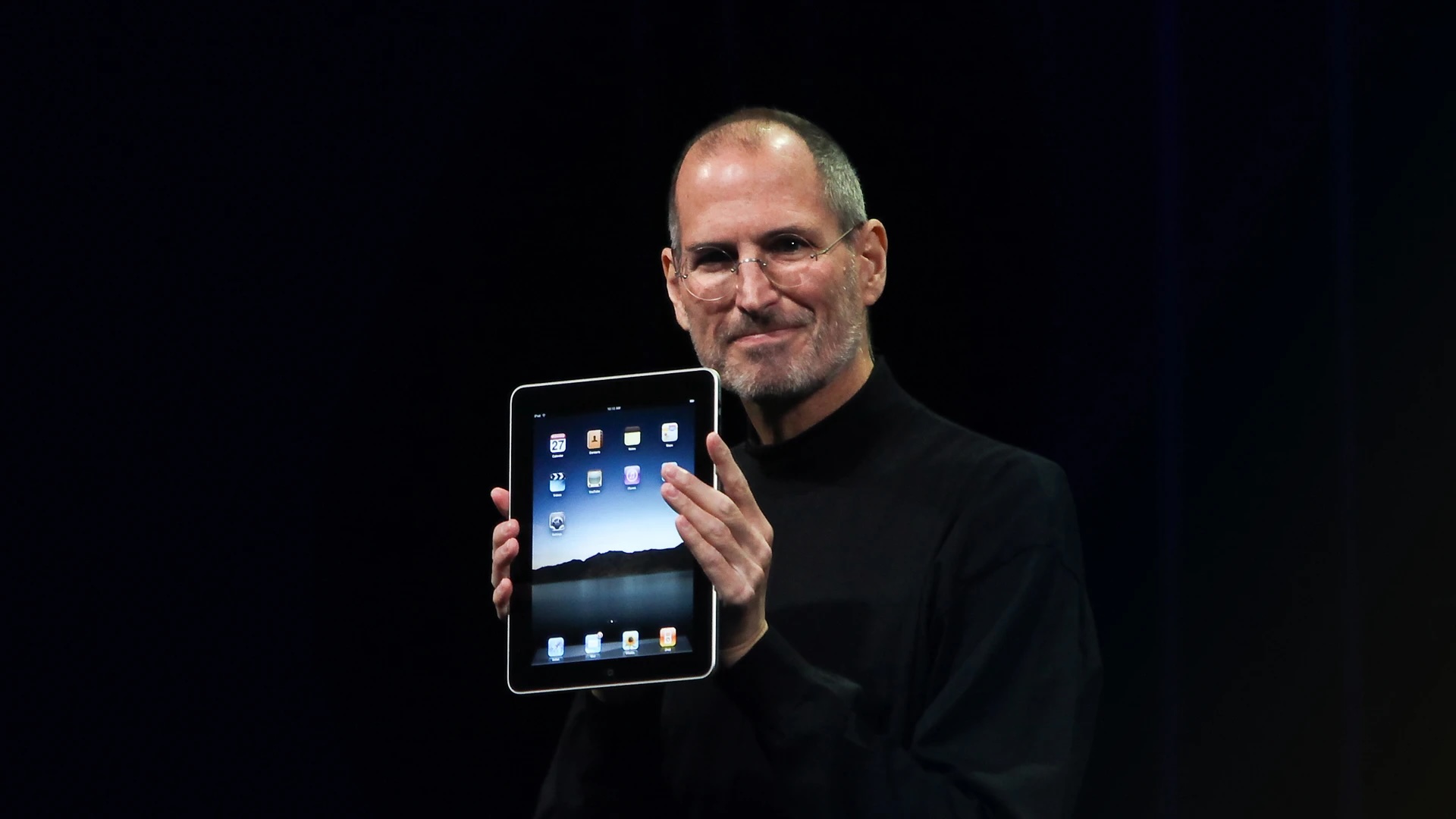
While the iPad was essentially just a large-screened iPhone when it first launched, the device has received significant advancements like trackpad support over the years, and it has since redefined what a personal computer is.
Millions of people wear an Apple Watch, and it has become one of the world's most popular fitness devices. With health and safety features like the ECG app, Crash Detection, Fall Detection, Emergency SOS, and more, the Apple Watch has even saved lives, which is a remarkable feat and something that Apple's CEO Tim Cook is very proud of.
As for AirPods, Apple says they are the world's most popular wireless headphones. Enough said.
2020s
In 2020, the Mac's transition from Intel processors to Apple silicon began, resulting in industry-leading performance-per-watt to this day.
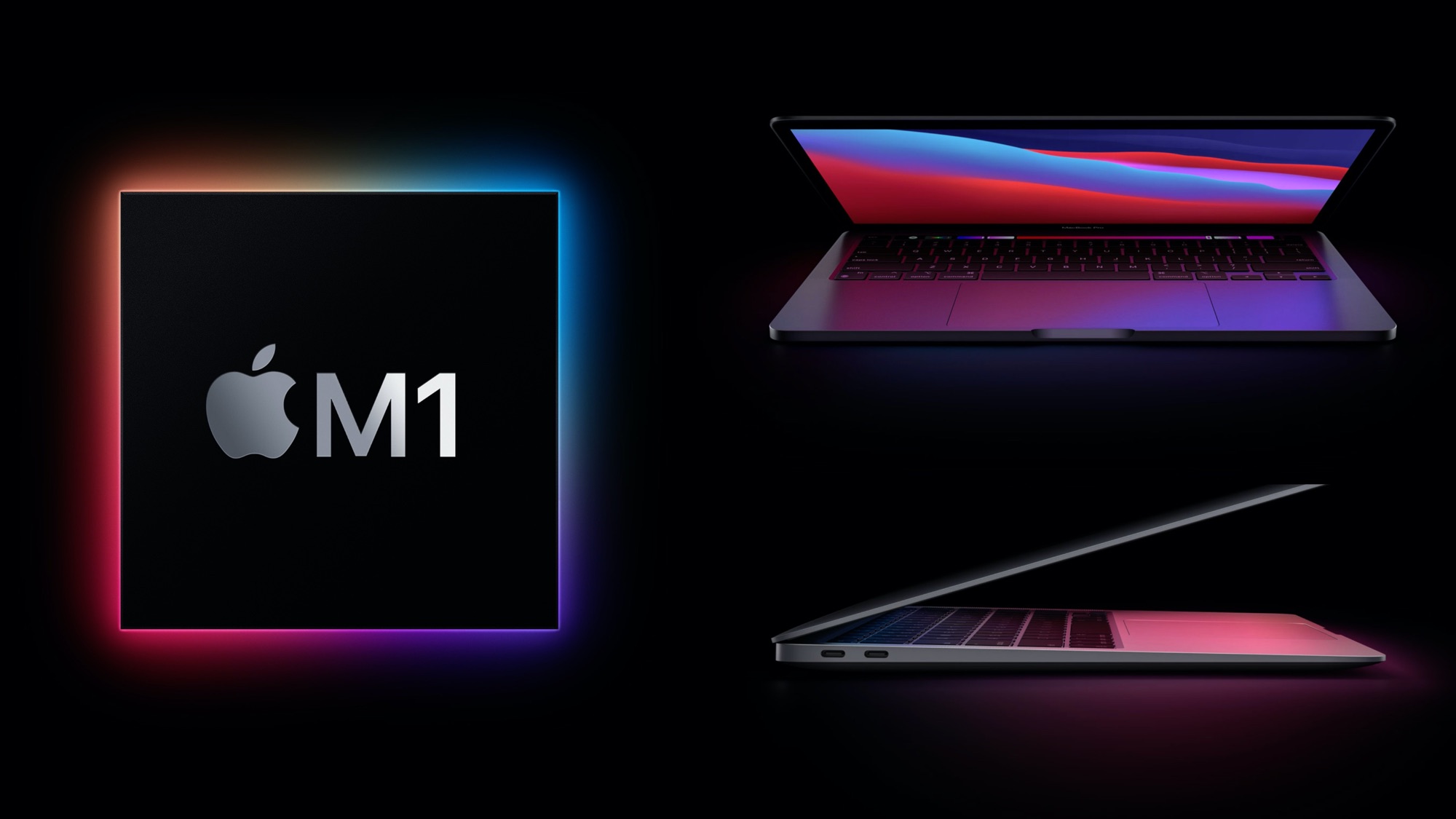
After years of rumors, Apple unveiled its plan to transition the entire Mac lineup from Intel processors to its own custom-designed chips at WWDC in June 2020. Later that year saw the release of the first three Mac models powered by Apple silicon, including a 13-inch MacBook Pro, MacBook Air, and Mac mini. The transition was completed in 2023 when the Mac Pro—which was recently discontinued—received the M2 Ultra chip.
Apple said macOS Tahoe is the final macOS release that will support Intel-based Macs.
In 2023, the Apple Vision Pro launched, ushering in the spatial computing era. A year later, the Apple Intelligence suite of AI features arrived. Unfortunately, these hardware and software categories have not ent... Click here to read rest of article
Article Link: Apple Turns 50 Today: Reflecting on Each Decade's Biggest Moments

Fallforward
macrumors regular
Agreed, a significant oversight. Woz was before Jobs. As an engineer at HP, "Five times they turned me down for the personal computer. I wanted Hewlett-Packard to do it. I loved my company, but now Steve Jobs and I had to go into business."Remember the 'other' Steve who co-founded Apple. It's as if he's a Politburo member airbrushed out of a May Day photo.
... for.. Me....? 😊🥰Added in NeXTSTEP for you.
Aw, you guys...
Fallforward
macrumors regular
Agreed, a significant oversight. Woz was before Jobs. As an engineer at HP, "Five times they turned me down for the personal computer. I wanted Hewlett-Packard to do it. I loved my company, but now Steve Jobs and I had to go into business."Remember the 'other' Steve who co-founded Apple. It's as if he's a Politburo member airbrushed out of a May Day photo.
Oldskool2000
macrumors newbie

Blackwell
macrumors member
Here is a 128k mac hand soldered and two Shugart drives. Also an A+ mouse and a keyboard made in Irland.

Yes, what most people don't realize is that not only macOS, but iOS, WatchOS, and the others are still just what NextStep was: BSD UNIX with a nice graphical user interface. BSD traces its roots back to 1969, making it something like 60 years old. The OS on your phone has a history longer than the age of most iPhone users. Of course, it has evolved, but at the core, most of the concepts are the same.This is a very concise history, but no mention of OS X, based on the NeXTStep OS that came with Jobs from NeXT..?
That was the most significant factor in the recovery of Mac -- and gave iPhone and all the other devices the functionality and connectivity that they have.

boswald
macrumors 68030
I wish FreeBSD took off as a desktop OS like Linux did. I'd be using it today if I knew how.Yes, what most people don't realize is that not only macOS, but iOS, WatchOS, and the others are still just what NextStep was: BSD UNIX with a nice graphical user interface. BSD traces its roots back to 1969, making it something like 60 years old. The OS on your phone has a history longer than the age of most iPhone users. Of course, it has evolved, but at the core, most of the concepts are the same.
boswald
macrumors 68030
Funny, I use the term "Plug 'n' Pray" when I try to use a WiFi adapter with Linux!I remember that CP/M was the operating system in the 1970's we were using trying to get a hodge podge of back planes and cards to get along. It was an art, not a science, to get an early PC up and running. The cards in the backplane had to play musical chairs until one found the correct combination of card locations with the jumpers in the correct location on each card for that specific motherboard. The phrase was Plug - n - Pray for we early folks.
There was a sense of pride getting an empty metal box, a backplane motherboard, power supply and a bunch of I/O cards to all work together.
Today's users are clueless of the history and actually could care less. Too Bad.

Parthen
macrumors newbie
My Mac history began with a PowerMac 5260. However, my first Apple experience was a decade earlier in grade school. We had an Apple that allowed for a wired, domed, clear-shelled, robot. Anyone remember that?
Last edited:
CarAnalogy
macrumors 603
Apple is simply just two fold: Apple with Steve and Apple without Steve.
It is a perfect reflection of what it means to have a maniacally driven innovator as a leader and what it means to not have that person at the helm.
Agreed. I know it didn’t technically happen to Apple but Jobs’s passing in 2011 was hugely impactful. He never really got to see through the iPad or Siri and I think Apple might be very different today if he had.

sim_g
macrumors newbie
Congrats on 50 years of thinking different, Apple!😃🎉 Here’s to the crazy ones☺️🌈🙌 I used a Macintosh for the first time in 1996 at my aunt and uncle’s on the other side of Norway, used one regularly since high school in 2000, and got my first Mac, a MacBook, in 2008…and haven’t looked back🤩👨🏻💻
My first iPhone, an iPhone 3GS, I got in 2009😊 I also have other stuff, like iPod’s, Apple TV’s and AirPods☺️📱🎧 So in a very real way Apple and Apple’s products has been with me in life for a looong time😃 And they’re with me today as well😁 I say thank you for the past, and look forward to the future, Apple🥰🌟🍏
My first iPhone, an iPhone 3GS, I got in 2009😊 I also have other stuff, like iPod’s, Apple TV’s and AirPods☺️📱🎧 So in a very real way Apple and Apple’s products has been with me in life for a looong time😃 And they’re with me today as well😁 I say thank you for the past, and look forward to the future, Apple🥰🌟🍏
Nice article. Some fantastic products were released during these years. Looking forward to seeing all the future products.
"Concise" is a good word for it.This is a very concise history, but no mention of OS X, based on the NeXTStep OS that came with Jobs from NeXT..?
That was the most significant factor in the recovery of Mac -- and gave iPhone and all the other devices the functionality and connectivity that they have.
Here are a few additions off the top of my head. I didn't start paying attention to Apple until I got my first Mac when I started college in 1984, so I can't say much about the first eight years.
1980s:
- The Macintosh Plus is the first Mac with a useful amount of memory (1MB) and external connectivity (SCSI).
- Apple single-handedly creates the desktop publishing industry with the Macintosh Plus and Laserwriter.
1990s:
- The Newton, though not a success, gets everybody talking about "personal digital assistants" and lays the groundwork for the later success of the Palm Pilot and iPhone.
- Apple forms the AIM consortium with IBM and Motorola, and becomes the first major computer company to completely switch CPU architectures (68000 to PowerPC) without major disruptions or abandoning previous buyers.
- In a misguided (and near-fatal) attempt to chase Wall Street's demand for "market share", Apple licenses the Macintosh architecture and operating system to third party clone makers.
2000s:
- Mac OS X shows the world what a true 21st century operating system looks like. Microsoft is taking notes (again).
- Apple introduces iTunes and the iTunes store, which ultimately leads to music streaming and the disruption of the traditional music media industry (cassettes/CDs).
- Bucking the industry trend for cheap plastic, Apple embraces aluminum and introduces the Mac Mini, MacBook Pro, Unibody iMac, and MacBook Air.
- The Mac Pro is introduced.
- As its AIM partnership fragments, Apple switches CPU architectures, AGAIN, to the Intel Core family, and AGAIN with barely a hiccup.
- Apple introduces the AirPort line of wireless routers, including the AirPort Time Capsule that worked with Time Machine software to make backups nearly effortless for non-technical users.
2010s:
- With the passing of Steve Jobs, all the tech industry pundits expect Apple to roll over and die. Instead, Tim Cook takes the helm and leads the company to even higher levels of profitability..
- The Apple TV arrives just as the world is starting to embrace video streaming.
- Apple introduces the "trash can" Mac Pro. Can't win 'em all, but credit for trying something new.
2020s:
- Apple pivots to services.
- Apple introduces the Mac Studio
- Apple discontinues the Mac Pro
I'm sure there are lots of others I'll think of later, but this is a good start for sitting for about 20 minutes.
Last edited:
The Verge has been doing a great series of articles about Apple's 50th. The writers are The Verge's veteran tech industry journalists who lived (and reported) through much of the Apple history and have very personal and meaningful recollections for some of the products. Definitely fun to read."At 50 years, it’s only natural to look back. But Apple has always looked forward, building tools and delivering experiences that enrich people’s lives. As we celebrate how far we’ve come, we’re inspired by where we’ll go — together."
Such safe, corporate copy that could be from almost any large company. Swap Apple for Google, Samsung, Marriott hotels, anyone, and it still works without changing a word. "Building tools and delivering experiences that enrich people's lives" is as generic as Tim Cook himself, to the point of meaningless. And "where we'll go together" is the kind of vague aspirational closer that gets used in every anniversary campaign ever written. The "look back / look forward" pivot has been done to death. This is almost embarrassingly bad.
Their 50 year celebrations have come and gone without a single memorable takeaway. How depressing.
Last edited:

Register on MacRumors! This sidebar will go away, and you'll see fewer ads.