Become a MacRumors Supporter for $50/year with no ads, ability to filter front page stories, and private forums.
Presumably that's due to the privacy restrictions imposed by foreign countries on data sharing. The US credit market can pull in a ridiculous amount of data points. In the EU that would be quite difficult, if not impossible, to do in the current regulatory environment.

Credit validation is about trying to evaluate risks, and you can't evaluate risk if people can hide their risks from you legally.

There was an article a while back talking about why there's no European version of Visa/MasterCard; it delves into the issue in more detail.
This isn't true. There are different credit norms in many European countries, and some cultural ones: many German retailers refused to accept credit cards (interchange fee) and while that is not now true they still don't have the centrality. EU pressure on interchange fees means that points are not nearly as attractive, and cash back virtually unheard of. So, I'm going to guess debit card use is higher as a share of spend than in the US. The UK — not EU, but operating in a very similar regulatory environment on the consumer side — has a credit culture that is very similar indeed to the US, and Klarna is a Swedish company, originating BNPL there.

I would not be surprised to see Apple expand this if it is successful: it is not unusual for its product launches to be geographically staggered. After the Apple Card fiasco, there may also be some humility about taking smaller steps (though humility is not exactly a core Apple brand value…!). So I don't think there is much in the way of a barrier. The one thing I really have no idea about is consumer protection legislation and the condition of the item at the end of the lease. The UK used to have a hire purchase "norm" for things like white goods (superseded some years ago by easy credit) which is legally completely different but conceptually, allowed payments that could be stopped with goods returned and while you would own the product at the end of the term, you did not until that last payment. In addition, all European countries have versions of the phone subsidy model, either buried in the monthly plan or as a separate payment, and so the situation of having to pay for something broken or lost for months or years is already there too. And, you can (of course) absolutely sign up for these things at point of sale.

I'm not sure what article you refer to but both Visa and Mastercard have joint European antecedents. Visa started as the BankAmericard brand licensed by BofA, but came to be owned by its members. A French (compatible) version was Carte Bleu. Seeing the BofA product, consortia of European banks created Europcard and (UK) Access. These allowed interoperability with MasterCard and in the end adopted its branding globally. But both were alliances of banks and not standalone corporations until the 2000s: it's not the case that either was an American export in the way that, say, the iPhone is.
 
I think not requiring AC+ is gonna be the biggest liability for mobile device users. If you damage the device, you are on the hook to repair prior to turning it in.
Makes me wonder if Apple will accept devices returned with third party parts. For example you don’t get Apple car, break it, then repair with some low quality parts just to get it returned.
 
What's the revenue incentive here for Apple?

It's retail pricing stretched out further with a lump sum at the end. They are making the same amount of money, but obviously Karna is getting a cut?
For Apple, more devices get in people's hands either through ownership or leases. More "sales" looks better on balance sheet for shareholders.

For Klarna, they're banking on people returning phones/other devices with slight damage, like a small scratch or slight nick, likely with some AI scan and evaluation algorithm. Then, they'll hit you with a repair fee. This goes to AC+ claims in a revolving scheme or directly to customer without AC+.

Seems consumer-friendly with no-fees/interest and lower payments, but some things are too good to be true.
 
  • Like
Reactions: Christopher Kim
The part about iOS 27 having code to allow Apple to block you out of certain apps after missed payments isn’t being talked about enough. That’s crazy that we are going there as a society.
 
  • Like
Reactions: driekraaien
Yeah if this were through the Apple card, it'd be more tempting. I'm uneasy at yet another company to deal with.
Clever of Apple just after raising prices, they camouflage that fact that may be missed by the mainstream buyers, by creating this new arrangement.

Two words come to mind… buyer beware.
 
  • Like
Reactions: zubikov
Assume a deal structure: $31.99 × 24 = $767.76 in payments, plus a final buyout of $1099 − $767.76 = $331.24 at month 24. Total nominal dollars paid: exactly $1099 — same sticker price, just spread out with a balloon at the end.

Discounting to "time-of-purchase" dollars

Recent inflation has been running around 2.5–4% depending on the exact window: CPI rose 2.4% in 2024 and 2.1% in 2025 on an annual-average basis, while the 12-month rate through June 2026 was 3.5%. So a reasonable range to use as your discount rate is 2.5%–4%, with ~3% as a solid central estimate.

Discounting the payment stream (24 monthly payments of $31.99 + a $331.24 balloon at month 24) back to month-0 dollars:

Discount rate PV of payment stream
2.5% ~$1,063
3.0% ~$1,057
4.0% ~$1,044

Bottom line: in inflation-adjusted terms, you effectively end up paying roughly $1,045–$1,065 in "original 2024 dollars" — versus the $1,099 you'd have paid outright at the time. That's a real savings of roughly $35–$55, or about 3–5%, just from letting inflation erode the purchasing power of your later payments.

A couple of caveats:

This is a fairly small effect because most of the money ($767.76) is paid early and steadily, and inflation compounds slowly month to month — the "float" you're benefiting from isn't huge.

If you use opportunity cost rather than inflation as your discount rate — e.g., what you could've earned parking that $1099 in a high-yield savings account (~4–4.5% recently) or investing it — the apparent benefit of paying later would look similar or even slightly larger, since HYSA rates have been running close to or above inflation. Either way, deferring payment is mathematically favorable, just by a modest amount, not a dramatic one.
 
Since the leasing/BNPL plan is nominally cost-neutral, the entire benefit comes from when you pay, not how much. By not paying $1,099 upfront, you keep that money — and the money you'd otherwise have handed over each month — working for you a little longer.

Upsides:

  • Inflation erosion: Future dollars are worth less than today's dollars. At recent inflation (~2.5–4%), the payment stream is worth roughly $1,045–$1,065 in today's dollars — a real discount of about 3–5% versus paying $1,099 now.
  • Investment upside: If instead of just letting inflation do the work, you actively invest the $1,099 (or park it in a high-yield savings account around 4%+, or the market historically ~7-10%/yr), you can earn a real return on top of that — meaning the effective savings could be noticeably larger than the inflation-only estimate, especially if invested in something with decent returns.
Either way, the logic is the same: money now is more valuable than the same amount of money later, so deferring payment while retaining use of your cash is financially rational if you intend to buy the device either way — you're not paying extra to do it, you're just choosing to hold cash longer.

Downsides:

  • Hassle: Recurring payments to track, a service to manage, and the friction of executing a lump-sum buyout at the end (paperwork, timing, potential price changes to the buyout math).
  • Inflation/return uncertainty: The benefit assumes you actually do something productive with the freed-up cash (invest it, or at minimum let inflation do its thing) rather than just spending it elsewhere. If you don't actually invest/save the difference, you get none of the upside — just the hassle.
  • Small magnitude: The dollar benefit here is modest (tens of dollars, not hundreds) — so it's a "why not" if you're already inclined to finance, not a compelling reason on its own to switch strategies.
 
Assume a deal structure: $31.99 × 24 = $767.76 in payments, plus a final buyout of $1099 − $767.76 = $331.24 at month 24. Total nominal dollars paid: exactly $1099 — same sticker price, just spread out with a balloon at the end.

Discounting to "time-of-purchase" dollars

Recent inflation has been running around 2.5–4% depending on the exact window: CPI rose 2.4% in 2024 and 2.1% in 2025 on an annual-average basis, while the 12-month rate through June 2026 was 3.5%. So a reasonable range to use as your discount rate is 2.5%–4%, with ~3% as a solid central estimate.

Discounting the payment stream (24 monthly payments of $31.99 + a $331.24 balloon at month 24) back to month-0 dollars:

Discount rate PV of payment stream
2.5% ~$1,063
3.0% ~$1,057
4.0% ~$1,044

Bottom line: in inflation-adjusted terms, you effectively end up paying roughly $1,045–$1,065 in "original 2024 dollars" — versus the $1,099 you'd have paid outright at the time. That's a real savings of roughly $35–$55, or about 3–5%, just from letting inflation erode the purchasing power of your later payments.

A couple of caveats:

This is a fairly small effect because most of the money ($767.76) is paid early and steadily, and inflation compounds slowly month to month — the "float" you're benefiting from isn't huge.

If you use opportunity cost rather than inflation as your discount rate — e.g., what you could've earned parking that $1099 in a high-yield savings account (~4–4.5% recently) or investing it — the apparent benefit of paying later would look similar or even slightly larger, since HYSA rates have been running close to or above inflation. Either way, deferring payment is mathematically favorable, just by a modest amount, not a dramatic one.
I agree with your logic etc, but these aren’t billionaires borrowing. These are regular, hard working people who probably live paycheck to paycheck. It just drowns the general population into more and more debt.
 
Disgusting concept. People with money problems use these services, which they should not. Companies know this, the fact Apple gave this to Klarna is another disgusting fact that every penny counts even from the poor. "To enrichen people lives".
Once long ago the Cupertino company seemed to care about their customers. But partnering with Klarna causes one to think much less of them. This arrangement may not be what it seems.

Unfortunately for those struggling financially, should they lose their job, losing their ability to pay, just when they need it most they no longer have a working phone.

No one knows their customers better than Apple, such shameful practices.


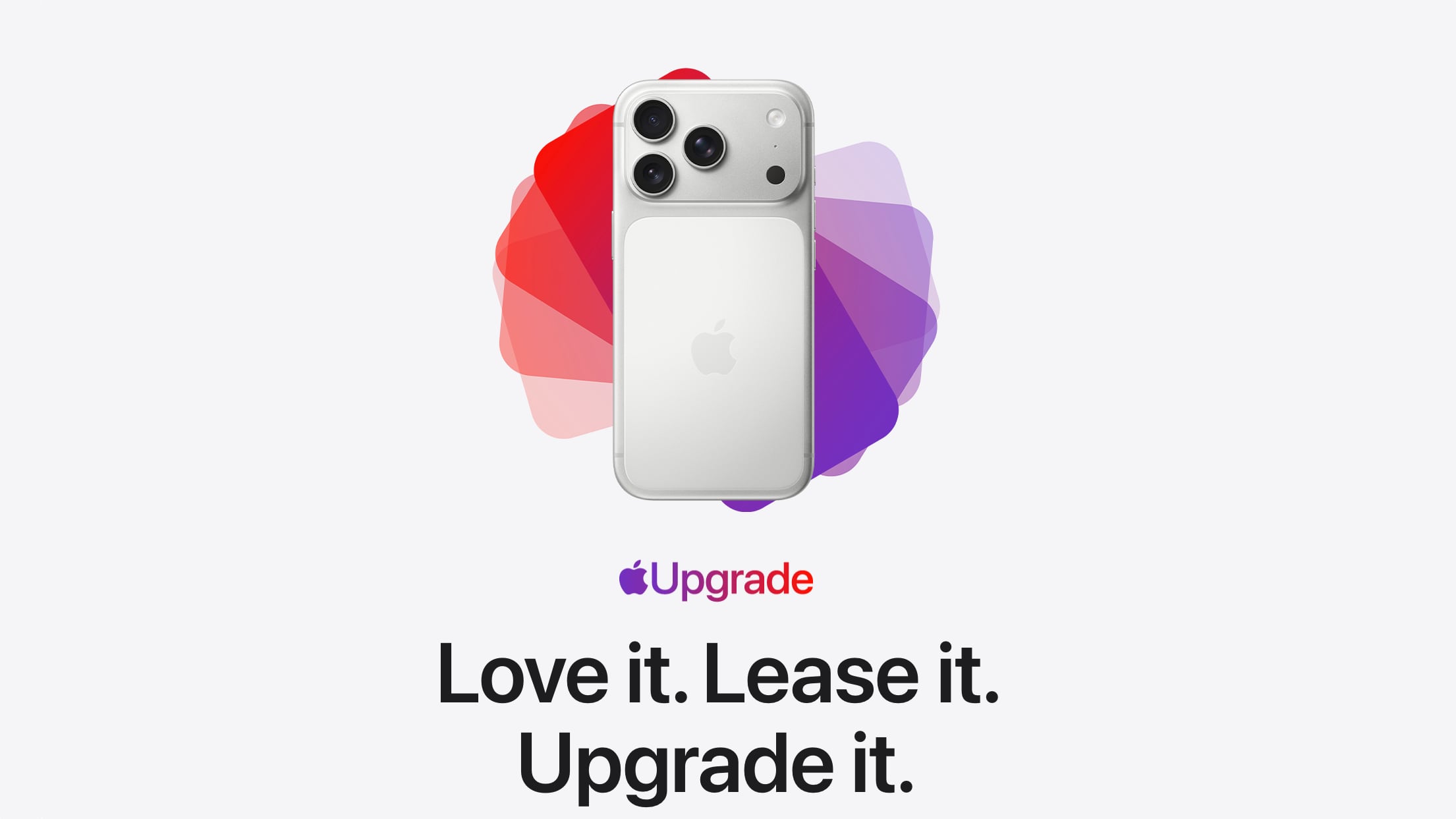
Apple retired the iPhone Upgrade Program in favor of a new Apple Upgrade leasing option made available in partnership with Klarna. Apple Upgrade gives customers an option to get iPhones, iPads, Macs, and Apple Watches at cheaper prices than before, but there are some things worth knowing about it.

apple-upgrade-program-1.jpg

We've gathered up some smaller tidbits that you should be aware of before deciding to opt in.
  • U.S. Only - Apple Upgrade is only available in the United States, and there's no word on whether it will expand to other countries.
  • Unlocked iPhones - iPhones leased with Apple Upgrade are unlocked, but you are required to choose a carrier at checkout. Carrier options include AT&T, Verizon, and T-Mobile. Since the iPhone is unlocked, you can switch carriers after purchase or add a second eSIM.
  • Postpaid Plans Only - You have to have a postpaid plan through a supported carrier to use Apple Upgrade. Prepaid plans aren't an option when leasing.
  • Ownership - You don't own the iPhone you're leasing at the end of the lease term unless you pay off the final amount. Your final payment is the device's cost when it was leased minus what was paid during the lease. If you don't want to purchase the iPhone, or if you want to upgrade, you need to return the leased iPhone.
  • No Lockout - Code in the iOS 27 beta suggested Apple could restrict apps and services if there are missed payments on a leased device, but it's not for Apple Upgrade. Missing a payment won't change how your iPhone works.
  • Missed Payments - If you miss a payment, it's rolled into your next month's payment. There are no late fees.
  • Three Strikes - If you miss three payments in a row, Klarna automatically terminates your lease and the full balance of the iPhone is due immediately. Klarna will subtract the value of the iPhone from the amount owed when you return it, cutting down on the payoff amount. If you don't return the iPhone or don't pay the balance, Klarna will send the account to collections.
  • No Fees - There are no fees for missing a payment, but you are subject to the lease termination rules. Missing a payment can also impact your credit score.
  • AppleCare+ - Unlike the iPhone Upgrade Program, AppleCare+ is not included with the Apple Upgrade leasing fee, and it needs to be purchased separately. AppleCare+ for the iPhone is $9.99 to $13.99 per month, or you can get AppleCare One for $19.99 per month. AppleCare One covers three devices.
  • Damage - Klarna will charge for any damage to an iPhone, and you'll need to pay for a repair when returning a device. If you have AppleCare+, you'll only pay the AppleCare+ service fee.
  • iPhone Upgrade Program - The iPhone Upgrade Program is discontinued. Current members don't have to swap to Apple Upgrade or another purchase option right now, but will need to do so at their next upgrade.
  • Apple Card Monthly Installments - Apple Card holders can still choose to finance an iPhone with zero interest using the Apple Card Monthly Installments option. An iPhone purchased with Apple Card is owned outright.
  • Ineligible Products - Some Apple devices can't be purchased with Apple Upgrade, including the iPhone 16, iPhone 16 Plus, Apple Watch SE, MacBook Neo, Mac mini, A16 iPad, and Studio Display.
  • No EDU - You can't use Apple Upgrade for discounted education prices.
  • No Refurbished Devices - You can't buy a refurbished Apple device with Apple Upgrade.
  • Ending a Lease Early - You can end a lease early, but you need to pay off the remaining amount on the lease and then return the device.
  • Buying Out a Lease - You can pay off a lease early with no penalty.
  • Soft Credit Check - There's no hard credit check when initiating a lease, so getting approval for a lease won't affect your credit.
  • Trade-Ins - When you initiate a lease, you can trade in an old iPhone. Trade-in value is split across your monthly payments instead of applied up front. You can't do a trade-in when sending a device back to upgrade to a new one.
  • Payment Restrictions - Klarna doesn't accept some credit cards, like AMEX, Chase, and Capital One. Other credit cards like the Apple Card can be used for Apple Upgrade payments to Klarna.
More Details

We have more information on Apple Upgrade in our full article, along with details on pricing.

Article Link: Apple Upgrade: 20 Things to Know Before Leasing an iPhone, iPad, or Mac
Apple got klarna cos no one else wants the headaches


Expect millions of missed payments forever hahaha
 
While I do understand that if you do all the payments on time, in the end it’s a 0% interest loan, a lot of people who can’t really afford a new iPhone or MacBook and shouldn’t take on (more) debt, all of a sudden can and will. Default on the three payments and they owe the full amount.

And it is quite a time we live in where leasing a phone is a thing. Amazing business for Klarna and Apple for sure.
 
  • Like
Reactions: Christopher Kim
Just like I won't ever lease a car, I will never lease an iPhone. There's too much fine print. The discontinuation of the iPhone Upgrade Program will just change my buying habits: I'll simply keep my phone longer. This new program will work for some, but I think it's dangerous for people who only see the low monthly and don't understand the risks.
 
  • Like
Reactions: stealthytolkien
Based on some of these comments, it appears Apple should expose buyers to rigorous credit checks and require income verification. Then only those with secure employment and top-tier credit scores should be allowed to purchase. Of course, then others would cry “discrimination.”
 
Register on MacRumors! This sidebar will go away, and you'll see fewer ads.