Become a MacRumors Supporter for $50/year with no ads, ability to filter front page stories, and private forums.

MacRumors

macrumors bot
Original poster


Apple objected to a European trademark filing from a Chinese keyboard maker because the logo the company wanted to use was too close to Apple's own logo. The EU Intellectual Property Office (EUIPO) partially refused to grant a European Union Trade Mark after Apple opposed the filing.
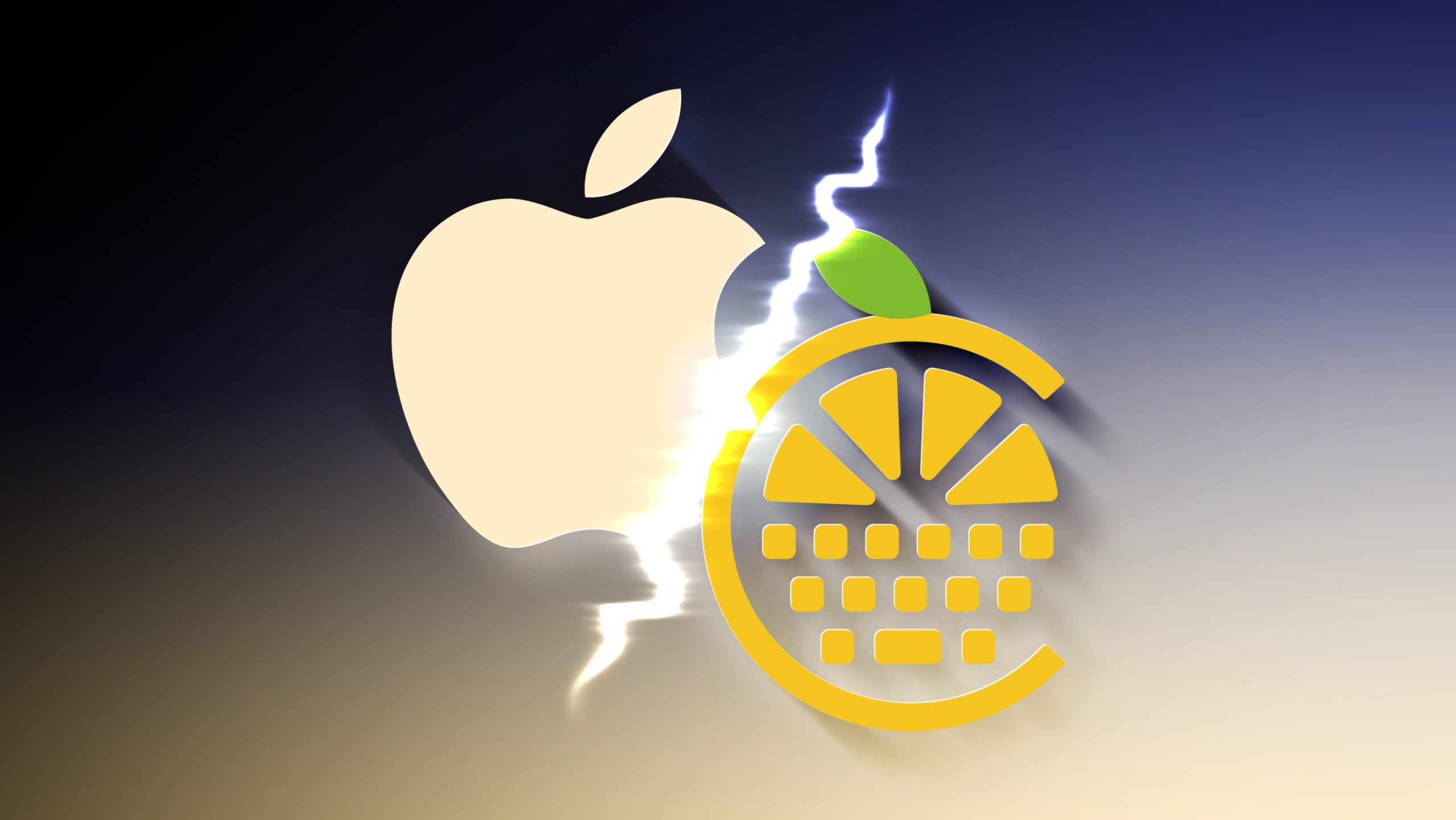
Apple-Objects-to-Keyboard-Makers-Logo-Feature-scaled.jpg

The company, Yichun Qinningmeng Electronics Co., makes mechanical keyboards and keycaps, according to its website, though it also seems to sell solar panels. The logo the company uses is a citrus fruit with the bottom segments turned into keyboard keys, with a green leaf angled to the left at the top of the fruit and a missing section on the right side. Part of the company's name translates to a citrus fruit, which is likely the reason behind the design.
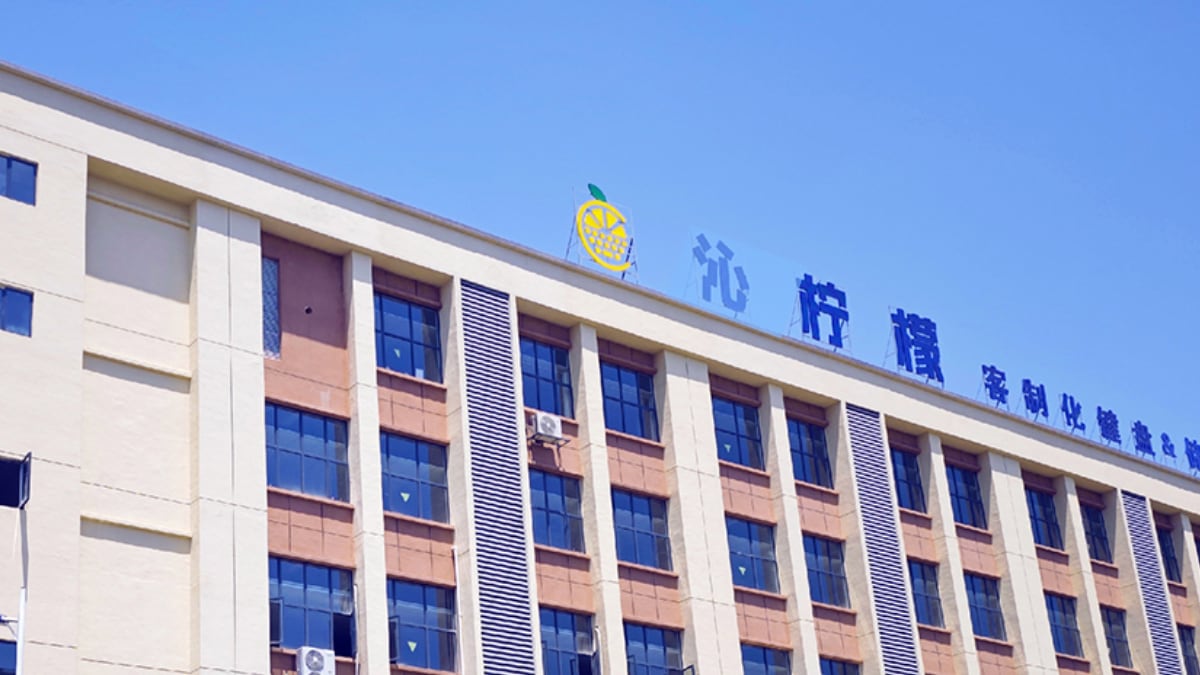
chinese-company-citrus-logo.jpg

Apple argued that the logo resembled an apple with a detached leaf and a bite, which the EUIPO did not agree with. It found the perfectly round shape of the logo did not track with the shape of an apple, and that it looked more like an orange.
The opponent argues that the figurative element of the contested sign also consists of an apple device with a detached leaf and a bite. However, the body of the figurative element consists of a circle (despite the missing part) and apples are not perfectly round. Furthermore, apples are not normally depicted in such a shape which is, in any case, more akin to an orange or other round-shaped fruits.

Therefore, while the Opposition Division agrees that the figurative element of the contested sign is likely to be perceived as depicting a fruit of some sort and that the detached oblong shape is therefore also likely to be perceived as depicting a leaf, in view of its round shape together with the relatively generic leaf shape, it will not be immediately associated with any fruit in particular but rather with a round-shaped fruit in general.

It follows from the above that, in the present case, the relevant public will perceive the contested application as a highly stylised round-shaped fruit bearing additional fanciful figurative elements. In particular, the triangular shapes, due to their arrangement, may be seen as segments. Furthermore, the square and rectangular figures in the lower part, again by virtue of their arrangement, may evoke a keyboard.
The EUIPO did acknowledge that there were some "minor commonalities" between the two designs, but also noted numerous differences. Overall, the two logos were found to be "visually similar, albeit to a very low degree," and the EUIPO concluded that the "signs are not conceptually similar."

Even though the EUIPO did not feel that the citrus fruit logo looked like an apple, it largely decided in Apple's favor because of the strength of Apple's reputation in the EU and the potential for customers to "establish a mental 'link' between the signs."

Apple claimed the citrus fruit logo would take unfair advantage of Apple's reputation, and the EU agreed. Apple's argument:
Given the immense reputation of the Opponent's Earlier Mark, it is hard to believe that the Applicant's intention was not, at the very least, to bring the Opponent's Apple Logo to mind in some way. More likely, the Application represents a deliberate attempt to take advantage of that reputation to offer identical and highly similar goods. As a result, the addressed public, when confronted with the Applicant's sign, will wrongly assume that the Application indicates a connection to Apple (i.e. that the Applicant is a supplier or manufacturer).
Yichun Qinningmeng Electronics Co. is not able to continue with the trademark process for keyboards or any other related computer goods, but the application to use the logo for solar panels will proceed. The company is able to file a notice of appeal in the next two months.

Apple and Yichun Qinningmeng Electronics Co. also had a trademark dispute in the U.S., but the trademark application was terminated after the Chinese company failed to respond in opposition proceedings.

Apple has objected to fruit-related logos several times in the past. It sued the developers behind an app named Prepear because the app used a pear-shaped logo that had a leaf, and it objected to an apple logo used by a Norwegian political party. Apple opposes dozens of trademark applications every year in the U.S. and other countries.

Article Link: Apple Wins EU Challenge Over Keyboard Maker's Citrus Logo
 
  • Wow
Reactions: Z-4195
I know that companies have to basically defend their trademarks using the law else risk losing them - hence why Apple was compelled to sue here.

... but in this case, I would be more worried about the health status of the consumer who looks at those two logos and genuinely thinks they came from the same company! 🙂
 
Even though the EUIPO did not feel that the citrus fruit logo looked like an apple, it largely decided in Apple's favor because of the strength of Apple's reputation in the EU and the potential for customers to "establish a mental 'link' between the signs."

Apple claimed the citrus fruit logo would take unfair advantage of Apple's reputation, and the EU agreed.
While the leaf is a blatant copy of Apple's and I agree with the decision, who would think Yichun Qinningmeng Electronics Co. and Apple Inc. had anything to do with one another?

Company should just remove the leaf and be done with it.
 
Here come all of the people that don't know anything about trademark law to tell us how mean Apple is being.

To spell it out in basic terms, trademark laws (in the United States, in particular) dictate that you must attempt to protect your trademarks or lose the right to them. So, even if Apple doesn't care, they are compelled to file and litigate. Disney and others are often criticized in the same way, despite the fact that they are doing what the laws require.

My guess is that in more cases than not, they are simply doing what they have to do to maintain their trademarks. In other cases, they are offended and would litigate anyway.
 
I'm curious if they moved the leaf to the bottom or side if they'd have the same problem. Unless Apple has a "Lemon" subsidiary I can't see how these two would be mixed up.
 
Here come all of the people that don't know anything about trademark law to tell us how mean Apple is being.

To spell it out in basic terms, trademark laws (in the United States, in particular) dictate that you must attempt to protect your trademarks or lose the right to them. So, even if Apple doesn't care, they are compelled to file and litigate. Disney and others are often criticized in the same way, despite the fact that they are doing what the laws require.

My guess is that in more cases than not, they are simply doing what they have to do to maintain their trademarks. In other cases, they are offended and would litigate anyway.
Did you even see the other logo?
 
  • Like
Reactions: Vasilioskn
While the leaf is a blatant copy of Apple's and I agree with the decision, who would think Yichun Qinningmeng Electronics Co. and Apple Inc. had anything to do with one another?

Company should just remove the leaf and be done with it.
it's not even in the same direction. This is similar only in the loosest sense possible. By this standard, I'd call myself Samuel Jackson.
 
I look forward to articles about Apple suing all grocery stores soon also. Makes sense why they did it above based on other user comments though
 
Here come all of the people that don't know anything about trademark law to tell us how mean Apple is being.

To spell it out in basic terms, trademark laws (in the United States, in particular) dictate that you must attempt to protect your trademarks or lose the right to them. So, even if Apple doesn't care, they are compelled to file and litigate. Disney and others are often criticized in the same way, despite the fact that they are doing what the laws require.

My guess is that in more cases than not, they are simply doing what they have to do to maintain their trademarks. In other cases, they are offended and would litigate anyway.
this is not the US but a EU challenge
 
You’re going to laugh, but I’m actually on Apple’s side.

No matter what language you speak, everyone now associates this term with the Cupertino-based company. Apple’s brand recognition is 100%.

And no tech manufacturer can claim that its logo is just a “coincidence” and that it isn’t trying to capitalize on Apple's brand recognition.
There are few other companies that are so well-known that one has to speak of intent. Volkswagen comes to mind. Albeit for less glorious reasons.

And yes, there is the exception of satire. We all remember the logo of the smartphone manufacturer in GTA V. And even with that, we immediately know: “Ah, satirizing Apple.”
1778096120468.png


Unfortunately, that’s just how it is. Apple is simply too well-known for that.


But what some people here don’t understand is:
It’s not just about whether a logo looks too similar. It’s already considered misuse if Company A designs a logo that resembles Company B's in order to profit from its fame.
Apple, given its corporate value, must take action against such cases. Because if they didn’t, the Apple brand(!) would be damaged in the medium term.
Sorry, but it’s not enough to say, “I don’t confuse them. Apple is the bad guy here”.
 
Apple argued that the logo resembled an apple with a detached leaf and a bite, which the EUIPO did not agree with.
That reminds me of the British computer company named Aprciot Computers. Not only did they copy Apple by naming their company after a fruit, but their second logo also had a green detached leaf. Apricot Computers had a different name when they were founded in 1965, which was Applied Computer Techniques (ACT), but they changed their name to Apricot Computers in 1985, first using a logo with two attached green leaves in 1985 to the early 1990s, and then used a different logo with a green detached leaf starting in the early 1990s.

In Apple's 50-year history, Apple has only had two logos, the first of which was designed in 1976 by Apple founder Ronald Wayne, and the second of which was designed in 1977 by art director Rob Janoff. Janoff's logo was a rainbow apple with a green detached leaf (the exact same logo is still used today with the only exception being that the entire apple, including the detached leaf, is monochrome).

Regarding the two logos of Aprciot Computers, you can see what both of them look like in the link below:
 
Last edited:
Apple is totally right here : every time I go to buy some apples at the grocery store I always end up buying citruses because they look so similar. There is no way to tell them apart. When I want to make an apple juice I end up drinking citrus... it's so acidic ! I got fooled every single time, I'm fed up with those 2 looking so similar, I don't care if you draw a keyboard on the citrus it still looks EXACTLY like an apple, I bought 10 the other day thinking I was buying 10 Macintosh apples 😡 I got fooled again ! Back home I tried to eat a Macintosh and that's where I realized it was a f...ing citrus with a keyboard !!!! NOOOOOO 😱
c517de2b1bca8f45104abad11aa8efbf-1172399236.jpg
 
Register on MacRumors! This sidebar will go away, and you'll see fewer ads.