For that mere use (i.e. not using its camera to describe the surroundings) an AirPod is probably more useful. Put just a single one in an ear and ask or listen all you need and without others around you hearing the response.Step back a second... if it were truly a Star Trek communicator-like device, it might sell insanely well. Think about it: a properly functioning Siri that you evoke with a tap (yeah, no always-on, please) and access data with a proper voice interface. That would sell.
But how quickly will it be dropped into the junk drawer?
If it has to be tethered to the iPhone (like the Watch has been for too long now), that is immediately a strike against it. If it's not an option to turn the camera off, that's another strike. And, at AirTag size, what will the battery life be like? How long will the pin's operational life be? What will the drain on the iPhone be to run this thing? Will I need AirPods to hear it, or will there be a tiny, tinny speaker anyone around me can hear? If I need AirPods, why would I need this to pick up voice (it's the "eyes and ears," right?)?
There are a lot of reasons this wouldn't make sense.
But, hey, if Siri finally works correctly, then I bet it will sell.

Got a tip for us?
Let us know
Become a MacRumors Supporter for $50/year with no ads, ability to filter front page stories, and private forums.
Apple's AirTag-Sized AI Pin: Everything We Know
- Thread starter MacRumors
- Start date
- Sort by reaction score
You are using an out of date browser. It may not display this or other websites correctly.
You should upgrade or use an alternative browser.
You should upgrade or use an alternative browser.


WarmWinterHat
Suspended
It gives many of the advantage of a watch for those who don’t want to wear a watch.
Seems straightforward to me. Want a watch but not on your wrist: here you go.
I wear a fitness watch for workout tracking and health metrics, not for the "smartwatch" portion. This solves none of that.
In short, no thank you.
Last edited:

macduke
macrumors G5
What happened to just looking something up when you want to know more about it? Why does our phone have to be always spying on every intimate thing we do?
"I've started a video recording. Your wife appears to be kneeling and is putting her hair up. I think you're in for a treat."
"I've started a video recording. Your wife appears to be kneeling and is putting her hair up. I think you're in for a treat."
GrumpyOldGuy52
macrumors regular
For that mere use (i.e. not using its camera to describe the surroundings) an AirPod is probably more useful. Put just a single one in an ear and ask or listen all you need and without others around you hearing the response.
Yep—and a new Siri might make that a realistic use case (and, if you need a photo analyzed, then you're already tied to the phone). I can't see why the pin would be a strong use case unless there's something we're not hearing about this prototype.

Happy_John
macrumors 68000
Sorry, but this sounds really stupid.
It does nothing your phone won’t be able to do, Apple is not going to try to push you NOT to buy an iPhone, and if it’s a situation where it’s not appropriate to take out a phone and point the phone’s camera at something, then it won’t be a situation where this device would be appropriate.
Either I’m missing something, or this is a completely redundant device.
It does nothing your phone won’t be able to do, Apple is not going to try to push you NOT to buy an iPhone, and if it’s a situation where it’s not appropriate to take out a phone and point the phone’s camera at something, then it won’t be a situation where this device would be appropriate.
Either I’m missing something, or this is a completely redundant device.
While I don't know if this is a 'strong' use case, the one case I can think of for myself is when I was touring Italy recently. I can imagine maybe it may have been helpful to have a camera on a pin such that it can describe things around me (via an AirPod) as I walk about some city. Maybe translate a sign or two or tell me what some building is. If both cheap and it gets good reviews I might try it out just to see if some usefulness comes that I didn't anticipate.Yep—and a new Siri might make that a realistic use case (and, if you need a photo analyzed, then you're already tied to the phone). I can't see why the pin would be a strong use case unless there's something we're not hearing about this prototype.
Happy_John
macrumors 68000
Eh, do you really think everyone around you is OK with that?I don't see it that way. The key feature for this new device is the camera that's always aimed forward so that an AI agent can tell you things about what's around you.
If they knew it can't record/capture photos or video I don't see why they'd care. Not so sure I have any use for this but since it doesn't take video or photos I don't care if others have one on.Eh, do you really think everyone around you is OK with that?
Everything we know: Most people won’t want it
"A thousand songs in your pocket" (Jobs' iPod introduction).
Who asked for that? (many MR responses).
One of two dozen reflexive responses here to newly released Apple products over the last 20+ years.
Happy_John
macrumors 68000
I would care. I think a lot of people would care.If they knew it can't record/capture photos or video I don't see why they'd care. Not so sure I have any use for this but since it doesn't take video or photos I don't care if others have one on.
I think a lot of people would be less than happy that you would be constantly using a device that was enabling you to profile them without their consent.
If you want to know information about a person, ask them directly. They have the right to answer, and they los have the right to tell you to mind your own business.
A device like this is inherently overly-entitled and presumes that consent is opt-out, not opt-in. Which is fundamentally wrong. You don’t automatically have the right to have information about everyone and everything around you.
There’s a justifiable reason why people get angry when someone wearing “meta” glasses is looking at them.
There’s a reason for the word “glasshole”.
Last edited:
Happy_John
macrumors 68000
"A thousand songs in your pocket" (Jobs' iPod introduction).
Who asked for that? (many MR responses).
One of two dozen reflexive responses here to newly released Apple products over the last 20+ years.
Not the same. That was a thousand of your songs in your pocket.
Jobs never claimed that you had a right to look into other people’s pockets.

blodyholy
macrumors regular
Did we not learn a valuable lesson from Humane’s AI pin flop?
Happy_John
macrumors 68000
And from Google Glass.Did we not learn a valuable lesson from Humane’s AI pin flop?

SBlue1
macrumors 68020
You carry a phone around with multiple cameras and a microphone with you alreadyEh, do you really think everyone around you is OK with that?

Astrohunter
macrumors 6502a
Happy_John
macrumors 68000
Ok, this is a good example of the fundamental problem.It's not like it can record photos or video. Not sure I need it either. The closest use case I can come up with is like when I was touring Italy and it could be handy having it describe some of what I was looking at. Beyond such rare uses I don't see using it.
When such a device described your surroundings, do you think the owners of the things it was describing have the right to have been asked to give consent to allow you to hear details about those things, or should it be allowed to just pull that information from a source on the internet.
If you looked at an apartment, build8ng, do you think you have the right to ask the device to tell you the names and ages of the people who live in that building?
If a person walked by you, do you think such a device should be allowed to connect to a LLM too cross-reference facial recognition, gps and social email data and then tell you that person’s name and the part of the town they live in.
You can say to this, ok, people have the option to opt out.
But consent is never “opt out”. Consent is “opt in”.
Happy_John
macrumors 68000
In my pocket. You’re missing the point. I consent to have my phone. My phone contains data about me. I am not using my phone to request and pull data about the people and things around me without their knowledge.You carry a phone around with multiple cameras and a microphone with you already
Last edited:


M4irmidnight
Suspended
“
“Always on and recording” hard pass.
Apple is working on an AI wearable device that's been described as a pin or a pendant. Apple is experimenting with the device right now, but if development moves forward, it could launch as soon as 2027.
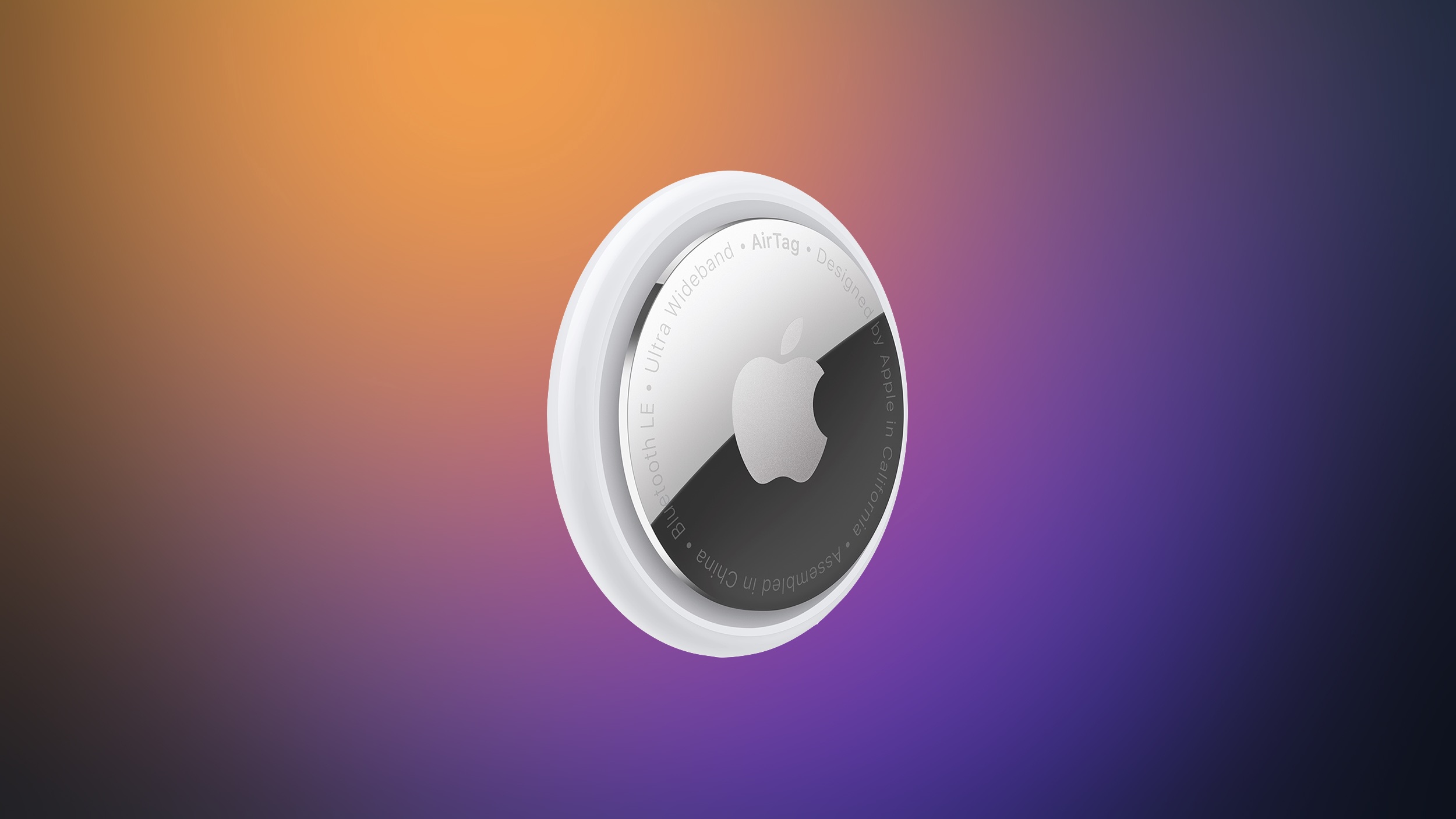
We've rounded up everything we know about the AI pin so far.
Design
The pin is said to be similar in size to an AirTag, with a thin, flat, circular disc shape. It features an aluminum and glass shell, and there's a physical control button on one edge. Apple apparently wants the final version of the device to be about the same size as an AirTag, but with the hardware inside, it will be slightly thicker.
Apple will let users attach it to clothing or a bag with a clip, or wear it as a necklace using a hole at the top of the accessory.
The AI pin wirelessly charges like an Apple Watch.
Camera
Apple plans to add a camera to the AI pin, but rumors are mixed on what the camera will do.
Bloomberg says the pin will have a low-resolution camera that gives it info about its surroundings rather than a camera for capturing photos and videos. The camera will be always-on and always recording, but users will not be able to use it for images.
The Information believes there will be two front cameras, one with a standard lens and one with a wide-angle lens for capturing photos and videos.
Apple's AI device will rely heavily on Visual Intelligence, which is currently an iPhone feature that uses the camera to provide users with more information about places and objects around them.
Speaker and Microphone
The AI pin has at least one microphone for speaking to Siri and picking up sounds around the wearer, but Apple has not decided whether to add a speaker for back-and-forth Siri conversations and audio playback.
Siri
The AI pin will run the updated version of Siri that Apple plans to unveil in iOS 27. Apple is working on a chatbot upgrade for Siri, putting it on par with Claude, Gemini, and OpenAI.
Siri will be powered by a version of Gemini thanks to Apple's partnership with Google. All of the intelligence features promised in iOS 18 are expected in iOS 27, plus more.
iPhone Reliance
The AI pin will have a dedicated chip inside, but it will be similar to the H2 chip in the AirPods. It's not going to be a high-powered chip, and most processing will be done on the iPhone.
Apple is not designing the AI pin to be a standalone device, and it will instead be marketed as an iPhone accessory. Bloomberg said some Apple employees see it as the "eyes and ears" of the iPhone.
Competition
OpenAI is also rumored to be working on an AI device through its collaboration with former Apple designer Jony Ive. OpenAI's device will be powered by ChatGPT, and it could launch in 2027. Rumors suggest that it's a small, pocket-sized non-wearable, but it would still compete with a similar AI wearable from Apple.
Other wearable AI devices like the $700 Humane AI Pin have failed, but the Humane pin was developed as a standalone device rather than an accessory to an existing product like the iPhone.
Apple's Other AI Wearable Work
Apple is working on AirPods that have a built-in infrared camera that's meant to gather information about the wearer's surroundings, similar to the pin. Development on the AirPods is further along, and rumors suggest we could see a camera-equipped version of the AirPods Pro as soon as this year.
Apple is also developing smart glasses that will compete with the Meta Ray-Bans. The glasses will have a high-resolution camera system able to capture photos and videos, plus a second camera that feeds visual data to Siri for environmental context. The glasses won't have an embedded display in the lens, and are reliant on the upcoming smarter version of Siri.
Launch Date
Development on the AI pin is in the early stages, and it could still be canceled. If Apple moves forward with plans for the pin, it's possible that it could launch as soon as 2027.
Article Link: Apple's AirTag-Sized AI Pin: Everything We Know

CarAnalogy
macrumors 604
Step back a second... if it were truly a Star Trek communicator-like device, it might sell insanely well. Think about it: a properly functioning Siri that you evoke with a tap (yeah, no always-on, please) and access data with a proper voice interface. That would sell.
But how quickly will it be dropped into the junk drawer?
If it has to be tethered to the iPhone (like the Watch has been for too long now), that is immediately a strike against it. If it's not an option to turn the camera off, that's another strike. And, at AirTag size, what will the battery life be like? How long will the pin's operational life be? What will the drain on the iPhone be to run this thing? Will I need AirPods to hear it, or will there be a tiny, tinny speaker anyone around me can hear? If I need AirPods, why would I need this to pick up voice (it's the "eyes and ears," right?)?
There are a lot of reasons this wouldn't make sense.
But, hey, if Siri finally works correctly, then I bet it will sell.
The killer feature of the Star Trek Communicator was calling in a transporter beam or an orbital strike.
Without the Enterprise to back it up, this thing just sounds like an Apple Watch with a camera on a necklace.

marinersaptcomplex
macrumors 6502a
if it can actually capture photos and videos this just sounds like every pervs dream, ew. kill this in R&D
CarAnalogy
macrumors 604
Sorry, but this sounds really stupid.
It does nothing your phone won’t be able to do, Apple is not going to try to push you NOT to buy an iPhone, and if it’s a situation where it’s not appropriate to take out a phone and point the phone’s camera at something, then it won’t be a situation where this device would be appropriate.
Either I’m missing something, or this is a completely redundant device.
I agree, this all sounds like it's handled better by improvements to the existing combination of phone, watch, and airpods that essentially already do this.
These tech companies seem determined to get us wearing body cameras and only accessing the internet after being positively identified. Very dystopian.

IIGS User
macrumors 68000
The killer feature of the Star Trek Communicator was calling in a transporter beam or an orbital strike.
Without the Enterprise to back it up, this thing just sounds like an Apple Watch with a camera on a necklace.
Target photon torpedoes on my location and energize.
Happy_John
macrumors 68000
The biggest worry I have is privacy - not the privacy of the user of the device, buy the privacy of everyone around that person. They haven’t clicked “I agree” to any contract.I agree, this all sounds like it's handled better by improvements to the existing combination of phone, watch, and airpods that essentially already do this.
These tech companies seem determined to get us wearing body cameras and only accessing the internet after being positively identified. Very dystopian.
It reminds me of the Google street view controversy in Germany. Street view seems great at the time, amazing use of technology. Except - what if you didn’t want strangers to look at your home or even potentially to look into your home, if viewing the inside of your home was possible through street view if you had big windows and no blinds? It may only be a still image from a single point in time, but Google hadn’t asked the homeowner .
Google said, no problem, you can opt out and if you ask us, We’ll remove the image. But that’s still a problem, because the option to opt out is not good enough. Not bring recorded should be the default, and people need to actively opt-in and agree to be recorded. The agreement cannot just be presumed.
An always-on camera/mic device is the same, but much much more invasive. The fact hat the audio feed is being sent to an LLM that may be able to identify people and provide information arion about them (which it could if it was trained in social media e.g. Facebook) based on the audio/video feed is also very invasive.
Given that people have used AirTags to stalk and track other people without their knowledge, this type of device really hasn’t been thought through with regards other’s right to not be recorded, identified and analysed/profiled without their knowledge.
You might have consented to use the device, with all its terms and conditions, but they haven’t.
Last edited: