Become a MacRumors Supporter for $50/year with no ads, ability to filter front page stories, and private forums.
My old Withings scale finally died this past week, and I was about to buy something new until I did a little research. Apparently their customer support is nonexistent since their recent business troubles, including people not getting responses for their warranty-related tickets for months, support failing to show up on pre-scheduled calls, etc. Pages and pages of complaints. Until they fix their situation, they should perhaps not be showing up to CES. Caveat emptor.
 
the most extensive scans can take up to 90 seconds
I wonder if any of the markers relate to how much you sway when you're leaning over staring down at the screen?
(My old Eufy smart scale can get stuck trying to choose between adjacent numbers if I do that, and then just times out instead of picking one and reporting it to the app.) Or maybe that's mooted by the fact you're supposed to hold the display during the scan?
I don't think older or out of shape people are going to want to bend over to pick the display handle up and put it back after, though, which narrows the group of people for whom the scans will be useful in practice. At least if the scale requires respooling that in between uses.
 
What are some good ones, I like the idea of hypertension checking.
Go to your local medical supply store and ask what's decent on a budget. You can get a decent Littman stethoscope for about $40. Analog gauge cuffs can be had for $20 and up. They do come in sizes, and the correct size is important for an accurate measurement (giant cuff on tiny arm will not do well).
 
  • Like
Reactions: polyphenol


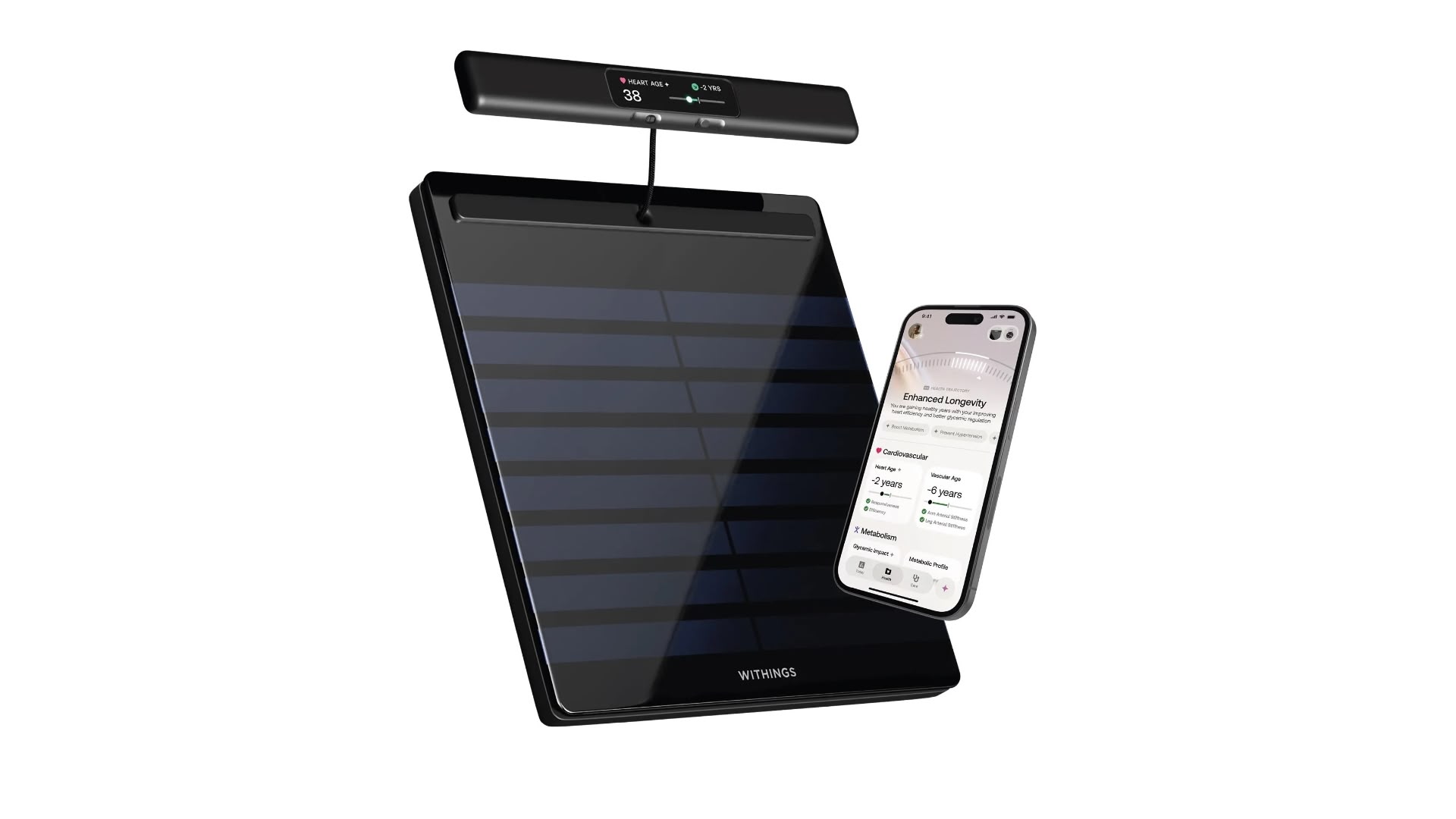
Withings has announced the Body Scan 2, a new smart scale that the French health tech company says can track over 60 longitudinal biomarker measurements that enable the early detection of health issues and can even predict longevity.

withings-body-scan-2.jpg

Unveiled at CES 2026, the Body Scan 2 builds on its 2023 predecessor by adding several advanced features including Impedance Cardiography (ICG) to monitor heart pumping efficiency, and Bioimpedance Spectroscopy (BIS) to assess cellular health and metabolic function. This version of the device also adds hypertension risk notifications.

Withings says the all-in-one "longevity station" gets around the need for blood tests to track metabolic health, instead using foot sweat stimulation and cellular membrane analysis, though the company is keen to note that the features are meant to be early warning signs rather than being diagnostic.

Body Scan 2 users receive a Health Trajectory score that synthesizes all of this biomarker data into a single metric representing predicted years of healthy life. The scale also tracks heart age, patterns of glycemic dysregulation – a potential precursor toward prediabetes – and artery elasticity. Users can customize what to monitor, and the tracking then happens automatically when they step on the scale, though the most extensive scans can take up to 90 seconds.

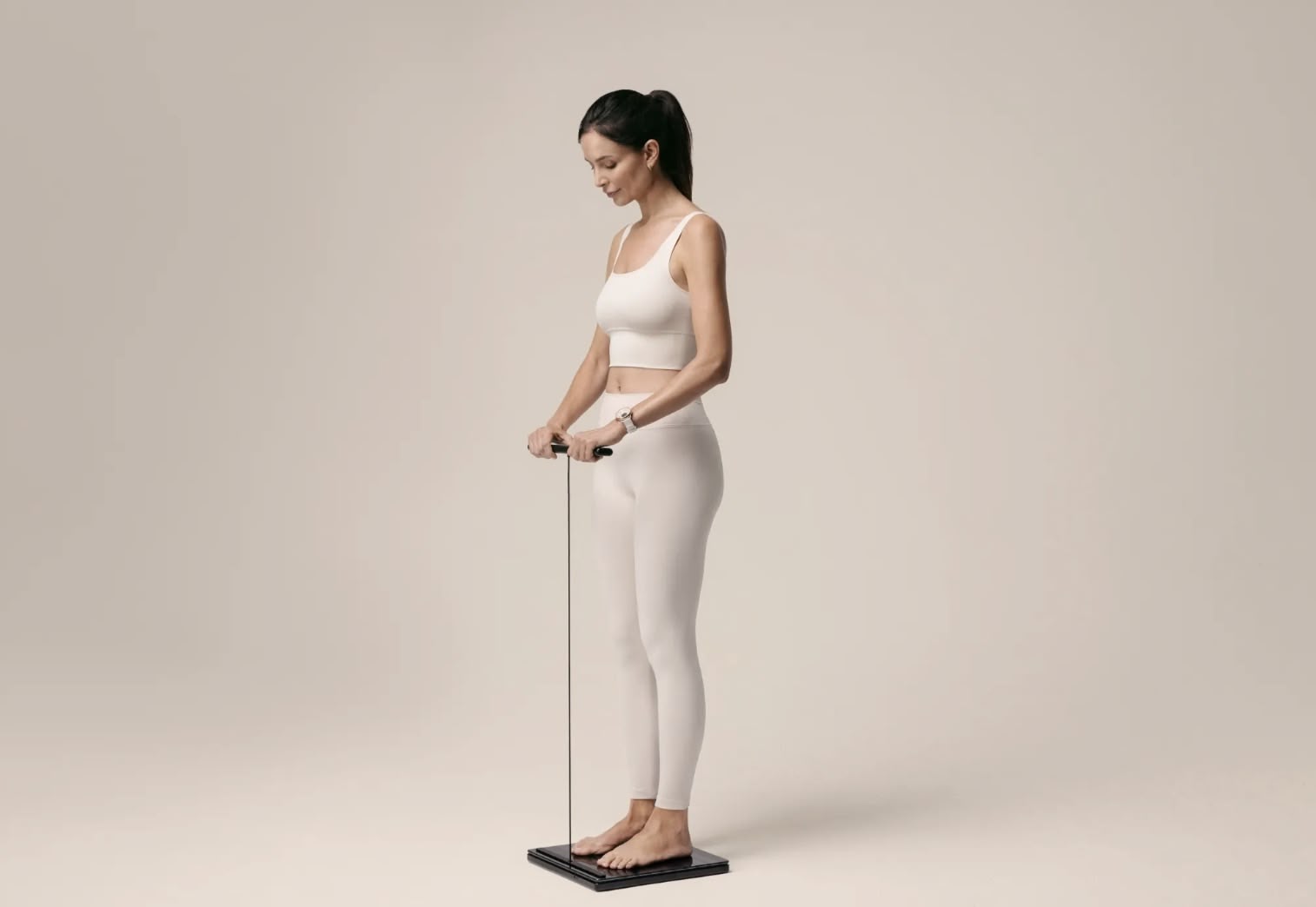
One notable design change from the original moves the color display from the scale's base into the retractable handle, which houses four electrodes. Combined with eight EKG-capable electrodes on the scale's glass surface, the device creates a full-body circuit for what Withings claims are more accurate measurements than typical foot-only smart scales.

withings-body-scan-2-standing.jpg

The Body Scan 2 costs $600 and will launch in the second quarter of 2026, pending FDA clearance for its hypertension risk and atrial fibrillation detection features, with a launch also planned in the U.K., Australia and Europe. The original Body Scan remains available at $399. Withings says the device complies with GDPR and HIPAA privacy standards, with all health data encrypted.

Article Link: CES 2026: Withings Unveils Body Scan 2 With Hypertension Detection

As a practicing internist, a word of advice:
Please do not waste your hard-earned money on this.
"Hypertension risk detection" is not a thing, and atrial fibrillation detection is mainly useful on a continuously-worn device. The rest of it is utter fluff and ********. Want to monitor blood pressure? Get an automatic cuff. Omron is a good brand.

As an aside, predicting longevity is very difficult even with real diagnostic tools. Unless you have something severely life-limiting like certain cancers or heart failure, the main predictor of longevity is your current age.

Dave
 
Haven't seen this one before. Looks pretty darn good especially for the price! I have to look into them more if/when my Withings dies.
From their official website it looks like some features like the weekly health report, "insights and recommendations" and so on are locked behind a subscription. But Withings also has a subscription service, and even though I don't see it mentioned on their new product site I'll just bet some of what they're touting will be locked away as well. Definitely something to look for in any product review of either one.
 
What are some good ones, I like the idea of hypertension checking.
My doctor recommended this one

 
  • Like
Reactions: WU27f1xcCs
As a practicing internist, a word of advice:
Please do not waste your hard-earned money on this.
"Hypertension risk detection" is not a thing, and atrial fibrillation detection is mainly useful on a continuously-worn device. The rest of it is utter fluff and ********. Want to monitor blood pressure? Get an automatic cuff. Omron is a good brand.

As an aside, predicting longevity is very difficult even with real diagnostic tools. Unless you have something severely life-limiting like certain cancers or heart failure, the main predictor of longevity is your current age.

Dave
Wife's an ER physician. I'm pretty sure Apple Watch EKG false positives have sent me on vacations. Apple gives them data but
1) Can't teach them to intepret
2) Can't give legitimate medical advice

Even if it worked well enough, there is such thing as too much data. If you test your BP constantly, you will eventually read abnormal, it's just probabilities.
 
Costly device. Not sure how many will buy one. Hopefully there won't be any subscription attached to it when it launches.
 
  • Like
Reactions: mganu
Wife's an ER physician. I'm pretty sure Apple Watch EKG false positives have sent me on vacations. Apple gives them data but
1) Can't teach them to intepret
2) Can't give legitimate medical advice

Even if it worked well enough, there is such thing as too much data. If you test your BP constantly, you will eventually read abnormal, it's just probabilities.
Off topic, but just recently watched “The Pitt”, and if that show is anything remotely accurate to a tough day in real life ERs… wow, the real life heroes do their deed on those.
 
There are many sources of advice on taking your own blood pressure, one is linked below but look around and find a list that is comprehensive and works for you. They are not difficult to follow but I have seen so many people doing things like talking, even doctors talking to patients, wrong elevation of arm, incorrect cuff placement, and so on. Taking the best approach to measuring is more important than the device used - so long as it reaches "reasonably accurate".

The effect of not adhering to these "rules" is that you will get inconsistent and likely useless results.

 
Wife's an ER physician. I'm pretty sure Apple Watch EKG false positives have sent me on vacations. Apple gives them data but
1) Can't teach them to intepret
2) Can't give legitimate medical advice

Even if it worked well enough, there is such thing as too much data. If you test your BP constantly, you will eventually read abnormal, it's just probabilities.

I have afib. And have found that my Apple Watch shows very much the same patterns as a full hospital ECG.

But I don't really have it to tell me whether or not I have afib. Not much point as I have that 100% of the time! But I do like to be able to cast my eye back over months and years.

Some time ago, I increased my levothyroxine dose (by just 12.5 micrograms a day) and saw a distinct improvement in afib and tachycardia. More steady heart rate, lower high peaks, virtually no warnings.

This was not from minute to minute, nor even day to day, monitoring - but occasionally looking back and seeing whether, and how, things had changed. And seeing a clear improvement in the days after changing my dose. (My doctor agreed and has changed the prescription.)

I would not rely on the watch alone. Still less on its interpretation. But as a collector of near-continuous data it works quite well.
 
Last edited:
Will this go down like the the Body Cardio's "pulse wave velocity" feature which they sold like a health feature, but struggled with for years to get FCC approved, only to fail and backtrack and then call it a "fitness feature" or something, because they realized they can't actually measure that from your sole?

Like how do you measure hypertension from a grip, really? How is it that no one else measures blood pressure from a grip? Surely, it must be coincidence, but finally Withings figured it out.

Or should I mention that you can't even measure blood pleasure while standing? Like you literally HAVE to be sitting, resting, without your limbs crossing in any way, and without talking, to have a proper reading.

Good luck anyway.
 
Still rocking the original Withings scale from 2010, and it still works great, other than randomly switching units of measure. Data still logs to the App just fine!
 
  • Like
Reactions: SalisburySam
I don't think older or out of shape people are going to want to bend over to pick the display handle up and put it back after, though, which narrows the group of people for whom the scans will be useful in practice. At least if the scale requires respooling that in between uses.

The Body Scan v1 does include a "wall handle mount" so people need not have to reach all the way down to grab the handle, so I'm fully expecting the v2 to also include one.

Withings Body Scan Wall Handle Mount
 
  • Like
Reactions: artifex
I have afib. And have found that my Apple Watch shows very much the same patterns as a full hospital ECG.

But I don't really have it to tell be whether or not I have afib. Not much point as I have that 100% of the time! But I do like to be able to cast my eye back over months and years.

Some time ago, I increased my levothyroxine dose (by just 12.5 micrograms a day) and saw a distinct improvement in afib and tachycardia. More steady heart rate, lower high peaks, virtually no warnings.

This was not from minute to minute, nor even day to day, monitoring - but occasionally looking back and seeing whether, and how, things had changed. And seeing a clear improvement in the days after changing my dose. (My doctor agreed and has changed the prescription.)

I would not rely on the watch alone. Still less on its interpretation. But as a collector of near-continuous data it works quite well.
Yeah see that totally makes sense. Glad you're doing better 🙂
 
Register on MacRumors! This sidebar will go away, and you'll see fewer ads.