RacerX said:
The structure used by Apple follows Genre, Artist, Album and Track (though never displayed in the column view) within iTunes and within the iPod (except the iPod shuffle which has no navigation).
In the terms of the patent, the levels Apple uses overlap, i.e.
Music->Artist->Album->Song and
Music -> Album -> Song
The patent states "
One aspect of the invention includes an overlapping hierarchy of categories ... Thus, a song title can be accessed in multiple different ways by starting with different categories." which looks pretty similar to the method mentioned.
So what you are saying is that because they used a list view on a handheld device rather than an icon view they came up with a new and novel way of displaying information? Are you being serious here or is this part an attempt at humor? It is hard to tell because this seems out of left field from the perspective of both topic and patent claims.
I'll let you clarify before I try to address this part any further.
If I may just make one personal point clear - my own view is that no software is or should be patentable.
I do not agree with the existence of the case in the first place, but we have to deal with the law as it is not as it should be.
I am suggesting that because a patent can be issued for a
novel application of existing technology, even if each implementation detail Creative uses has been used before (including with respect to columns), they can claim that it has been applied to solve a new problem. Far from being left field, I view it as the principal area of concern - I believe my first statement up thread. Focusing on column views is, IMHO, somewhat disingenuous (although most informative - I have cut a few comments out above for brevity)
You are going to need to post (step by step) what it is you think that Creative does (that Apple infringes)
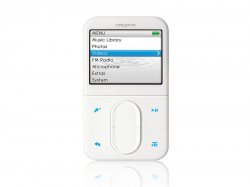
From Creative's point of view, they were faced with a 1" by 2" screen (values in patent), 6Gb / ~2000 music files and a limited number of buttons. They needed to find someway of making all that information accessible through such a tiny interface (only about 20% of the Newton screen, which is why I don't fully follow the comparison).
In order to achieve this they took existing technology (column view, tags, sorting / filtering algorithm and necessary data structures - possibly customised for their own needs) and applied it to the novel situation that had arisen from their new media player device.
They realised that other companies could make comparable devices and took steps to protect what was possibly a significant amount of research and development. Apple faced near enough exactly the same problem and lo and behold, came up with nearly exactly the same solution.
Using column view for organizing and presenting data is neither unique to Creative or a new and novel application of the presentation.
Then it will be simple to show a device that exists before this patent, that has the same restrictions on screen size and deals with presenting a comparable volume of data through that screen and leverages meta data in a comparable way.
And this is why I brought up the earlier example of the Newton in the thread (which you read according to your first post). If this type of functionality was patentable, then Apple would at the very least be making a ton of money on licenses from makers of PDAs.
You also pretty much answered that in your own post
🙂
Just because Apple didn't patent something in 1993(?) doesn't mean that they couldn't and doesn't something possibly similar in spirit isn't patentable now. Patent law has changed and, IIRC, Apple now has quite a number of UI patents relating to Dashboard, the Genie effect in the bank.
Not to mention of course, that just because you think it shouldn't be patentable - and I tend to agree - does not change the fact that, at the end of the day, they do have the patent.