
Got a tip for us?
Let us know
Become a MacRumors Supporter for $50/year with no ads, ability to filter front page stories, and private forums.
Epson to stop manufacturing flatbed film scanners
- Thread starter dimme
- Start date
- Sort by reaction score
You are using an out of date browser. It may not display this or other websites correctly.
You should upgrade or use an alternative browser.
You should upgrade or use an alternative browser.

Yes sad to say it's true...
 epson.com
Epson Perfection V800 Photo Color Scanner | Products | Epson US
Get the precise color and detail you need to digitally archive all your priceless originals - with the Epson Perfection V800 Photo scanner. 6400 dpi resolution1, a 4.0 Dmax and an innovative dual-lens scanning system ensure extraordinary results whether scanning slides, negatives, medium- or...

mollyc
macrumors G3
Well, the V800 was replaced by the V850, which is still on the Epson website. But I did find a Youtube video that says that the V850 has been discontinued as well....
But I'd kind of like confirmation from someone a little more official....
But I'd kind of like confirmation from someone a little more official....

bunnspecial
macrumors G3
Kind of not surprised, although for a lot of purposes camera scanning is better than the Epson scanners.
Also, it's worth mentioning that the Epson flatbeds are very durable units, and the way most photographers are going to use them, they're not going to wear out. I THINK the V700 and newer in large format scanners use LED lamps, so you don't really need to worry about color shift of aging fluorescent tubes(which I think can be a problem in older models like the 4990).
I bought my V700 used, and it's still going strong, although I really only use it now for large format and for oddball film sizes(and hopefully within the next week I'm going to have a solution for my Coolscan 9000 for oddball sizes). The V750 is supposed to have some improvements in the coating on the optics, and the V800/V850 are supposed to be a further improvement, but the differences are pretty minor and for a lot of purposes the V7xx and V8xx series scanners are interchangeable. There are a LOT of used ones out there.
I hate to see products discontinued, but at the same time someone using a scanner these days as opposed to a camera is pretty dedicated to start with, and if going down that rabbit hole you'll run into the weaknesses of the Epson flatbeds pretty quickly. Assuming you can even get your medium format film to lay flat, there are resolution issues, issues with the Dmin and Dmax the scanner handles(and because of the way Epson does multipass/multisample, trying to use those techniques brings real resolution well below what single pass gets you), and several other nitpicky things. For the new price of one, you're really not far off from buying something like an older Creo flatbed or a Hasselblad/Imacon, both of which come with their own quirks and REALLY steep learning curves, but also ultimately are going to deliver results that are in almost every measurable way better than the Epson...
So that's my two cents, and like I said I hate to see them go, but this is a product line that's had a good run, and anyone who needs one isn't going to have a hard time finding one.
Also, it's worth mentioning that the Epson flatbeds are very durable units, and the way most photographers are going to use them, they're not going to wear out. I THINK the V700 and newer in large format scanners use LED lamps, so you don't really need to worry about color shift of aging fluorescent tubes(which I think can be a problem in older models like the 4990).
I bought my V700 used, and it's still going strong, although I really only use it now for large format and for oddball film sizes(and hopefully within the next week I'm going to have a solution for my Coolscan 9000 for oddball sizes). The V750 is supposed to have some improvements in the coating on the optics, and the V800/V850 are supposed to be a further improvement, but the differences are pretty minor and for a lot of purposes the V7xx and V8xx series scanners are interchangeable. There are a LOT of used ones out there.
I hate to see products discontinued, but at the same time someone using a scanner these days as opposed to a camera is pretty dedicated to start with, and if going down that rabbit hole you'll run into the weaknesses of the Epson flatbeds pretty quickly. Assuming you can even get your medium format film to lay flat, there are resolution issues, issues with the Dmin and Dmax the scanner handles(and because of the way Epson does multipass/multisample, trying to use those techniques brings real resolution well below what single pass gets you), and several other nitpicky things. For the new price of one, you're really not far off from buying something like an older Creo flatbed or a Hasselblad/Imacon, both of which come with their own quirks and REALLY steep learning curves, but also ultimately are going to deliver results that are in almost every measurable way better than the Epson...
So that's my two cents, and like I said I hate to see them go, but this is a product line that's had a good run, and anyone who needs one isn't going to have a hard time finding one.
Well said. I have used both the Creo flatbed or a Hasselblad/Imacon along with a drum scanner to digitize my film collection from my film days (The Imacon being my goto scanner). They are by far better than what you get with the Epson. But the cost of those scanners is also much higher and also required regular maintenance. I was lucky to be in a position where I had access to the scanners and the training for both operation and maintenance. (It was my job) The time spent to get the high quality results from those scanners was well worth it for most of the work I was doing. I also have an Epson v600, which I used to scan a few thousand (mostly Kodacolor negatives) that my late Father took of our family over some 40 years. The project took well over a year to complete and having the epson v600 with its batch scanning and ICE was a godsend. The end product of these scans was a family archive. that would live on the web. The Epson was perfect for this. But I do see where the market for such a scanner has diminished. RIP Epson film scanners.Kind of not surprised, although for a lot of purposes camera scanning is better than the Epson scanners.
Also, it's worth mentioning that the Epson flatbeds are very durable units, and the way most photographers are going to use them, they're not going to wear out. I THINK the V700 and newer in large format scanners use LED lamps, so you don't really need to worry about color shift of aging fluorescent tubes(which I think can be a problem in older models like the 4990).
I bought my V700 used, and it's still going strong, although I really only use it now for large format and for oddball film sizes(and hopefully within the next week I'm going to have a solution for my Coolscan 9000 for oddball sizes). The V750 is supposed to have some improvements in the coating on the optics, and the V800/V850 are supposed to be a further improvement, but the differences are pretty minor and for a lot of purposes the V7xx and V8xx series scanners are interchangeable. There are a LOT of used ones out there.
I hate to see products discontinued, but at the same time someone using a scanner these days as opposed to a camera is pretty dedicated to start with, and if going down that rabbit hole you'll run into the weaknesses of the Epson flatbeds pretty quickly. Assuming you can even get your medium format film to lay flat, there are resolution issues, issues with the Dmin and Dmax the scanner handles(and because of the way Epson does multipass/multisample, trying to use those techniques brings real resolution well below what single pass gets you), and several other nitpicky things. For the new price of one, you're really not far off from buying something like an older Creo flatbed or a Hasselblad/Imacon, both of which come with their own quirks and REALLY steep learning curves, but also ultimately are going to deliver results that are in almost every measurable way better than the Epson...
So that's my two cents, and like I said I hate to see them go, but this is a product line that's had a good run, and anyone who needs one isn't going to have a hard time finding one.
bunnspecial
macrumors G3
Well said. I have used both the Creo flatbed or a Hasselblad/Imacon along with a drum scanner to digitize my film collection from my film days (The Imacon being my goto scanner). They are by far better than what you get with the Epson. But the cost of those scanners is also much higher and also required regular maintenance. I was lucky to be in a position where I had access to the scanners and the training for both operation and maintenance. (It was my job) The time spent to get the high quality results from those scanners was well worth it for most of the work I was doing. I also have an Epson v600, which I used to scan a few thousand (mostly Kodacolor negatives) that my late Father took of our family over some 40 years. The project took well over a year to complete and having the epson v600 with its batch scanning and ICE was a godsend. The end product of these scans was a family archive. that would live on the web. The Epson was perfect for this. But I do see where the market for such a scanner has diminished. RIP Epson film scanners.
I do agree with this.
It's been hashed to death on a lot of photography forums, but the high end scanners really do still deliver when it comes to it. That's true of CCD based scanners like the Hasselblad/Imacon or Creo, or if you go even further back to a PMT based drum scanner.
The older models of Imacon and Creo can be had in the $2K-$3K range depending on what's included, but of course you're at the mercy of a product that's no longer supported, may need some scavenging or creativity to keep going, and still has a steep learning curve. That's even more true of the PMT-based drum scanners out there-especially given that a lot are even older, and that's not counting the space. With some you're at the mercy of old computers too, since IIRC at least some drum scanners use Mac software that needs an ADB HASP(so you're not using a Mac made in this century to run them).
The Epsons definitely cross into "good enough" territory for a lot of uses. I forget how many slides can be loaded at a time in the big(8x10 capable) flatbeds-maybe 12? You can do 4x strips of 6 35mm, so 24 at a time, or even 2 strips of medium format(which could be ~12 frames depending on the frame size-IIRC 8 frames of 6x6 at a time are doable). I've scanned everything from 16mm(110) to 5x7 on my V700. The flexibility is definitely a big selling point, especially considering that you can do up to 8x10 either directly on the glass or on the fluid bed, can wet mount if you want, and basically with enough creativity can scan any format you so desire.
The Nikon 8000/9000 are an even bigger step up in terms of image quality, although now they're ~20 years out of date and need some real commitment to keep them running. I rarely scan 35mm on my 9000, but IIRC, it can handle 2x strips of 6 or maybe 8? mounted slides. Of course these are slow scanners, although the 9000 improves a lot over the 8000(especially since most decent well exposed/processed film can do single single sample, where 2x was often needed on my 8000 to reduce banding even on good film). For the III/IV/4000/V/5000 you have the 6 frame strip feeder, and on the 4000 and 5000 you can even use the(rare) uncut strip feeder or the slide stack feeder. Before my 4000 died, though, it was basically an all day operation to do full strips...
The Epson scanners definitely fill an important an valuable role, and I know a lot of primarily or exclusively large format photographers who are content with them for routine work and send off for high end scans when they need something beyond what the Epson can deliver.
I'm actually a bit surprised that the market isn't stonger with the current strong film renaissance, but I've noticed that a lot of film shooters now don't see a place in their workflow for a dedicated scanner. For some, automated lab scans are fine. Many people shooting film also will have a higher end digital that can be used very effectively for this, and even though I can still make a lot of arguments for how a dedicated scanner is better, I can also understand a lot of the arguments. The Nikon 35mm format scanners are small, but most flatbeds or larger format film scanners take up a lot of space. Plus, the resolution of modern cameras coupled with high end lenses really does make the gap between them and a good scanner small. The last time I tested my D850 against my scanners, I found that for 35mm Velvia, it edged out my V700 slightly. My Coolscan V was still noticeably better, but the 9000 was close(the D850 showed similar detail in the mid-tone portions, but the 9000 was night and day at the ends of the curve). Moving up to even 645, though, both the V700 and the 9000 blew the D850 away, but really the D850 results were perfectly for everything but the poorly exposed stuff...


turbineseaplane
macrumors Penryn
mollyc
macrumors G3
petapixel reports that epson (us side at least) is denying this.
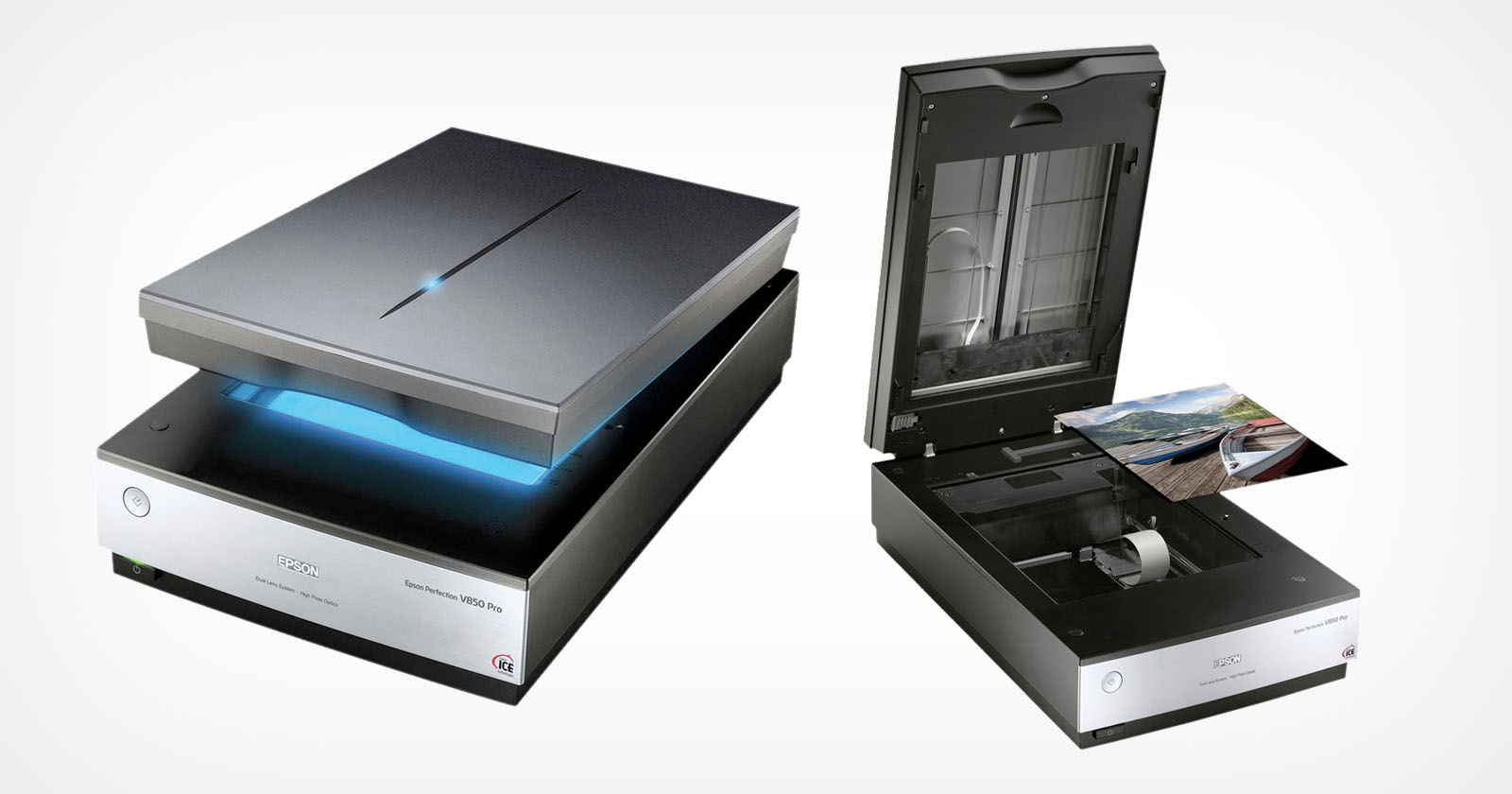
 petapixel.com
Epson Denies Claim That Its CCD Film Scanners Are Approaching 'End of Life'
Epson flatly denies the claim that its flatbed CCD film scanners are approaching "end of life" and says they're still actively being made.
That is good news for film shooters. Thanks for the info.petapixel reports that epson (us side at least) is denying this.
Epson Denies Claim That Its CCD Film Scanners Are Approaching 'End of Life'
Epson flatly denies the claim that its flatbed CCD film scanners are approaching "end of life" and says they're still actively being made.
piatigorsky
macrumors 6502
That's good news if true. I'm still using a second-hand V600 for film and print scanning, and when I saw this subject pop up in my feed I almost immediately went to scour the online shops here to see if anybody was selling a V850.petapixel reports that epson (us side at least) is denying this.
Epson Denies Claim That Its CCD Film Scanners Are Approaching 'End of Life'
Epson flatly denies the claim that its flatbed CCD film scanners are approaching "end of life" and says they're still actively being made.