

Become a MacRumors Supporter for $50/year with no ads, ability to filter front page stories, and private forums.

MacRumors

macrumors bot
Original poster


Apple's upcoming home hub will support multiple profiles and will include "ambient sensing" for identity verification, according to code we found in the macOS Tahoe 26.7 update.
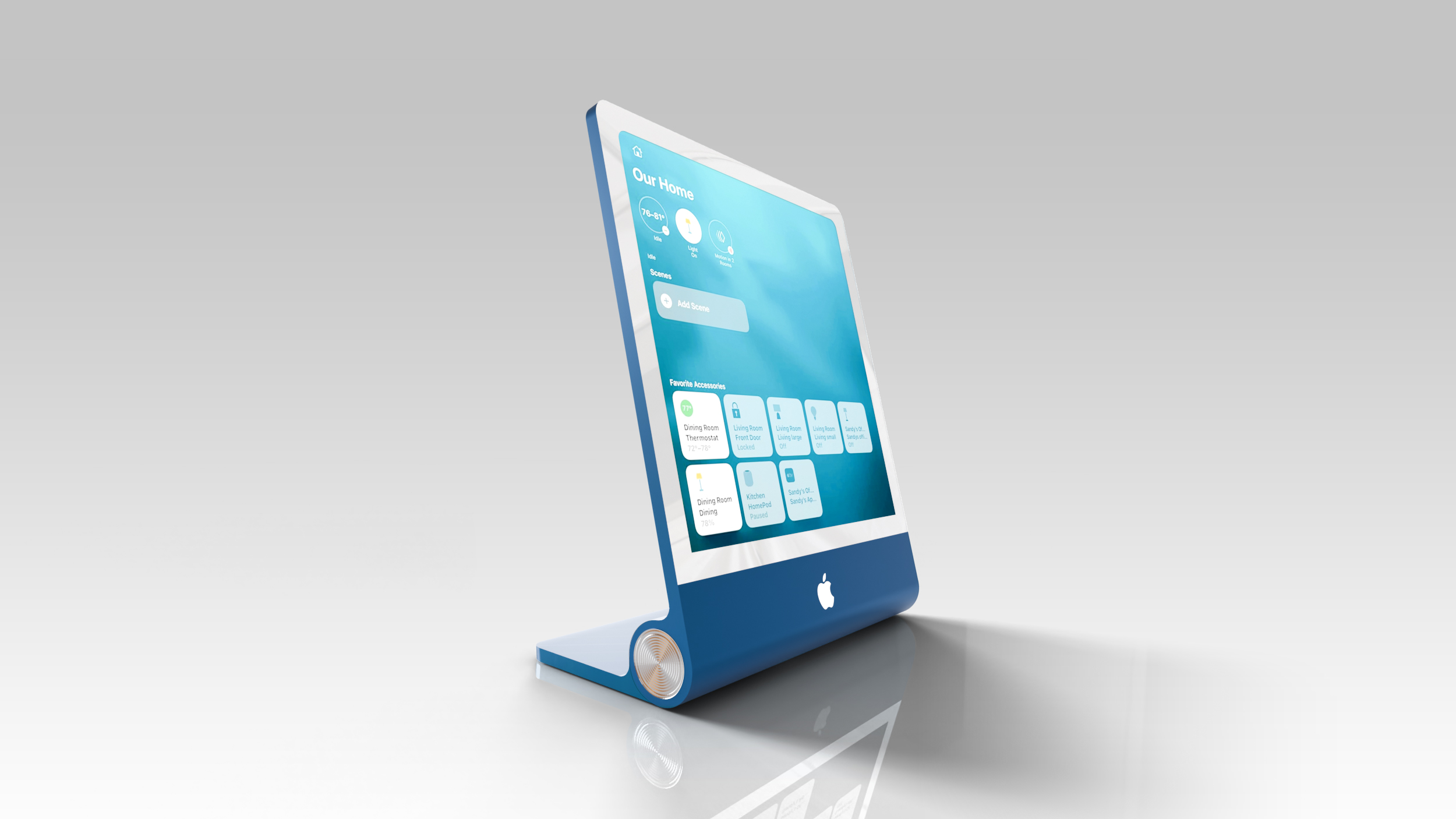
Apple-AI-Command-Center-Concept-Mock-3.jpg

The accessory will show Personal Content for different users in the home, with options to select a profile via Control Center or the Settings app on the device. The home hub is expected to have an operating system similar to tvOS, so the Control Center and profile selection options might look like those on the Apple TV.

It sounds like the home hub can switch between profiles automatically using some combination of cameras and sensors, based on the mentions of ambient sensing. The device is rumored to include cameras and a presence-sensing feature to determine when someone is in the room, so it will be able to tell who is near it and switch profiles appropriately.

Here are some of the code strings.
  • Sorry, I'm not sure who you are. To access your Personal Content, you'll need to select yourself in Control Center.
  • Before I can help with that, you'll need to enable Personal Content. In the Settings app, tap on your name, and turn on Personal Content.
  • I'm not sure who's speaking. Please come in front of this device and ask again.
  • Sorry, since this device hasn't seen you in a while, you'll need to ask again in front of the camera.
  • To access your Personal Content, you'll need to select yourself in Control Center and temporarily allow ambient sensing to verify your identity.
There are also mentions of a wall-mounted version of the home hub, confirming that there will be two models. The other version will include a speaker base.

Rumors suggest the home hub will have a square, 7-inch display. It will run apps and have a main home screen with quick-access widgets. We could see the home hub announced as soon as September.

Article Link: Home Hub Code Hints at Face-Based Profile Switching
 
Hoping some of this can be overridden. For me, much of the point of this would be to let guests and kids control lights and other HomeKit devices in an easy and intuitive manner without layers of BS like having to use an iPhone or having to register biometrics. Now calendars and reminders... sure, that can and should be user-specific, and I have a hunch that’s what this is all about.
 
So facial recognition in a $300-400 or so device but not on on the $2000 foldable, lame, and yes, I've heard it before that FaceID does supposedly not fit in the fold but that is simply lame
They are likely making the calculation a device that doesn't leave your home can work with a less secure FaceID implementation than one more subject to loss or theft because you carry it on your person.
 
So facial recognition in a $300-400 or so device but not on on the $2000 foldable, lame, and yes, I've heard it before that FaceID does supposedly not fit in the fold but that is simply lame
The Face ID assembly costs like $10, so its price certainly isn’t the issue.
 
  • Disagree
Reactions: racerhomie
Hoping some of this can be overridden. For me, much of the point of this would be to let guests and kids control lights and other HomeKit devices in an easy and intuitive manner without layers of BS like having to use an iPhone or having to register biometrics. Now calendars and reminders... sure, that can and should be user-specific, and I have a hunch that’s what this is all about.
I’d assume that distinguishing between guests and non-guests is exactly one of the use cases for this feature.
 
  • Like
Reactions: ipedro


Apple's upcoming home hub will support multiple profiles and will include "ambient sensing" for identity verification, according to code we found in the macOS Tahoe 26.7 update.

Apple-AI-Command-Center-Concept-Mock-3.jpg

The accessory will show Personal Content for different users in the home, with options to select a profile via Control Center or the Settings app on the device. The home hub is expected to have an operating system similar to tvOS, so the Control Center and profile selection options might look like those on the Apple TV.

It sounds like the home hub can switch between profiles automatically using some combination of cameras and sensors, based on the mentions of ambient sensing. The device is rumored to include cameras and a presence-sensing feature to determine when someone is in the room, so it will be able to tell who is near it and switch profiles appropriately.

Here are some of the code strings.
  • Sorry, I'm not sure who you are. To access your Personal Content, you'll need to select yourself in Control Center.
  • Before I can help with that, you'll need to enable Personal Content. In the Settings app, tap on your name, and turn on Personal Content.
  • I'm not sure who's speaking. Please come in front of this device and ask again.
  • Sorry, since this device hasn't seen you in a while, you'll need to ask again in front of the camera.
  • To access your Personal Content, you'll need to select yourself in Control Center and temporarily allow ambient sensing to verify your identity.
There are also mentions of a wall-mounted version of the home hub, confirming that there will be two models. The other version will include a speaker base.

Rumors suggest the home hub will have a square, 7-inch display. It will run apps and have a main home screen with quick-access widgets. We could see the home hub announced as soon as September.

Article Link: Home Hub Code Hints at Face-Based Profile Switching
This might be an unpopular opinion but a homepad device is the solution to a problem that doesn’t really exist.

Yes current HomePods suck with Siri but the next gen’s will most likely get Siri AI.

So conversational Siri will be great and work better at carrying out ecosystem tasks.

But an iPad device on a stand with a speaker?

Sounds like they’re building a limited iPad on top of a limited HomePod speaker (in terms of being a full speaker system).

Maybe I’m wrong but like the Vision Pro, its success will be down to its price.

And let’s be honest $350 (minimum) for HomePod 3 and that thing won’t have a screen.

This homepad will cost minimum $700 and who is wanting to buy that when you could stereo pair Siri AI.

Extra expense for a single speaker with a screen. Something our phones and 5 year old iPads have already?

Unless it can pack the speaker performance of two full sized HomePods into one device it might end up being a niche device being crammed into a smart speaker / assistant market that already peaked with the Alexa’s?
 
So facial recognition in a $300-400 or so device but not on on the $2000 foldable, lame, and yes, I've heard it before that FaceID does supposedly not fit in the fold but that is simply lame
Despite the picture used for the article, this device won’t need to be particularly thin.

MacBook Pros don’t have FaceID above the display, a folding iPhone mightn’t have FaceID - because thinness is an issue in these cases.

The IPad Pro s the thinnest device that they’ve been able to shoehorn FaceID into.

Price of the components aren’t the issue, the physical dimensions of them is.

presumably, a folding phone where each leaf of the device is as thick as an iPad Pro mightn’t be thin enough to be acceptable to Apple.
 
  • Like
Reactions: Kengineer
So facial recognition in a $300-400 or so device but not on on the $2000 foldable, lame, and yes, I've heard it before that FaceID does supposedly not fit in the fold but that is simply lame
Hahaha still can't believe they still charge $2k meanwhile this home hub have face id
 
This might be an unpopular opinion but a homepad device is the solution to a problem that doesn’t really exist.

Yes current HomePods suck with Siri but the next gen’s will most likely get Siri AI.

So conversational Siri will be great and work better at carrying out ecosystem tasks.

But an iPad device on a stand with a speaker?

Sounds like they’re building a limited iPad on top of a limited HomePod speaker (in terms of being a full speaker system).

Maybe I’m wrong but like the Vision Pro, its success will be down to its price.

And let’s be honest $350 (minimum) for HomePod 3 and that thing won’t have a screen.

This homepad will cost minimum $700 and who is wanting to buy that when you could stereo pair Siri AI.

Extra expense for a single speaker with a screen. Something our phones and 5 year old iPads have already?

Unless it can pack the speaker performance of two full sized HomePods into one device it might end up being a niche device being crammed into a smart speaker / assistant market that already peaked with the Alexa’s?
Yes, price is the issue.

Basically, if this as expensive or more expensive than a base iPad + HomePod mini, why the hell would anyone buy it?

Yes, multi-user switching is nice, but is that enough?

Realistically, this should be as expensive or less expensive than a base iPad, but that’s very unlikely.
 
Yes, price is the issue.

Basically, if this as expensive or more expensive than a base iPad + HomePod mini, why the hell would anyone buy it?

Yes, multi-user switching is nice, but is that enough?

Realistically, this should be as expensive or less expensive than a base iPad, but that’s very unlikely.
Exactly, it’s basically an iPad that’s less portable (due to the stand) and given the picture used you’d be luck to fit a HomePod mini speaker in there.

Outside of Face ID switching you might as well get a base iPad, get a stand or wall mount it and keep it plugged.

Yes you’ll miss out on AI due to the A16 but the next gen can either be an A17 Pro or an A18.

I doubt Apple will let the base iPad go another year without Apple Intelligence.

Also how can this product evolve in generations to come?

HomePod can produce better sound and possibly more complex AI tasks but so can a iPad.

It’s weird given the Vision Pro and iPhone Air arguably flopped.

Are Apple just throwing products out there to see what sticks?
 
  • Disagree
Reactions: citysnaps
Despite the picture used for the article, this device won’t need to be particularly thin.

MacBook Pros don’t have FaceID above the display, a folding iPhone mightn’t have FaceID - because thinness is an issue in these cases.

The IPad Pro s the thinnest device that they’ve been able to shoehorn FaceID into.

Price of the components aren’t the issue, the physical dimensions of them is.

presumably, a folding phone where each leaf of the device is as thick as an iPad Pro mightn’t be thin enough to be acceptable to Apple.
all devices are some compromise on certain things, if Apple thinks that putting touchid in a $2k foldable phone is an acceptable compromise (as they can't fit faceid in there cause of thinness), that is fine, it is simply a dealbreaker for me.
Getting faceid into a foldable phone is an engineering challenge, nothing more
 
all devices are some compromise on certain things, if Apple thinks that putting touchid in a $2k foldable phone is an acceptable compromise (as they can't fit faceid in there cause of thinness), that is fine, it is simply a dealbreaker for me.
Getting faceid into a foldable phone is an engineering challenge, nothing more
It is. If it’s not in the predicted folding home, it’s not in there because they haven’t as yet, been able to overcome that challenge, just as they haven’t yet overcome the same challenge in MacBooks

This “homepad” doesn’t have that design challenge, so there’s no reason to not use it.

What should annoy people is that iPad airs don’t have FaceiD, as there’s no technical reason why it shouldn’t be.
 
Can someone help me understand who the target audience for a device like this is? And what's it's purpose?

I already have HomePods, which can play music. My partner and I can both control it from our iPhones. If someone rings our doorbell, I can look at my iPhone. I don't know why I would want to get up and go to the screen to see who is here. Plus, I have AppleTV.

What problem does this solve (i.e., why should I give Apple my money)?
 
Register on MacRumors! This sidebar will go away, and you'll see fewer ads.