

Become a MacRumors Supporter for $50/year with no ads, ability to filter front page stories, and private forums.

MacRumors

macrumors bot
Original poster


Apple's rumored new variable aperture camera system for this year's iPhone 18 Pro models has reached the sampling stage, according to a new claim from a Chinese leaker.
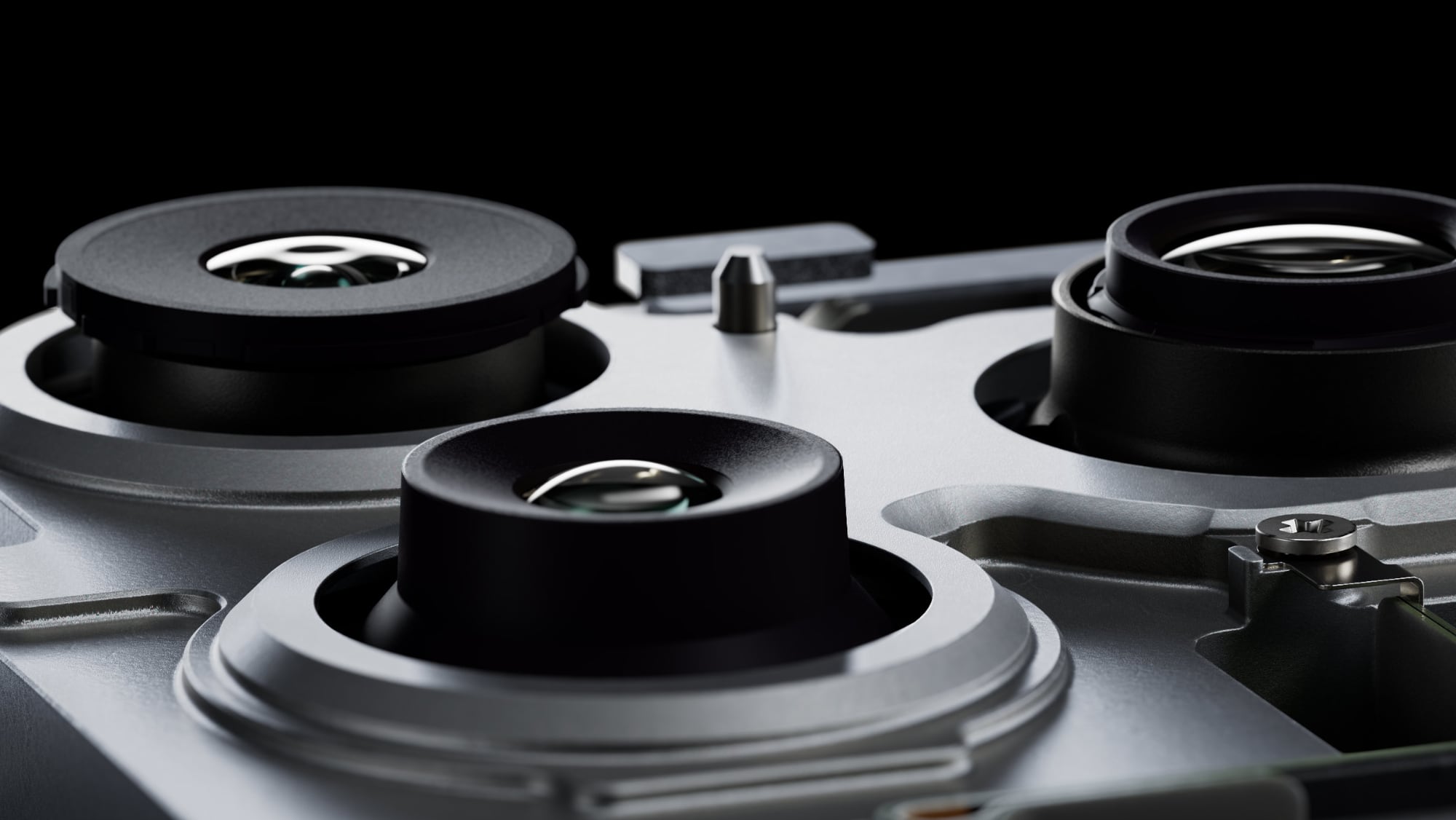
iphone-17-cameras-zoom.jpg

Posting on Weibo today, the account known as "Smart Pikachu" said the feature had entered late-stage engineering samples, while a teleconverter is also "under evaluation" for the device. The iPhone 18 Pro and iPhone 18 Pro Max are expected to launch in September 2026.

A variable aperture on the iPhone 18 Pro could improve exposure control, particularly for video. By reducing light optically, it could help maintain natural motion blur and smoother exposure in bright conditions.

Apple supply chain analyst Ming-Chi Kuo said in December 2024 that the main rear camera on both iPhone 18 Pro models will offer variable aperture, which would be a first for the iPhone. A more recent report from October 2025 said Apple was moving ahead with plans to bring the technology to next-generation iPhones and was discussing components with suppliers.

Today's teleconverter claim, meanwhile, is a new and unusual one. In typical DSLR cameras, teleconverters are optical elements that can be added to lenses to increase effective focal length and improve zoom reach, though at the cost of light intake. It's unclear how this would apply to a smartphone, but if Apple were to introduce a teleconverter-style optical system, it would likely end up reducing the amount of light reaching the sensor. In that sense, a variable aperture could theoretically give Apple more flexibility in managing exposure alongside its computational photography.

Apple's overall iPhone 18 Pro design will already be locked in at this stage in the development cycle. What Apple tends to continue doing at this point is evaluate specific features like camera modules. Apple may well be running parallel tests without committing any one feature to mass production, so there's still leeway for things to change.

In this case, Apple is likely using the late-stage engineering samples to check the optical performance and reliability, as well as to gauge how easy the camera system is to mass produce, so it could always still drop the feature if it fails to meet Apple's quality standards. Variable aperture was in fact rumored for at least one iPhone 17 model, but it failed to materialize.

Smart Pikachu is known for providing accurate details about Android products in advance of launch, but in terms of Apple rumors, they are a relative newcomer on the Chinese supply chain rumor scene, so these claims warrant caution. The leaker recently claimed that the upcoming iPhone 17e will feature a Dynamic Island and a downclocked A19 chip.

Note: article updated to clarify possible variable aperture benefits.

Article Link: iPhone 18 Pro Could Feature Teleconverter Alongside Variable Aperture
 
Last edited:
If all the things promised by articles on MacRumors, by claimed to be reliable-ish rumor sources, had come true my iPhone would right now be half its size, unfold into a 55" display, have a three week battery and 10Gbps satellite connection for free and with negative lag, and be able to take perfectly clear photos of atoms on the surface of the moon.
 
Sooo . . . Practically zero chance of engineering a smaller camera bump. (If rumor is true)

Unlike teleconverter attachments used in traditional cameras, this reads like it is “built-in”.
 
This could change everything! It could be the best iPhone Apple has ever made. Wow teleconverter (and other technical jargon) could make the iPhone X look-alike seem like the best of the best. I hope it uses Apple Intelligence too!
 
and offering new depth of field options beyond computational photography.
No...
and a variable aperture could help offset the light loss by opening wider when engaged.
... and no. This is not how it works.

The iPhone camera's aperture is already wide open. You can reduce the amount of light hitting the lens, but you can't increase it more than it already is. A variable aperture will not give you new depth of field options other than making everything sharp to infinity - which is pretty much already the case on such a small sensor. If you want shallower depth of field without computational photography, you need a bigger sensor or a much longer lens (or both).

And variable aperture definitely won't offset teleconverter losses, again because it is already wide open, so a teleconverter on the current iphone camera would result in light loss, and a variable aperture would only allow you to lose more light.

A variable aperture WILL allow the iPhone to stop using shutter speed to control exposure in video which is very welcome. But everything described in this article is complete BS. Apple aren't breaking the laws of physics.
 
This could change everything! It could be the best iPhone Apple has ever made. Wow teleconverter (and other technical jargon) could make the iPhone X look-alike seem like the best of the best. I hope it uses Apple Intelligence too!

You're right. This could be the best iPhone Apple has ever made. When we get to the launch event they're going to be really excited to tell you about it. You're going to love it.
 
So 5x telephoto camera + variable aperture + teleconverter + digital zoom from 48 to 12 MP, gives what, a total of 15-20x zoom with a presentable 12MP image? That would be really cool.

edited: calculation error.
 
Last edited:
Folks, remember that we are now entering the season of the tutti-fruitti, phoney-baloney, plastic banana, good time, rock-n-roll Apple PR “leaks” about bleeding edge features that Apple is working overtime to try to squeeze into the next iPhone. This is all to build hype. The truth is the iPhone 18 series has been locked-in for a good long while. If this is included, that was decided quite a while ago.
 
If all the things promised by articles on MacRumors, by claimed to be reliable-ish rumor sources, had come true my iPhone would right now be half its size, unfold into a 55" display, have a three week battery and 10Gbps satellite connection for free and with negative lag, and be able to take perfectly clear photos of atoms on the surface of the moon.

Negative lag would be incredible. Quantum networking.
 
Just what I always wanted.... MORE GIMMICKS!!!! MORE ACCESSORIES!!! MORE $$$$$$$

Camera control was a flop, lets continue pretending the iPhone can replace a real camera...
 
  • Haha
Reactions: iPAU
Would it eventually be possible to have only one lens that's thin enough to be flush with the back and that can do everything the three can do? Or is this impossible physics?
 
Just what I always wanted.... MORE GIMMICKS!!!! MORE ACCESSORIES!!! MORE $$$$$$$

Camera control was a flop, lets continue pretending the iPhone can replace a real camera...

Honestly, the best camera is always the one you have with you.

But instead of making Vision Pros, AI pins and Doorbells, Apple should just make a proper point-and-shoot camera, or an iOS mirrorless camera. That is a product they could actually sell and it would be a real camera. Xiaomi are already doing it.

realme_lens_concept_1741001541821.jpg
 
If all the things promised by articles on MacRumors, by claimed to be reliable-ish rumor sources, had come true my iPhone would right now be half its size, unfold into a 55" display, have a three week battery and 10Gbps satellite connection for free and with negative lag, and be able to take perfectly clear photos of atoms on the surface of the moon.
2027. 🤣
 
1) Video Exposure
  • The Issue: This is the "Pro" reason. To get natural-looking motion blur in video, you want your shutter speed to be double your frame rate (e.g., shooting at 24fps requires a 1/48s shutter).
  • The Problem: In bright sunlight, a wide-open f/1.8 lens lets in so much light that the phone is forced to use a shutter speed of 1/4000s just to keep the image from blowing out. This makes video look "jittery" and hyper-sharp.
  • The Fix: By closing the physical aperture, the phone can block enough light to keep that slower, "cinematic" shutter speed without needing an external ND filter clipped onto the back.
For me this would be the most appealing feature. Bright sunlight requires an ND filter now unless you want very high shutter speeds. ND filters on the phone is a PITA.
 
Register on MacRumors! This sidebar will go away, and you'll see fewer ads.