
Got a tip for us?
Let us know
Become a MacRumors Supporter for $50/year with no ads, ability to filter front page stories, and private forums.
Just found a 9+ year old disposable camera, will the pictures develop?
- Thread starter todd2000
- Start date
- Sort by reaction score
You are using an out of date browser. It may not display this or other websites correctly.
You should upgrade or use an alternative browser.
You should upgrade or use an alternative browser.


As long as it was kept in a dry, room temperature place they should turn out fine.
Im not really sure where it was kept for the last 9 years, but I guess I'll try anyway. It's cheap enough to get developed.

CaptMurdock
Suspended
Six months ago I developed a disposable full of shots I took in Yosemite in 2003. Out of approximately thirty-six shots, only three came out, and the colors were a little skewed. Mind you, I did not have this camera stored in a "room-temperate" (e.g. 65-70F on average) location; this poor thing got cooked and cooled over the years.
Still, what have you got to lose?
Still, what have you got to lose?


glocke12
macrumors 6502a
Ive got you all beat.
I found some film from what I believe is 1990, my first cross country trip across the U.S.
There were about 16 rolls, and for at least the past three years had been sitting in the glove compartment of a truck, through freezing PA winters, and sweltering PA summers.
ALL of the photos developed, but they look "old". Destaturated colors, low contrast, etc.., but I think some can be fixed up in photoshop.
I found some film from what I believe is 1990, my first cross country trip across the U.S.
There were about 16 rolls, and for at least the past three years had been sitting in the glove compartment of a truck, through freezing PA winters, and sweltering PA summers.
ALL of the photos developed, but they look "old". Destaturated colors, low contrast, etc.., but I think some can be fixed up in photoshop.


balamw
Moderator emeritus
Do us a favor and post a couple. Get a CD with your developing.
FWIW, Costco near me will develop and scan to CD without any prints for ~$2-$3. If you see any prints you'd actually like, get a reprint. or tweak the photo in Phostoshop before you print. (I do this all the time when I hand my 9 year old a disposable camera for a field trip or such.)
B
Disc Golfer
macrumors 6502a
That was true for those things if you'd developed the photos the day you got home from your trip. Such garbage cameras, thank goodness for the advent of waterproof digitals.Six months ago I developed a disposable full of shots I took in Yosemite in 2003. Out of approximately thirty-six shots, only three came out, and the colors were a little skewed.
Ttownbeast
macrumors 65816
Most disposable cameras and film rolls have an expiration date, the chemicals lose potency and developing old film is difficult because of this. But if it is a disposable and has the circuit for a flash all is not lost you could make a really awesome low voltage stun gun out of it and take a pic with your digital (I find it almost unbelievable that some people still use disposables when you can find digital cameras used everywhere cheap)😀
This little guy builds up 300 volts in the Capacitor off of a regular 1.5 volt AA and gives one hell of a shock for the first 2 seconds--rig it up right and that is one serious joy buzzer:

This little guy builds up 300 volts in the Capacitor off of a regular 1.5 volt AA and gives one hell of a shock for the first 2 seconds--rig it up right and that is one serious joy buzzer:
.JahJahwarrior.
macrumors 6502
I remember being very surprised and I think maybe even crying a little when, as a younger kid, I took apart a disposable camera for whatever reason, and discovered just what 300 volts built up on a AA battery feels like on your finger tips 🙂

Disposable cameras from 2000-2009
Ok, so I am putting together a movie of pics and music for my daughter's Sweet 16 party and was looking for photos and found 8 disposable cameras from 2000-2009, I am taking them in to see what happens... Wish me luck!
Ok, so I am putting together a movie of pics and music for my daughter's Sweet 16 party and was looking for photos and found 8 disposable cameras from 2000-2009, I am taking them in to see what happens... Wish me luck!

Shaun.P
macrumors 68000
I just found an old Fuji Film disposable camera that has been used up. It has an "expiration date" on it of Feb, 2002. What are the odds that the pictures will come out if I get it developed? Im really curious whats on it.
Well, what happened?

bailorg
macrumors member
Here's what came out (these are all unmodified from the photo CD) when I developed two disposable cameras with expiration dates in 2002 and 2004 at my local Walgreens in September 2015:


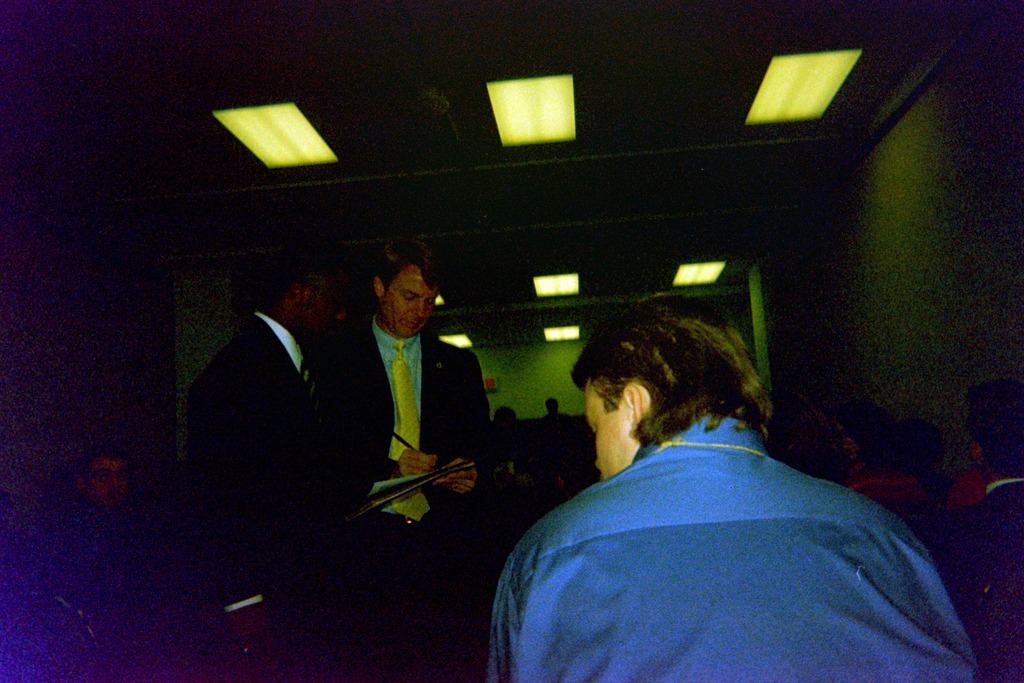
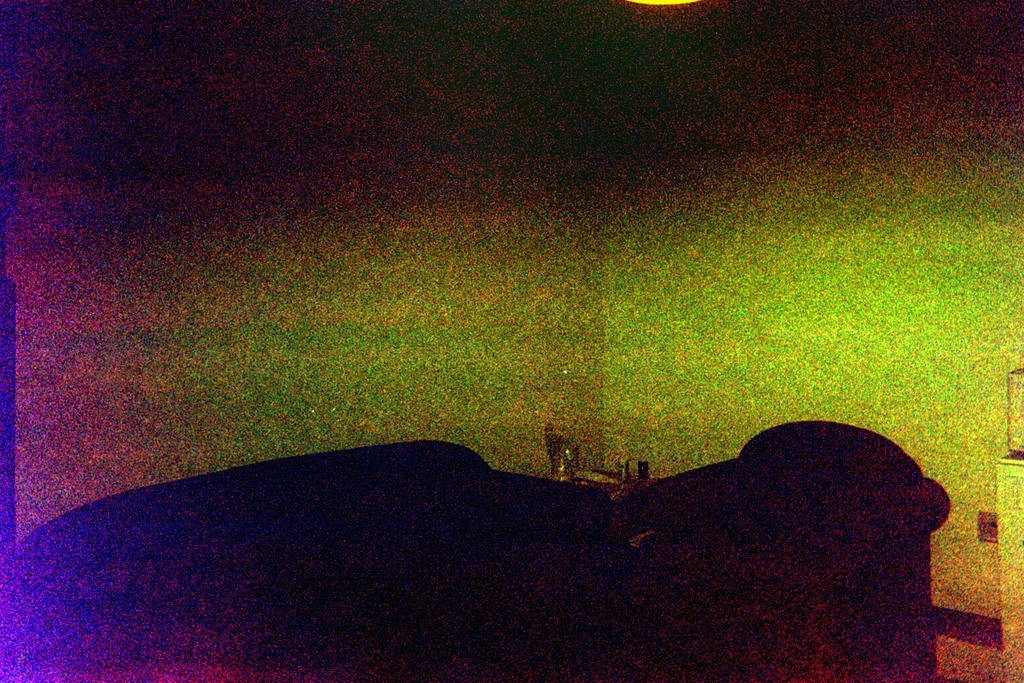
Some mostly bright, outdoor photos came out well, some turned out ok, some surprisingly decent (yes, that is John Edwards circa January 2003), and others provoke a WTF is that?!?!
These cameras were kept in a shoebox under a bed in a climate controlled room for most of the past 13 or so years.
Some mostly bright, outdoor photos came out well, some turned out ok, some surprisingly decent (yes, that is John Edwards circa January 2003), and others provoke a WTF is that?!?!
These cameras were kept in a shoebox under a bed in a climate controlled room for most of the past 13 or so years.

bunnspecial
macrumors G3
Proper storage is the key.
A while back, I bought a big stash of Kodak EliteChrome 100(consumer Ekatachrome) with a 2001 expiration date.
The person before me kept it in the freezer from new, and that's where I've kept it since buying it. It's lost a little bit of saturation and a little bit of sensitivity over the years, but is mostly fine. The base fog has also increased a bit(unavoidable due to background radiation). I can actually quantify this, as I have a densitometer and can measure the DMAX of unexposed areas(slide film loses DMAX as base fog increases). BTW, Kodak stores master rolls(rolls that have been coated but not cut/perforated and packaged) in a salt mine where they have a virtually indefinite life.
Granted, when I'm talking about using old film, I generally process it promptly(within a few weeks at the most). The latent image is somewhat more susceptible to degradation than the film itself.
One last thing-disposables were crummy from day. I have photos from the early 2000s taken with them that were processed promptly and many of them don't look a lot different from the ones posted above. The usual methodology with those is to load 400 ASA film and use a fixed shutter speed of about 1/500 and an aperture of f16. This gives a decent daylight exposure(sunny 16) and also helps prevent motion blur. They typically have a single plastic lens focused to infinity or a little bit shorter, and the f16 aperture gives both decent depth of field and reduced spherical aberration from the poor quality lens. The lens, however, does introduce a lot of reflection and other issues that reduce saturation. The exposure also means that you basically can't get any get anything indoors unless you're right in front of the flash.
A while back, I bought a big stash of Kodak EliteChrome 100(consumer Ekatachrome) with a 2001 expiration date.
The person before me kept it in the freezer from new, and that's where I've kept it since buying it. It's lost a little bit of saturation and a little bit of sensitivity over the years, but is mostly fine. The base fog has also increased a bit(unavoidable due to background radiation). I can actually quantify this, as I have a densitometer and can measure the DMAX of unexposed areas(slide film loses DMAX as base fog increases). BTW, Kodak stores master rolls(rolls that have been coated but not cut/perforated and packaged) in a salt mine where they have a virtually indefinite life.
Granted, when I'm talking about using old film, I generally process it promptly(within a few weeks at the most). The latent image is somewhat more susceptible to degradation than the film itself.
One last thing-disposables were crummy from day. I have photos from the early 2000s taken with them that were processed promptly and many of them don't look a lot different from the ones posted above. The usual methodology with those is to load 400 ASA film and use a fixed shutter speed of about 1/500 and an aperture of f16. This gives a decent daylight exposure(sunny 16) and also helps prevent motion blur. They typically have a single plastic lens focused to infinity or a little bit shorter, and the f16 aperture gives both decent depth of field and reduced spherical aberration from the poor quality lens. The lens, however, does introduce a lot of reflection and other issues that reduce saturation. The exposure also means that you basically can't get any get anything indoors unless you're right in front of the flash.

Cashout24
macrumors newbie
[doublepost=1528463373][/doublepost]Were you able to recover your pics, I just found a phone from 2004 disposable camera with 21 pictures on it it's been in the console of a truck for the last 14 years so no light not sure about the weather, the thing is I'm afraid to take it somewhere and have them ruin it as my brother suspiciously passed away in June of 2004 and this was his camera so it's the last pictures he tookI just found an old Fuji Film disposable camera that has been used up. It has an "expiration date" on it of Feb, 2002. What are the odds that the pictures will come out if I get it developed? Im really curious whats on it.

TooDarkPark
Suspended
We found one of those Kodak Disc cameras sometime in the early 2000s and took the camera in to get the pics developed. They turned out mostly good with a few that had odd colors.
bunnspecial
macrumors G3
Sometime last year, I got the itch to try APS and bought a Nikon Pronia 6i(one of the best APS cameras made, and of course you have access to the full line of Nikon F mount lenses). I dug up some Kodak Gold that expired in 2008, and was fairly disappointed with results. Of course, I had the lab scan it and haven't opened the cartridge to actually look at the negatives-with that said the saturation was low and there was a lot of grain. For the next roll I shoot, I'll set it to +1 exposure compensation and see if things get any better.
Not too long ago, I shot a roll of Kodak Ektar 25 that expired in 1990. There was a decent amount of base fog, but I still got perfectly usable results. I shot it in a Nikon FM2N, and for most shots did 1/2 over(O and + illuminated for those familiar with this camera).
I just recently got my hands on 5 120 rolls of Fuji Astia-a film I've never shot and regret not trying when it was still available. It came from a photographer who had always kept it frozen, and he actually shipped it with an ice pack in the box. I'll see how it turns out. There was also some 220 E100GX in the same box, although I don't want to shoot it until I make my Hasselblad A24 back works correctly and doesn't leak. I'll load up some Kodak TXP 320 and try it...
Not too long ago, I shot a roll of Kodak Ektar 25 that expired in 1990. There was a decent amount of base fog, but I still got perfectly usable results. I shot it in a Nikon FM2N, and for most shots did 1/2 over(O and + illuminated for those familiar with this camera).
I just recently got my hands on 5 120 rolls of Fuji Astia-a film I've never shot and regret not trying when it was still available. It came from a photographer who had always kept it frozen, and he actually shipped it with an ice pack in the box. I'll see how it turns out. There was also some 220 E100GX in the same box, although I don't want to shoot it until I make my Hasselblad A24 back works correctly and doesn't leak. I'll load up some Kodak TXP 320 and try it...
Cashout24
macrumors newbie
Where did you take it to get developed?We found one of those Kodak Disc cameras sometime in the early 2000s and took the camera in to get the pics developed. They turned out mostly good with a few that had odd colors.

tobefirst ⚽️
macrumors 601
The developer isn't going to ruin the pics. Either they are salvageable or they aren't. You have two options: never develop them, or have them developed. What comes out is what comes out.[doublepost=1528463373][/doublepost]Were you able to recover your pics, I just found a phone from 2004 disposable camera with 21 pictures on it it's been in the console of a truck for the last 14 years so no light not sure about the weather, the thing is I'm afraid to take it somewhere and have them ruin it as my brother suspiciously passed away in June of 2004 and this was his camera so it's the last pictures he took
Or I guess you could wait for a time machine to be created and then go back in time and develop them sooner.
TooDarkPark
Suspended
I have no idea. My dad found it somewhere in the house where it had been forgotten and took it in.Where did you take it to get developed?
bunnspecial
macrumors G3
For common 35mm color negative film(C-41 process-you need a specialty lab for C-22 and older processes as they will disintegrate in C-41 chemistry), you can probably find a local place with a minilab that can run it and scan it for a few bucks. The days of every drug store having a minilab are gone, but there are still some camera stores and independent labs that maintain them.
Most labs these days can handle 35 and a lot can do 120(and maybe 220). Not all labs can do handle other oddball sizes-APS, 110, disk, etc. I really like Dwayne's Photo out of Kansas-they were the last lab in the world that could do Kodachrome, and handle everything but sheet film.
Most labs these days can handle 35 and a lot can do 120(and maybe 220). Not all labs can do handle other oddball sizes-APS, 110, disk, etc. I really like Dwayne's Photo out of Kansas-they were the last lab in the world that could do Kodachrome, and handle everything but sheet film.