

Become a MacRumors Supporter for $50/year with no ads, ability to filter front page stories, and private forums.

MacRumors

macrumors bot
Original poster


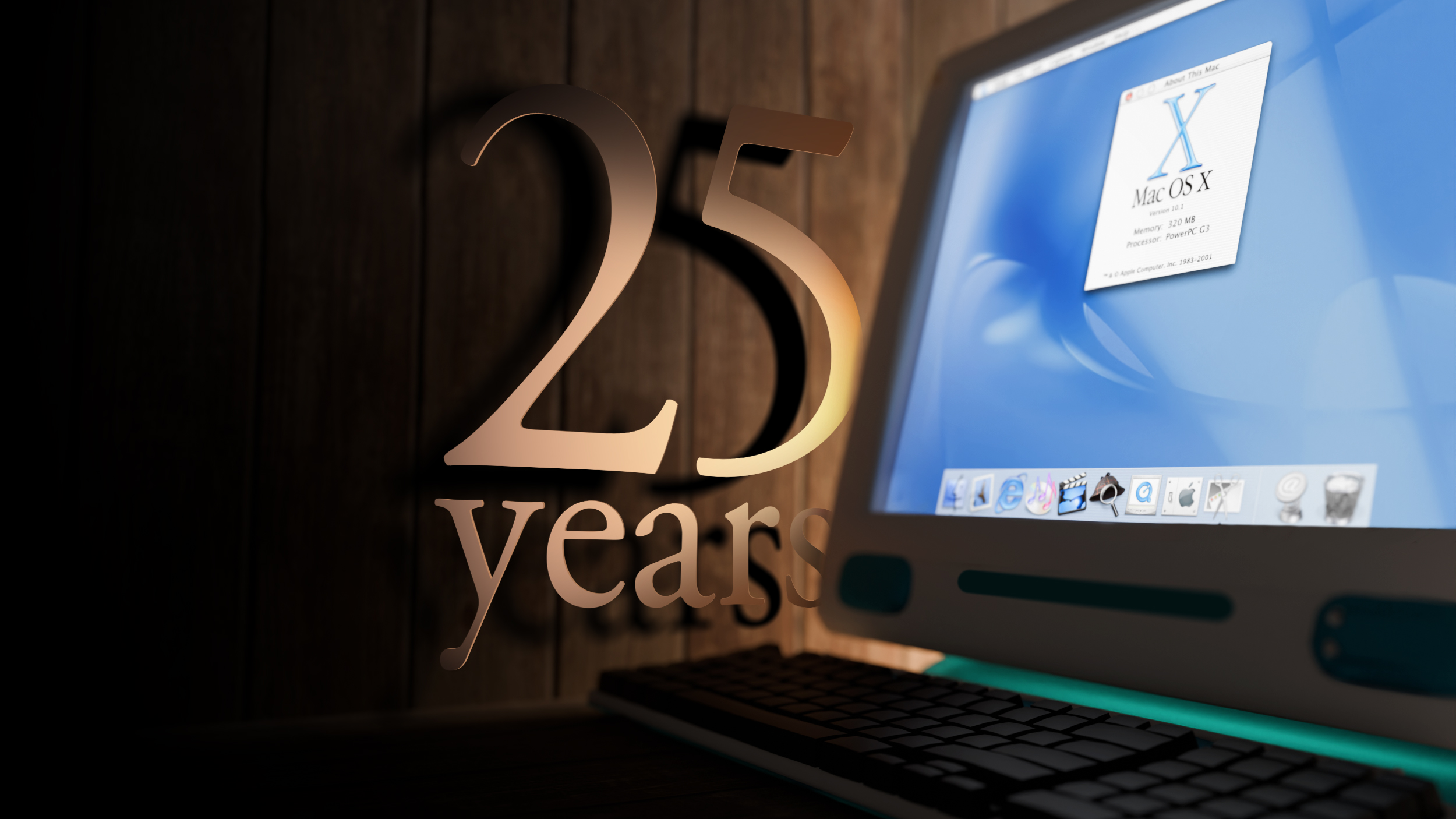
Today marks the 25th anniversary of Apple launching Mac OS X, the operating system that serves as the foundation of modern-day macOS.
iMac-25-Years-Feature.jpg

Apple released a public beta of Mac OS X in September 2000, and the operating system officially launched on March 24, 2001.

"Mac OS X is the future of the Mac, and we hope it will delight our customers with its unrivaled power and ease of use," said Steve Jobs, in 2001. "The Public Beta has generated incredible feedback and support from Mac users and developers, which has helped us to make Mac OS X the most advanced operating system ever."

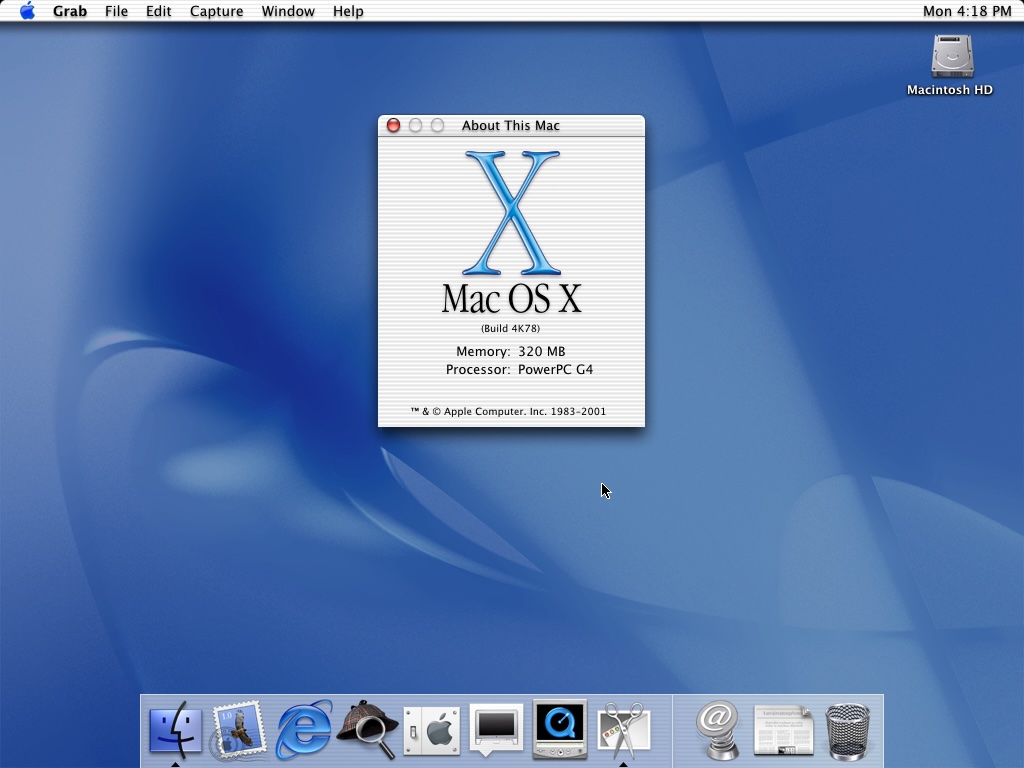
Mac OS X was a next-generation, UNIX-based operating system for the Mac, succeeding the classic Mac OS operating system. It ushered in Apple's iconic "Aqua" interface, the Dock, an improved Finder app with hierarchical navigation, and more.
Mac-OS-X-Cheetah.jpg
Mac OS X 10.0 screenshot via Stephen Hackett's gallery

"Mac OS X is the most important software from Apple since the original Macintosh operating system in 1984 that revolutionized the entire industry," said Jobs.

In the U.S., Mac OS X was priced at $129. Apple stopped charging for macOS releases in 2013, when OS X Mavericks was released free of charge.

Mac OS X was renamed to OS X in 2012 and to macOS in 2016:
  • Mac OS X 10.0 (2001): "Cheetah"
  • Mac OS X 10.1 (2001): "Puma"
  • Mac OS X 10.2 (2002): Jaguar
  • Mac OS X 10.3 (2003): Panther
  • Mac OS X 10.4 (2005): Tiger
  • Mac OS X 10.5 (2007): Leopard
  • Mac OS X 10.6 (2009): Snow Leopard
  • Mac OS X 10.7 (2011): Lion
  • OS X 10.8 (2012): Mountain Lion
  • OS X 10.9 (2013): Mavericks
  • OS X 10.10 (2014): Yosemite
  • OS X 10.11 (2015): El Capitan
  • macOS 10.12 (2016): Sierra
  • macOS 10.13 (2017): High Sierra
  • macOS 10.14 (2018): Mojave
  • macOS 10.15 (2019): Catalina
  • macOS 11 (2020): Big Sur
  • macOS 12 (2021): Monterey
  • macOS 13 (2022): Ventura
  • macOS 14 (2023): Sonoma
  • macOS 15 (2024): Sequoia
  • macOS 26 (2025): Tahoe
Mac OS X was a big part of Apple's renaissance, which began when Jobs returned to the company in the late 1990s. Big hits in those first few years after his return included the iMac in 1998, the iBook in 1999, and Mac OS X and the iPod in 2001. In this sense, it is poetic that this milestone comes just a week ahead of Apple's 50th anniversary.

Article Link: Mac OS X Launched 25 Years Ago Today: 'The Future of the Mac'
 
Last edited:
At the time, I had just graduated college and was forced to convert to Macs and OS9 to use Media Composer NLE editing software for my first job editing TV documentaries. In the next year, my father bought a Mac, and began learning Final Cut Pro. I then followed, buying my first Mac and converting to Final Cut Pro for all my films. Magical time 🖥️ ✨

I miss OS9
What a quaint but fun operating system it was. Maybe there's a simulator out there? 🙂
 
  • Like
Reactions: tshane
I remember Tiger well. It was on my first Mac. I loved it, but a lot of what it was good at has weakened. No nagging (the biggest reason I hated Windows, resulting in the switch), consistent UI (the same simple user interactions everywhere), and very user friendly (not hiding basic graphics settings in Accessibility).
 
I remember getting OS X with my Powerbook G4 Titanium. The build quality was terrible, but man, it looked amazing compared to all the black plastic PCs. It really felt like a leap into the future. The only other time I've felt that was with the iPhone.
 
  • Like
Reactions: psingh01
OS X was groundbreaking in that it brought UNIX (BSD) to the masses. The early days were rough though during the transition. Some things were much better ("Classic" Mac OS was getting long in the tooth and had quite a few stability issues over the years), but OS X was sluggish for some years and it took time for the major applications to transition over to the new framework. There were also frequently encountered bugs, graphical glitches, and the new "Kernel Panic" screen that popped up regularly. Mac OS X 10.0 was basically a paid public beta. The operating system improved quickly, but the first year or two were rough.

That all laid the foundation for the excellent system we have today though.
 
My favorite was Mac OS X 10.3 panther, that had the fastest search feature and it inherited the cache features of 10.2, but when they went to 10.4 spotlight slop, it took years to recover from the system slow down.
I think that’s the time I found a new app called Easyfind and am still using it in 2026. 😛

Too bad Apple wasn’t smart enough to release macOS 26 for Intel PCs to bring users over from Windows 11 and the upcoming Windows 12 subscription model and AI slop.
 
  • Like
Reactions: tranceking26
I lost count after Mavericks. Apple needs to stop releasing new OSs every single year. It doesn't make sense, the Desktop/Laptop segment is a mature product. Mac OS can be a brilliant product if they'd just focus on making each release matter. That doesn't mean there shouldn't be point releases for security and bug fixes. But Tim Cook doesn't need to go on stage at WWDC and announce Mac OS 27, 28, 29, etc. every year. Just let it cook (pun intended). The world will not end if we don't get AI but customers will be annoyed with memory leaks and bugs on their brand new MacBook Pro M5 Pro on Mac OS 27. Remember Tiger came out in 2004, Leopard 2007, Snow Leopard 2009 and the world was fine for it.

And so is mobile. It made sense to release new IOSs every year when we were making leaps in hardware that supported new things in software. Like early versions of IOS didn't have copy/paste or desktop wallpapers and once there was better CPUs and more RAM features could be added.

Thank you for listening to my TED talk.
 
Register on MacRumors! This sidebar will go away, and you'll see fewer ads.