

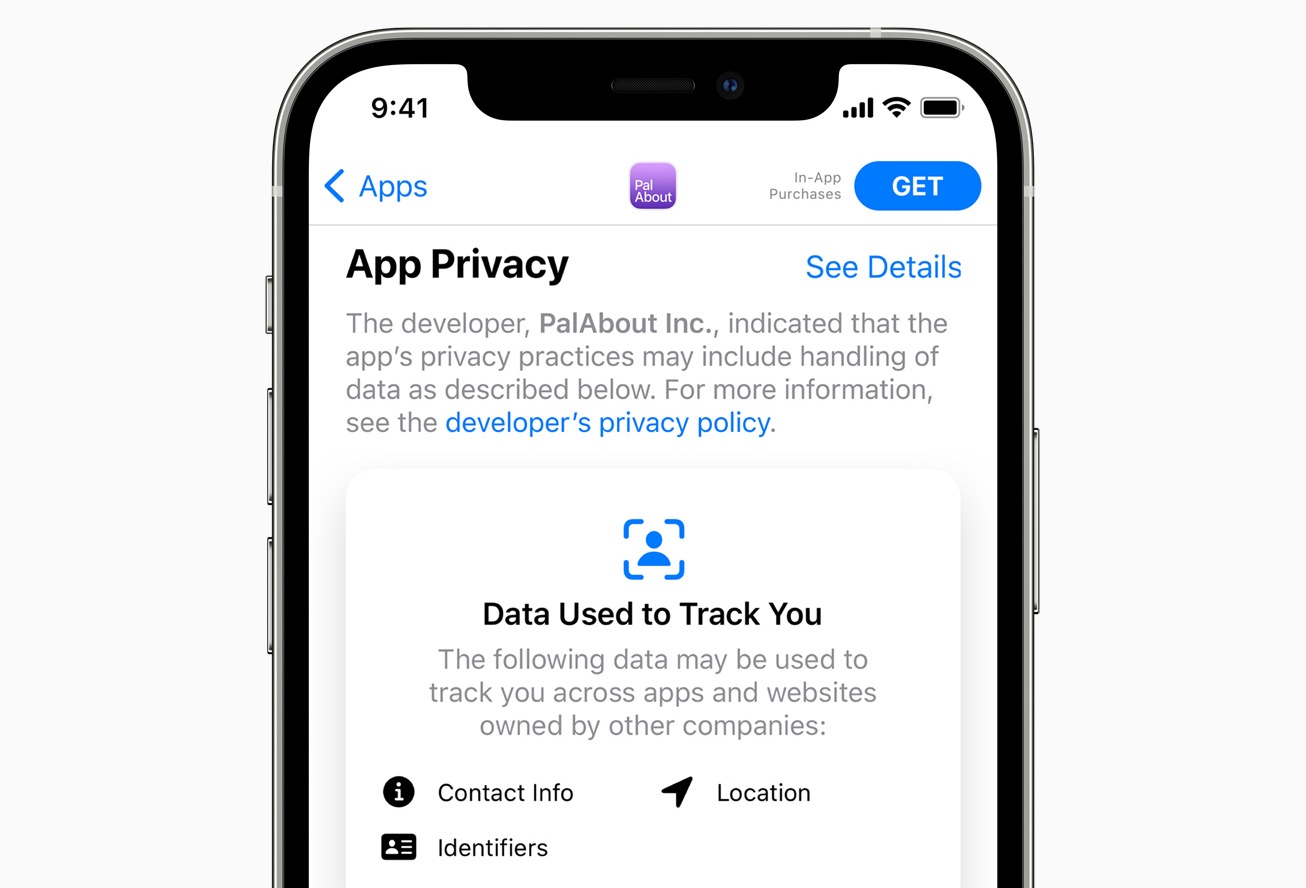
Last month, Apple introduced privacy labels on the App Store, providing users with a broad overview of the data types an app may collect, and whether the information is used to track them or is linked to their identity or device.


The privacy report always sounded like creating a legal obligation for the app developer. Sure you can lie, but when caught you face potential civil penalties
Last month, Apple introduced privacy labels on the App Store, providing users with a broad overview of the data types an app may collect, and whether the information is used to track them or is linked to their identity or device.
Apple has required developers to provide this privacy information when submitting new apps and app updates to the App Store since early December, but the labels function on an honor system, with fine print indicating that "this information has not been verified by Apple." As such, there is always the potential that some apps will be dishonest.
On that note, The Washington Post's Geoffrey A. Fowler recently did a spot check and discovered "more than a dozen" apps with "either misleading or flat-out inaccurate" privacy labels. One of these apps was a game called "Satisfying Slime Simulator," which Fowler said was sending his iPhone's advertising identifier and other device information to companies like Facebook, Google, and Unity, despite its privacy label indicating "No Data Collected."
Fowler listed several other apps with "No Data Collected" labels that he found to be covertly collecting user data, such as Rumble, Maps.me, and FunDo Pro. He also found the popular game Match 3D to be "sending an ID for my phone that could be used to track me to more than a dozen different companies," despite having a label that claimed it only took "data not linked to you." Match 3D has since updated its label to reflect "data used to track you."
In response to the report, Apple said it "conducts routine and ongoing audits of the information provided" and works with developers to correct any inaccuracies, adding that "apps that fail to disclose privacy information accurately may have future app updates rejected, or in some cases, be removed from the App Store entirely if they don't come into compliance."
This issue will be partially addressed by Apple's upcoming enforcement of a privacy measure it calls App Tracking Transparency. Starting with the next betas of iOS 14, iPadOS 14, and tvOS 14, developers will be required to get a user's permission to track their activity across other apps and websites and access their device's random advertising identifier, known as the Identifier for Advertisers (IDFA), for targeted advertising and ad measurement purposes.
Apple said that, at the software level, App Tracking Transparency will prevent developers from accessing a user's IDFA unless they grant permission, preventing an app from silently tracking their activity in this manner. However, there are still other ways for apps to track users, so the accuracy of privacy labels will still not be guaranteed.
Article Link: More Than a Dozen Apps With 'Misleading or Flat-Out Inaccurate' Privacy Labels Found on App Store
So they can blackmail you into buying vitamins and treadmills at a later date.I cannot fathom why the Amazon app is using Health & Fitness Data
eta: Unless its because I use biometrics??
Because many of them are just as sleazy, money-grabbing bottom feeders as larger corporations?I simply don't get it when developers deliberately mis-represent themselves in this way.
Well, that's an app I've been missing out onOn that note, The Washington Post's Geoffrey A. Fowler recently did a spot check and discovered "more than a dozen" apps with "either misleading or flat-out inaccurate" privacy labels. One of these apps was a game called "Satisfying Slime Simulator," which Fowler said was sending his iPhone's advertising identifier and other device information to companies like Facebook, Google, and Unity, despite its privacy label indicating "No Data Collected."
13More than 12? Out of how many?
It's like cockroaches, though. Where there's 12, there's 1200.More than 12? Out of how many?


Did anyone think, even for a second, that this was going to "fix" the issue?


Call me cynical, but that might not leave many apps left in the App Store, and that wouldn't be beneficial to Apple's bottom line.Well, it will eventually fix the issue if the developers (not just the individual app in question) are permanently banned from Apple's stores.


I don't really like the idea that Apple comes up with this privacy label idea just for devs to lie on them, because Apple always likes to brag about how much they care about privacy, and we're supposed to assume we can trust them and their privacy labels now. It's too reactionary and relies too much on the honesty of devs, if they even update their apps (looking at you, Google). But I guess catching them lying is better than nothing...Well, it will eventually fix the issue if the developers (not just the individual app in question) are permanently banned from Apple's stores.

Maybe the US could pass privacy laws, then we could sue people like Facebook and sleazy developers who steal our data. Or maybe each of us could offer our data for a price that developers would have to pay to use it without our permission. My offer is $1m, hey facebook, here is your bill! A free market solution, oh yah!Well, it will eventually fix the issue if the developers (not just the individual app in question) are permanently banned from Apple's stores.
Make that 1 million per access per day. We also need them to take hacks and leaks seriously too. A small percentage of FB customer data being released should bankrupt them.Maybe the US could pass privacy laws, then we could sue people like Facebook and sleazy developers who steal our data. Or maybe each of us could offer our data for a price that developers would have to pay to use it without our permission. My offer is $1m, hey facebook, here is your bill! A free market solution, oh yah!

