
Become a MacRumors Supporter for $50/year with no ads, ability to filter front page stories, and private forums.

MacRumors

macrumors bot
Original poster


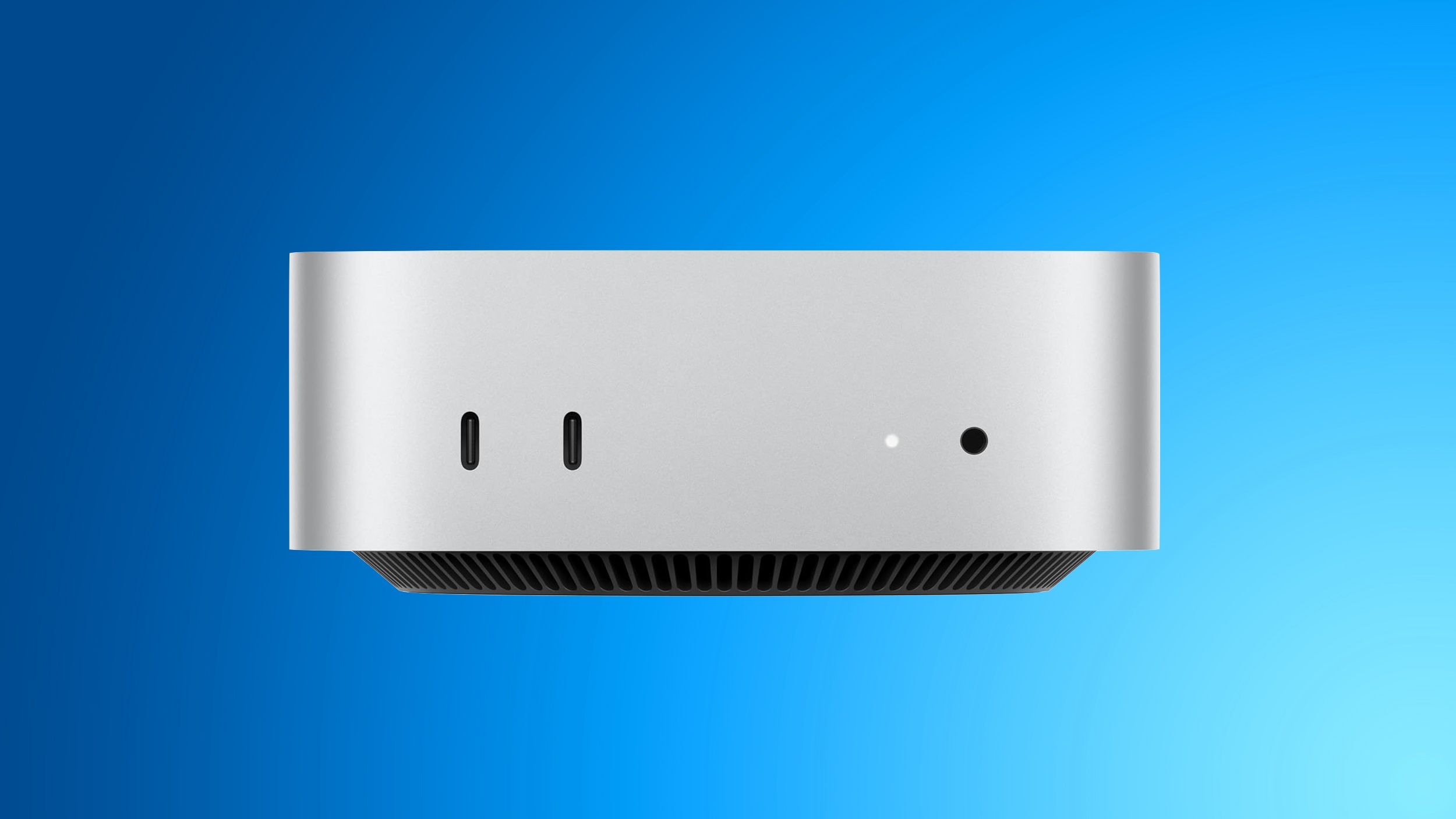
mac-mini-blue.jpeg
Apple's new Mac mini and Mac Studio feature genlock support over USB-C, allowing users to precisely synchronize a display with a camera such as the iPhone 17 Pro, without the need for additional equipment.

It keeps multiple cameras and displays locked to the same timing signal, stopping footage from drifting out of sync during a multi-camera shoot.

Article Link: New Mac Mini and Mac Studio Add Genlock Support for Camera Syncing

 
Same here, and I work in video. I think it has to do with live video streaming and seamlessly switching in between multiple cameras.

Let’s say you have two cameras both recording at 30 frames per second. Without genlock synchronizing the timing of those 30 frames per second, each camera’s 30 frames would be recording at different intervals of time as measured in milliseconds.

So if you’re trying to switch camera angles in a live feed, there could be a 1-frame hiccup caused by the difference in the two cameras’ clocks that might be perceptible as a slight visual glitch.

Genlock is meant to synchronize the 2 cameras’ clocks so each of their 30 frames per second are both being captured at the same millisecond.

I think that’s how it works, it’s a pretty niche thing, but maybe if you’re a high end live streamer or TV studio this matters you?
 
I love how some tech podcasters and bloggers talk about this ability as though it's something everybody is gonna need and use.
 
Can someone elaborate what this means? I’m not exactly following.

Same here, and I work in video. I think it has to do with live video streaming and seamlessly switching in between multiple cameras.

Let’s say you have two cameras both recording at 30 frames per second. Without genlock synchronizing the timing of those 30 frames per second, each camera’s 30 frames would be recording at different intervals of time as measured in milliseconds.

So if you’re trying to switch camera angles in a live feed, there could be a 1-frame hiccup caused by the difference in the two cameras’ clocks that might be perceptible as a slight visual glitch.

Genlock is meant to synchronize the 2 cameras’ clocks so each of their 30 frames per second are both being captured at the same millisecond.

I think that’s how it works, it’s a pretty niche thing, but maybe if you’re a high end live streamer or TV studio this matters you?

My take might be a bit old-school, but Genlock is also about syncing the capture frame rate with the playback frame rate. So if you're recording someone in front of a display, the display frame generation and camera capture periods are perfectly synchronised and this stops the flickering or black bars that sometimes appear on the recorded copy of the display.
 
Used to be a much larger issue in the days of CRT only displays, especially when productions were shooting 24p film around them. There were some ways to mitigate it with camera settings if the scene allowed, but even for things like local newscasts you'd have to have any monitors visible on set all synced with the 'house' sync generator to keep them from having tears in the image or other issues. Nowadays with many displays having higher refresh rates (not to mention displaying the full image at once vs scanning the way CRTs had to) you can get away with a lot more without needing any adjustments or accommodations... but I guess there's still some who need it.
If anything, this sounds more like 'jam sync' than a true genlock setup, but that's an explanation for another day and one that nobody who didn't work in the analog TV production days will care about. ha ha
 
  • Like
Reactions: Engender
Used to be a much larger issue in the days of CRT only displays, especially when productions were shooting 24p film around them. There were some ways to mitigate it with camera settings if the scene allowed, but even for things like local newscasts you'd have to have any monitors visible on set all synced with the 'house' sync generator to keep them from having tears in the image or other issues. Nowadays with many displays having higher refresh rates (not to mention displaying the full image at once vs scanning the way CRTs had to) you can get away with a lot more without needing any adjustments or accommodations... but I guess there's still some who need it.
If anything, this sounds more like 'jam sync' than a true genlock setup, but that's an explanation for another day and one that nobody who didn't work in the analog TV production days will care about. ha ha
Jam sync term is usually used regarding (SMPTE) timecode. Higher refresh rate of monitors helps with scanning anomalies in picture capture. Genlock is helpful when switching between input signals in a live situation so that vertical sync lines up.
 
Yeah me too. The name is extremely confusing and just makes me thing generational lock - nothing video related.
yeah it is pretty niche, I think if it had been just another bullet point in a long list it probably wouldn't have started a comment thread. IMHO
 
Genlock is also essential for ‘stitching’ displays together… and opens the door to Macs being able to output a display that is over 8K.

Think giant LED panel builds used at big events or stadium signs that are not the standard 16x9 or even the newly supported 5K Ultrawide Support thats in macOS Golden Gate. (E.g. 20K pixels wide).

For what it’s worth it’s not there yet… as AVFoundation (macOS’s hardcoded maximum for external outputs are 8192 for height and 8192 for width.) limits this and why PCs with GPUs (with the GPU being what usually supports gen lock with multiple outputs from a video card) are still required for things of that nature.

And in case you made it this far… macOS and third party apps (I.e. Adobe AE) CAN create video files over this hard limit… but macOS can NOT play them back over an external display output at full resolution (not to mention the caps of the version of DisplayPort and HDMI AND even the physical cable to account for in terms of bandwidth).
 
  • Like
Reactions: MiG007
Can someone elaborate what this means? I’m not exactly following.

It lets you take a video of a computer display without the "strobing" or "tearing" effect that you can get if the screen refresh is slightly out of sync with the camera.

Used to be horrendous with old school 50/60Hz CRTs (which actually went blank between scans) and pretty essential when filming around computers or CCTVs. Didn't think it was such an issue with modern LCDs, but I guess you;d get tearing on moving graphics...

Was also used to enable overlay computer graphics/captioning on (analogue) video in 80s/90s interactive video systems but I can't imagine that's still a thing in the days of digityal compositing.

(I'm getting a "1990 called" vibe... but I guess some people still need it)
 
  • Like
Reactions: jent
Video Guy here. I work in live event video—concerts, conferences, corporate. This feature is for us, and it is really a ‘finally’ moment on two fronts.

1) Our “display” outputs aren’t used for more monitors on our desk. They are video outputs that go to switchers and giant LED walls and projectors. If we wanted to have multiple display outputs stitched together, they must be exactly in sync, otherwise you see tearing on the seams. MacOS does not do this natively, and that’s why we have to use beefy PCs with special graphics cards that can do this with display outputs.

2) If you shoot an LED wall with a camera and they aren’t synced with each other, you get visible scan lines on the wall through the camera’s eye. Not a good look.

Genlock is a special signal used in broadcast environments that tells all the video gear when to start “drawing” the image, so everything scans at the same rate in the same timing. The only way to have multiple displays synced and have cameras not see scan lines, they all need to be “locked” to the same scan frequency.

If this implementation is done well (and if it works how we hope it does), this one little after-though of a bullet point will be a game changer for Mac’s in live-event environments.
 
Register on MacRumors! This sidebar will go away, and you'll see fewer ads.