Become a MacRumors Supporter for $50/year with no ads, ability to filter front page stories, and private forums.
Don’t see how anyone could thumbs down this comment.
I guess it would be based on the notion that if Apple were to design their Macs to be more user-upgradeable, it might come at the cost of being more expensive, less intuitive, or more buggy ... or some combination of this.
 
Why do we listen to this idiot. Mark Gurman is rarely right, and most of his “predictions” are so vague that even when he is wrong (usually) he claims otherwise.
He drives engagement? There’s no downside to saying wild things that bring attention to Bloomberg that are eventually shown to be incorrect, so that’s what they’ll keep on doing.
 
  • Like
Reactions: Timpetus
I am not sure that was the reason, but rather the move to smaller, much more delicate IT hardware, making it more and more challenging to update and upgrade.

Laptops I can appreciate are difficult, if not impossible, to work in, and if you want tinker-friendly desktops, buy something else. I do not understand people who buy Apple hardware and then go and complain that they can't upgrade the RAM, the CPU, the disks, themselves... You know that before you buy.
If by buy something else you meant hackintosh, then that’s not an option anymore. If you actually mean building a windows machines, then ****
 
Apple is testing new Mac mini configurations with mismatched M6 and M5 Pro chips, according to Bloomberg's Mark Gurman, but he did not provide a release timeframe.

Mark Gurman:
Apple also has plans for new Mac mini and Mac Studio models with upgraded chips. The Mac mini in testing uses M5 Pro and M6 processors, while the Mac Studio has the M5 Max and M5 Ultra. But the timing of those machines — and the planned chip and memory configurations — hinge on the state of memory-chip supplies.

So, it seems that MacRumors came up with the "with mismatched M6 and M5 Pro chip" language on their own. This was a poor choice of wording, because even if they were only using chips from the M5 line, the M5 and M5 Pro are not matched chips, nor are they mismatched. Mismatched would be if the chips in a single machine/configuration were not meant to work together.
 
I have a base M4 Mac mini with 24 GB of RAM. If they offered the M6 with 32GB of RAM, I might upgrade.
I'm curious, why?

In my case, which is mainly just business type apps with light multimedia but sometimes with moderate multitasking, 16 GB is very good and 24 GB is great.* 32 GB in my case would be overkill for the foreseeable future, although part of the reason is I don't use AI and I haven't tried macOS 27 yet either. Do you do development work or have more intensive multi-media requirements for example? Just wondering.

*16 GB in my workflow is fine but I do accumulate several GB worth of swap. That isn't the end of the world, but can sometimes causes pauses in the OS of a few seconds at a time, enough to be somewhat annoying once you notice them. With 24 GB I almost never have swap, and therefore I don't get those short pauses.
 
  • Like
Reactions: Tagbert
Don’t see how anyone could thumbs down this comment.
I didn’t downvote it, but I don’t miss those days.

Today’s Macs are way more powerful, thinner, more reliable and last more than those upgradable old models. It’s not just because of the lack of upgradability, but it plays a role.
 
I really miss the days when a Mac desktop (and laptops to some degree) could be opened, tinkered with, and hardware upgraded by users.

I had one of the Late 2009 white polycarbonate unibody MacBooks, with a 2.26GHz Core 2 Duo and Nvidia 9400M graphics...

I upgraded the RAM to 8GB, pulled the 320GB HDD (not the stock one, that had failed and I had replaced it) and put that where the disc drive was, and installed a 128GB SSD for the system drive; I also replaced the little blower fan assembly...
 
I really miss the days when a Mac desktop (and laptops to some degree) could be opened, tinkered with, and hardware upgraded by users.
The Macintosh was originally intended to be an appliance. That’s why expansion options started for the Macintosh after Steve Jobs left Apple. He didn’t want the Macintosh to be the Apple II.
 
  • Like
Reactions: Tagbert
I am not sure that was the reason, but rather the move to smaller, much more delicate IT hardware, making it more and more challenging to update and upgrade.

Laptops I can appreciate are difficult, if not impossible, to work in, and if you want tinker-friendly desktops, buy something else. I do not understand people who buy Apple hardware and then go and complain that they can't upgrade the RAM, the CPU, the disks, themselves... You know that before you buy.
If by buy something else you meant hackintosh, then that’s not an option anymore. If you actually mean building a windows machines, then ****

Or, you could build the same machine, but install a Linux distro on it...? ;^p
 
  • Like
Reactions: Killerbob
Apple should let me upgrade the SoC chip in my Mini when I want to so that I don't need to throw the old Mini in the trash.
Ding, ding, ding! Any Mac desktop system for quite a while could receive pin-compatible CPU upgrades, and I remember how annoyed everyone was when the first Intel iMacs started shipping with the CPUs soldered in place on what should have been a removable socket. That's in addition to RAM and batteries on laptops, and as others have pointed out is still available SSD upgrades. It's not "modern engineering" that makes this impossible, it's planned obsolescence. Apple fought against having USB-C on all their mobile phones in Europe until they didn't, for example, with the excuse that Lightning was simply "better." My point is that it is possible to solve this from an engineering perspective on desktops, but Apple chooses to serve its own interests of streamlined production and hardware/software deprecation cycles.

I'm not saying this is for everyone, but the all-in-one architecture of current Mac desktop systems is frustrating and expensive, especially given that something like an SoC upgrade could keep an older system working good enough under the current deprecation cycle of MacOS for potentially several more years past its original expiration date. We're now in an era when there's a literal storage crisis in tech along with global supply chain problems, and I'd argue that more consumer friendly upgrades would help alleviate the pressure, instead of simply compelling total replacements in new acquisitions.

We're also reaching a moment in tech where truly "revolutionary" hardware advancements are few and far between - look at every discussion of new iPhone releases here at MacRumors. It's becoming a series of incremental improvements marketed as drastic changes. Meanwhile, my personal iPhone replacement cycle has lengthened from 2 years to going on 4, because at some point, none of the hardware/software improvements take away from the basic function of "mobile phone," they just add more stuff that I may or may not ever use.

Are the M-Series chips an amazing achievement? Yes, absolutely. But why this achievement hasn't unlocked greater user ownership and upgradeability of their own hardware is entirely a choice, not an inevitability. Especially in an era when the deleterious economic and environmental cost of "innovation" in technology is becoming increasingly apparent.
 
So, it seems that MacRumors came up with the "with mismatched M6 and M5 Pro chip" language on their own. This was a poor choice of wording, because even if they were only using chips from the M5 line, the M5 and M5 Pro are not matched chips, nor are they mismatched. Mismatched would be if the chips in a single machine/configuration were not meant to work together.
I opened this just to see if the rumor was that they were going to bond dissimilar chips together. Disappointed but also relieved.
We need the 64GB option back on the Mac mini so that it can run some of the larger AI LLMs!
If you're serious about investing in Mini hardware for LLM use, consider spending more for a non-base unit so you have better memory bandwidth.
 
Apple should let me upgrade the SoC chip in my Mini when I want to so that I don't need to throw the old Mini in the trash.
I'd love to have an old Mini to use at school. The last time someone donated a computer to the school was a PowerMac G5 (2003 model). I still use it for lesson planning and to play iTunes music during work time for my classes. Donated computer equipment is tax deductible in case anyone is wondering.
 
Steve would never…
…oh wait…

Oops…
Also, another example of an email from Steve Jobs where he basically said, “we did it because we felt like it, just deal with it bro.” And then reverse that decision just a year later.
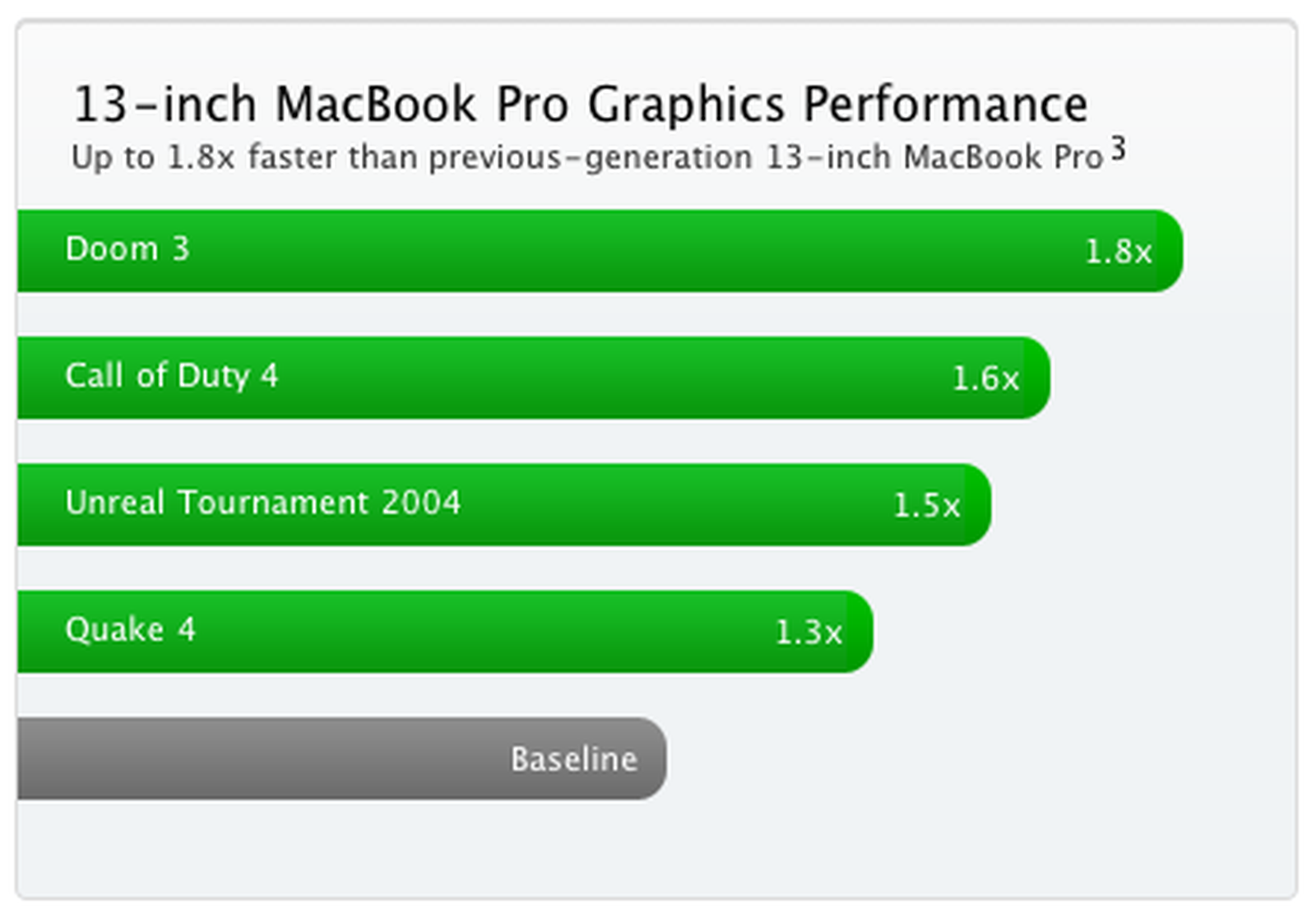
There was definitely a long line of 13" MBPs getting significantly worse specs than their larger siblings. My 12" PB G4 didn't feel nearly as gimped compared to its siblings as most of the 13" MBPs did.
 
So, it seems that MacRumors came up with the "with mismatched M6 and M5 Pro chip" language on their own. This was a poor choice of wording, because even if they were only using chips from the M5 line, the M5 and M5 Pro are not matched chips, nor are they mismatched. Mismatched would be if the chips in a single machine/configuration were not meant to work together.
Well, yes and no. The M5 Pro and Max are much more closely related to the M5 than they will be to the M6. So, I'd say MacRumors' terminology here isn't entirely inaccurate. What this would mean is that for certain specific actions, the M6 might perform better than M5 Pro, or in the very least, the M5 Pro wouldn't perform as much better as expected when compared to the M6 as opposed to the M5.

There was definitely a long line of 13" MBPs getting significantly worse specs than their larger siblings. My 12" PB G4 didn't feel nearly as gimped compared to its siblings as most of the 13" MBPs did.
The first 12" PowerBook G4 actually had some better features than the 15" PowerBook G4 that was available at the same time... which p!ssed me off to no end:

I had been telling my buddy for years that Apple was going to release a 12" PowerBook G4. It's what I wanted, because I didn't like the 15" size, and all the existing 12" Macs were G3 iBooks. He didn't believe my 12" PowerBook prediction, and then in late 2002 Apple released an updated 15" TiBook G4 with no 12" PowerBook in sight. I admitted defeat, and reluctantly bought a 15" TiBook... but then just 2 months later at Macworld, Apple released the 12" PowerBook G4. 😡

What p!ssed me off was not just the fact that the 12" size is what I really wanted, but also the fact that the 12" had USB 2. the TiBook only had USB 1. Plus the TiBook was notorious for paint chipping.
 
Apple should let me upgrade the SoC chip in my Mini when I want to so that I don't need to throw the old Mini in the trash.

Every M SoC model within a generation, much less across each generation, have different physical connections to the systemboard, so you would need to replace both the SoC and the systemboard (along with the RAM and perhaps storage depending on the model). So you would likely be paying almost as much as just replacing the entire unit and you get the benefit of being able to re-sell the original unit to recover some of that cost.
 
  • Like
Reactions: ikir and seek3r
Register on MacRumors! This sidebar will go away, and you'll see fewer ads.