

Become a MacRumors Supporter for $50/year with no ads, ability to filter front page stories, and private forums.

MacRumors

macrumors bot
Original poster


A rare, operational Apple-1 Computer was recently put up for auction, and it ended up selling for $375,000. The Apple-1 was the first computer sold by Apple co-founders Steve Jobs and Steve Wozniak, and so few remain that they fetch high prices at auction.
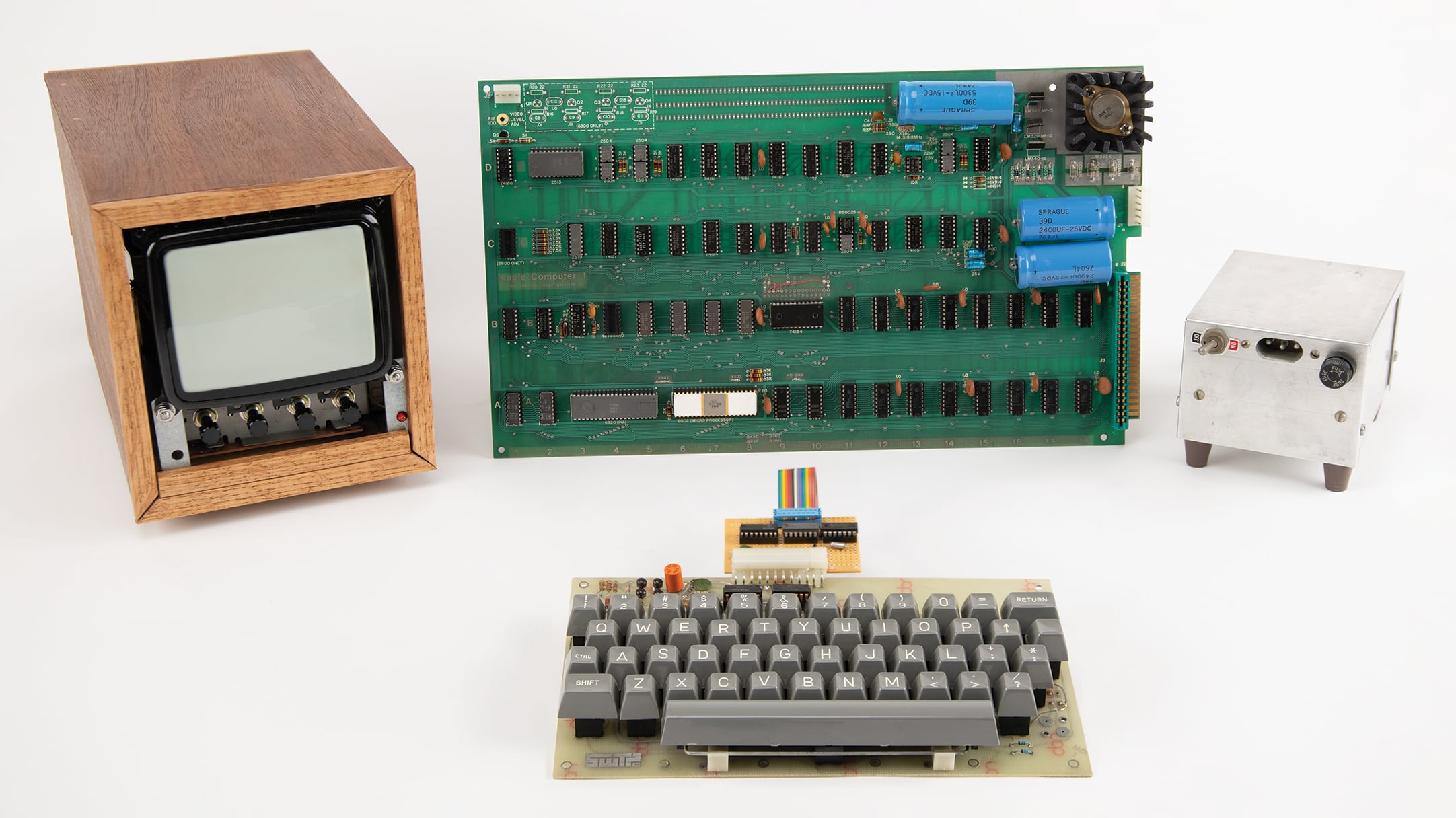
apple-1-rr-auction.jpg

The Apple-1 that sold is known as the "Bayville" Apple-1, and it is number 91 on the Apple-1 Registry. The Apple-1 Registry aggregates all known remaining Apple-1 computers, and it includes details and a history for each one. The registry has 104 Apple-1 machines listed.

The Bayville Apple-1 was part of the first batch of Apple-1 machines sold in 1976, and it has a handwritten serial number that was likely penned by Steve Jobs. It was sold with an original manual with a handwritten note by Daniel Kottke, who was Apple employee number 12.

The Apple-1 was sold alongside many other Apple-related items as part of a "Steve Jobs and the Apple Revolution" auction event. A 1976 Apple Computer check signed by Steve Jobs sold for $112,054, and a sealed, first-generation 4GB iPhone sold for $87,514.
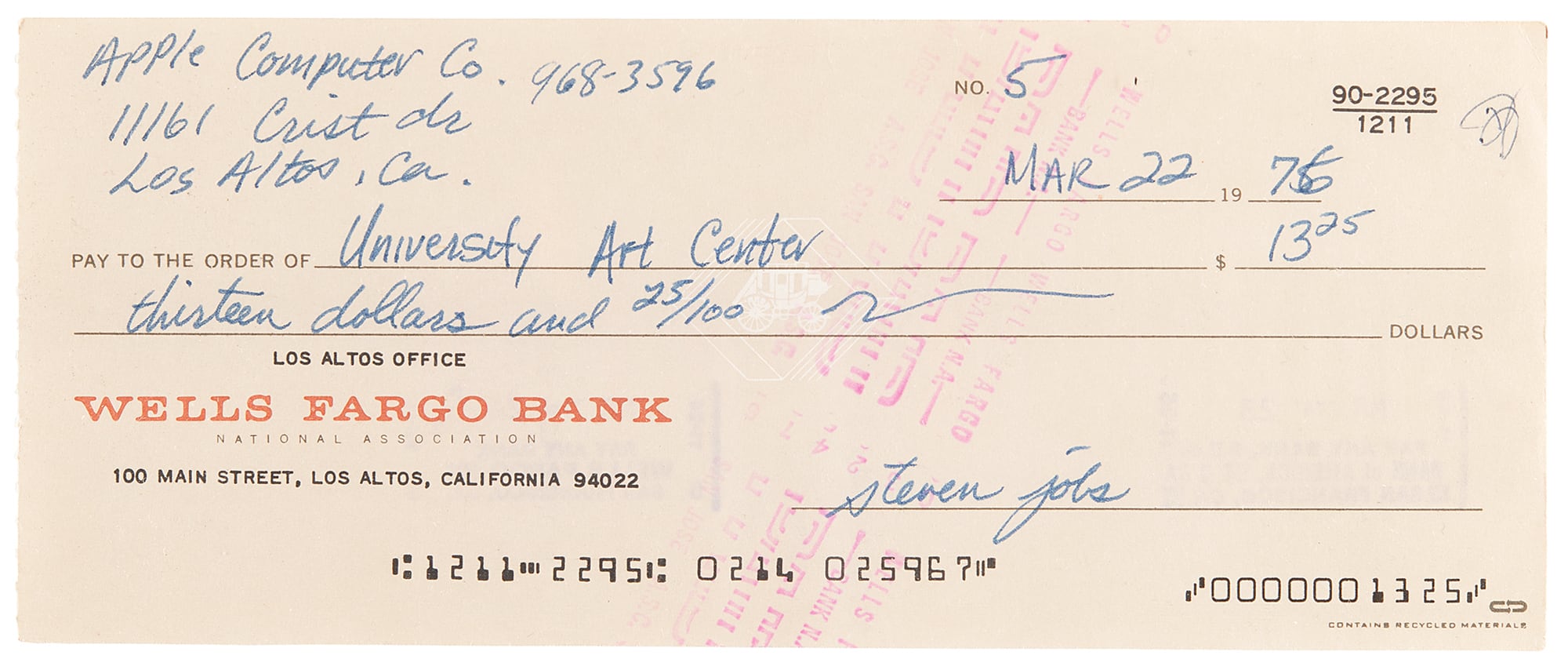
steve-jobs-check-rr-auction.jpg

Another check signed by Steve Jobs sold for $62,500, and an Apple Lisa Computer sold for $56,818. The auction earned a total of $1,308,251.

Article Link: Rare Apple-1 Computer Sells for $375,000
 
It looks interesting but I wonder what this computer could do ?

The spreadsheet was the "killer app" that caused many people to buy the Apple II. But this predates that. I think this computer ran BASIC. Then you would either find or write BASIC scripts to do what you wanted. Games, if you were a hobby user or some kind of actual computation otherwise.
 
  • Like
Reactions: Plutonius
Hmmm. Seem to recall an Apple-1 selling for around 1m maybe a decade or so ago.

That's quite a drop-off. Has the market been saturated in the last few years?
 
I have the original 8gb iPhone with original box (A1203). Used of course, but in great shape, still powers on and holds a charge. How much can I expect to get for it?
 
  • Wow
Reactions: iGüey
Gives me same vibes as those Facebook Marketplace bois selling 40 year old Japanese rust cans for 40k+


A rare, operational Apple-1 Computer was recently put up for auction, and it ended up selling for $375,000. The Apple-1 was the first computer sold by Apple co-founders Steve Jobs and Steve Wozniak, and so few remain that they fetch high prices at auction.

apple-1-rr-auction.jpg

The Apple-1 that sold is known as the "Bayville" Apple-1, and it is number 91 on the Apple-1 Registry. The Apple-1 Registry aggregates all known remaining Apple-1 computers, and it includes details and a history for each one. The registry has 104 Apple-1 machines listed.

The Bayville Apple-1 was part of the first batch of Apple-1 machines sold in 1976, and it has a handwritten serial number that was likely penned by Steve Jobs. It was sold with an original manual with a handwritten note by Daniel Kottke, who was Apple employee number 12.

The Apple-1 was sold alongside many other Apple-related items as part of a "Steve Jobs and the Apple Revolution" auction event. A 1976 Apple Computer check signed by Steve Jobs sold for $112,054, and a sealed, first-generation 4GB iPhone sold for $87,514.

steve-jobs-check-rr-auction.jpg

Another check signed by Steve Jobs sold for $62,500, and an Apple Lisa Computer sold for $56,818. The auction earned a total of $1,308,251.

Article Link: Rare Apple-1 Computer Sells for $375,000
I have 4 sealed 4gb iPhones lol!!! I’ll keep holding 😂
 
  • Like
Reactions: iGüey
Some years ago, my brother went to a meeting of the Homebrew Computer Club. He told me there was a guy there named Steve Wozniak showing around his prototype board for a home computer, and asking if anyone was interested in it. My brother seemed to be asking me if I wanted to chip in the $40 to buy the schematics and circuit board design, but I remember thinking, "I don't know if we can afford that."
 
It looks interesting but I wonder what this computer could do ?
This:
The Apple I, introduced in 1976, was Apple’s first personal computer and a pioneer in the early personal computing era.

Key Features:
• Processor: Equipped with a MOS Technology 6502 microprocessor running at approximately 1.023 MHz.
• Memory: Came standard with 4 KB of RAM, expandable up to 8 KB on the motherboard, and further to 64 KB with additional expansion cards.
• Display: Featured built-in video output, allowing users to connect to a composite video monitor or a standard television via an RF modulator. This capability provided a 40×24 character display, facilitating direct interaction without the need for specialized equipment.
• Input: Required an external ASCII keyboard for user input, enabling users to type commands and programs directly.
• Storage: An optional cassette interface allowed data storage and retrieval using standard audio cassette tapes, making it possible to save and load programs.

Functional Capabilities:
• Programming: Users could write and execute programs in machine code or using a BASIC interpreter, facilitating the creation of custom applications and simple games.
• Text Display: The system could display text on the screen, supporting basic word processing and text-based applications.
• Educational Use: Served as a learning tool for computer enthusiasts and hobbyists, offering hands-on experience with programming and computer operations.
 
What could that machine do, other than act as a huge calculator?
That was largely it, though it could also run simple BASIC programs like text-based games, simple simulations like Life, etc. It was pretty much a developer platform. The things that really made it stand out, though, were its hardware features--you could plug a TV or composite monitor directly into the board and see text output without needing a separate terminal; video generation was largely done in software, using minimal hardware and clever timing tricks; it could connect directly to a standard ASCII keyboard, and keystrokes appeared on screen as you typed; you could save and load programs using audio cassette machines; it had an expansion bus; and it was much simpler than other home computers at the time, like the Altair, which had a bunch of wires and cards.
 
  • Like
Reactions: DEMinSoCAL
Register on MacRumors! This sidebar will go away, and you'll see fewer ads.