Since I was in the market for a monitor not long ago and I got a 24" for a secondary, 24" retina (200+ PPI) monitors of the caliber of the 24" iMac just don't exist. The segment is dominated by FHD (1920x1080, often 100+ Hz), and 4K models @ 60Hz. At that refresh rate I'd take the iMac 24" display any day of the week.I don't think the people buying a bog standard Mac are doing that kind of shopping. Even so, a 750 MBA + 500 monitor is still only 1250, only $100 more than the iMac and now you have 2 screens. And you're still under the retail price of the iMac.

Got a tip for us?
Let us know
Become a MacRumors Supporter for $50/year with no ads, ability to filter front page stories, and private forums.
Report: Apple Developing 24-Inch OLED iMac With 600 Nits Brightness
- Thread starter MacRumors
- Start date
- Sort by reaction score
You are using an out of date browser. It may not display this or other websites correctly.
You should upgrade or use an alternative browser.
You should upgrade or use an alternative browser.
theluggage
macrumors G3
Er... because it wasn't?Can someone explain to me why in 2015 the max spec on a standard iMac was a 3tb fusion hard drive and 128 gb ram...
iMac "Core i7" 3.3 21.5" (4K, Late 2015) Specs (Retina 4K, Late 2015, BTO/CTO, iMac16,2, A1418, 2833): EveryMac.com
Technical specifications for the iMac "Core i7" 3.3 21.5" (4K, Late 2015). Dates sold, processor type, memory info, hard drive details, price and more.
 everymac.com
iMac "Core i7" 4.0 27" (5K, Late 2015) Specs (Retina 5K, Late 2015, BTO/CTO, iMac17,1, A1419, 2834): EveryMac.com
Technical specifications for the iMac "Core i7" 4.0 27" (5K, Late 2015). Dates sold, processor type, memory info, hard drive details, price and more.
everymac.com
Plus, the current iMac is a replacement for the 21" model. Max spec on the 2015 21" iMac was 16GB RAM and either a 2TB fusion drive or a 512GB SSD. Even the top-end 5k only went up to 64GB RAM and that was unofficial...
In 2015 the 5k iMac range was the most powerful system Apple offered apart from the Trashcan (which was abandonware by then).
Like it or not, the the 24" iMac has gone back to being an entry-level desktop - as it was originally and the current replacement for the 5k iMac is a Mac Mini or Mac Studio plus a Studio Display. What we've lost is the $1800 base 5k iMac (which was always a bit of a bargain by Mac standards) c.f. $2200 (plus keyboard & mouse) for a Mini + Studio Display. However, if you look at relative power, the Mac Studio + Studio Display combo was well into iMac Pro or fully-tricked-out i9 iMac territory for less money.
As for SSDs - the switch to SSDs around the mid-10s did see a hefty cut in capacity vs. mechanical HDs and have been slow to catch up. A few months ago I'd have said it was about time Apple got back to offering ~1TB SSD as standard, but then industry prices started ballooning so that isn't happening anytime soon...


Student of Life
macrumors 65816
https://slickdeals.net/f/18944299-samsung-epp-27-inch-viewfinity-s9-5k-ips-matte-slimfit-camera-smart-monitor-540?src=SDSearchv3&attrsrc=Thread:Expired:False|Search:Type:normal|Search:Sort:relevance|Search:HideExpired:falseI don't think the people buying a bog standard Mac are doing that kind of shopping. Even so, a 750 MBA + 500 monitor is still only 1250, only $100 more than the iMac and now you have 2 screens. And you're still under the retail price of the iMac.


Yeah without much effort I checked and you can get the 5k retina Samsung Display for 540 dollars. Sure it's not 100% perfect like the Studio Display but at 1/3 the price many flaws are forgiven. Personally I want a 27+ iMac but at this price even I am temped to go this path.
Donkey Man
Suspended
An absolutely ridiculous idea size-wise, not to mention the fact that current iMacs, contrary to what used to be the case, have ZERO repairability and upgradability. ZERO.
Apple is working on a 24-inch iMac featuring an OLED display, with the aim of completing development as early as 2027, claims a new report out of Korea.
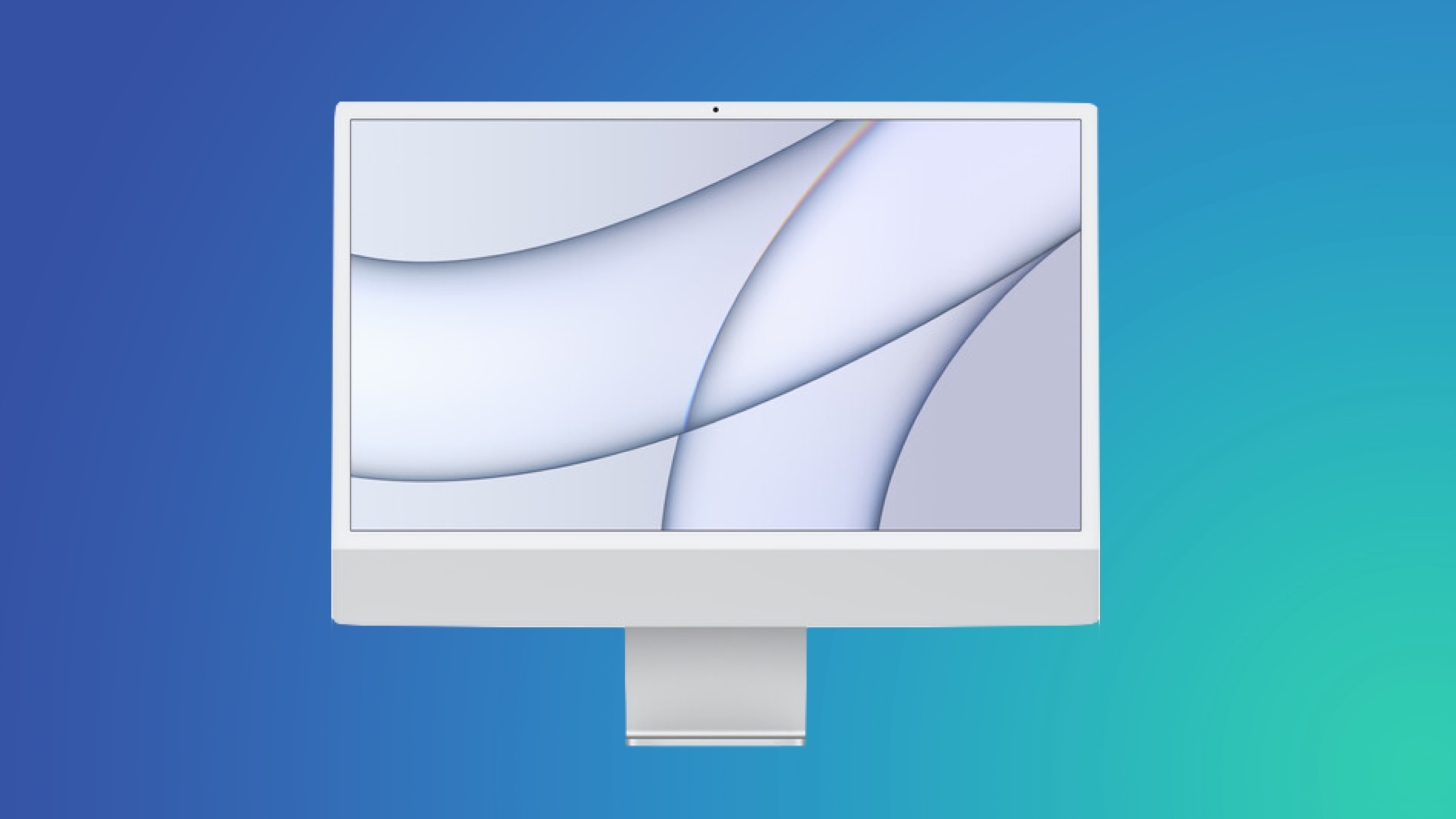
According to The Elec, Apple has sent requests for information to Samsung Display and LG Display regarding development of a 24-inch OLED panel for the iMac. Current 24-inch iMacs use a 4.5K Retina display, which is an LCD panel with LED backlighting.
The specs apparently being discussed include 600 nits of brightness and a pixel density of 218 PPI. If accurate, that would match the current 24-inch iMac's resolution but deliver a 20% brightness boost over the existing 4.5K Retina display's 500-nit maximum, making it equivalent to the brightness of Apple's Studio Display – though that also uses an inferior LCD panel.
OLED display technology benefits from several other advantages beyond brighter screens, such as deeper blacks with higher contrast, improved power efficiency, and other enhancements.
This is the first report we've seen suggesting Apple plans to bring OLED technology to its all-in-one desktop lineup. The company has already committed to OLED displays for future MacBook Pro models, with 14-inch and 16-inch versions expected to enter production next year using Samsung Display's 8th-generation IT OLED manufacturing line. OLED versions of its MacBook Air models are expected to follow.
For the iMac display, both Samsung and LG Display are expected to propose their respective large-format OLED technologies rather than the RGB OLED method Apple traditionally prefers. Samsung would likely pitch its quantum dot (QD-OLED) panels, while LG Display would offer its white (W-OLED) solution. QD-OLED produces color by passing blue light through a QD color conversion layer, while W-OLED produces color by passing white light through RGBW color filters. Both manufacturers are reportedly developing 5-stack configurations that add an extra green layer to improve brightness compared to current 4-stack designs.
The report suggests Apple prefers RGB OLED, where light and color generate at the subpixel level, but this technology apparently hasn't yet scaled reliably to the 20-30 inch range needed for desktop displays. Both panel makers are said to be exploring RGB OLED as a longer-term option.
Apple aims to complete iMac OLED panel development by 2027 or 2028, but the finished product could launch after that timeline. A recent but separate report has claimed Apple is developing a high-end iMac featuring the M5 Max chip, but there is currently no indication that OLED is destined for this rumored model. Apple could refresh the 24-inch iMac with an updated M5 chip at some point next year.
Article Link: Report: Apple Developing 24-Inch OLED iMac With 600 Nits Brightness


CATiNTHESTORE
Suspended
Dark-Signature
macrumors 6502a
Even at this attractive price, it would be a waste of money for me because the 5K Samsung only has a matte panel.https://slickdeals.net/f/18944299-samsung-epp-27-inch-viewfinity-s9-5k-ips-matte-slimfit-camera-smart-monitor-540?src=SDSearchv3&attrsrc=Thread:Expired:False|Search:Type:normal|Search:Sort:relevance|Search:HideExpired:false
Yeah without much effort I checked and you can get the 5k retina Samsung Display for 540 dollars. Sure it's not 100% perfect like the Studio Display but at 1/3 the price many flaws are forgiven. Personally I want a 27+ iMac but at this price even I am temped to go this path.

ProbablyDylan
macrumors 68040
https://slickdeals.net/f/18944299-samsung-epp-27-inch-viewfinity-s9-5k-ips-matte-slimfit-camera-smart-monitor-540?src=SDSearchv3&attrsrc=Thread:Expired:False|Search:Type:normal|Search:Sort:relevance|Search:HideExpired:false
Yeah without much effort I checked and you can get the 5k retina Samsung Display for 540 dollars. Sure it's not 100% perfect like the Studio Display but at 1/3 the price many flaws are forgiven. Personally I want a 27+ iMac but at this price even I am temped to go this path.
I wish you hadn't posted this because now I'm considering it. My wallet might not ever forgive you.
deconstruct60
macrumors G5
I’ve moved on to a Mac Mini and a Samsung screen. I figure Apples lost over $1.5k in revenue from me by not offering a 27 in iMac.
Short term viewpoint. Longer term you are more likely to update that far more affordable Mini on a quicker schedule than a $2.5-3K iMac ( which would be ridenning into the ground before upgrade). Two units sales over 3-5 years or 1 unit sale over the same time... which one is better for Apple over the long term? ( also customer would be saving money if bought 2 iMacs in that time frame. Apple would have more though, but customer not as likely to spend that. ) .
deconstruct60
macrumors G5
Can someone explain to me why in 2015 the max spec on a standard iMac was a 3tb fusion hard drive and 128 gb ram...and today, 10 years later the max spec is a 2tb hard drive and 32 gb of ram. What am I missing?
First, "Fusion Drive" versus SSD is 'Apple's and Oranges' comparison. SSD prices for 3TB back in 2015 wouldn't have been in an iMac. Apple does 'do' HDD anymore. Period.
Second, The large screen iMac was officially replaced by Apple by the Mac Studio (Apple openly stated this). Not the 24" iMac ( which only superseded the 21.5" model
2015 21.4 non Retina Max RAM 16GB Max Storage 2TB Fusion Drive ( pure SSD capped at 0.256 TB )
iMac (21.5-inch, Late 2015) - Technical Specification - Apple Support
2015 21.4 Retina Max RAM 16GB Max Storage 2TB Fusion Drive ( pure SSD capped at 0.512 TB )
)
There was no 'backslide' in the 27" context:
M1 Studio: Max RAM 128GB. Max Storage 8TB
Mac Studio (2022) - Technical Specifications - Apple Support
M3 Studio: Max RAM 512GB Max Storage 16TB
https://support.apple.com/en-us/122211
deconstruct60
macrumors G5
Ah yes; a thinner iMac. I simply find it astonishing that if Apple dropped the 24” for a 27” or larger display the chin would be half the size of not smaller as the computer components would have more room to be placed in-line. It also boggles the mind that Apple is unable to make the iMac have an articulated arm and hamstring the iMac ability to be adjusted.
Given Apple's design constraint of placing the main logic board in the 'chin' , a larger screen that came with a more powerful chop ( Mn Pro or Mn Max ) would also come with a larger logic board ... and therefore larger chin.
The only way to get a relatively smaller chin is either stay capped at the 'plain' Mn SoC or use another set of design criteria ( e.g.. keep the old iMac Pro chassis).
A better solution would be a blend of the G4 Luxo Lamp iMac. Have the iMac display removable on an articulated arm/stand and the computer located at the base that can also be removable. This would effectively provide the customer/client to swap out the display as needed to a different size and upgrade the computer with a Mac mini while the key component of the iMac being the articulating stand.
That has some substantive issues. The larger display would need a different counterbalance and weight distribution to hold the heavier display. The display needs power and there is multiple data connections (video , camera , and likely speakers) which resulits in some proprietary connector that customers would have to 'snap' into.
Reinventing the wheel to create a 'monitor' with a hyper custom Apple connector on the back, probably wouldn't lead to 'cheaper'.
This would result in a win-win-win situation for the environment, customer and Apple. While you are at it Apple make the sole iMac stand foldable that way transporting and travelling with it would be a pleasure.
versus Mini and Mac Studio with industry standard monitor connection on them that work with a wide ecosystem of monitors ? If a testing of "eco friendly", that is the larger winner. There is a far wide set of mix-and-match 2nd and 3rd generation owner solutions there.

EugW
macrumors P6
Beware, that Samsung is a VA panel, not IPS. YMMV but I'm not a fan of VA panels for desktop computers, even though it has better contrast than IPS. (Apple has never used VA panels for their monitors.)I wish you hadn't posted this because now I'm considering it. My wallet might not ever forgive you.
coolfactor
macrumors G3
This a great news and all but 3 years from now is a major fumble. OLED Mac’s and Displays should’ve been out by now… We just entered 5 generations of Mini-LED MBPs with the same design. The OLED MBP was rumored back in 2023.
All this wait so the Mac’s get OLED but the Studio Display is getting Mini-LED?
Just feels like they have no urgency over this product line up and they’re taking their sweet time.
I agree that Apple is moving at a snail's pace with some of their hardware products, which is unfortunate. I don't want them to release garbage products "just for the sake of it", like HP and company do, but surely they can execute on product development faster than this?
Lounge vibes 05
macrumors 603
I feel like for as cool as a 32 inch M5Max 6K OLED iMac sounds on paper, in reality it doesn’t make a very good product.
Lets face it, an M4Max Studio already *starts* at $2000, the 6K display isn’t going to be a dime under $1999 on its own.
Plus the inevitable flaw with all-in-ones, especially someone who’s going to have one of the Pro or Max chips likely won’t be happy with that performance forever, but with the iMac, you have to throw away the display with all the specs. This makes a lot more sense for reception desks and family home computers because those are only likely to be replaced every, what, once a decade or so?
But “Pros” are way more likely to be on a 3 to 5 (or even quicker) upgrade pace, blowing through basically brand new displays.
For that audience, the Mac Studio makes a lot more sense.
An OLED or Mini LED 24 inch iMac really only makes sense to me if they are also planning on doing the same thing to the MacBook Air and the iPad Air, it’s other product line equivalent.
Which they desperately should, both of the MacBook Air and the iPad Air are long in need of some true upgrades that aren’t just old chip out, new chip in.
Lets face it, an M4Max Studio already *starts* at $2000, the 6K display isn’t going to be a dime under $1999 on its own.
Plus the inevitable flaw with all-in-ones, especially someone who’s going to have one of the Pro or Max chips likely won’t be happy with that performance forever, but with the iMac, you have to throw away the display with all the specs. This makes a lot more sense for reception desks and family home computers because those are only likely to be replaced every, what, once a decade or so?
But “Pros” are way more likely to be on a 3 to 5 (or even quicker) upgrade pace, blowing through basically brand new displays.
For that audience, the Mac Studio makes a lot more sense.
An OLED or Mini LED 24 inch iMac really only makes sense to me if they are also planning on doing the same thing to the MacBook Air and the iPad Air, it’s other product line equivalent.
Which they desperately should, both of the MacBook Air and the iPad Air are long in need of some true upgrades that aren’t just old chip out, new chip in.
Lounge vibes 05
macrumors 603
A lot of it is truly simply due to their massive, massive size.I agree that Apple is moving at a snail's pace with some of their hardware products, which is unfortunate. I don't want them to release garbage products "just for the sake of it", like HP and company do, but surely they can execute on product development faster than this?
Just look at the folding phone situation, Samsung has to produce 5 million a year for *all* of their folding phones. This being folds, flips, multi folds, whatever else comes about.
Apple is rumored to come out with one single foldable design next year, one phone. Just one.
They need 22 million folding screens. Just for one phone. Just for one year.
Over 4X as many as Samsung needs to produce for themselves, they also need to produce for Apple.
Another recent example, the tandem OLED iPad Pro. Samsung and LG obviously had been putting OLED panels and tablets for years… But not 10 million of them all at once in an eight month period. It is a completely different ballgame.
I work on 15 inch MBA. Must be from 2000’s then.Why is Apple so stuck on screen sizes from 2010? Give us 27" and 32" or don't bother.
EugW
macrumors P6
The Asus 6K is US$1299 retail and the Acer 6K is supposedly US$1199 (although we don't have official US pricing on the Acer yet). And Tcolor is selling a 6K with all-aluminum chassis and height adjustable all-aluminum stand for about US$800 shipped from China.I feel like for as cool as a 32 inch M5Max 6K OLED iMac sounds on paper, in reality it doesn’t make a very good product.
Lets face it, an M4Max Studio already *starts* at $2000, the 6K display isn’t going to be a dime under $1999 on its own.
Plus the inevitable flaw with all-in-ones, especially someone who’s going to have one of the Pro or Max chips likely won’t be happy with that performance forever, but with the iMac, you have to throw away the display with all the specs. This makes a lot more sense for reception desks and family home computers because those are only likely to be replaced every, what, once a decade or so?
But “Pros” are way more likely to be on a 3 to 5 (or even quicker) upgrade pace, blowing through basically brand new displays.
For that audience, the Mac Studio makes a lot more sense.
An OLED or Mini LED 24 inch iMac really only makes sense to me if they are also planning on doing the same thing to the MacBook Air and the iPad Air, it’s other product line equivalent.
Which they desperately should, both of the MacBook Air and the iPad Air are long in need of some true upgrades that aren’t just old chip out, new chip in.
My LG 6K is US$1999 list, but comes with a built-in Thunderbolt 5 hub, and I paid a little over US$1500 for it (since there were lots of discounts on it in Canada for purchases direct from LG).

code-m
macrumors 601
Thunderbolt incorporated within the stand to connect the display with speakers and camera to the computer in the base with the same Thunderbolt cable is presently feasible. The power can run from the Mac mini type computer in the base for a clean look.Given Apple's design constraint of placing the main logic board in the 'chin' , a larger screen that came with a more powerful chop ( Mn Pro or Mn Max ) would also come with a larger logic board ... and therefore larger chin.
The only way to get a relatively smaller chin is either stay capped at the 'plain' Mn SoC or use another set of design criteria ( e.g.. keep the old iMac Pro chassis).
That has some substantive issues. The larger display would need a different counterbalance and weight distribution to hold the heavier display. The display needs power and there is multiple data connections (video , camera , and likely speakers) which resulits in some proprietary connector that customers would have to 'snap' into.
Reinventing the wheel to create a 'monitor' with a hyper custom Apple connector on the back, probably wouldn't lead to 'cheaper'.
versus Mini and Mac Studio with industry standard monitor connection on them that work with a wide ecosystem of monitors ? If a testing of "eco friendly", that is the larger winner. There is a far wide set of mix-and-match 2nd and 3rd generation owner solutions there.
The metal stand can be folded almost flat with two hinges but to make it articulating like the G4 iMac, Apple’s engineers are able to pull it off. The present style is old in the tooth.
code-m
macrumors 601
The iMac as a stand to incorporate a swappable ASD and a Mac mini at the bottom would cut the need for an iMac while still retaining an AIO option within a stand. Plus target display mode cut to increase the standalone display sales. For a company aiming to be green by removing power adapter, earphones and who knows USB-C cables it is surprising the iMac design language is still suck in the late 90’s and 2000’s.The Asus 6K is US$1299 retail and the Acer 6K is supposedly US$1199 (although we don't have official US pricing on the Acer yet). And Tcolor is selling a 6K with all-aluminum chassis and height adjustable all-aluminum stand for about US$800 shipped from China.
My LG 6K is US$1999 list, but comes with a built-in Thunderbolt 5 hub, and I paid a little over US$1500 for it (since there were lots of discounts on it in Canada for purchases direct from LG).
Last edited:
deconstruct60
macrumors G5
It'd be nice if a multi TRILLION dollar company could include more size variety in all of their product offerings.
Apple is a trillion dollar company for Apple stockholders (the stockholders have access to the Trillion, not the company). Apple is valued that high because they consistently deliver profits. Trying to be a 'sell everything to everybody' company would likely lower Apple's profits. Lower profits ... less folks want to own it and overall valuation goes down.
Want an iPhone?
You must accept a patio paver in your pocket
User trends in phones have gone toward larger screens. Some users their phone is there only 'personal computing' device so a larger screen drives more uses. Larger/more screens also tend to. be addictive.
[ Apple did badly market the mini though. But the 'Air' and 'Plus' stumbled too. It isn't just 'small' . The have problems properly pricing and promoting more than 1-2 phones. ]
iMac?
Sorry, all we can do is this little 24" screen
In the Intel era. ( and to some extent PowerPC one) the Mini was a largely kneecapped, limited, system. The iMac 'won' that largest desktop share because Apple did not sell the xMac , make the Mini more competitive, and lowered the price of the Mac Pro ( Mac Pro price gradually crept up over time and the Mini retained its mobile CPU , pragmatically iGPU only solution. ). Things were narrowed before where Apple herded 'xMac' users into the buying iMacs.
New era where there is a just as computational performant Min and "Mini Pro" that herding effect wasn't going to work. Works even less if also offering a Mac Studio. In the overall personal computer space, Desktop Windows ... All-in-One are not the huge #1 sellers over there. The dominant solution most folks want in desktop is a discrete monitor; not one permanently attached.
The M-series brought a substantively different era where some of Apple "wish we could do more in a small enclosure" hopes came true. At that point the iMac didn't have the same leverage. [ The 'eco friendly' design criteria also doesn't match up with the very different lifetimes for monitor panel and rest of computer for a desktop. ]
MacRazySwe
macrumors 65816
Maybe people expect more from a desktop? There was a time when they offered a lot of added benefits - Performance, Port-connectivity, Front Row (Remember this? It debuted with the iMac G5 - so cool!)Remember - everyone agrees that the M4 MacBook Air is an excellent machine. The current 24" iMac is the same exact computer in a different form factor. So the dislike of the iMac that I see from a lot of people is irrational when I see the same kinds of people praise the MacBook Air.
Because what's the point of being tied to a desk - if a MacBook Air offers exactly the same features?
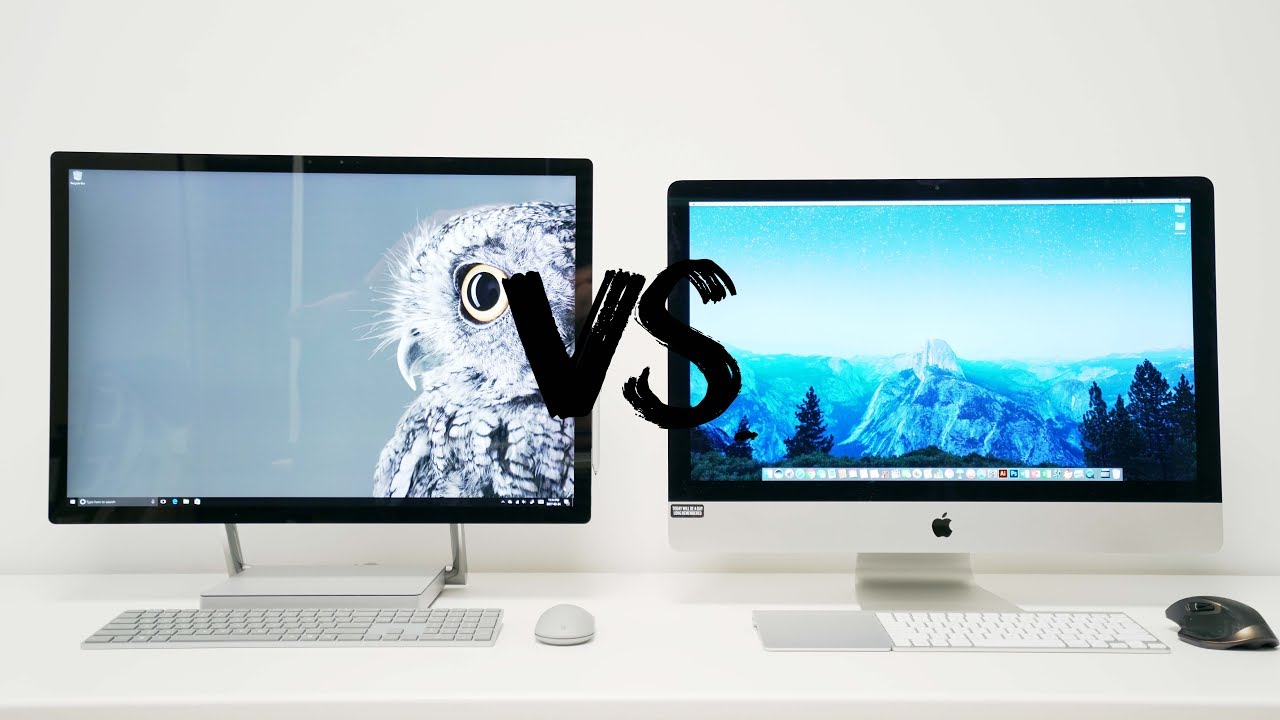
True size wise. However, considering antireflective coating Microsoft really forgot to put it on. If they are side by side that reflection should be visible on both. That basically defines Microsoft, they do 90% right, but blew 10%. And this goes with almost anything they do, unfortunately.I wish Apple would copy the Microsoft Surface. I have a 27" iMac and I remember going to the Microsoft store years ago and was blown away by how much more screen space it had because it was only 28" and then realized it was a 3:2 aspect. One of the few times I saw something blow away an Apple design.

sleep/to/dream
macrumors demi-goddess
What we need are taller aspect displays. 24” is great when it’s 16:10 or 3:2 and gives a height closer to a 27” screen. I want to scroll less more than anything, I have plenty of space for two files next to one another.
I like the 24 inch size for a three monitor setup without it being super huge and taking up a lot of space, but again a taller aspect would be nice so I don’t have to have a monitor rotated (which at 16:9 is sooo tall)
I like the 24 inch size for a three monitor setup without it being super huge and taking up a lot of space, but again a taller aspect would be nice so I don’t have to have a monitor rotated (which at 16:9 is sooo tall)
Jeeve Stubbs
macrumors 6502a
If iMac becomes OLED, I'll switch to Mac Mini and pair it with a non-OLED monitor. The way I use a personal computer, there are several static things on the screen for many hours a day, and I want no burn-in anxiety. It's OK if blacks aren't perfect, macOS isn't about gaming anyway.
grammatica
macrumors 6502
Jeeve Stubbs
macrumors 6502a
Apple products and services have their trade-offs too. They're usually great overall, but there's almost always a couple of annoying things to take into account. No one's perfect I guess.True size wise. However, considering antireflective coating Microsoft really forgot to put it on. If they are side by side that reflection should be visible on both. That basically defines Microsoft, they do 90% right, but blew 10%. And this goes with almost anything they do, unfortunately.