

Become a MacRumors Supporter for $50/year with no ads, ability to filter front page stories, and private forums.

MacRumors

macrumors bot
Original poster


Apple will bring OLED displays to its iPad Air models next year, according to a new report from Korea's ET News.
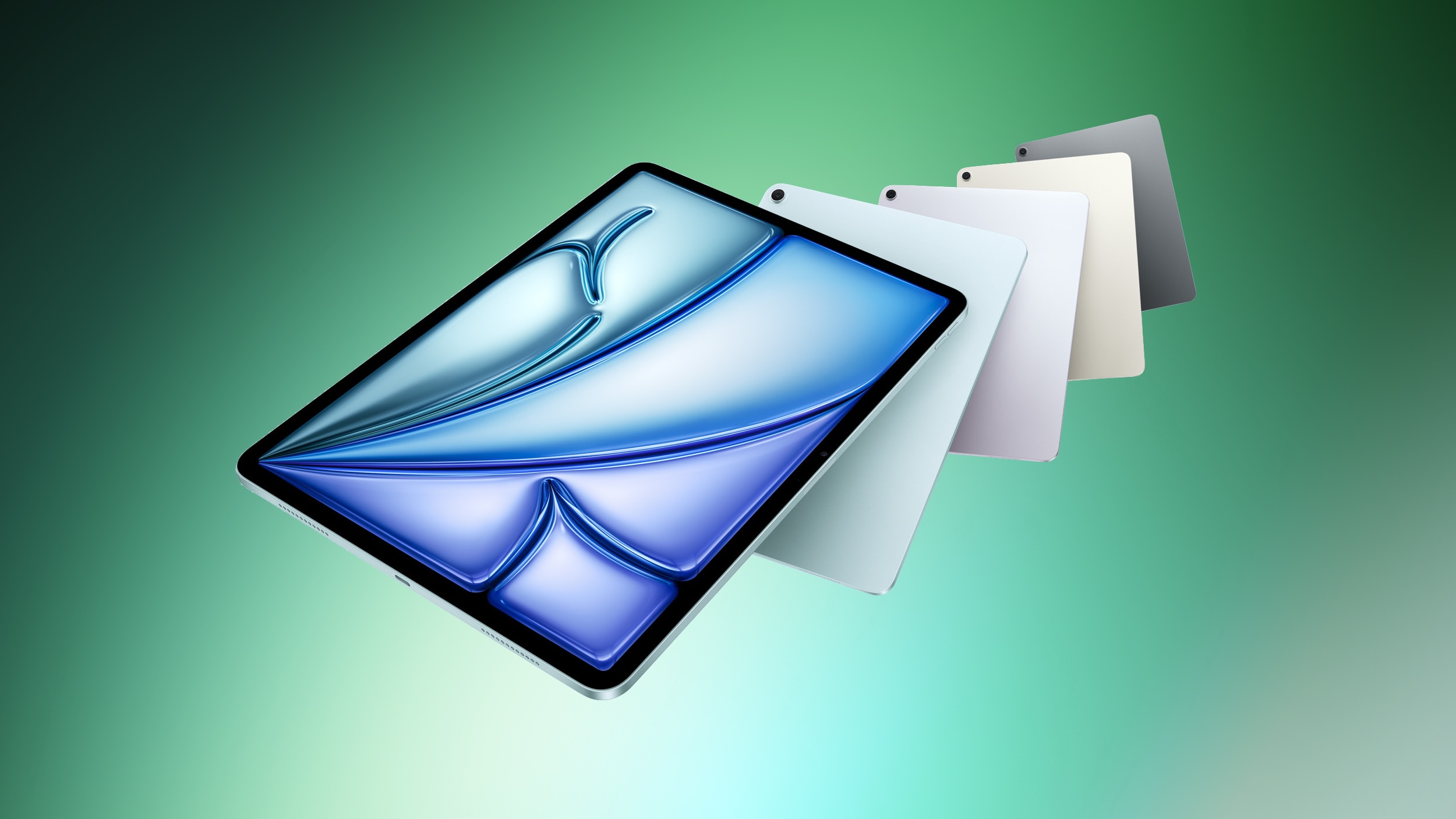
m3-ipad-air-mint.jpeg

Citing industry sources, the outlet says Samsung Display will begin mass production of OLED panels around the end of 2026 or January next year, with a view to supplying panels for Apple's next iPad Air, expected to be released in early 2027. Apple last updated the iPad Air in March 2026 with an M4 chip.

Apple's iPad Pro models already have OLED displays, but the iPad Air models still use more affordable LCD displays that Apple calls Liquid Retina. The Liquid Retina displays do not support 120Hz ProMotion display technology, and are limited to 60Hz refresh rates.

OLED panels individually control each pixel, resulting in more precise color reproduction and deeper blacks compared to LCD. They also provide superior contrast, faster response times, better viewing angles, and greater design flexibility.

That said, unlike Apple's ‌iPad Pro‌ models, which feature two-stack low-temperature polycrystalline oxide (LTPO) OLED panels‌, the iPad Air‌ is expected to use single-stack low-temperature polycrystalline silicon (LTPS) panels, meaning that they may be dimmer and continue to lack ProMotion.

Apple's plan to transition the ‌‌iPad mini‌‌ from an LCD to an OLED display is already widely rumored, with reports suggesting the iPad mini 8 will adopt OLED later this year, albeit using the same cheaper single-stack LTPS panel.

Once the iPad mini and iPad Air receive the display upgrade, the entry-level iPad will be the only model in Apple's tablet lineup without an OLED panel.

Article Link: Report: iPad Air to Gain OLED Display Early Next Year
 
Last edited:
  • Haha
  • Like
Reactions: Z-4195 and KeithBN


Apple will bring OLED displays to its iPad Air models next year, according to a new report from Korea's ET News.

m3-ipad-air-mint.jpeg

Citing industry sources, the outlet says Samsung Display will begin mass production of OLED panels around the end of 2026 or January next year, with a view to supplying panels for Apple's next iPad Air, expected to be released in early 2027. Apple last updated the iPad Air in March 2026 with an M4 chip.

Apple's iPad Pro models already have OLED displays, but the iPad Air models still use more affordable LCD displays that Apple calls Liquid Retina. The Liquid Retina displays do not support 120Hz ProMotion display technology, and are limited to 60Hz refresh rates.

OLED panels individually control each pixel, resulting in more precise color reproduction and deeper blacks compared to LCD. They also provide superior contrast, faster response times, better viewing angles, and greater design flexibility.

That said, unlike Apple's ‌iPad Pro‌ models, which feature two-stack low-temperature polycrystalline oxide (LTPO) OLED panels‌, the iPad Air‌ is expected to use single-stack low-temperature polycrystalline silicon (LTPS) panels, meaning that they may be dimmer and continue to lack ProMotion.

Apple's plan to transition the ‌‌iPad mini‌‌ from an LCD to an OLED display is already widely rumored, with reports suggesting the iPad mini 8 will adopt OLED later this year, albeit using the same cheaper single-stack LTPS panel.

Once the iPad mini and iPad Air receive the display upgrade, the entry-level iPad will be the only model in Apple's tablet lineup without an OLED panel.

Article Link: Report: iPad Air to Gain OLED Display Next Year
Great update with OLED! It is a great news for all customers and potential customers liking the product!
 
  • Like
  • Disagree
Reactions: mzubb and sos47
I get the single stack panel, which can be differentiated as a Pro feature, but I don't get the lack of Pro-motion. In the iPhone range the high (Pro/Pro Max), mid (Air) and low (non-pro) models now feature 120 Hz, so why would Apple not apply it to at least the mid (iPad Air) tier of their iPad lineup?
 
Okay, but will this finally mean that Apple will stop pretending not laminating the display on the base iPad is a defining upgrade for the Air compared to it?
 
  • Like
Reactions: turbineseaplane
I get the single stack panel, which can be differentiated as a Pro feature, but I don't get the lack of Pro-motion. In the iPhone range the high (Pro/Pro Max), mid (Air) and low (non-pro) models now feature 120 Hz, so why would Apple not apply it to at least the mid (iPad Air) tier of their iPad lineup?
Because iPhones from the 12 model up to and including the 16 model had OLED screens, yet they did not offer the ProMotion feature.
 
Because iPhones from the 12 model up to and including the 16 model had OLED screens, yet they did not offer the ProMotion feature.
I could see this if you’re using the 12 to MAYBE the 15 max… keeping 60hz. Somehow making 120hz is an impossible task for Apple. It’s a joke.

The next iPad mini better have 120hz or they have lost the plot completely.
 
  • Like
Reactions: Steve Job's Cousin
I could see this if you’re using the 12 to MAYBE the 15 max… keeping 60hz. Somehow making 120hz is an impossible task for Apple. It’s a joke.

The next iPad mini better have 120hz or they have lost the plot completely.
The issue isn't Apple's ability to deliver 120Hz in iPads, but rather the need for a strong differentiating factor between the iPad Pro and Air.

ProMotion technology has historically been a stronger Pro feature than the OLED screen. Currently, all iPhones have OLED screens, although only the iPhone 16 Pro had ProMotion until a year ago.

ProMotion technology in iPads was introduced in 2017 with the launch of the 10.5-inch iPad Pro with... an LCD screen.

ProMotion technology in MacBooks was introduced in 2021 with the Apple Silicon MacBook Pro with a mini-LED screen.

Apple simply can't afford to upgrade two major factors (OLED screen and ProMotion) in a single iPad Air launch.
 
Something noticeable must happen soon with the iPad Air. Apart from increased power, it has not changed since 2020. If you have an Air M1, there is really no reason to upgrade unless you have very specific demanding needs. The iPad Air has become a boring product.
 
The issue isn't Apple's ability to deliver 120Hz in iPads, but rather the need for a strong differentiating factor between the iPad Pro and Air.

ProMotion technology has historically been a stronger Pro feature than the OLED screen. Currently, all iPhones have OLED screens, although only the iPhone 16 Pro had ProMotion until a year ago.

ProMotion technology in iPads was introduced in 2017 with the launch of the 10.5-inch iPad Pro with... an LCD screen.

ProMotion technology in MacBooks was introduced in 2021 with the Apple Silicon MacBook Pro with a mini-LED screen.

Apple simply can't afford to upgrade two major factors (OLED screen and ProMotion) in a single iPad Air launch.
Nah. A ProMotion single stack OLED would still be a differential factor. And if thats not enough, the ProMotion LCD from the non OLED 11” Pro of the past. Its obsurd they keep using this as a Pro only feature especially since they moved the base 17 iPhone to OLED and ProMotion. Apple has always been known to offer industry leading display quality in all their products and above standard, yet they choose to hold back on refresh rate for so many years when 120hz has become the standard on other platforms and proven to be cheap. If anything, the Neo has made the Air’s current pricing questionable as the base iPad can do everything the Air does. I would argue that the iPads/iPhones have become Apple’s only substantial gaming platforms, you would think they would be propping this up by releasing gaming features like higher refresh even if mobile games dont take advantage.
 
Last edited:
  • Like
Reactions: satchmo
I get the single stack panel, which can be differentiated as a Pro feature, but I don't get the lack of Pro-motion. In the iPhone range the high (Pro/Pro Max), mid (Air) and low (non-pro) models now feature 120 Hz, so why would Apple not apply it to at least the mid (iPad Air) tier of their iPad lineup?
But if it gets oled it’s automatically going to get 90-120 Hz refresh rate, right? I don’t think there have been oled panels available that don’t support that for several years now.

So if they’d still handicap it, it’d be a software limitation. Then maybe a jailbreak (is that still a thing?) can get the original refresh rate working.
 
But if it gets oled it’s automatically going to get 90-120 Hz refresh rate, right? I don’t think there have been oled panels available that don’t support that for several years now.

So if they’d still handicap it, it’d be a software limitation. Then maybe a jailbreak (is that still a thing?) can get the original refresh rate working.
The iPhone 17e has a 60hz OLED panel. So yes, there are such panels still on the market.
 
  • Like
Reactions: Saturn1217
Eh. Keep it LCD. I would rather they add a portrait FaceID.
Yep. I’d much rather FaceID and/or the 120 Hz variable panel used in the pre-OLED iPads pros, and keep the tandem OLED for the pro.

It would keep the air and air distinct from one another, and overall, the air would benefit more.
 
Now either add the ability to safely eject drives on iPadOS or add OLED to MBA. I'll trade in my MBA M4 either way.
 
Register on MacRumors! This sidebar will go away, and you'll see fewer ads.