
Got a tip for us?
Let us know
Become a MacRumors Supporter for $50/year with no ads, ability to filter front page stories, and private forums.
Snap Launches $2,195 'Specs' Augmented Reality Glasses
- Thread starter MacRumors
- Start date
- Sort by reaction score
You are using an out of date browser. It may not display this or other websites correctly.
You should upgrade or use an alternative browser.
You should upgrade or use an alternative browser.

ItchyRat2160
macrumors 6502

Dirk Pieters
macrumors 6502a
+$2000 is bat **** crazy.
"Up to 4 hours" in reality means "if you follow this particular use-case you may just get 4 hours". Calling ******** on the 7000 patents as well.
Then there's the looks. I get its early days in some ways. But the fact remains they will never get a day's worth of use out of a frame that also looks good.
Yeah, but no.
"Up to 4 hours" in reality means "if you follow this particular use-case you may just get 4 hours". Calling ******** on the 7000 patents as well.
Then there's the looks. I get its early days in some ways. But the fact remains they will never get a day's worth of use out of a frame that also looks good.
Yeah, but no.
These will be very valuable, at a demonstration, where you can arrive to hold a sign without having to hold your phone to record the stupidity going on around you lolThose are very discreet! No one will know you're a perv.

KENESS
macrumors 6502
Model makes it look not AS bad... "Good" is a stretch.That frame is too damn thick. Looks good on a model
KENESS
macrumors 6502
I think he was exclaiming, not asking... 😉It’s literally in the article.
KENESS
macrumors 6502
They won't just float, they're a floatation device. And they're big enough to save both Rose AND Jack.They will float if they fall in a swimming pool.
AnotherOpinion
macrumors regular
Ugly glasses… Apple will certainly make their glasses with different frames to choose. In the presentation… they showed virtual screens… with bezels… which I find hilarious since a virtual screen is anything you want it to be. But as far as the glasses themselves… no thanks.
ttaylor2258
macrumors regular
vanillaboy
macrumors member
That frame is too damn thick. Looks good on a model

HazeAndHahmahneez
macrumors 6502a
Ace Rothstein would be interested 😂
Paul Pfieifer too!
risenphoenixkai
macrumors 6502
This is the lukewarmest of takes. Obviously I am the target market for AR glasses since I already own a pair.If it’s a price issue for you, then you certainly aren’t the target market Lol
If these glasses from Snap were legitimately 3x better than the ones I have that cost 1/3 as much, then that would justify their price. Based on the information released, that is not the case.

Klagarde
macrumors member
Snap today unveiled Specs, a pair of augmented reality glasses that it describes as a wearable computer built into a pair of see-through glasses.
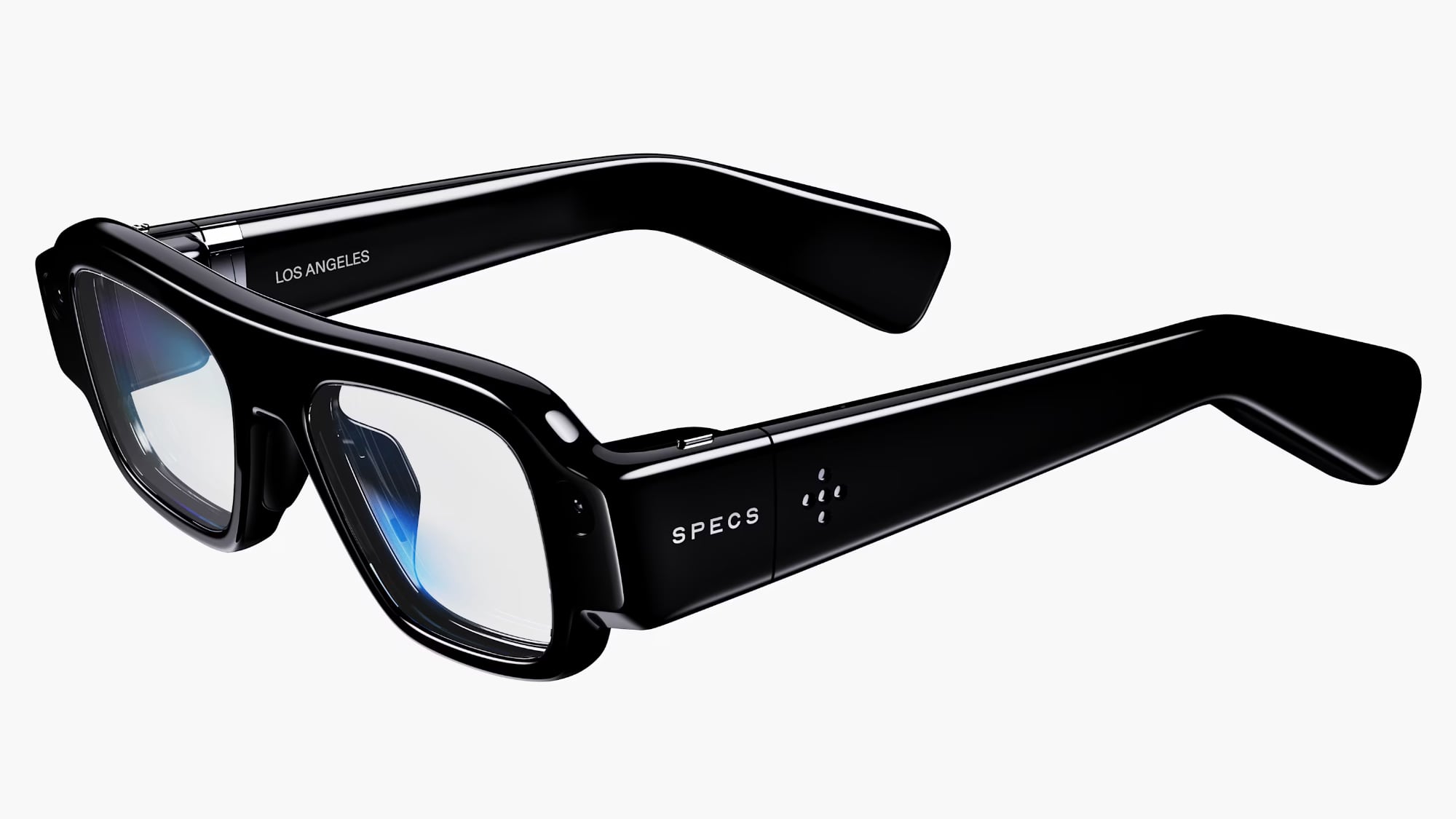
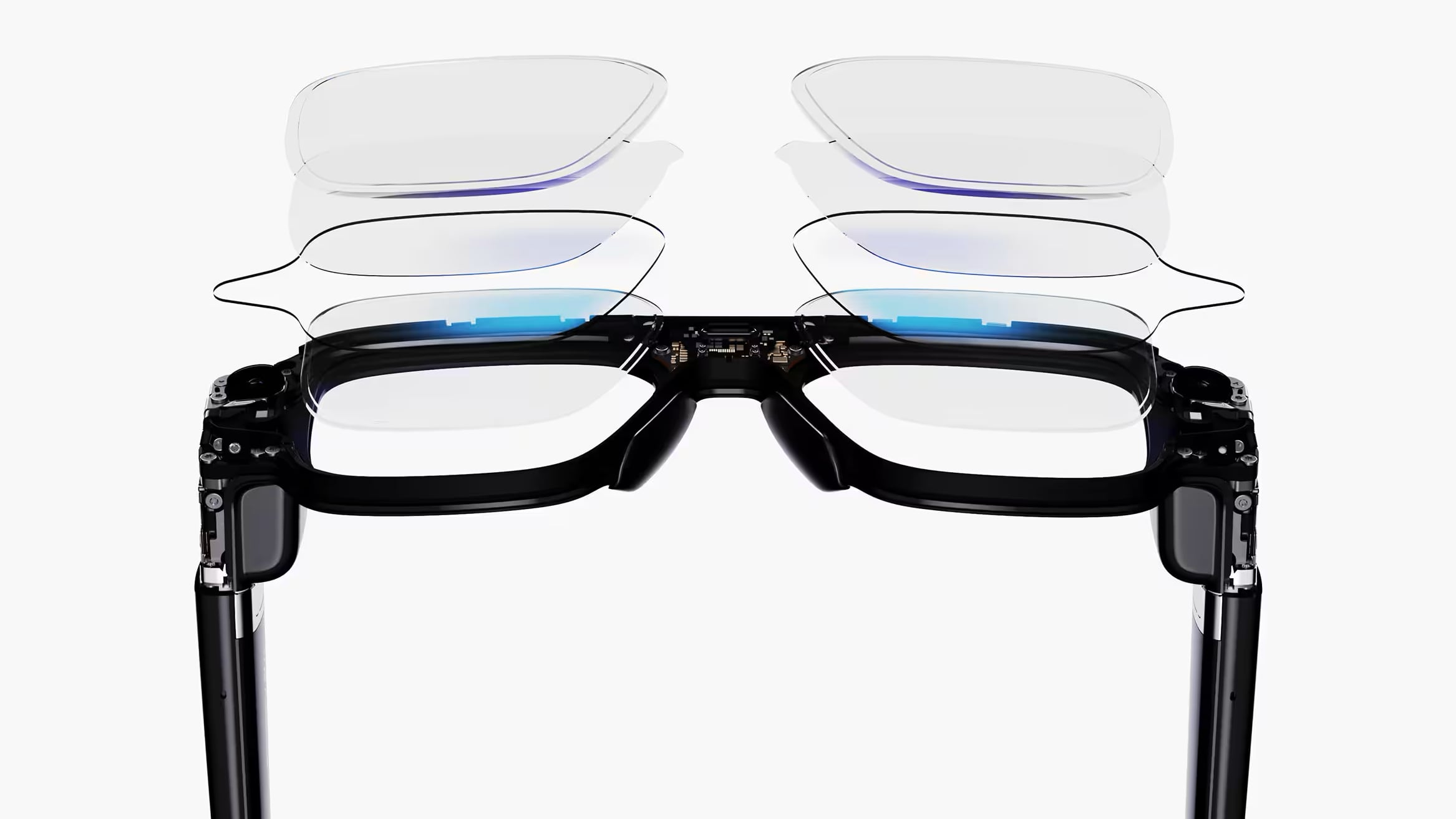
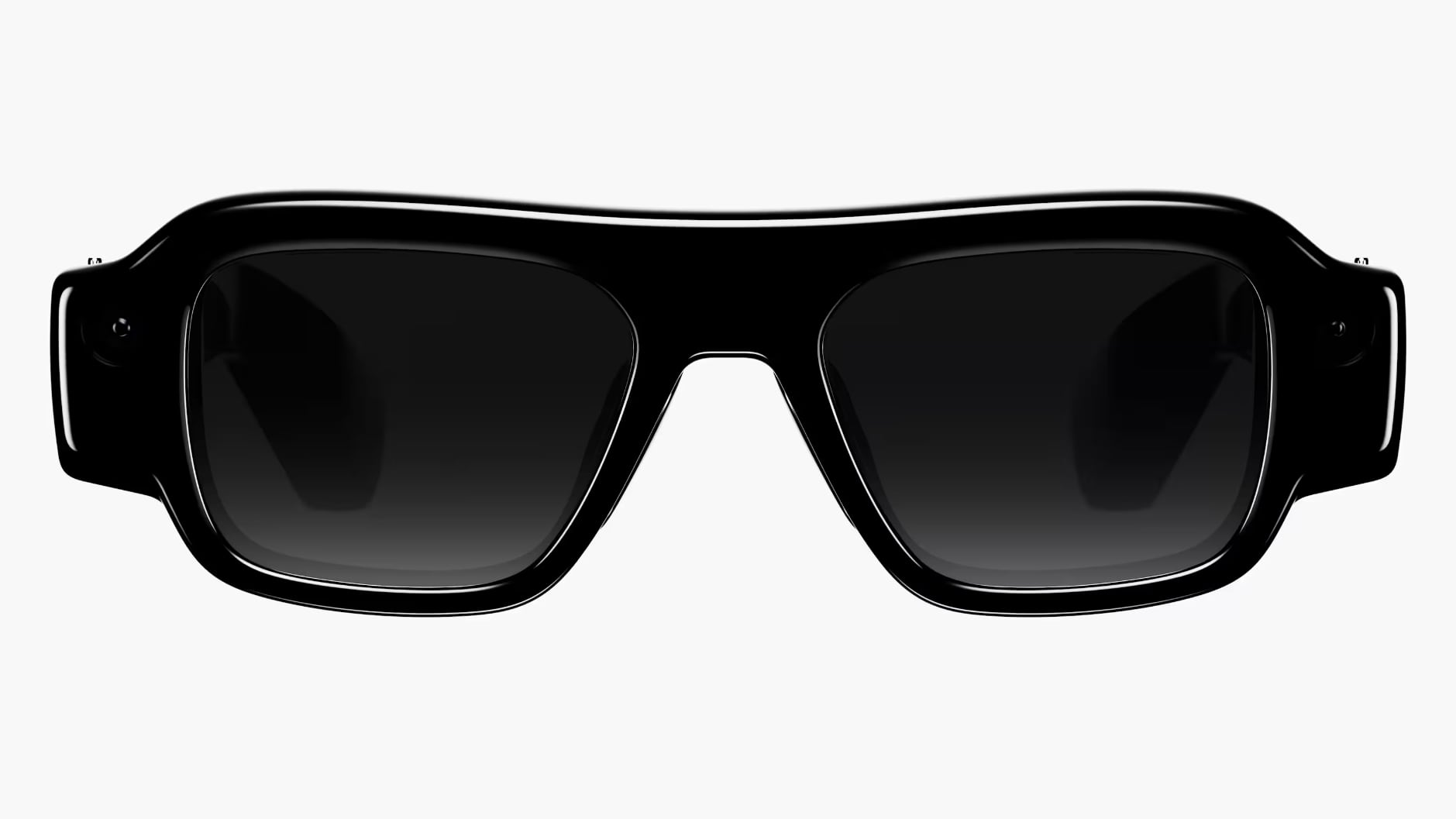
Specs are made from Swiss TR90 polymer that Snap suggests is "plastic titanium" because of its light weight and durability. The glasses are light enough to be "worn for hours" and two sizes are available. The 47mm frame weighs 132 grams (4.7 ounces), while the 52mm frame weighs 136 grams (4.8 ounces). Prescription lenses can be easily inserted and swapped out for sharing glasses with friends and family.
The AR glasses include cameras and sensors that feed data to AI with contextual understanding. There are two full-color high-resolution cameras, two infrared computer vision cameras, and 6-axis IMUs for inertial sensing. There are two Snapdragon chips inside, with one processor running the lenses, and the other handling computer vision.

Specs have a 51-degree field of view and a stereo waveguide display with automatic tinting for different lighting conditions. The device uses liquid crystal on silicon (LCoS) miniature projectors to project images to the display. Snap compares the field-of-view to a 115-inch screen viewed from 10 feet.
Stereo speakers are included for spatial audio, and there's a microphone array for audio input. The glasses have hand tracking capabilities for gesture control, along with voice recognition and support for natural voice commands.
Specs last for up to four hours with mixed use, and there is a custom magnetic charging cable that can charge the glasses while they're being worn. They come with a charging case that supports 20 hours of use. Prior-generation Spectacles from Snap that were limited to developers only offered 45 minutes of battery.
Specs can be used for watching content like movies, videos, and TV shows, casting to a screen, writing on a whiteboard, and using the myriad existing Snapchat lenses. Specs can also connect to a computer, phone, or gaming system over USB-C to be used as a display.
Snap CEO Evan Spiegel introduced the Specs at AWE USA 2026 and showed some of the experiences developers have created with Snap's Lens Studio. Since Specs can use lenses developed for Snapchat, there are already options for placing virtual items, playing mini games, getting DIY help, and more.
Lens Studio is getting agentic development for lenses, and there are developer integrations for Claude Code, Codex, and Cursor. Lenses are able to rely on APIs from OpenAI and Gemini for AI augmented reality experiences.
Specs are priced at $2,195 with a refundable $200 deposit, and they can be pre-ordered today. They're set to launch later this fall in the U.S., UK, and France.
Snap is beating multiple other tech companies to market with AR glasses, including Apple. Apple is developing augmented reality smart glasses with lenses, but the product won't launch for several more years. Apple's first glasses, which will be limited to AI capabilities and no built-in display, won't launch until late 2027.
Article Link: Snap Launches $2,195 'Specs' Augmented Reality Glasses

I want to say the glasses look good but I'll save that for another day.

Piggie
macrumors G3
I don't like these at all (looks wise)
But I'm super super glad they exist, and I can only Imagine Apple, Google, Meta are super happy also.
Why is that you ask. Well it's for some glasses from a known brand, and it's the price that is the point here.
By Snap pricing them where are are going to be, then it gives consumers early expectations on what similar things may cost from other brands.
EG: If everyone else sells something for $500 then it's hard for Apple to bring out their version that will succeed for perhaps $1500
But others have theirs at $2000 then Apple coming out at $1500 will look great in comparison.
If I did not know better I'd almost think Apple, Google, Samsung and Meta all paid Snap to bring these out now, so they will be able to justify THEIR prices a little later
But I'm super super glad they exist, and I can only Imagine Apple, Google, Meta are super happy also.
Why is that you ask. Well it's for some glasses from a known brand, and it's the price that is the point here.
By Snap pricing them where are are going to be, then it gives consumers early expectations on what similar things may cost from other brands.
EG: If everyone else sells something for $500 then it's hard for Apple to bring out their version that will succeed for perhaps $1500
But others have theirs at $2000 then Apple coming out at $1500 will look great in comparison.
If I did not know better I'd almost think Apple, Google, Samsung and Meta all paid Snap to bring these out now, so they will be able to justify THEIR prices a little later

Happy_John
Suspended
I don't like these at all (looks wise)
But I'm super super glad they exist, and I can only Imagine Apple, Google, Meta are super happy also.
Why is that you ask. Well it's for some glasses from a known brand, and it's the price that is the point here.
By Snap pricing them where are are going to be, then it gives consumers early expectations on what similar things may cost from other brands.
EG: If everyone else sells something for $500 then it's hard for Apple to bring out their version that will succeed for perhaps $1500
But others have theirs at $2000 then Apple coming out at $1500 will look great in comparison.
If I did not know better I'd almost think Apple, Google, Samsung and Meta all paid Snap to bring these out now, so they will be able to justify THEIR prices a little later
I agree with you here (except for your last line). One way or another, the glasses / headset market is going to settle, which means a lot of these early products and companies are going to vanish, and we'll end up with a more reasonable and consistent price with a consistent set of features ( and better styling). Mayn would-be producers know this, so they are rushing out products now, in the hopes that they become a mainstream company or are bought out by a mainstream company, or at the least, get their money in to recoup costs and make a profit before the market settles.
Or it will simply tun out to be an unpopular product category, and will die out except for a small niche market, and in that case, price is less relevant to a degree, because they are selling to the converted.
This is still very much the "early adopter" stage.
Piggie
macrumors G3
I agree with you here (except for your last line). One way or another, the glasses / headset market is going to settle, which means a lot of these early products and companies are going to vanish, and we'll end up with a more reasonable and consistent price with a consistent set of features ( and better styling). Mayn would-be producers know this, so they are rushing out products now, in the hopes that they become a mainstream company or are bought out by a mainstream company, or at the least, get their money in to recoup costs and make a profit before the market settles.
Or it will simply tun out to be an unpopular product category, and will die out except for a small niche market, and in that case, price is less relevant to a degree, because they are selling to the converted.
This is still very much the "early adopter" stage.
Whilst of course, in an ideal and perfect world, processing power and batter life is never an issue.
For the next X or XX years, whilst not "Perfect" I feel the most sensible and logical way would be for a pair of smart glasses to have VERY limited/constrained abilities when that is the only piece of tech you have on you.
For the main/full work we need to offload all the CPU power onto the phone you will always be carrying in your pocket anyway.
All the glasses need to handle is the display and the battery.
You phone has a vastly larger battery and CPU/GPU power than glasses will ever have.
So (IHMO) is seems sensible to make a way better performing product that uses your phone for the "heavy lifting" than making a poor set of smartglasses.
And lets be honest, very very few normal folks are going out without their phone on them anyway.
I'd rather see smartglasses with 5 times the abilities and power than need the phone, that a poorly performing stand alone pair.
And of course, you can always have a small limited set of things the glasses can do if you genuinly have nothing else on you
Monstrosity, indeed. Mild form of it though when compared to the AVP.I think Snap's leadership is living in an augmented reality if they think people are going to wear this monstrosity.
Piggie
macrumors G3
Monstrosity, indeed. Mild form of it though when compared to the AVP.
I do wonder if perhaps one answer may be for the glasses to have an actual back to them, behind the neck (even if it's a broken loop, then a large chunk of the chunkiness could be around the back.
Not only out of view, and hence allowing you to make the obvious/visible front of the glasses look vastly better, but also to balance any weight out nicely.
Really makes me appreciate even more that I can carry my phone in my pocket or a pouch.Snap today unveiled Specs, a pair of augmented reality glasses that it describes as a wearable computer built into a pair of see-through glasses.