

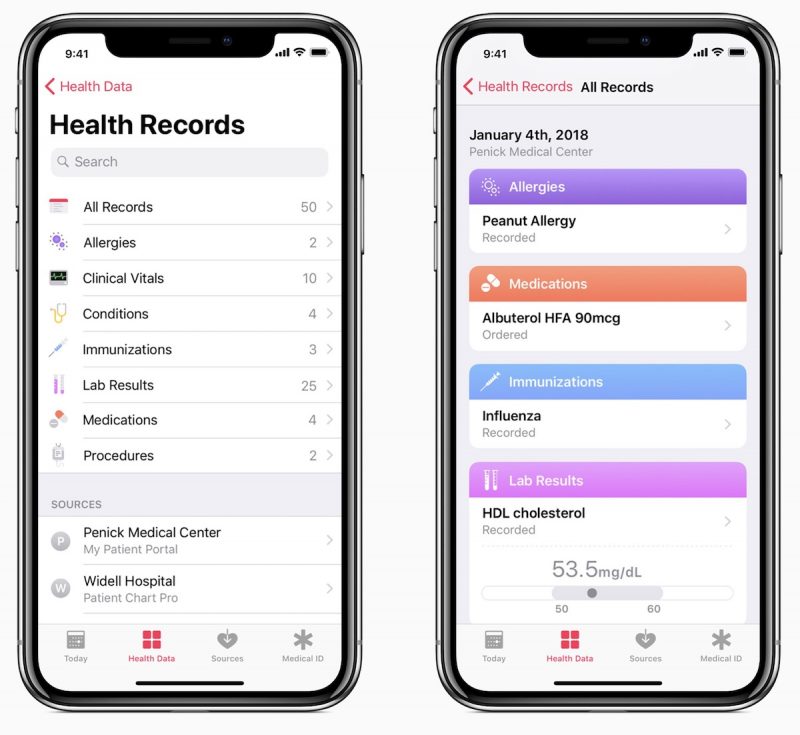
UC San Diego Health recently sent an online survey to its first 425 patients who activated Apple Health Records in 2018, and among 132 respondents, 78 percent indicated that they were "satisfied with using the feature."


Excately, more than 1 in 5 are unhappy with the service; it's poorBelow 90-95% of satisfaction will make it really hard to adopt in public hospitals IMO.
But we really, like really really have to use these technologies sooner than later, or the system will continue to crumble (in Quebec at least)
Get back to us when public institutions like the NHS here in the UK support it, where virtually every citizen has a record (all 65m of us).
Then it'll be worth patting themselves on the back. Not this.

Excately, more than 1 in 5 are unhappy with the service; it's poor

Epic, Cerner, Allscripts and more of the major EHR vendors are on board with Apple Health.I'd gladly use this over Epic... which is better than what the local hospitals were using previously. Both medical groups I see as a patient use Epic now.
If Epic connects to Apple Health, that'd be a huge usability improvement. Sadly, medical records have a long way to go in the interoperability zone, since there's little incentive for providers to establish a standard for it.


Below 90-95% of satisfaction will make it really hard to adopt in public hospitals IMO.
But we really, like really really have to use these technologies sooner than later, or the system will continue to crumble (in Quebec at least)

78%. That's 103 out of 132 respondents satisfied (29 less than satisfied). A little under one-third of the people who were sent the survey responded. Not a terribly large sample size. Some of those 29 likely ran into one particular issue of some sort in this new system - maybe they didn't like the entire system, but just as likely there was just one thing that irked them. As well, people who don't like something are often more motivated to take the time to fill out such surveys. Pronouncing judgement of the whole system to be "poor" based on only this much data seems premature.Exactly, more than 1 in 5 are unhappy with the service; it's poor

Kind of a meaningless number without a prior satisfaction level.
Excately, more than 1 in 5 are unhappy with the service; it's poor
Get back to us when public institutions like the NHS here in the UK support it, where virtually every citizen has a record (all 65m of us).
Then it'll be worth patting themselves on the back. Not this.
Indeed, the more interesting part is missing, i.e. what do the 22% see as shortcomings or improvement ? And how feasible is it to address their criticism ?Does that number seem odd to anyone? Over 90% said it was easy to set up, and that it "improved their understanding of their own health".... yet only 78% were satisfied?
Does that number seem odd to anyone? Over 90% said it was easy to set up, and that it "improved their understanding of their own health".... yet only 78% were satisfied?
Epic does interface with apple health - it’s really up to the individual hospital system to connect to Apple. As a doctor and patient I find Epic (and the patient facing MyChart) passable - and I’m quickly finding it’s ubiquity is the best thing about it.I'd gladly use this over Epic... which is better than what the local hospitals were using previously. Both medical groups I see as a patient use Epic now.
If Epic connects to Apple Health, that'd be a huge usability improvement. Sadly, medical records have a long way to go in the interoperability zone, since there's little incentive for providers to establish a standard for it.
Then again - what should be improved ?Epic does interface with apple health - it’s really up to the individual hospital system to connect to Apple. As a doctor and patient I find Epic (and the patient facing MyChart) passable - and I’m quickly finding it’s ubiquity is the best thing about it.
Perhaps it only has some of their medical records, their doctors or other medical staff were unable to access the information efficiently, it doesn't link with other medical information systems they are using, it doesn't link with medical devices they need to use, or they were unhappy with who they could share their information with (e.g. only with those of their family who are using ios devices). Apple should now have some good feedback on how to make improvements before this is rolled out more widely (only 425 patient records so far?). Even though it's early stage, I'm quite impressed that they've managed to make this much progress - there are a lot of technical, social and legal hurdles to overcome.
