Become a MacRumors Supporter for $50/year with no ads, ability to filter front page stories, and private forums.

MacRumors

macrumors bot
Original poster
Apr 12, 2001
70,450
42,120


2025 was a significant year of advancement for Apple's software, with a noticeable focus on visual design, productivity, and communication.
iOS-26-Glass-Feature.jpg

While Apple introduced and continued to iterate on a wide range of features throughout the year, several additions stood out for their scope and practical impact across multiple devices. As the year comes to an end, these five new features provide a useful lens for weighing up what the company focused on this year and how far its platforms evolved in 2025.

Liquid Glass

This year's most immediately visible change is the introduction of Liquid Glass, a new system-wide visual design language applied across Apple's operating systems. Liquid Glass replaces many of the flat, opaque UI elements introduced over the past decade with layered translucency, subtle refraction, and motion-responsive surfaces that react to underlying content.
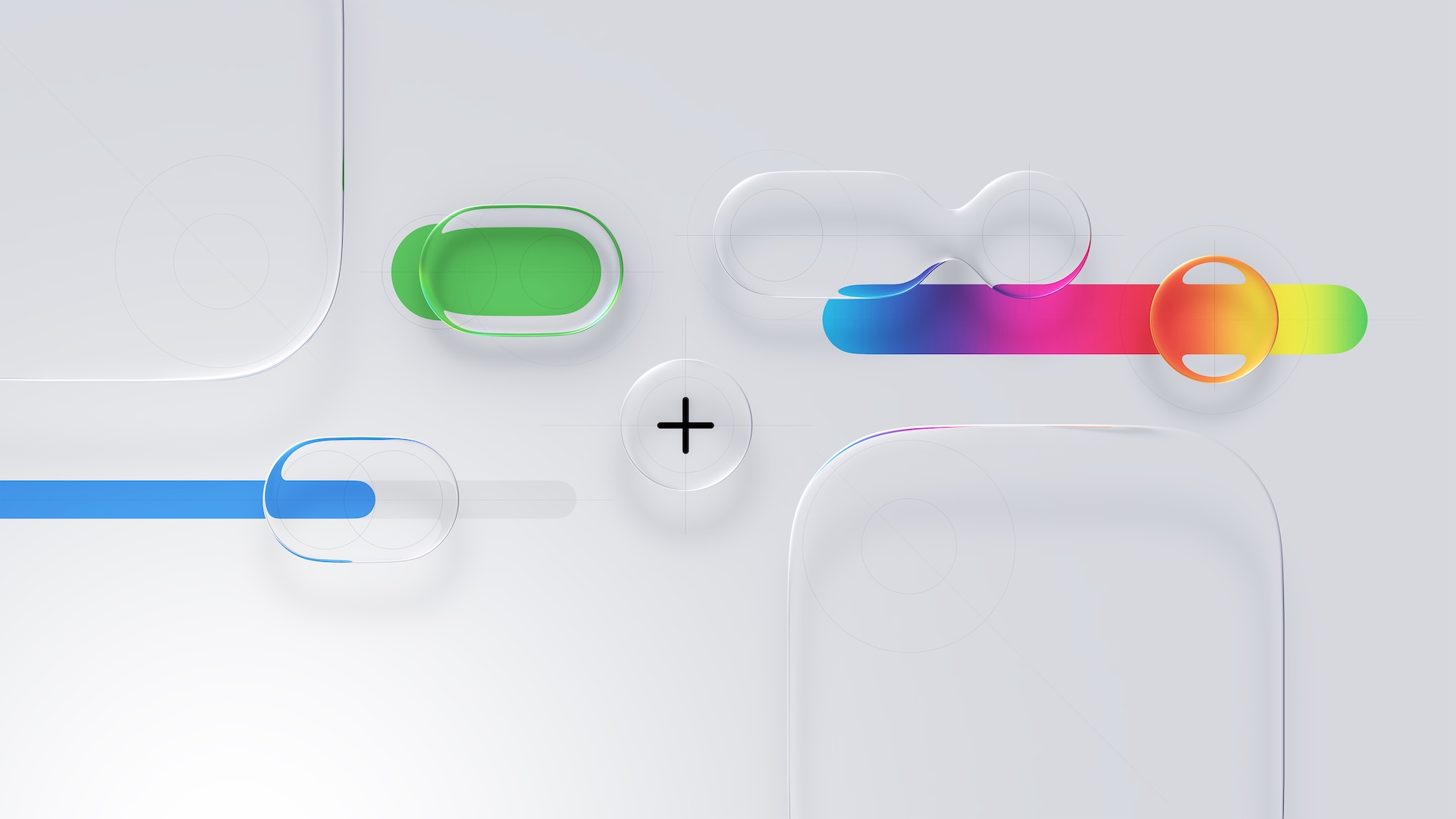
Liquid-Glass-General-Feature.jpg

Navigation bars, sidebars, control panels, and system overlays now appear as semi-transparent sheets that blend into their surroundings rather than sitting on top of them. Apple framed this as a unifying material across platforms rather than a purely aesthetic refresh, with the same visual logic appearing on iPhone, iPad, Mac, Apple Watch, and Apple TV.

In practice, it is one of Apple's biggest visual redesigns since the original iOS 7 shift away from skeuomorphism, and it signals a renewed focus on making the interface feel fresh, spatial, playful, and responsive rather than static.

Revamped iPad Multitasking

On the iPad, the most consequential change is the introduction of an all-new multitasking system with windows and a macOS-style Menu Bar and cursor in iPadOS 26.
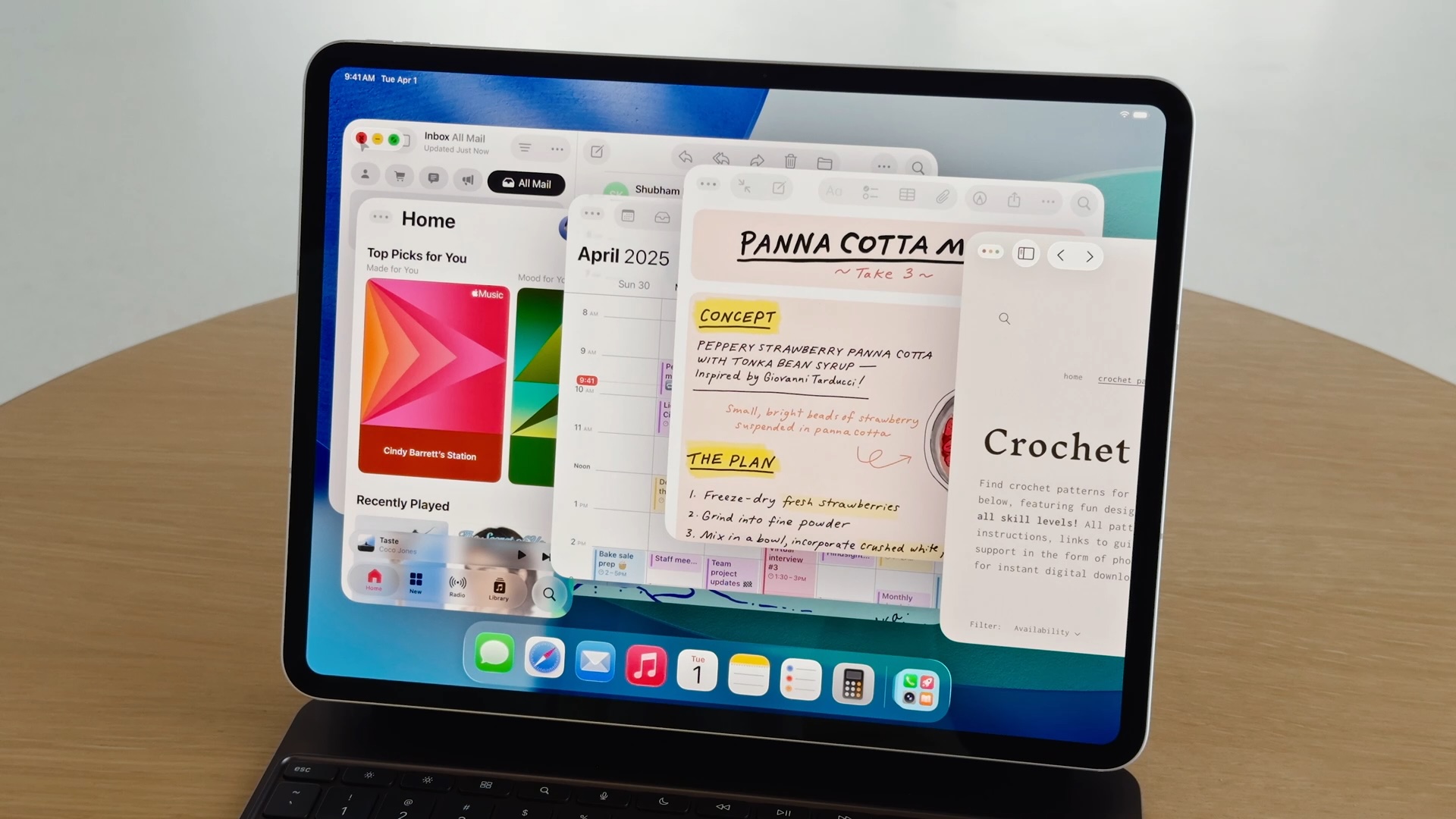
iPadOS-26-App-Windowing.jpg

Apps can now run in freely resizable windows rather than being constrained to fixed split-screen layouts, allowing multiple overlapping windows to coexist on screen. Alongside this, a Menu Bar appears at the top of the display when invoked, exposing app commands in a structured, searchable format similar to macOS.

Instead of asking users to adapt desktop workflows to a touch-first model, Apple has now explicitly imported desktop interaction styles into iPadOS, addressing a significant number of user complaints about the software limitations of the iPad. For users who want to use the iPad with true multitasking and desktop-style workflows, this is one of the most substantive capability upgrades the platform has ever received.

More Powerful Mac Spotlight

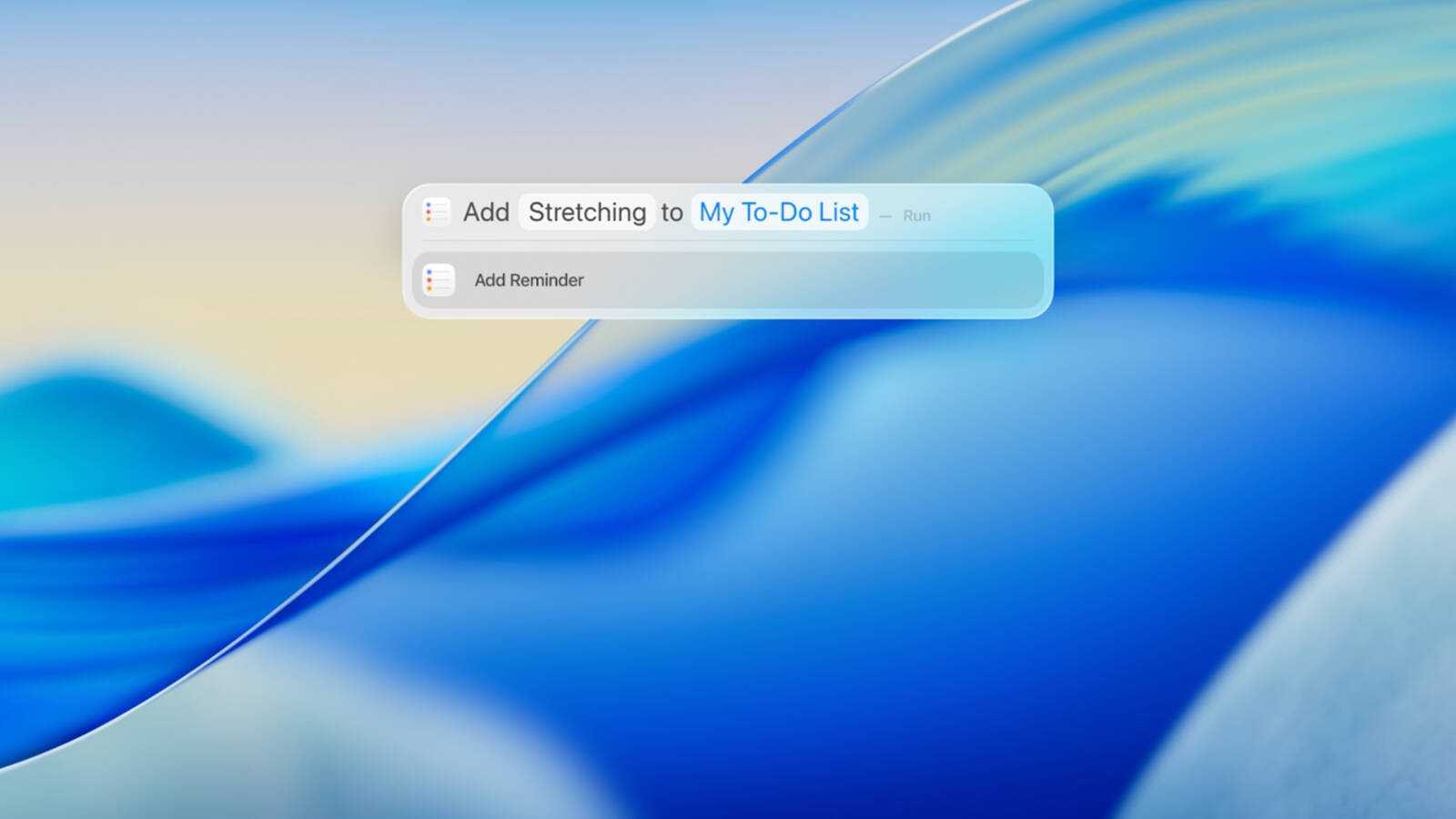
On the Mac, Spotlight received its most extensive overhaul to date, transforming it from a passive search tool into an actions-first command interface, similar to third-party apps like Alfred or Raycast.
tahoe-spotlight.jpg

Spotlight in macOS Tahoe can now execute hundreds of actions directly from the search field. Users can create and edit notes, send emails and messages, start timers, run Shortcuts, adjust system settings, and perform app-specific commands, without opening the corresponding app.

Apple also redesigned Spotlight's results presentation with richer, more structured browsing views. Instead of returning a flat list of matches, Spotlight now surfaces grouped results for files, applications, actions, and suggestions, allowing users to scan and refine results more quickly.

Spotlight now includes a built-in clipboard history, allowing users to view and reuse previously copied text or images directly from the Spotlight interface. Apple also integrated an app library-style view, providing a centralized, searchable overview of all installed applications.

Live Translation

Another major addition is Live Translation. Real-time translation now operates inside Messages, FaceTime, and the Phone app, translating both text and spoken audio during conversations.
AirPods-Live-Translation.jpg


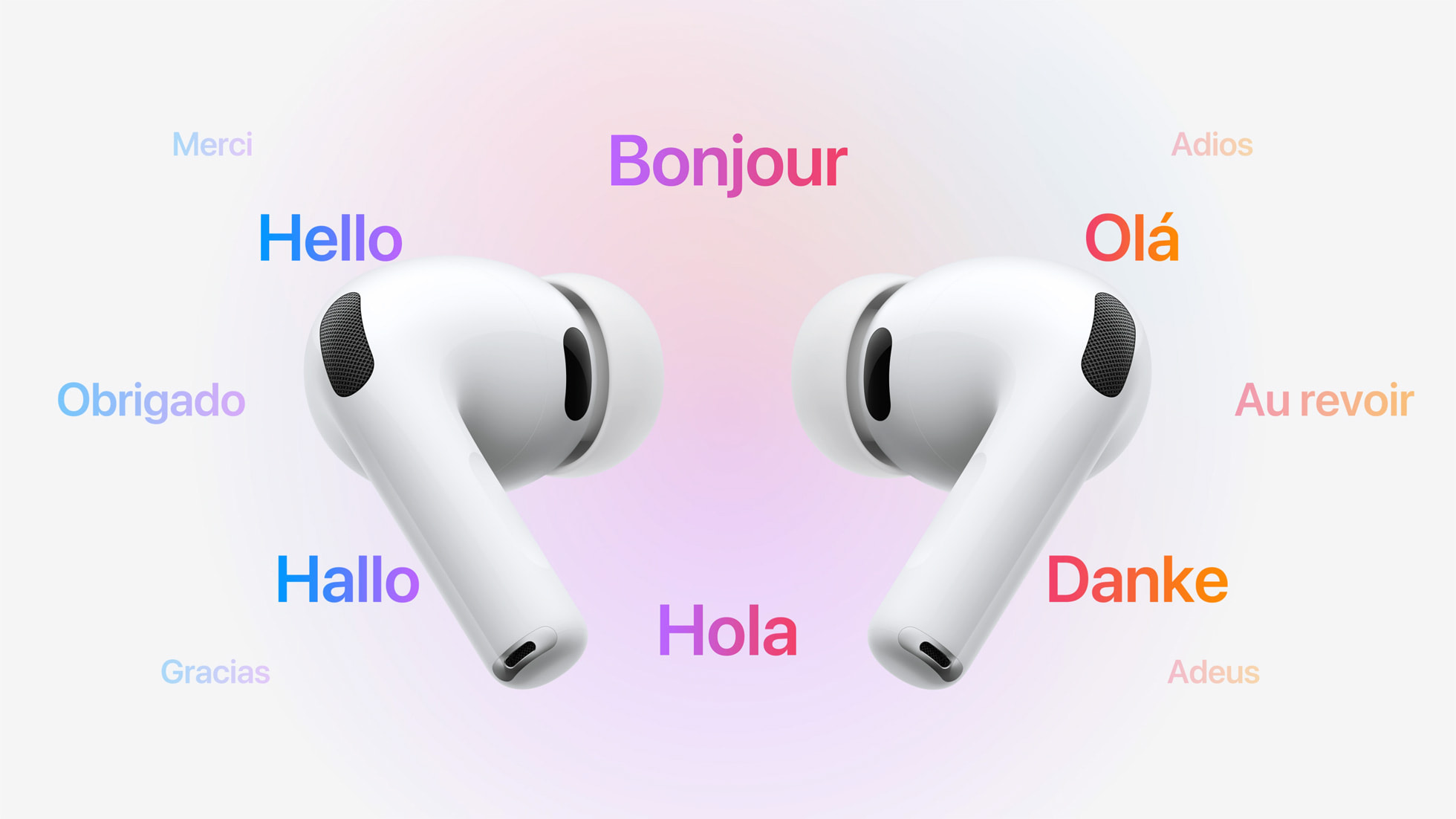
In Messages, incoming and outgoing text can be translated inline. In FaceTime, Live Translation provides real-time translated captions during video calls, allowing participants to speak naturally while reading translations as the conversation unfolds. In phone calls, spoken dialogue can be translated in near real time, with translated audio and on-screen text presented during the call.

Apple also extended Live Translation to AirPods, enabling real-time spoken translation directly through the earbuds during in-person conversations. When Live Translation is active, speech from another language can be translated on the paired iPhone and played back in the user's AirPods, while the user's responses can be translated and spoken aloud by the iPhone for the other participant.

Communication Screening and Hold Assist

Call Screening allows the iPhone to automatically answer calls from unknown numbers on the user's behalf. The system asks the caller to identify themselves and explain the reason for the call, then presents the user with a live transcript of the response before the call is connected.

With Hold Assist, when a user is placed on hold during a phone call, the iPhone can remain in the queue on their behalf and monitor the call until a live agent becomes available. Once the system detects that the call has resumed, it notifies the user to return to the conversation.

In Messages, Apple introduced more aggressive screening for unknown senders. Messages from numbers that are not in the user's contacts are automatically routed into a separate area, keeping potential spam and scam attempts out of the main conversation list.

Article Link: The 5 Most Important Apple Software Features Introduced This Year
 
  • Haha
Reactions: addamas and rjw1678
pfft

memory integrity enforcement doesn’t get a mention… what sort of coverage is this?


TLDR: This culmination of this half-decade plus of work, involving both the hardware and software/OS teams at Apple will make malware MUCH more difficult to develop for macOS and iOS due to a combination of software and hardware features built into the A19 and M5 and later.

Essentially, OS 26+ when running on A19/M5 and onward, the OS and CPU will stop about 90-95% of memory exploit bugs (read: malware) in their tracks, even if the software is buggy and exploitable.

WAY more relevant than liquid (gl)ass.
 
Last edited:
Have to say, I actually really like the Liquid Glass Experience on Apple TV. It's a perfect fit for large screen visuals / entertainment platforms and actually adds to the Apple TV UI. It still seems buggy with 26.2 with slow element redraws but it feels like it fits.

But for something that is supposed to focus on your content, it's WAY too busy, messy, buggy and interfering for small screens - so much so that I even downgraded my phone to get rid of it so that my device was usable again (and might I add just how FAST and intuitive iOS18 is compared to 26). The design language of liquid glass just makes no sense of productivity devices.
 
Last edited:
pfft

memory integrity enforcement doesn’t get a mention… what sort of coverage is this?


TLDR: This culmination of this half-decade plus of work, involving both the hardware and software/OS teams at Apple will make malware MUCH more difficult to develop for macOS and iOS due to a combination of software and hardware features built into the A19 and M5 and later.

Essentially, OS 26+ when running on A19/M5 and onward, the OS and CPU will stop about 90-95% of memory exploit bugs (read: malware) in their tracks, even if the software is buggy and exploitable.

WAY more relevant than liquid (gl)ass.
This is a hardware feature. The title of this article specifically said software.
 
Liquid Glass is a skin. An ugly skin, nothing more. There's nothing new; all the magnifiers, zooms, and highlights have been given a glass skin. The settings menu is identical to before. Everything is exactly the same. iOS 7 brought much more in this regard. To call it something great is a misconception. Its greatness manifests itself solely in dissatisfaction, not in fear of change. I was the first to test the beta, and as quickly as I saw it, I got rid of the crap.


2025 was a significant year of advancement for Apple's software, with a noticeable focus on visual design, productivity, and communication.

iOS-26-Glass-Feature.jpg

While Apple introduced and continued to iterate on a wide range of features throughout the year, several additions stood out for their scope and practical impact across multiple devices. As the year comes to an end, these five new features provide a useful lens for weighing up what the company focused on this year and how far its platforms evolved in 2025.

Liquid Glass

This year's most immediately visible change is the introduction of Liquid Glass, a new system-wide visual design language applied across Apple's operating systems. Liquid Glass replaces many of the flat, opaque UI elements introduced over the past decade with layered translucency, subtle refraction, and motion-responsive surfaces that react to underlying content.

Liquid-Glass-General-Feature.jpg

Navigation bars, sidebars, control panels, and system overlays now appear as semi-transparent sheets that blend into their surroundings rather than sitting on top of them. Apple framed this as a unifying material across platforms rather than a purely aesthetic refresh, with the same visual logic appearing on iPhone, iPad, Mac, Apple Watch, and Apple TV.

In practice, it is one of Apple's biggest visual redesigns since the original iOS 7 shift away from skeuomorphism, and it signals a renewed focus on making the interface feel fresh, spatial, playful, and responsive rather than static.
So, the "most important Apple Software feature introduced this year", is a skin. A skin which is extremely divisive, and subjectively less practical. It is such an important feature; that even prior public release, Apple backtracked on the design, and had to introduce a less glassy, less contrasty version - due to the backlash of users not being able to read content.

It's been a good year🤣
 
  • Like
Reactions: megatronbomb
This is a hardware feature. The title of this article specifically said software.

It’s both.

it requires BOTH macOS/ipadOS/iOS 26 AND the new hardware. It required creation of significant instrumentation software inside of Apple to create both.

Parts of it are software only and have been deployed over the past 5 years.


But the entire solution is useless without the 26 OS platforms. Essentially the OS is ‘tagging’ memory when a process uses it, so that it is not accessible via any other process without that tag. Which means buffer overflows from one process into another by exploiting buggy code are no longer trivial. The enforcement is handled by the CPU, which is why it requires A19/M5 and up.

This is the biggest reason to run macOS 26 or ipadOS 26 or later imho, in addition to being a significant reason to choose say M5 over M4 (or iphone 16 over iphone 17) at a slightly cheaper price.
 
Last edited:
Liquid Glass: Meh. And it's much less intrusive with Settings > Accessibility > Display > Reduce Transparency toggled on, on both Mac and iPhone.

Revamped iPad Multitasking: I only have an iPad mini, and I never multitask on that...

More Powerful Mac Spotlight: I like it, but - TBH - I'm using Spotlight much the same as I always have, without really using the new (and improved) features.

Live Translation: Not had a chance to test this, yet. But seems very exiting, and maybe it'll come in handy on our next trip to, let's say, Japan or Germany.

Communication Screening and Hold Assist: Not tested this, since I already have Silence Unknown Callers toggled on 99% of the time.

So, all in all kind of underwhelming...
 
I haven't used Hold Assist yet. Could someone tell me, if you put a call on Hold Assist and you want to return to the call before a human picks up on the other end, are you able to?

Or are you forced to wait until iOS notifies you that a human has picked up and then and only then are you able to return to your call?
 
Liquid gAss is the biggest Apple fail in the history! Imagine to buy new 17 pro and use this Laggy peace of iOS 26 where your keyboard stuttering. And absolutely garbage UI implementation…

If this OS stay as it is I will 100% switch to the Android. This is insane
 
Register on MacRumors! This sidebar will go away, and you'll see fewer ads.