Glenn Wolsey said:
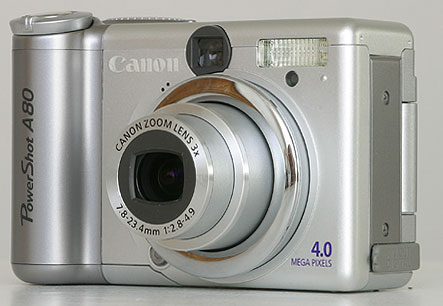
*Cringes* Canon PowerShot A80...
Hey, don't cringe. My P&S is an A80 too, and it really does quite well.
For example, go look at the OP's photo's at the start of this thead
🙂
...and I'm dead serious when I say to think about being successful in getting the "silky flowing water" effect from a
"mere" P&S. Especially when without a tripod!
Thus said, my choices between 1-2-3 is #3. Reason being:
Image #1 looks like someone tried to get the 'silky water' effect, but failed to do so, because of a not long enough shutter.
Similarly, #2 looks like it was an attempt to absolutely freeze motion, but also failed, due to not a short enough shutter.
Perhaps its because of factors of the above that #3 is considered to be "the" classical approach for moving water.
FWIW, when using long shutter speeds for the effect, don't assume a "one size fits all" when it comes to shutter speeds. Yes, you'll need a certain minimum shutter to get sufficient motion blur, but there's not necessarily an upper limit, so do try different durations.
For example, you can sometimes use "very long" exposures to create the illusion of more total water flow. This can be useful if there's "too little" water flow for your intended composition...for example, a small dribble of water due to drought or seasonal variation can be made to look "normal", or a normal flow can be give the illustion of a deluge, especially if it has a lot of wide spray that will fill itself in.
Here's an example...this waterfall was a very weak dribble:
Flatbed scan of an 8x12 print. Rainbow Falls, Great Smokies National Park,
35mm Pentax K-1000 SLR, 28mm @ f/22?, ~2sec, w/polarizer & Kodak Ektar ISO 25.
As always, its useful to experiment. This also means trying the same composition with a polarizer at a few different angles. This is not easy to do with a P&S, granted, but ... hmm ... I'd bet that I could hand-hold one of my SLR polarizers in front of an A80, especially if I had the A80 on a tripod.
-hh