I'm not going to go through the whole thread picking out individuals to correct, though (on the whole) this is one of the least off base NeXT related threads I've seen in a long time.
😀
Given that, lets hit on some topics that seem like areas of confusion for many people.
What is Yellow Box?
It is an application environment based on the OpenStep APIs (which in turn were based on the NEXTSTEP APIs but were modified by NeXT and Sun to create the
OpenStep Specification). This was the native application environment of Rhapsody (for more on Rhapsody, I wrote a
What is Rhapsody article for my Rhapsody web site), but it was also designed to be cross platform (as in multiple operating systems).
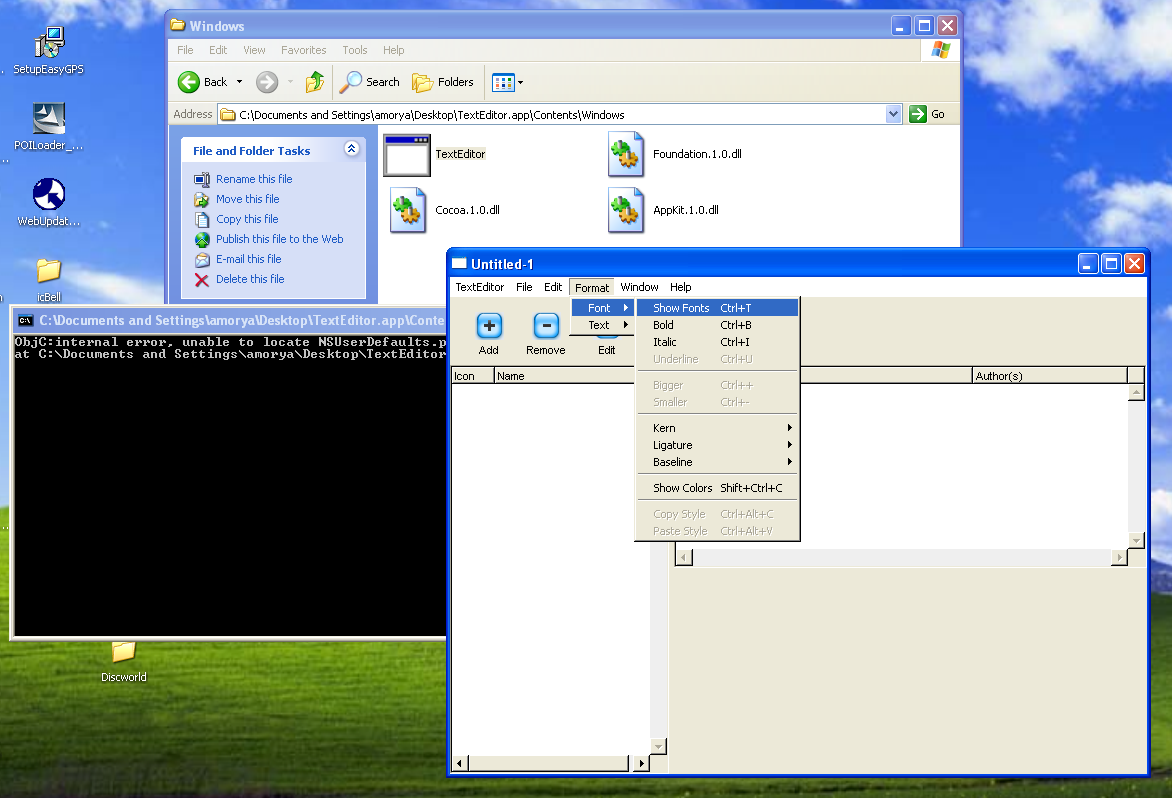
Yellow Box for Windows
As has been pointed out, there was a product called
OpenStep Enterprise for Windows. In the NeXT days (that is, before 2000 when Apple stopped selling NeXT products) this was the foundation of a number of key products, including
Portable Distributed Objects,
Enterprise Objects Framework and
WebObjects.
Apple was considering continuing along these lines and included
Yellow Box for Windows with the Rhapsody developer releases in 1997 and 1998.
What happened to Yellow Box for Windows?
Nothing, really...
It was never actually supposed to be a shipping product. The idea was the developers would license the runtime environment from Apple and include it with their Yellow Box apps so they could run on Windows systems. That licensing deal is what was cut off.
Yellow Box (everything that was included on the developer CDs) was released within WebObjects 4. And any applications developed for
Yellow Box for Windows ran just fine on Windows with WebObjects 4.x.x installed.
Rhapsody apps for Windows... not quite
One of the biggest misconceptions about
Yellow Box for Windows was that this was a
write once, use anywhere type of development environment. It wasn't.
Yellow Box applications for Rhapsody would not run within
Yellow Box for Windows without some extensive reworking. As such, only the smallest handful of Rhapsody apps were ever ported to
Yellow Box for Windows (I display a number of these in screen shots of
Yellow Box on Windows NT 4 and
Yellow Box on Windows 2000 Professional).
Other Boxes
To help with the transition to Rhapsody, Apple developed
Blue Box which seems to be largely based on the technology used for MAE (Macintosh Application Environment for Unix systems) and A/UX.
While early versions had some issues with running a little slow, the later versions that were included with Rhapsody 5.3-5.6 (Mac OS X Server 1.0-1.2) were actually very nice speedwise (I ran a test on my main Rhapsody system using Mathematica, the results are
here), and the Blue Box environment is much more stable than the Mac OS running on it's own.
There are rumors all around that Apple was developing
Red Box for the Intel version of Rhapsody. I cover that area in an article
here.
🙄
That brings us to the
Where are they now? section.
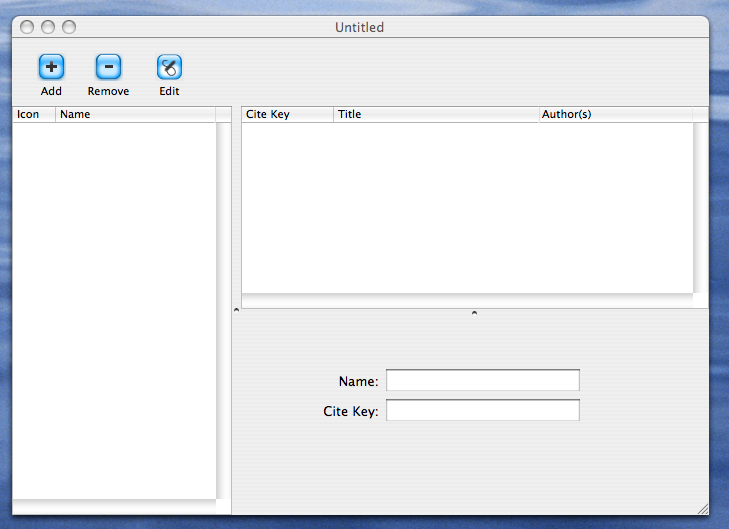
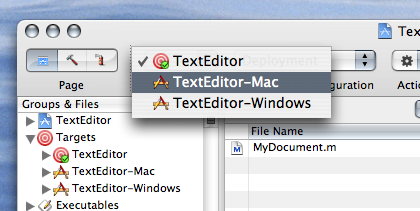
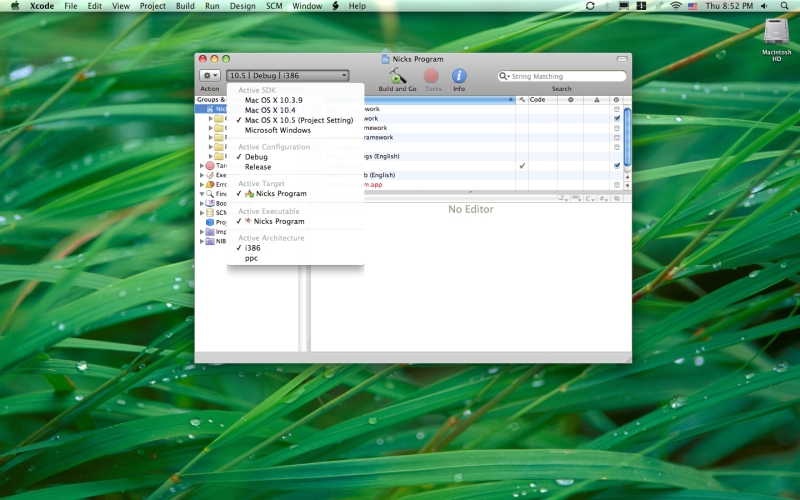
Yellow Box became Cocoa. And while everyone seems up in arms about Apple not making Carbon 64 bit, I would point out that the best Mac apps actually make use of both Carbon and Cocoa frameworks. Developers have been mixing the two to get the best of both for many years now.
While I pointed out that
Yellow Box for Windows basically became WebObjects 4, Apple made some major changes with WebObjects 5... mainly the removal of Objective C support (making it Java only).
While many are under the misconception that the
Rhapsody project was a failure, that couldn't be further from the truth... unless Mac OS X is a failure. Mac OS X is an evolution of Rhapsody.
The first thing Apple did was put in Carbon. While many mistakenly think this was some how based on code used for QuickTime... it wasn't. QuickTime had been on Rhapsody from the very beginning, without Carbon. The foundations of Carbon are based in Copland. Apple's developers were already hard at work developing a streamlined version of the Macintosh Toolbox that could be implemented on a kernel based operating system when the Copland project was dropped. When looking for a similar solution for Rhapsody, that Copland environment was placed within Rhapsody to make a suitable environment for existing Mac apps with small amounts of code changes. Within weeks of getting Carbon into Rhapsody a number of demo apps were compiled and running (including Simple Text, AppleWorks and Photoshop 5).
The second thing was removal of licensed aspects of 4.4BSD from Rhapsody's foundation (which gave us Darwin) followed by the removal of Adobe's Display Postscript. Both of these steps were taken to reduce the cost of the operating system. Considering that Rhapsody 5.6 cost about $500 where as Mac OS X v10.0 cost $129, I'd say that Apple did a good job of getting rid of expensive licenses.
Rhapsody was sold as a product from early 1999 until the summer of 2001, and the very first developer release of Mac OS X (Mac OS X Developer Preview 1) was nearly identical to the shipping version of Rhapsody (Mac OS X Server 1.x) from a users stand point.
So yeah, from my point of view, Rhapsody was very successful.
😀