
Got a tip for us?
Let us know
Become a MacRumors Supporter for $50/year with no ads, ability to filter front page stories, and private forums.
YouTube Launches 'Capture' App to Easily Film and Share Videos
- Thread starter MacRumors
- Start date
- Sort by reaction score
You are using an out of date browser. It may not display this or other websites correctly.
You should upgrade or use an alternative browser.
You should upgrade or use an alternative browser.


swarmster
macrumors 6502a
The best feature is that they force you to shoot in landscape mode!
What's wrong with vertical videos? Maybe the movie and TV industry has just been doing it wrong this whole time?
I'm wondering the same thing as ChromeAce. Sounds like most people complain about videos with more lines vertically than horizontally because YouTube handles them poorly. Is that all? Either that or 'because the things I know about have all been that way' (also known as 'the worst reason to do anything ever').
If it makes sense to frame something vertically, why not? Especially if you're just sharing it among phones, where vertical is a more common orientation anyway.
----------
YouTube is not a company. It's like saying "Mac has launched...."
/rant
YouTube is an LLC (and a wholly owned subsidiary of Google). So...they very much are a company.
Last edited:
StuddedLeather
macrumors 6502a
The most important question: Will the videos being uploaded be in full HD?!
If so this app could be amazing and convenient!
If so this app could be amazing and convenient!
CapnJackGig
macrumors 6502a
YouTube is becoming a wasteland.
It's flooded with ads everywhere and last friday even clicking on the "play" button of a video opened a new browser window for a 3rd-party game.
I haven't had the same experience using YouTube in recent days.
I suggest installing the AdBlock Safari extension and blocking pop-up windows in Safari. See if it improves your YouTube viewing...
Great, more idiots now encouraged to take out their phone to shoot a crappy video of a concert they're at.
Attention everybody: Nobody wants to see your poorly filmed video, and I sure as hell don't want you standing in front of me with your phone out while I'm trying to enjoy a concert. Please go back to enjoying the actual moment and not having to film every little thing.
Okay, rant over (but, seriously, can we please ban cell phones at concert venues?).
Attention everybody: Nobody wants to see your poorly filmed video, and I sure as hell don't want you standing in front of me with your phone out while I'm trying to enjoy a concert. Please go back to enjoying the actual moment and not having to film every little thing.
Okay, rant over (but, seriously, can we please ban cell phones at concert venues?).
justjohn025
macrumors regular

stepshows
macrumors member

SeanMcg
macrumors 6502
Human vision is "widescreen."
I'm an amateur photographer (cited as background not as expertise), and I remember as a kid the whole world of options that opened up simply by turning the camera 90 degrees. As I got older and started watching people around me taking pictures, it intrigued me how this one simple little trick was lost on so many. When I would recommend a vertical shot (think, family in front of the castle at Walt Disney World), people would be amazed at the picture tha could be obtained.
The design of the cameras did a lot to force this. The 35mm format and cameras were designed for the landscape nature of our vision and our horizontally-oriented hands. Other formats, meant more for studio photography, which often made their way into vertically oriented magazines, weren't tied to this same constraint. Thanks to the design of camera phones, vertical has become much more normal. Unfortunately, that extends to video from these devices as well.
Vertical is fine for still photography. The image isn't changing so it gives our widescreen vision a chance to take everything in. Video and movies, though, are meant to be an extension of our eys in the real world. Even if the movie is shot vertically, the image is presented to eyes that are used to seing horizontally. It forces an uncomfortable translation.
I'm an amateur photographer (cited as background not as expertise), and I remember as a kid the whole world of options that opened up simply by turning the camera 90 degrees. As I got older and started watching people around me taking pictures, it intrigued me how this one simple little trick was lost on so many. When I would recommend a vertical shot (think, family in front of the castle at Walt Disney World), people would be amazed at the picture tha could be obtained.
The design of the cameras did a lot to force this. The 35mm format and cameras were designed for the landscape nature of our vision and our horizontally-oriented hands. Other formats, meant more for studio photography, which often made their way into vertically oriented magazines, weren't tied to this same constraint. Thanks to the design of camera phones, vertical has become much more normal. Unfortunately, that extends to video from these devices as well.
Vertical is fine for still photography. The image isn't changing so it gives our widescreen vision a chance to take everything in. Video and movies, though, are meant to be an extension of our eys in the real world. Even if the movie is shot vertically, the image is presented to eyes that are used to seing horizontally. It forces an uncomfortable translation.
chairguru22
macrumors 6502a
This should be a part of the existing Youtube app, i don't need another one... same goes with Google, facebook, etc Apps..

Swift
macrumors 68000
What's wrong with vertical videos? Maybe the movie and TV industry has just been doing it wrong this whole time?
The movie screen doesn't fit that way!
Actually, still photographers use vertical all the time. Portrait mode. Talking to someone while showing their figure, from head to waist. Nothing's the matter with it.
All this onslaught of well-written apps, it's great, but I know what I don't like. Install the gmail app and it changes your "got mail" beep to a thunk. Can't figure out how to change it back, at least for Mail mail.
----------
Vertical is fine for still photography. The image isn't changing so it gives our widescreen vision a chance to take everything in. Video and movies, though, are meant to be an extension of our eys in the real world. Even if the movie is shot vertically, the image is presented to eyes that are used to seing horizontally. It forces an uncomfortable translation.
I don't think you need a fancy philosophical explanation. You had to put a movie screen in a room for hundreds of people. You weren't going to switch the movie screen orientation for portrait mode. Then TVs, the early ones, weighed 200 pounds. But a smartphone is a personal space camera. A series of interviews with a bunch of people filmed in "portrait mode" is quite interesting to me.
----------
The most important question: Will the videos being uploaded be in full HD?!
If so this app could be amazing and convenient!
Nope. 720p max.

The most important question: Will the videos being uploaded be in full HD?!
If so this app could be amazing and convenient!
Just logged in to ask the same thing! 😀
Edit:
Bah, I see 720. I'll stick to waiting to upload from my laptop I suppose.

APlotdevice
macrumors 68040
Its 2012 and you're not using adblock? Even my Nexus phone has adblock installed.
You do realize that if everyone used an adblocker then services like YouTube would either have to start charging its users or go out of business?
Morshu9001
macrumors regular
How about working to fix the screwed up youtube layout instead of pumping out useless apps.
I know, it looks like it failed to load properly!!! And they also ruined the channel design before that. Imagine if Apple owned YouTube and did that. They'd get burned at the stake for making a mistake that bad. I don't even understand why; Google also has very high expectations of quality. I always thought they were doing an excellent job with YouTube until these horrible developments.
P.S. A lot of users (including me) on all types of browsers and OSs have been reporting problems of some videos not showing up at all in YouTube after the new layout. There's just a black square instead of the player. Did they hire Microsoft to do this or something??!
----------
You do realize that if everyone used an adblocker then services like YouTube would either have to start charging its users or go out of business?
We're not everyone 🙂
Besides, if everyone was like me except that they didn't use AdBlock, nobody would buy anything anyway from the ads (or, in some cases, boycott the advertised product), so ads would not work. Also, if everyone was like me, the "fashion" industry would be dead.
----------
The best feature is that they force you to shoot in landscape mode!
That's great. Portrait mode is extremely annoying. So many great videos have been ruined.
----------
The ability to do this has basically been there for a while, but this gives advanced features. You could already upload the video without enhancements:
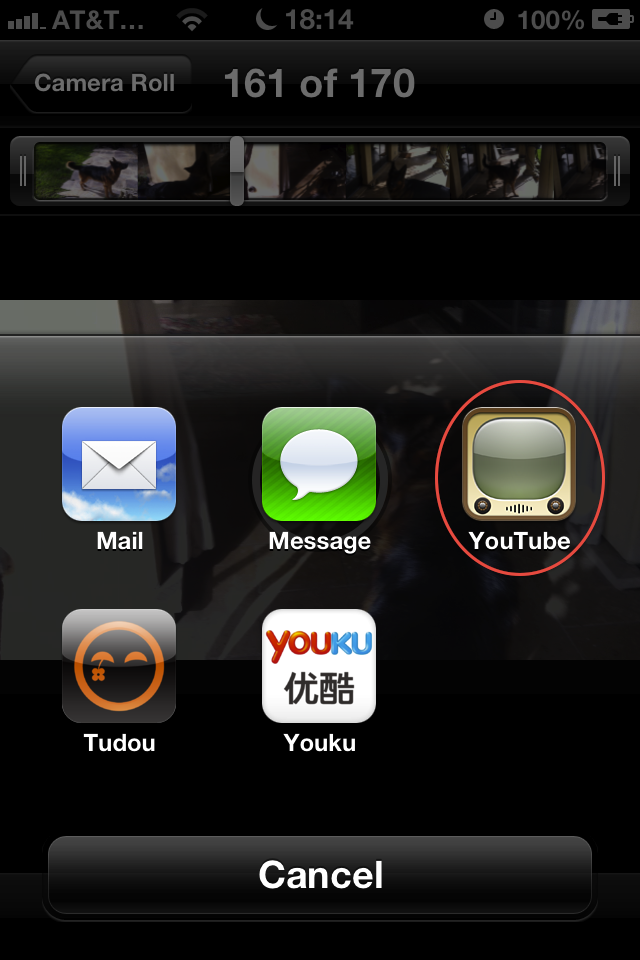
Last edited:
I always had wondered why Youtube didn't have a mobile video creation app to begin with. Seems like a no brainer.
Exactly, what were they doing all this while? the iPhone 3 could & later could capture vid, it has been so long!
Oh well, @least now they are here... but the time lost is still lost

MacDav
macrumors 65816
YouTube is becoming a wasteland.
It doesn't work with HTML5 anymore.
It's flooded with ads everywhere and last friday even clicking on the "play" button of a video opened a new browser window for a 3rd-party game. 🙄
All my future videos will be uploaded to Vimeo.
What else would you expect since Google bought them? That's the Google way.
More ads, more gimmicks, more money for google. 🙂 Google is not about quality it is about mass market share and cheap advertising for the mass market. 😉
MacDav
macrumors 65816
You do realize that if everyone used an adblocker then services like YouTube would either have to start charging its users or go out of business?
I'd rather be charged for something good, than not charged for something bad.😉
Michael CM1
macrumors 603
What's wrong with vertical videos? Maybe the movie and TV industry has just been doing it wrong this whole time?
When people come with eyes on top of each other vertically instead of side-by-side horizontally, then vertical videos will be OK. Until then, NEVER!
I am searching for the best software's to hare video. I go reviews about youtube, Most probably I received less votes to support youtube. So, If anyone had an experienced regarding this sharing video, Please suggest me which is the best. Any kind of suggestions are greatly accepted.
eritrean news
eritrean news
Last edited:

dontpannic
macrumors 6502
No no no no no YouTube, please! You should be getting rid of that godforsaken useless sick inducing crap producing 'stabilise' function, not letting people use it more often!
It's a crap implementation that means I can no longer watch some videos on YouTube, as it induces motion sickness!
It's a crap implementation that means I can no longer watch some videos on YouTube, as it induces motion sickness!
Register on MacRumors! This sidebar will go away, and you'll see fewer ads.