Not really? It’s shift more from hardware to software.Am I alone in using and liking the DI functionality? If it gets too small, its function as a convenient and quick access point will be compromised and will need to be provided elsewhere on the display -- that may improve aesthetics but is not a functional improvement.

Got a tip for us?
Let us know
Become a MacRumors Supporter for $50/year with no ads, ability to filter front page stories, and private forums.
Apple Apparently Still Undecided on iPhone 18 Pro Dynamic Island
- Thread starter MacRumors
- Start date
- Sort by reaction score
You are using an out of date browser. It may not display this or other websites correctly.
You should upgrade or use an alternative browser.
You should upgrade or use an alternative browser.
You have no idea how long (and difficult) tooling, sourcing, manufacturing, takes, if they make a new cutout. They have to do the visual and touchscreen display tooling process to include the new dimensions. Then the front camera module needs to be designed and manufactured to fit the right display cutout too (which requires its own tooling process). The glass fits on top of all of it (which if they are putting things like the flood illuminator under the display the glass composition may have changed so the FI can penetrate through the glass), not just the cutout. This doesn’t even get into test runs, the time needed to fix hiccups, and then doing more test runs after, until they get it right. There is no way they’re deciding this late. It’s less than 6 months. Sorry.All I can say is, it's clear most posters here have no idea what "China speed" is.
Apple suppliers are even more flexible today. Nobody back in 2007 imagined iPhone would be successful. Few suppliers thought iPhone would be successful. Corning didn't even make Gorilla Glass until Steve Jobs asked for the change to glass. It took 6 month back then.
Today, Apple has Plan A/B/C/D for all devices, especially iPhone. They have the money to do parallel development. It's $200 billion annual income for Apple.
Last edited:

Lounge vibes 05
macrumors 603
Absolutely, no idea where this idea keeps coming from that Apple’s just picking and choosing which components, camera modules, screen sizes to use a month before they announce a product.You have no idea how long (and difficult) tooling, sourcing, manufacturing, takes. If they make a new cutout. They have to do the display touchscreen tooling process. Then the front camera module needs to be designed for that to fit to the right display cutout. The glass fits on top of all of it (which if they are putting things under the display the glass composition may have changed so the flood illuminator component of Face ID can penetrate the glass), not the cutout. This doesn’t even get into test runs and the time needed to fix no hiccups and then doing more test runs. There is no way they’re deciding this late. It’s less than 6 months. Sorry.
cdsapplefan
macrumors 6502a
Klasma their going to have to differentiate between the 18 pro’s and the 17 pro’s or else they’ll look the same. The probably already decided smaller DI for the 18 pro max only.Yes!!!!

JPack
macrumors P6
You have no idea how long (and difficult) tooling, sourcing, manufacturing, takes. If they make a new cutout. They have to do the display touchscreen tooling process. Then the front camera module needs to be designed for that to fit to the right display cutout. The glass fits on top of all of it (which if they are putting things under the display the glass composition may have changed so the flood illuminator component of Face ID can penetrate the glass), not the cutout. This doesn’t even get into test runs and the time needed to fix no hiccups and then doing more test runs. There is no way they’re deciding this late. It’s less than 6 months. Sorry.
You're stuck thinking Apple has a linear development strategy. Apple and many other tech companies lean heavily into Parallel Prototyping. Why do you think Apple has a $30B R&D budget?
A tentpole feature like Face ID or Titanium frame doesn't just have one team working on a single solution. They have multiple teams working on different versions of the same product concurrently. Apple wants to launch the best possible product each year, which means multiple teams developing multiple options.
Why do you think there's a stage called DVT? It's to ensure the pessimistic and optimistic designs are scrapped. If Apple can figure out during DVT how to ramp the under display Face ID design, they will do it.
From people who think manufacturing is magic. 🪄 ✨Absolutely, no idea where this idea keeps coming from that Apple’s just picking and choosing which components, camera modules, screen sizes to use a month before they announce a product.
Research teams trying to find best option is not manufacturing and the tooling and sourcing required for whatever they end up doing. They have to scale up to mass production. I don’t think you get what I’m talking about here.You're stuck thinking Apple has a linear development strategy. Apple and many other tech companies lean heavily into Parallel Prototyping. Why do you think Apple has a $30B R&D budget?
A tentpole feature like Face ID or Titanium frame doesn't just have one team working on a single solution. They have multiple teams working on different versions of the same product concurrently. Apple wants to launch the best possible product each year, which means multiple teams developing multiple options.
Why do you think there's a stage called DVT? It's to ensure the pessimistic and optimistic designs are scrapped. If Apple can figure out during DVT how to ramp the under display Face ID design, they will do it.

Dr McKay
macrumors 601
MacRumors posts a rumor. Users are enraged.
It isn't about a Mac, checkmate atheists.

jz0309
macrumors P6
parallel development - sureAll I can say is, it's clear most posters here have no idea what "China speed" is.
Apple suppliers are even more flexible today. Nobody back in 2007 imagined iPhone would be successful. Few suppliers thought iPhone would be successful. Corning didn't even make Gorilla Glass until Steve Jobs asked for the change to glass. It took 6 month back then.
Today, Apple has Plan A/B/C/D for all devices, especially iPhone. They have the money to do parallel development. It's $200 billion annual income for Apple.
we are way beyond development, first iPhone 18 Pros will be in customers hands in just over 5 months, the components are in full manufacturing swing.
Apple does not have a A/B/C plan to build millions of components in parallel.
This "leak" is pure BS

DocMultimedia
macrumors 68030
If they are A/B testing at this late stage the iPhone will be delayed. But we are used to that big D word lately. 😴
JPack
macrumors P6
Research teams trying to find best option is not manufacturing and the tooling and sourcing required for whatever they end up doing. They have to scale up to mass production. I don’t think you get what I’m talking about here.
Probably because you've never worked in China and witnessed how development of electronics happens.
Again, Apple has a $30B+ R&D budget. They pay a huge number of suppliers very early to design and qualify backups for all components to enable a quick pivot if needed. This means a chassis suppliers for example can make "soft tools" or molds made of aluminum or silicone and test parts carved by CNC. Once Apple has confirmed the final design, they can make the steel molds. This applies to everything from the dot projector, logic board, to the chassis.
You keep assuming a $4T company has this single path with no alternative options.
This story isn't even that complicated. Apple is simply choosing between an optimistic (under display Face ID) or pessimistic (same as iPhone 17) option.

musicmachine
macrumors member
From a marketing standpoint if they shrink the island and give it a black color it would take sales away from the fold. If they keep DI same with no black option it would entice buyers to jump to the fold which would come in black. So I won’t be surprised if it doesn’t change.
JPack
macrumors P6
parallel development - sure
we are way beyond development, first iPhone 18 Pros will be in customers hands in just over 5 months, the components are in full manufacturing swing.
Apple does not have a A/B/C plan to build millions of components in parallel.
This "leak" is pure BS
Components haven't even ramped, or else we'd start seeing the classic photo leaks of components. Apple pays hundreds millions of dollars of NRE costs to various suppliers to get ready to implement two or three different options.
Again, what is being talked about here? We're only talking about the IR illuminator being:
A) Within the TrueDepth module, OR
B) Separated and put in the left corner
That's it. This is not some massive unanticipated redesign. It's a choice between an optimistic or pessimistic design.
Tim Jobs the 2nd
Suspended
And you have? Where do you work?Probably because you've never worked in China and witnessed how development of electronics happens.
Again, Apple has a $30B+ R&D budget. They pay a huge number of suppliers very early to design and qualify backups for all components to enable a quick pivot if needed. This means a chassis suppliers for example can make "soft tools" or molds made of aluminum or silicone and test parts carved by CNC. Once Apple has confirmed the final design, they can make the steel molds. This applies to everything from the dot projector, logic board, to the chassis.
You keep assuming a $4T company has this single path with no alternative options.
This story isn't even that complicated. Apple is simply choosing between an optimistic (under display Face ID) or pessimistic (same as iPhone 17) option.
You keep talking about research and development. That is not what I’m talking about. I seriously doubt they get manufacturing companies to create every possibility (beyond prototyping) ready to ramp up and pivot late. Source it.
Last edited:

HouseLannister
macrumors 68040
I don't know why you would think the crunch culture we see in Apple's software doesn't also extend to its hardware. A/B testing the Pro in April and running into problems with test production on the Fold. That's normal. It's just less normal for us to hear about it. The iPhone is planned years in advance, but it isn't until the spring that they get their first hands on and learn what works well and what doesn't and then they pivot. They are such a power in the industry that they can scrap everything now and still ship in the fall. The only thing that changed is that the dome of silence at Apple has more holes in it nowadays.

RSmith2023
macrumors 65816
JPack
macrumors P6
And you have? Where do you work?
You keep talking about research and development. That is not what I’m talking about. I seriously doubt they get manufacturings to create every possibility (beyond prototyping) ready to ramp up and pivot late. Source it.
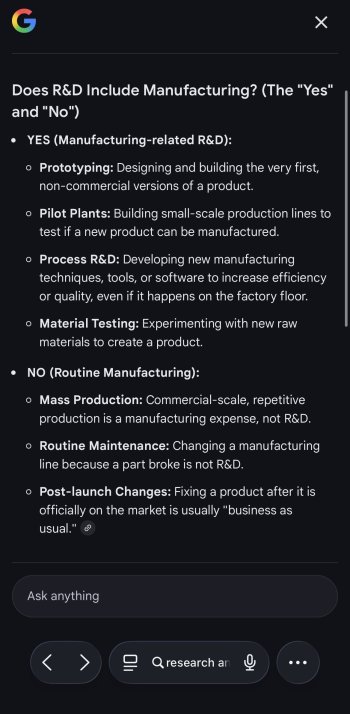
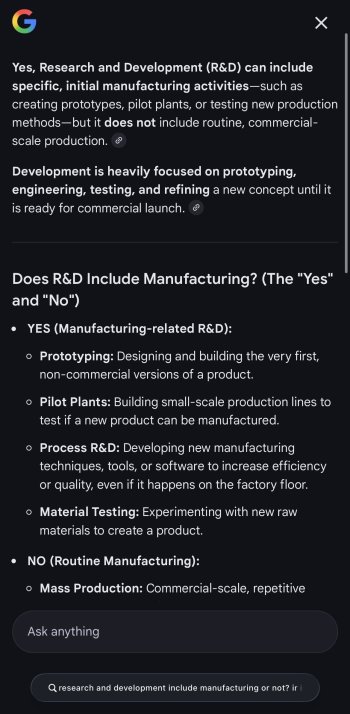
R&D includes Development.
Guess what DVT lands? It's the transition before manufacturing begins.
Apple doesn't get their suppliers to make "every possibility" but rather only three or four. A/B/C/D
That’s interesting. I would have to see more sources on them making manufacturers build out 4 possibilities to late pivot for such serious critical components.R&D includes Development.
Guess what DVT lands? It's the transition before manufacturing begins.
Apple doesn't get their suppliers to make "every possibility" but rather only three or four. A/B/C/D
Attachments

Reeneman
macrumors 68020
For sure not. You have long term contracts. They won’t be able to switch this a couple of months before the device enters production.All I can say is, it's clear most posters here have no idea what "China speed" is.
Apple suppliers are even more flexible today. Nobody back in 2007 imagined iPhone would be successful. Few suppliers thought iPhone would be successful. Corning didn't even make Gorilla Glass until Steve Jobs asked for the change to glass. It took 6 month back then.
Today, Apple has Plan A/B/C/D for all devices, especially iPhone. They have the money to do parallel development. It's $200 billion annual income for Apple.

JPack
macrumors P6
For sure not. You have long term contracts. They won’t be able to switch this a couple of months before the device enters production.
Long term contracts meaning what?
Apple is still buying the Face ID module. Whether the IR illuminator is separate or integrated, they're still buying it. In situations where Apple cannot buy, they pay for the design and ramp equipment (e.g. Cirrus Logic HPMS story). Money buys a lot of stuff.

surferfb
macrumors 68030
I was coming on here to dunk on this article, but I actually think you've convinced me you (and it) could be right here.R&D includes Development.
Guess what DVT lands? It's the transition before manufacturing begins.
Apple doesn't get their suppliers to make "every possibility" but rather only three or four. A/B/C/D
It's totally conceivable that they've been running two complete parallel development tracks simultaneously, both of which were locked in and tooled up many months ago. The "decision" still pending is which pre-built, pre-validated option goes to mass production, almost certainly contingent on whether the under-display Face ID yields are hitting acceptable thresholds. If the new sensor arrangement is passing validation, they go with the smaller Dynamic Island. If it's failing, they fall back to the existing screen mold they've been running in parallel as insurance.
Now, I everything I've ever read is that Apple locks in the design 12-18 months in advance, so I don't know how to square that circle, but this is entirely reasonable as far as manufacturing goes.