Become a MacRumors Supporter for $50/year with no ads, ability to filter front page stories, and private forums.
So this is something I've been thinking about for a while now, and my theory was proven right by Apple's decision to discontinue the Mac Pro.

In 2013, Apple released the trashcan Mac Pro, a machine that's now loved by enthusiasts, but back then every professional hated the thing. And for a good reason. Expandability was basically nonexistent, the SSDs were proprietary, the GPUs would fail and the whole Mac would often overheat in demanding workflows.

So after getting insane amount of pushback, Apple decided to bring back the classic Mac Pro in 2019. Then, in 2021 Apple released the Mac Studio. For me, it was immediately clear that this was Apple's way or resurrecting the trashcan Mac Pro from the dead, now that they have the efficient architecture that allows it to run cool, and be extremely powerful and compact thanks to ARM. It still didn't have expansion, but for a lot of Pros that was okay by 2021, since most professional gear was now running perfectly fine over Thunderbolt anyways.

However, what I did not understand is what the hell Apple was thinking in 2023. The Mac Pro still had such insane potential, they could have released an M2 Extreme version, or combined two M2 Ultras, or give it like 512/1024GB of unified memory for the ever growing AI industry.

But instead, they completely **** the bed. They basically put the Studio in a big case, and gave it PCIe slots. That's 3,000$ extra for ya.

So obviously nobody bought it, because why would anyone?? It is the first Mac Pro that was completely non-upgradeable, it only had 192GB of unified memory compared to the Intel MP, even though they had more than enough space for more memory. And if they did price it on par with the Mac Studio, I'm almost certain it would have sold better than the Studio.

I don't understand why they didn't repurpose the Mac Pro for AI. There are lots of people in AI now building Mac Studio "clusters", so the market would absolutely be there for an AI supercomputer that would be even more powerful than the Mac Studio.

I don't understand this decision. Why did they even release the Mac Pro in 2023 in the way they did? If they were planning on killing it off anyways, why bother bringing it over to Apple Silicion?

Right now the only professional workstation you can get from Apple is the Mac Studio, because they even replaced the powerful 27-inch iMac and the iMac Pro with this lousy ass 24-inch iMac with absolute base specs, so basically unusable for any demanding workflow.


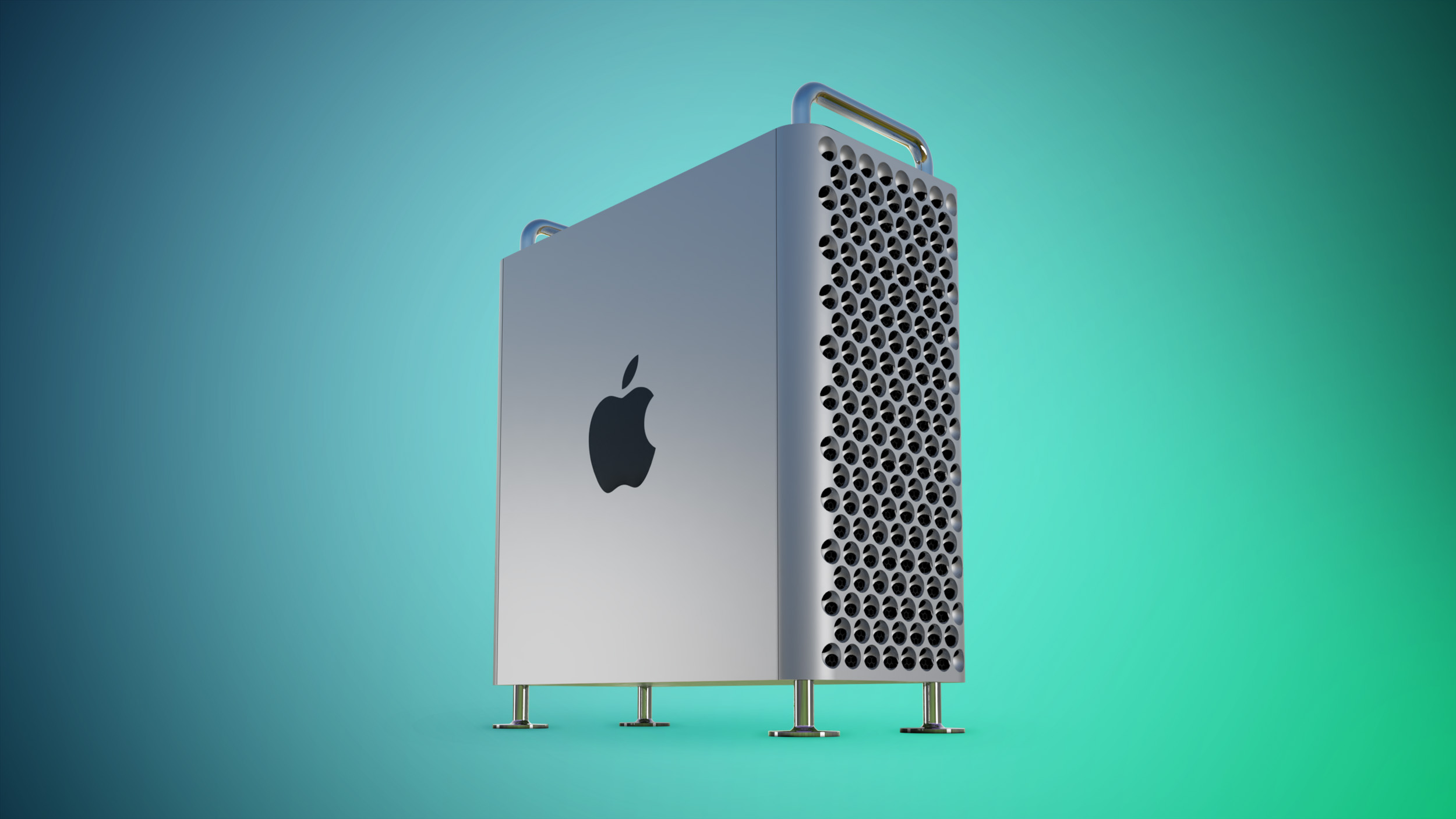
Apple has discontinued the Mac Pro and has removed the machine from its website, reports 9to5Mac. Apple said it does not plan to design a new version of the Mac Pro, and no new model will be coming in the future.

Mac-Pro-Feature-Teal.jpg

The Mac Pro was last updated in 2023, which was when Apple added an M2 Ultra Apple silicon chip, but the chassis has not been refreshed since 2019. Apple redesigned the Mac Pro to be more modular in 2019 after failing with its "innovative" trashcan Mac Pro, but the machine has never been mainstream due to its $6,999 starting price.

Apple has largely replaced the Mac Pro with the Mac Studio, a device that is smaller and uses newer Apple silicon chips. The Mac Studio is now Apple's high-end desktop machine designed for professional use.

The current Mac Studio features an M3 Ultra chip, though it is expected to get an M5 Ultra refresh later this year. Apple's desktop lineup also includes the Mac mini and the iMac.

The Mac Pro's downfall started in 2013 when Apple introduced a radical cylindrical design that turned out to be a major mistake. The Mac Pro's components were mounted around a central thermal dissipation core and cooled with a single fan that pulled air from under the case, through the core, and out of the top of the machine. It was quiet, but not efficient.

When Apple announced the 2013 Mac Pro, Phil Schiller infamously said "Can't innovate anymore, my ass," in response to critics who complained about the Mac Pro's lack of updates and Apple's failure to create products for pro users.

Unfortunately, the 2013 Mac Pro's design did not include PCIe expansion slots for graphics cards and other hardware, with expansion handled through Thunderbolt 2 ports. The design also did not account for future updates in GPU technology, leaving Apple unable to add larger graphics cards and other components to the device.

Apple ended up apologizing to its pro user base and said the 2013 design was thermally constrained in a way that made upgrades impossible. It took Apple until 2019 to unveil the current Mac Pro, which adopted a more standard tower form factor with eight PCIe slots.

After the 2019 launch, the Mac Pro got an Apple silicon chip in 2023, and that's it. There have been three Mac Pro updates in the last 13 years, so it's not surprising to see the Mac Pro retired. The Mac Studio offers almost all of the same capabilities as the Mac Pro, with the exception of PCIe expansion slots.

Article Link: Apple Confirms Mac Pro Is Dead, No Future Models Planned
Well THIS should be good! RIP LOL IMHO Th towers are falling. My dentist still runs a massive Windows tower. My last Mac tower was a G3. Mac Pro has vanished into the cloud.
 
Last edited:
  • Disagree
Reactions: triptolemus
Genuinely curious what PCIe cards were ever actually used in the Pro model. Obviously not graphics but were audio mixing or faster networking cards compatible? What were those slots even for?
In my use case, in addition to the 32TB PROMISE MPX module, I used the PCIe slots for additional storage (e.g., OWC NVMe RAID cards). The thought of replicating the aforementioned in an external form factor is mind numbing.
 
You'll never get true TB5 speeds with anything plugged into a port. NEVER.
How many people truly need the theoretical TB5 or PCIe top speed?
Now, while that is certainly true (both your points), I will say this; I have never had an internal PCIe/SATA device disconnect because a cat bit the Thunderbolt cable. 🤷🏼‍♂️
I hate the anti-design ‘stick it in a box’ of all the new Mac products, the Jonathan Ive era will remain peek Apple design, I don’t see that level of detail ever returning to Apple.
Hard disagree there. While I love the original iMac, original iBook and the iPod, after that it seems Ive became obsessed with making things thinner at all cost, however impractical. Culminating with the 12" MacBook with only one USB-C port and an outright unusable keyboard. (Though my mum had one and loved it, so I know very well they were appreciated.) If a crumb or some dust got under the keys you had to send it back to Apple who replaced the entire keyboard assembly and aluminium frame. Insanity.

Personally, I think the Studio, the mini and the current laptop lineup looks terrific. Clean and sleek, yet functional. 👍🏼
 
Jonathan Ive probably met his design brief to make slick & futuristic hardware, the engineering side dragged their feet with hot & slow Intel. All of Ive’s designs are before their time.

As for the anti-design of the current hardware, the Studio, Mini, iMac & MacBooks are from someone who can’t design or appreciate small but important details. It is from the put it in a box and hit the pub school of design.

I have my 2015 15” MacBook Pro sitting next to my M4 16” MacBook Pro - it’s literally Beauty & The Beast.
 
As expected. Why have PCIe expansion if for NVIDIA, AMD, or Intel GPUs cards that aren't compatible with Darwin 25.x? There are a entire new philosophy SoC with cpu - ram speed, there aren't any drivers, Apple invested in Metal.
In fact, they are unnecessary for an ARM chip that now offers up to 80 cores in the M3 Ultra? ...
 
Last edited:
So obviously nobody bought it, because why would anyone?? It is the first Mac Pro that was completely non-upgradeable, it only had 192GB of unified memory compared to the Intel MP, even though they had more than enough space for more memory.

The only point of the 2023 Mac Pro was that it had PCIe slots - the target market was people who still had (expensive) custom PCIe cards - particularly audio/video devices like this:


The 2023 Mac Pro gave audio/video production users a chance to transition to Apple Silicon without having to throw away all of their PCIe cards, and another 3-5 years to switch to a Thunderbolt-based workflow.

Yes, it was horribly expensive, but so are external TB-to-PCIe enclosures for the Studio, and those were stuck on TB3/PCIe3 until TB5 came along (TB4 was all about USB compatibility and didn't improve bandwidth or PCIe version).

The 192GB memory limit was because that was the maximum the M2 Ultra SoC could physically accommodate.

The Extreme processors never materialised so it's possible that they hit problems... doubling up everything to get more GPU cores isn't particularly efficient anyway - I suspect many of the people buying 2023 MPs for studio work would have been fine with a M2 Max - the main point of the Ultra in the MP was to provide extra PCIe lanes.

Apple really faced a choice between:
Apple silicon - a major step forward for the laptops and small-form-factor system that account for the majority of Mac sales OR
PCIe Tower Workstations - for which Apple Silicon really isn't the tool for the job.

A new Mac Pro which could take NVIDIA and AMDs latest GPUs would be no faster than an AMD or Xeon tower with the same GPUs - at that level, the GPU is the bottleneck. Using discrete GPUs throws away the advantages of integrated GPU/Media Engine/Neural engine/Unified RAM (particularly for jobs that need lots of VRAM) and Apple Silicon's power efficiency really isn;t an issue in a big desktop tower (with big, sweaty GPUs). There's more software at that level for Windows and Linux than for MacOS (and the exceptions are rapidly catching up). Yet, in order to produce a "me too" PCIe tower, Apple would have had to create a whole new Apple Silicon die just to provide the PCIe bandwidth and RAM capacity needed.

Even the 2019 Mac Pro was really just another Xeon PCIe tower - it was an early adopter of the new Xeon-W chip that offered huge PCIe bandwidth and RAM capacity, but anybody else could make a workstation with the same specs. The only real innovation was the MPX slot, which made routing power in and video out (for Thunderbolt) to GPUs a bit neater, but did't do anything you couldn't do with a Threadripper and a handful of internal cables. Its only real USP was that it ran MacOS for people locked into MacOS-only software: a rapidly shrinking niche. On the minus side, Apple's feud with NVIDIA was a major dealbreaker.
 
There have been multiple reports that they are developing their own AI server chips — the hardware, not the software.
Maybe ...but an AI server wouldn't be a replacement for the Mac Pro as we knew it.
Most likely they'd be capitalising on the advantages of having a GPU, Neural engine and CPU sharing the same unified RAM. I suspect that the result would be a bunch of Mac Studio-like "blades" that could be built into clusters.

You could log in to it from a MacBook Neo...
 
  • Haha
Reactions: realLucaR
How is it old architecture? 😂 The M5 Max was just released.
Exactly. M3 is 2 generations behind and the first base model M6 devices might still release this year. Anything M3 can already be considered old no matter how long Apple is still selling a Mac with the M3 Ultra. Since you claim I write nonsense without providing any specifics I'll disregard that.
 
Now, while that is certainly true (both your points), I will say this; I have never had an internal PCIe/SATA device disconnect because a cat bit the Thunderbolt cable. 🤷🏼‍♂️

Hard disagree there. While I love the original iMac, original iBook and the iPod, after that it seems Ive became obsessed with making things thinner at all cost, however impractical. Culminating with the 12" MacBook with only one USB-C port and an outright unusable keyboard. (Though my mum had one and loved it, so I know very well they were appreciated.) If a crumb or some dust got under the keys you had to send it back to Apple who replaced the entire keyboard assembly and aluminium frame. Insanity.

Personally, I think the Studio, the mini and the current laptop lineup looks terrific. Clean and sleek, yet functional. 👍🏼
The only thing I am absolutely missing is an iMac Pro. The current iMac is some cheap entry-level thing that I cannot even consider getting.

I tried a 32GB iMac M4 with the 10-Core CPU/GPU in January and oh boy, the fans were at 100% and it was thermal throttling like crazy.
I really wanna see Apple release an iMac Pro again, this would be a day one purchase.
 
  • Like
Reactions: AbeLincoln1984
I am curious on when they will announce that they designed themselves into a thermal corner… m5 max draws up to 170 W, more than 2x the m1 max. double that for ultras.
So?
The Studio design has already survived two processor upgrades. The original seems to have more than adequate cooling and if they need to make it a bit taller to beef up the cooling & psu for version 4, they can. Its a single source of heat at the top of the unit so they can just pile more copper fins and fans on top of it.

The "thermal corner" with the Trashcan was that it was designed around having 1 CPU and 2 medium-powered GPUs arranged in a triangle around a central chimney & a massive bet on a shift to OpenCL software optimised for that configuration that would spread the heat between those three sources - leaving Apple dependent on Intel and AMD producing future chips for that scenario. The original Trashcan had cooling problems. It never saw a single update (beyond the original entry-level model being dropped). Of course, Apple could have re-designed the enclosure but they preferred not to (because the Mac Pro was not seen as a priority - the original cheesegrater had been left to wither on the vine & was actually discontinued in Europe rather than fit a plastic fan guard).

I strongly suspect that the iMac Pro was supposed to completely replace the Mac Pro - until they shared the idea with key developers/customers.

There's also the assumption that the M5/M6 "Ultra" will be two Max dies connected by ultrafusion - yet the M5 Pro and Max use a new, more modular design which already has two "fused" dies - so it's possible that the next Ultra will just be a different combination of dies rather than two MAXs fused together.
 
  • Like
Reactions: mlayer
As expected. Why have PCIe expansion if for NVIDIA, AMD, or Intel GPUs cards that aren't compatible with Darwin 25.x? There are a entire new philosophy SoC with cpu - ram speed, there aren't any drivers, Apple invested in Metal.
In fact, they are unnecessary for an ARM chip that now offers up to 80 cores in the M3 Ultra? ...
Well, the fact that my 2019 Mac Pro with a 400$ GPU still outperforms the M3 Ultra with 80-Cores says enough about how well Apple Silicon GPUs are. They're not.

If Apple and Nvidia both pulled their heads out of their asses they could make some of the best desktop workstations, but well.

The only point of the 2023 Mac Pro was that it had PCIe slots - the target market was people who still had (expensive) custom PCIe cards - particularly audio/video devices like this:


The 2023 Mac Pro gave audio/video production users a chance to transition to Apple Silicon without having to throw away all of their PCIe cards, and another 3-5 years to switch to a Thunderbolt-based workflow.

Yes, it was horribly expensive, but so are external TB-to-PCIe enclosures for the Studio, and those were stuck on TB3/PCIe3 until TB5 came along (TB4 was all about USB compatibility and didn't improve bandwidth or PCIe version).

The 192GB memory limit was because that was the maximum the M2 Ultra SoC could physically accommodate.

The Extreme processors never materialised so it's possible that they hit problems... doubling up everything to get more GPU cores isn't particularly efficient anyway - I suspect many of the people buying 2023 MPs for studio work would have been fine with a M2 Max - the main point of the Ultra in the MP was to provide extra PCIe lanes.

Apple really faced a choice between:
Apple silicon - a major step forward for the laptops and small-form-factor system that account for the majority of Mac sales OR
PCIe Tower Workstations - for which Apple Silicon really isn't the tool for the job.

A new Mac Pro which could take NVIDIA and AMDs latest GPUs would be no faster than an AMD or Xeon tower with the same GPUs - at that level, the GPU is the bottleneck. Using discrete GPUs throws away the advantages of integrated GPU/Media Engine/Neural engine/Unified RAM (particularly for jobs that need lots of VRAM) and Apple Silicon's power efficiency really isn;t an issue in a big desktop tower (with big, sweaty GPUs). There's more software at that level for Windows and Linux than for MacOS (and the exceptions are rapidly catching up). Yet, in order to produce a "me too" PCIe tower, Apple would have had to create a whole new Apple Silicon die just to provide the PCIe bandwidth and RAM capacity needed.

Even the 2019 Mac Pro was really just another Xeon PCIe tower - it was an early adopter of the new Xeon-W chip that offered huge PCIe bandwidth and RAM capacity, but anybody else could make a workstation with the same specs. The only real innovation was the MPX slot, which made routing power in and video out (for Thunderbolt) to GPUs a bit neater, but did't do anything you couldn't do with a Threadripper and a handful of internal cables. Its only real USP was that it ran MacOS for people locked into MacOS-only software: a rapidly shrinking niche. On the minus side, Apple's feud with NVIDIA was a major dealbreaker.
I still do not understand why Apple has this obsession with making things "efficient". Like sure, it makes sense on a battery powered MacBook, but I really don't care about efficiency or power usage on a 10,000$ desktop.
Exactly. M3 is 2 generations behind and the first base model M6 devices might still release this year. Anything M3 can already be considered old no matter how long Apple is still selling a Mac with the M3 Ultra. Since you claim I write nonsense without providing any specifics I'll disregard that.
It doesn't really matter if you consider it old or not, the M3 Ultra will be prefectly fine for normal users for the next 10 years. And if had a way to install Linux on these, they would be good to go for probably the next 30 years.
 
So?
The Studio design has already survived two processor upgrades. The original seems to have more than adequate cooling and if they need to make it a bit taller to beef up the cooling & psu for version 4, they can. Its a single source of heat at the top of the unit so they can just pile more copper fins and fans on top of it.

The "thermal corner" with the Trashcan was that it was designed around having 1 CPU and 2 medium-powered GPUs arranged in a triangle around a central chimney & a massive bet on a shift to OpenCL software optimised for that configuration that would spread the heat between those three sources - leaving Apple dependent on Intel and AMD producing future chips for that scenario. The original Trashcan had cooling problems. It never saw a single update (beyond the original entry-level model being dropped). Of course, Apple could have re-designed the enclosure but they preferred not to (because the Mac Pro was not seen as a priority - the original cheesegrater had been left to wither on the vine & was actually discontinued in Europe rather than fit a plastic fan guard).

I strongly suspect that the iMac Pro was supposed to completely replace the Mac Pro - until they shared the idea with key developers/customers.

There's also the assumption that the M5/M6 "Ultra" will be two Max dies connected by ultrafusion - yet the M5 Pro and Max use a new, more modular design which already has two "fused" dies - so it's possible that the next Ultra will just be a different combination of dies rather than two MAXs fused together.
I highly suspect that version. I don't think they'll just fuse them together again with the M5's new architecture.
 
In 2013, Apple released the trashcan Mac Pro, a machine that's now loved by enthusiasts, but back then every professional hated the thing. And for a good reason.

It's loved by enthusiasts as an objet d'art, to put on a shelf. Not by people who want to use it for anything remotely serious in 2026.

Then, in 2021 Apple released the Mac Studio. For me, it was immediately clear that this was Apple's way or resurrecting the trashcan Mac Pro from the dead, now that they have the efficient architecture that allows it to run cool, and be extremely powerful and compact thanks to ARM. It still didn't have expansion, but for a lot of Pros that was okay by 2021, since most professional gear was now running perfectly fine over Thunderbolt anyways.

Yeah, and the G4 Cube before that. Only now, AS has the performance and TB5 is enough for most external connectivity.

However, what I did not understand is what the hell Apple was thinking in 2023. The Mac Pro still had such insane potential, they could have released an M2 Extreme version, or combined two M2 Ultras, or give it like 512/1024GB of unified memory for the ever growing AI industry.

Because as a trillion dollar company, they need to sell more than three of a product to make it worth their while.

But instead, they completely **** the bed. They basically put the Studio in a big case, and gave it PCIe slots. That's 3,000$ extra for ya.

Yes - it was a minimal effort product that reused everything except the mobo. Just to get the last remaining Intel users over to AS and call the transition done. If it had taken Apple by surprise and sold really well, they'd have made a another iteration. But it didn't.

So obviously nobody bought it, because why would anyone?? It is the first Mac Pro that was completely non-upgradeable, it only had 192GB of unified memory compared to the Intel MP, even though they had more than enough space for more memory. And if they did price it on par with the Mac Studio, I'm almost certain it would have sold better than the Studio.

Sure, but it's undoubtedly more expensive to make / transport / store / support than the Studio, so to preserve margins, they'd have to charge more for it to make it worth it. $3000 more, as it turns out.

I don't understand why they didn't repurpose the Mac Pro for AI. There are lots of people in AI now building Mac Studio "clusters", so the market would absolutely be there for an AI supercomputer that would be even more powerful than the Mac Studio.

I think you answered your own question - just use a Studio cluster over TB5 / 10GbE (an MP Extreme wouldn't be any cheaper). The AI bubble might pop anyway.

I don't understand this decision. Why did they even release the Mac Pro in 2023 in the way they did? If they were planning on killing it off anyways, why bother bringing it over to Apple Silicion?

Answered above. They put no effort into it - it was a transition model that served it's purpose.

Right now the only professional workstation you can get from Apple is the Mac Studio, because they even replaced the powerful 27-inch iMac and the iMac Pro with this lousy ass 24-inch iMac with absolute base specs, so basically unusable for any demanding workflow.

Well, the Studio is pretty good. If you need something more bespoke, there's Windows / Linux. Apple's all about grabbing the largest, most profitable parts of the market with as few products as possible, not covering every use case, as other OS's do.
 
I still do not understand why Apple has this obsession with making things "efficient". Like sure, it makes sense on a battery powered MacBook, but I really don't care about efficiency or power usage on a 10,000$ desktop.
Because Apple make more money out of selling a ton of battery-powered Macbooks than they do selling a relative handful of $10,000 desktops, so that's where they're going to focus their R&D.
 
I still do not understand why Apple has this obsession with making things "efficient". Like sure, it makes sense on a battery powered MacBook, but I really don't care about efficiency or power usage on a 10,000$ desktop.

Because Apple Silicon is heavily based on technologies developed for their main product - the iPhone. Laptops likely represent at least 90% of Mac sales, and the remaining machines are all 'laptops in a box' (iMac = Air, mini = low end MBP, mini Pro = mid range MBP, Studio = high end MBP). Efficiency is baked in.

They don't want to make a dedicated desktop with completely different design goals, especially one that would sell to 0.05% of their customers.
 
  • Sad
Reactions: wyliej
It's loved by enthusiasts as an objet d'art, to put on a shelf. Not by people who want to use it for anything remotely serious in 2026.
True. Not usable in 2026, at least under macOS. With Windows 11 it does run relatively fine though, albeit not for professional work.

Yes - it was a minimal effort product that reused everything except the mobo. Just to get the last remaining Intel users over to AS and call the transition done. If it had taken Apple by surprise and sold really well, they'd have made a another iteration. But it didn't.
That is very likely, yes. Especially judging by their "7 Afterburner cards!!" thing.

Sure, but it's undoubtedly more expensive to make / transport / store / support than the Studio, so to preserve margins, they'd have to charge more for it to make it worth it. $3000 more, as it turns out.
That is true. It's massive.

I think you answered your own question - just use a Studio cluster over TB5 / 10GbE (an MP Extreme wouldn't be any cheaper). The AI bubble might pop anyway.
Well, as an AI consultant I hope that does not happen. We will see a decline in lots of those startup AI tools that nobody needs, but AI as a whole is here to stay.

Answered above. They put no effort into it - it was a transition model that served it's purpose.
Yes, and it was successful at that.

Well, the Studio is pretty good. If you need something more bespoke, there's Windows / Linux. Apple's all about grabbing the largest, most profitable parts of the market with as few products as possible, not covering every use case, as other OS's do.
I know, which is why I'm technically a better fit for Windows / Arch, but I do not want to switch, since Macs are just too good to switch out with a Windows machine. The whole ecosystem makes my life way easier.
 
Because Apple Silicon is heavily based on technologies developed for their main product - the iPhone. Laptops likely represent at least 90% of Mac sales, and the remaining machines are all 'laptops in a box' (iMac = Air, mini = low end MBP, mini Pro = mid range MBP, Studio = high end MBP). Efficiency is baked in.

They don't want to make a dedicated desktop with completely different design goals, especially one that would sell to 0.05% of their customers.
True. Which is why the Mac Pro looked particularly empty with the M2 Ultra. No GPU, nothing. Just a ****-ton of free space.
 
I know, which is why I'm technically a better fit for Windows / Arch, but I do not want to switch, since Macs are just too good to switch out with a Windows machine. The whole ecosystem makes my life way easier.

That's how they get you! This is the crux of the issue for Mac Pro customers. The product didn't really make sense, but the only alternative was to move to Windows, which long term macOS users were understandably reluctant to do. Apple have at least ripped off the Band-Aid now.
 
Sadly, Apple listened to all those "pros" discarding the cylindrical MacPro 6,1, going for essentially an ultra expensive PC-styled tower instead, on an era where PCIe cards were dying and magnetic HDDs inside your case didn't make much sense. They had the opportunity to go modular if they supported and upgraded MP6,1 - picking CPU/GPU/RAM options that made more sense (planning on Thunderbolt and Ethernet taking over expansion), offering different BTO options and maybe have a rack based machine for those needing to scale up instead of a bulky tower. Instead, they offered a machine you could replicate on a generic hackintosh and eventually locked out GPU upgrades, putting physical and software constraints. At least they realised their mistake and went with Mac Studio and Mac Mini.
 
Sadly, Apple listened to all those "pros" discarding the cylindrical MacPro 6,1, going for essentially an ultra expensive PC-styled tower instead, on an era where PCIe cards were dying and magnetic HDDs inside your case didn't make much sense. They had the opportunity to go modular if they supported and upgraded MP6,1 - picking CPU/GPU/RAM options that made more sense (planning on Thunderbolt and Ethernet taking over expansion), offering different BTO options and maybe have a rack based machine for those needing to scale up instead of a bulky tower. Instead, they offered a machine you could replicate on a generic hackintosh and eventually locked out GPU upgrades, putting physical and software constraints. At least they realised their mistake and went with Mac Studio and Mac Mini.

The tower workstation isn't dead - just ask Dell, HP or Lenovo. It's simply a category that Apple Silicon is ill suited for. Apple could create something in this area if they really wanted to, but they don't. It's as simple as that. From a business point of view, it's almost certainly the right call.
 
  • Like
Reactions: wyliej and seek3r
In my use case, in addition to the 32TB PROMISE MPX module, I used the PCIe slots for additional storage (e.g., OWC NVMe RAID cards). The thought of replicating the aforementioned in an external form factor is mind numbing.

Same thing here. Currently the Sonnet J2i for HDDs and the M.2 4x4 PCIe for 4x NVMe SSDs.

I don't know what the special audio cards do, but, it does seem like Apple could address this part. They could offer a Studio Extreme with more room for more internal SSD, and package that as a second superfast RAID. 64 TB big enough? That seems to be about half of what these various requirements add up to.

As for the audio PCIe cards, can the actual requirement be defined clearly? Some number, say up to-- 256? -- analog audio feeds get converted to digital and need to be timestamped. Is there a standard for what that format is? Audio is pretty low bandwidth. Why couldn't a series of TB boxes do that? I'm just trying to understand what the requirement is.
 
  • Like
Reactions: AbeLincoln1984
Register on MacRumors! This sidebar will go away, and you'll see fewer ads.