

Become a MacRumors Supporter for $50/year with no ads, ability to filter front page stories, and private forums.

MacRumors

macrumors bot
Original poster


Apple is developing a much thinner Face ID hardware module in an effort to reduce the space its facial authentication system takes up in the iPhone Air, a known leaker on China's Weibo social media platform today suggested.
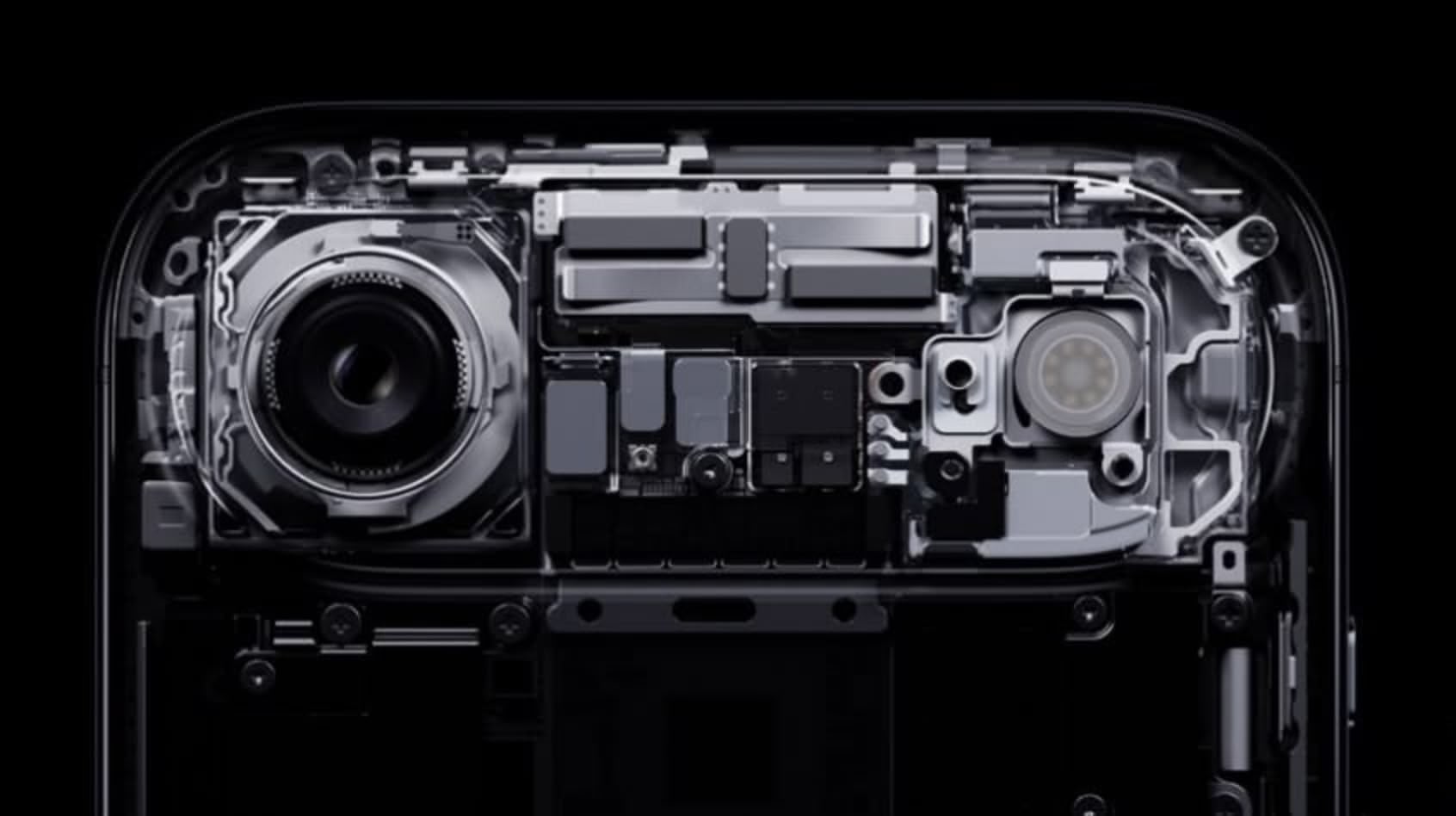
iphone-air-internal-design@2x.jpg

According to Instant Digital, Apple has requested an "ultra-thin" Face ID component from suppliers that will allow the device to accommodate an ultra wide-angle lens in addition to the existing single main lens.

A redesign that includes a second camera is said to be one way that Apple thinks it can address user complaints that the iPhone Air, while an impressive design feat, has led to too many hardware compromises, especially given the $999 price tag.

Multiple technologies are housed in the plateau of the iPhone Air to maximize space for the battery, so Apple would presumably need to redesign the internals considerably to fit in another camera. Chinese leaker Digital Chat Station in November said Apple was focusing on making the device ultra-thin and lightweight in order to do just that.

The claim was soon followed by a report by The Information suggesting a second camera for the device was indeed in development.

For its rumored upcoming foldable iPhone, expected later this year, Apple has reportedly chosen to integrate Touch ID into the side button, rather than use Face ID, in order to make the device as slim as possible. Designing a smaller TrueDepth camera system could arguably see a next-generation model switch over to facial authentication.

Today's leaker speculates that an ultra-thin Face ID module could even eventually find its way into a MacBook, but there are no active rumors that indicate this is something Apple is working on.

In 2022, Bloomberg's Mark Gurman said Apple tested Face ID for the iMac, but the technology necessary to embed the authentication hardware into a thin notebook display simply wasn't available, and the biometric system has yet to be added to any Mac.

Around the same time, a marketing employee for Apple argued that Touch ID is more convenient, since the button is near your hands. Of course, that does not rule out the possibility of Apple adding Face ID to a Mac in the future.

The latest claim doesn't point to any imminent product changes – the second-generation iPhone Air is not expected until next year – but it does suggest Apple is actively reassessing how its Face ID hardware is packaged. Watch this space.

Article Link: Apple Developing Thinner Face ID for iPhone Air 2, Report Suggests
 
  • Wow
Reactions: Z-4195
I'm hardly an expert, but it's wild to me that Apple and other phone manufacturers haven't taken advantage of the periscope/prism lens tech to reduce the depth of every optical component. Seems like it's a no-brainer, particularly to get Face ID into a Mac and/or thinner iPhone.
 
  • Like
Reactions: qnssekr
I'm hardly an expert, but it's wild to me that Apple and other phone manufacturers haven't taken advantage of the periscope/prism lens tech to reduce the depth of every optical component. Seems like it's a no-brainer, particularly to get Face ID into a Mac and/or thinner iPhone.
Having face id on a mac is a terrible idea. You HAVE to push a button or something to consent to the face id so it wont just randomly pop up and authenticate something like admin permission or to buy something. On your phone or on your vision pro or even your ipad you double tap the button to activate it.

With a computer pushing the power button would be stupid and unintuitive, so you might as well use the keyboard for touch id so its a deliberate button push and wont just randomly unlock your computer because you exist near your computer.
 
Having face id on a mac is a terrible idea. You HAVE to push a button or something to consent to the face id so it wont just randomly pop up and authenticate something like admin permission or to buy something. On your phone or on your vision pro or even your ipad you double tap the button to activate it.

With a computer pushing the power button would be stupid and unintuitive, so you might as well use the keyboard for touch id so its a deliberate button push and wont just randomly unlock your computer because you exist near your computer.

This is such a strained argument. Use Windows Hello once and you'll immediately see the benefit of Face ID on a Mac. And, as with the iPhone and iPad, there's nothing preventing Apple from having both Touch ID and Face ID.
 
One would think that while developing the initial iPhone Air it would have been well thought out as Apple claims it keeps rejecting ideas and refined until it feels confident it makes it as a shipping product.

More marketing fluff.
 
This is such a strained argument. Use Windows Hello once and you'll immediately see the benefit of Face ID on a Mac. And, as with the iPhone and iPad, there's nothing preventing Apple from having both Touch ID and Face ID.
There is only fractional benefit for a very limited usercases of FaceID on a Mac.

TouchID is equal if not the better option for macs.
 
This is such a strained argument. Use Windows Hello once and you'll immediately see the benefit of Face ID on a Mac. And, as with the iPhone and iPad, there's nothing preventing Apple from having both Touch ID and Face ID.
I have and I disagree strongly. Windows Hello is nowhere near as functional as touch ID on mac is (to unlock administrative actions, pay for things, etc etc) because auto authenticating someone for things like that is an awful idea.

Again on a phone or ipad or vision pro, you have to double tap something to consent to the biometric. How will you do so on macOS? If your answer is to press a button on your keyboard or click something with the mouse, then why wouldnt you just use touch id.

If its such a strained argument then surely you would have been able to directly respond to it instead of dropping a "trust me bro". I also use something similar on Android and its only used for unlocking the screen but its not very secure since sometimes it seeing my face it will unlock and open my phone whereas Apple was smart enough to require a swipe up for added security.
 
This statement nails it:

iPhone Air, while an impressive design feat, has led to too many hardware compromises, especially given the $999 price tag.

iPhones Air's biggest problem was/is iPhone 17. The bang-for-buck of the 17 was/is ridiculous. Even with a wide-angle lens and better battery, a $1,000 iPhone Air 2 might still be mission impossible when users have an "almost Pro-level experience" in an iPhone 18 for $200 less than iPhone Air.

That said, iPhone Air was the most impressive of all of last September's upgrades - with regard to in-hand feel and overall aesthetic. It felt/looked the most "new." Reminded me of the "wow" I felt when we first saw that 2007 iPhone. I said "almost!"
 
This statement nails it:

iPhone Air, while an impressive design feat, has led to too many hardware compromises, especially given the $999 price tag.

iPhones Air's biggest problem was/is iPhone 17. The bang-for-buck of the 17 was/is ridiculous. Even with a wide-angle lens and better battery, a $1,000 iPhone Air 2 might still be mission impossible when users have an "almost Pro-level experience" in an iPhone 18 for $200 less than iPhone Air.

That said, iPhone Air was the most impressive of all of last September's upgrades - with regard to in-hand feel and overall aesthetic. It felt/looked the most "new." Reminded me of the "wow" I felt when we first saw that 2007 iPhone. I said "almost!"
And THE phone for those looking for thinner/lighter alternatives to the existing lineup who can live with some of the compromises (like the external speakers that I never use).
 
Again on a phone or ipad or vision pro, you have to double tap something to consent to the biometric. How will you do so on macOS? If your answer is to press a button on your keyboard or click something with the mouse, then why wouldnt you just use touch id.

You're eliding that this has already been solved on the iPhone, and that the same argument applies—why Face ID on the iPhone when they can just put Touch ID in the side button? You have to click it to authenticate anyway!

Plus, I use a mechanical keyboard and having to constantly reach for Touch ID is a huge pain. Allowing a keyboard shortcut to approve Face ID would solve that problem.
 
  • Like
Reactions: urnotl33t
There is only fractional benefit for a very limited usercases of FaceID on a Mac.

TouchID is equal if not the better option for macs.

I use a mechanical keyboard so I very much disagree. And even assuming you're correct that Touch ID > Face ID, there's no good reason not to include both.
 
Air 2 will be DOA because none of us can agree on what that 2nd camera should be. Half of us say UW, the other half say zoom. The customer base is fractured.

And thats assuming you improve the battery, which is the other main reason most of us skipped this phone.
My wife and I are two of the folks who did get the Air, even with the smaller battery. That was kind of the point of it, no? You know - as light as possible?! It's fine that *most* of you skipped this phone - if the smaller battery was a show stopper for you, you're not the market segment they were aiming for.

My wife and I, after a few years of Pro Max got tired of the ever increasing weight and wanted to try the opposite. And we love the iPhone. Sure, it doesn't have as great a battery, but that doesn't bother us. For the 99% of the time that it is enough, we're not carrying around that extra weight of a bigger battery. For that other percent - always on trips - we bring one Anker Nano for whoever needs it.

But what we didn't expect to miss so much is a better optical zoom - and that tiny, single speaker! So we're definitely watching to see what Apple brings out with version 2. If it doesn't have improvements with both of these, we'll probably end up going back to the Pro Max for the next phone :-(
 
  • Like
Reactions: CombatCaptured
I'll go from iPhone 17 Pro Max to iPhone Air 2 if they add the UW camera. It's the only reason I didn't get the 1st one. I don't find the mono speaker to be an issue.
 
I'm hardly an expert, but it's wild to me that Apple and other phone manufacturers haven't taken advantage of the periscope/prism lens tech to reduce the depth of every optical component. Seems like it's a no-brainer, particularly to get Face ID into a Mac and/or thinner iPhone.
The existing Face ID system does use a prism, specifically for the dot projector. It's actually the prism that takes up the bulk of the thickness of the Face ID assembly and prevents it from fitting in a MacBook's lid. What Apple could use is a metalens, which is wafer thin but can project light inward or outward like a thicker lens or prism could. This would allow the Face ID assembly to be drastically cut down in thickness.
 
Good to hear about this. Would have liked a telephoto lens but don't think there will be space for that even with a thinner FaceID module. For the MacBook, I think there will be both TouchID and FaceID options. However not expecting to see it for at least 2 to 3 years after the redesigned MacBook Pros launch. The iMac may be the first Mac to support FaceID.
 
  • Like
Reactions: mganu
I use a mechanical keyboard so I very much disagree. And even assuming you're correct that Touch ID > Face ID, there's no good reason not to include both.
The good reason is cost. The additional cost for a certain minority is not how you develop a product for masses.

A great portion of people use their laptops connected to a monitor, lids closed. Why FaceID?

Why FaceID when you can literally touch the TouchID on the kepboard? How it is so much better?

If not better then TouchID, why is it needed?
 
Register on MacRumors! This sidebar will go away, and you'll see fewer ads.