Become a MacRumors Supporter for $50/year with no ads, ability to filter front page stories, and private forums.

MacRumors

macrumors bot
Original poster


Apple developed two Mac Pro models in recent years that never made it to market, according to Bloomberg's Mark Gurman.
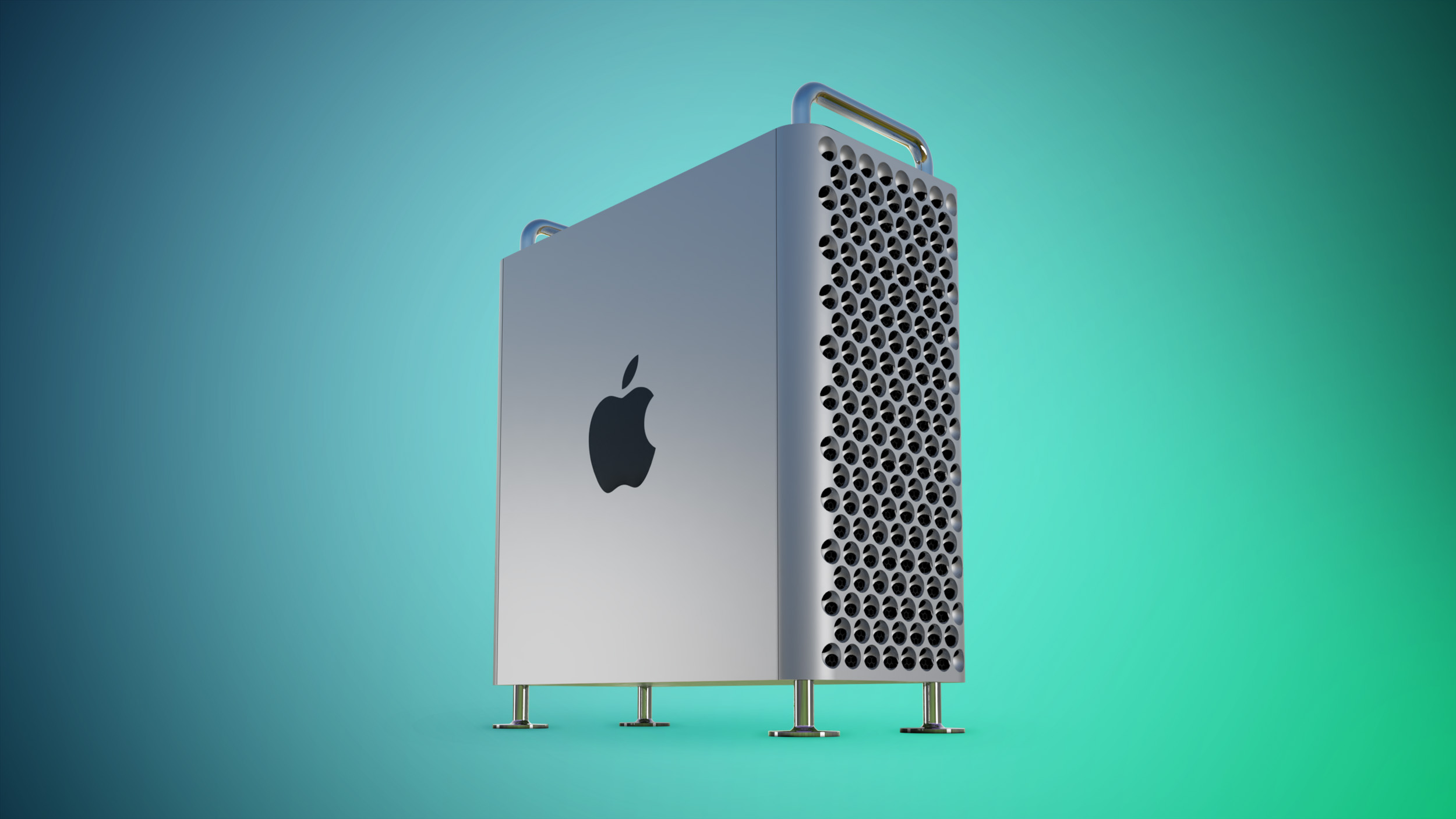
Mac-Pro-Feature-Teal.jpg

In his latest "Power On" newsletter, Gurman revealed that Apple internally developed two unreleased Mac Pro projects codenamed J170 and J190 before ultimately discontinuing the machine altogether.

As for new Mac Pro hardware, there were two additional models developed by Apple that never saw the light of day: J170 and J190. The former was a new Intel Corp. Mac Pro (yes, even when Apple was making its own silicon) to address certain uses. The latter was an M3 Ultra version that was supposed to launch alongside the M3 Ultra Mac Studio in early 2025.

J170 was apparently a new Intel-based Mac Pro, which is notable because Apple had already completed its transition to Apple silicon by the time the project was in active development. Gurman did not specify what "certain uses" the Intel model was meant to address, but its existence suggests Apple explored keeping an x86 option alive for specific professional workflows even years into the Apple silicon era.

J190, meanwhile, was said to be an M3 Ultra-equipped Mac Pro that was supposed to launch alongside the M3 Ultra Mac Studio in early 2025, but Apple shelved it before release. It would have paired the same chip found in that Mac Studio with the Mac Pro's unique-to-the-lineup PCIe expansion slots.

Neither model shipped, and Apple discontinued the Mac Pro entirely this year, ending its 20-year run. The Mac Pro had been left on the aging M2 Ultra chip from 2023 while the Mac Studio continued to receive refreshes, and it was priced roughly double that of a similarly configured Mac Studio despite offering essentially the same performance.

The J170 and J190 cancellations add to a growing list of shelved Mac Pro plans. Apple had also developed "Extreme" chip variants, processors with twice the CPU and GPU cores of Apple's Ultra chips, for a future Mac Pro before winding down those projects over cost and demand concerns.

Gurman said he does not expect Apple to bring back the Mac Pro "anytime soon — if ever." Apple is instead expected to refresh the Mac Studio with M5 Ultra chips as early as this fall.

Article Link: Apple Shelved Two Mac Pro Models, Including an Intel-Based One
 
  • Sad
Reactions: sydneysider88
Oh wow
Thank God we live in this timeline where the M1 MacBook Air is fast in 2026
If Apple released this Intel Mac Pro, then M1 could have dropped before this Intel Mac Pro and not be fast on macOS Golden Gate.
 
J170 was apparently a new Intel-based Mac Pro, which is notable because Apple had already completed its transition to Apple silicon by the time the project was in active development. Gurman did not specify what "certain uses" the Intel model was meant to address, but its existence suggests Apple explored keeping an x86 option alive for specific professional workflows even years into the Apple silicon era.

That intrigues me. Would they have continued an Intel macOS branch for this machine? Left it on a specific OS but offered updates and patches just for that model? I understand why certain professionals would find this hugely attractive (the issues with card compatibility, Boot Camp, and probably very decent expansion options). When we consider how long people had Mac II's and IIfx's—with all 8 slots filled and max memory—running in production environments (I'd be shocked if there aren't a couple still running somewhere), this sounds like the sort of machine that would have filled the same purpose. This would have been a fun hobbyist machine on the aftermarket in 5+ years.
 
MacBook Neo ROI has put extra nails in the coffin. I'm all for a powerful Mac like the Pro, but the sales obviously don't make it something of interest for them anymore.
 
  • Like
Reactions: hieranonymous
Since the article didn't mention this, below are some use cases I can think of for why they would have release one more Intel Mac. The problem is that the market for these are small, relative to the overall consumer market that Apple focuses on, which is probably why Apple likely got to the prototype stage, but scrapped it. BTW, this would've been similar to how re-introduced a variant of the PowerMac G4, that was OS 9 bootable, AFTER the G5 was released, for people who still needed to boot OS 9).

  • Expansion cards that only have Intel system drivers (there's a lot of audio card, storage controllers, and Scientific instrumentation that can't be used on Apple Silicon).
  • Memory needs over 192GB (the last Intel Mac Pro could do 1.5TB).
  • Intel virtualization.
  • Any software and processes that cannot run in the Apple hypervisor, and required direct execution on an Intel system (anything that needs AVX, for example).
  • Anything that needs to run on and was written for specific GPUs, particularly compute.
  • For anyone who has a very expensive high-end license that doesn't apply to a newer version, specifically apps that would also not run as well or at all on Apple Silicon.
  • Anyone who's using apps that won't run properly and Apple Silicon and I no longer getting updates.
 
This fits the public perception we have that there was pretty clearly a power struggle within Apple over the Mac Pro, and the people who wanted it gone clearly won.

I really want to know who developed that Intel Mac Pro, and who was the driving force behind its cancellation.

I have a feeling Tim Cook had no strong feelings either way, and let his lieutenants fight it out and bring him their decision.

Either that, or his only question was to make a financial case for it. It seems engineering/marketing created a machine with no financial case.

Hope we get a book about this and the rest of Cook's tenure some day soon.
 
This is sad. It suggests Apple struggled internally with the decision to discontinue the Mac Pro. The simple truth, from Apple’s perspective, is that the Mac Pro was simply too niche to continue developing and marketing. Even the Mac Studio makes up a low sing-digit percentage of total Mac sales, and that’s as far as Apple’s willing to extend itself to accommodate the pro desktop market.
 
Since the article didn't mention this, below are some use cases I can think of for why they would have release one more Intel Mac. The problem is that the market for these are small, relative to the overall consumer market that Apple focuses on, which is probably why Apple likely got to the prototype stage, but scrapped it. BTW, this would've been similar to how re-introduced a variant of the PowerMac G4, that was OS 9 bootable, AFTER the G5 was released, for people who still needed to boot OS 9).

  • Expansion cards that only have Intel system drivers (there's a lot of audio card, storage controllers, and Scientific instrumentation that can't be used on Apple Silicon).
  • Memory needs over 192GB (the last Intel Mac Pro could do 1.5TB).
  • Intel virtualization.
  • Any software and processes that cannot run in the Apple hypervisor, and required direct execution on an Intel system (anything that needs AVX, for example).
  • Anything that needs to run on and was written for specific GPUs, particularly compute.
  • For anyone who has a very expensive high-end license that doesn't apply to a newer version, specifically apps that would also not run as well or at all on Apple Silicon.
  • Anyone who's using apps that won't run properly and Apple Silicon and I no longer getting updates.

Exactly. Apple Silicon left those users behind. I agree that it's not a huge amount of users, and they have niche needs, but those I know moved over to Windows because they needed an Intel-compatible solution that worked well (and felt Apple had abandoned them). I get that Apple wants its profits, but it lost users who had been on the Mac since the late 1980s. This machine might have extended that (who knows for how long, though).
 
In a perfect world, Apple would license out the Mac Pro and Enthusiast/Pro level devices to a third party. It could be a subsidiary or something where they have control, but independent enough that it doesn't affect the rest of Apple. That way Apple's consumer ambitions don't affect those that may not need a new major OS release every year that breaks critical apps and workflows.
 
This is sad. It suggests Apple struggled internally with the decision to discontinue the Mac Pro. The simple truth, from Apple’s perspective, is that the Mac Pro was simply too niche to continue developing and marketing. Even the Mac Studio makes up a low sing-digit percentage of total Mac sales, and that’s as far as Apple’s willing to extend itself to accommodate the pro desktop market.

They constantly did it to themselves though. The Mac Pro made sense back in the late aughts and early teens when it wasn't stratospherically more expensive than its competition.

There has always been a desire for a more modular Mac that can dual boot Windows and play PC games as well as run the full MacOS experience in a separate environment. But the amount of people willing to pay over $10k just for the base model has never been enough.

And somewhat ironically, the dual boot situation is solved again since Windows on ARM is now fully officially supported. There's nothing stopping them from supporting video cards, Windows, and expandable RAM except their own decisions.
 
In a perfect world, Apple would license out the Mac Pro and Enthusiast/Pro level devices to a third party. It could be a subsidiary or something where they have control, but independent enough that it doesn't affect the rest of Apple. That way Apple's consumer ambitions don't affect those that may not need a new major OS release every year that breaks critical apps and workflows.
They tried that and eventually the clones started to be cheaper than Macs from Apple. Steve Jobs killed the clone program and even had to buy one company out to get them to stop.
 
  • Like
Reactions: lfaa and Timpetus
This is sad. It suggests Apple struggled internally with the decision to discontinue the Mac Pro. The simple truth, from Apple’s perspective, is that the Mac Pro was simply too niche to continue developing and marketing. Even the Mac Studio makes up a low sing-digit percentage of total Mac sales, and that’s as far as Apple’s willing to extend itself to accommodate the pro desktop market.
The Mac Pro was simply too expensive to not be a niche product, worth the price or not. The expandable Mac eventually just priced itself out of the market and Thunderbolt expansion helped it along the way.
 

There were rumours of an Intel Ice Lake Mac Pro for 2022. With Ice Lake's Deep Learning Boost instructions and support for 4TB of RAM alongside RDNA3 GPUs, maybe one of those "certain use cases" was machine learning/AI development?

Or an Intel Mac Pro after the Apple Silicon transition (ie. alongside or after the M2 Ultra Mac Pro in 2023) would point to a Intel Sapphire Rapids based Mac Pro which with 56 CPU cores and also 4TB RAM support would have been very interesting.
 
Last edited:
The interesting "what if" is "what if Apple didn't mess up the 2013 Mac Pro", because that's probably when the exodus started making it even more niche than it already was.
The irony is, the Mac Studio is essentially the same broad concept as the 2013 Mac Pro, albeit in a much less interesting form factor. Apple Silicon is the secret sauce that made it viable … a decade later.
 
They could just make a taller Mac Studio that has space for more RAM, extra CPU's, etc. and then call it the Mac Pro. I always thought that case it was in added at least $1000 to the cost.
 
Interesting to know about these plans. Also not surprising to see Apple testing various combination of chips and computers. Don't think the Mac Pro will ever come back. Mac Studio will be the high end desktop.
 
  • Sad
Reactions: maxoakland
This is sad. It suggests Apple struggled internally with the decision to discontinue the Mac Pro. The simple truth, from Apple’s perspective, is that the Mac Pro was simply too niche to continue developing and marketing. Even the Mac Studio makes up a low sing-digit percentage of total Mac sales, and that’s as far as Apple’s willing to extend itself to accommodate the pro desktop market.
I think the Mac Pro becoming so niche was half Apple's own fault, any sort of self-fulfilling prophecy. Yes, half of it is the fact that a lot of Mac users don't actually need towers with expansion cards, but Apple used to take pride in producing products for the high-end pro market, and used the profit margin from these models to fund R&D for the other models in the Mac lineup. I think that Apple simply just wants to sell you a tiny box that you could replace the whole thing every few years to maximize their profits.

Since they're heavily consumer services focused now, my thinking is that the current majority of decision makers no longer care to have the pride of catering towards the high-end market and producing really cool stuff for high-end professionals. They also simply don't need to justify R&D budgets from the high-end anymore, as their upgrade ladder has solidified a new source for that.

It's also not just about greed, though, because I honestly don't think Apple cares about profits first, I think they just care about efficiency and focus, and that they believe profit will always follow. I think it's a matter of saying "hey, there's a lot of stuff we want to change every few years, so if you just happen to have to buy a whole new little box every few years to do that, that's great with us". I also think they just truly don't care about the professional market anymore. Besides the educational market the professional market (particularly video, but especially graphic design) is what kept Apple existing from the late 1980s until the iPhone took over the majority of their sales. Had the situation remained the same, the Mac Pro would've been critical to their business today. However, since the majority of their profits come from services, followed by iPhones, Apple has refocused what they consider important.

Towers have a lot of really great advantages, and I think of Apple actually cared about them, and also didn't balloon the profit margin on them starting with the 2019 Mac Pro, and offered a range of SoC options from the "Pro" series to the "Ultra" or even "Extreme", I think they could very clearly still exist, and very clearly still have an important place in the market. It's just that Apple's priorities have shifted, which led that less emphasis on a tower design, thereby fulfilling their own prophecy of it being a niche market for them.

I also think that this really started to happen in the late 2010s, which is why after the 2009-2012 Mac Pros were essentially the same machine with some component upgrades, and why the 2013 was so radically different. I think Apple wanted to create something like the Max studio in 2013, but couldn't quite do it. I think the 2019 Mac Pro was their stop-gap, until the market conditions were right to force the tower design off their roadmap.
 
Register on MacRumors! This sidebar will go away, and you'll see fewer ads.