

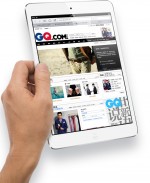


Demand for the iPad mini is also very strong in China, where the device launched on December 7, as highlighted in a new report from Topeka Capital Markets analyst Brian White. White cites "insatiable appetite" for the iPad mini in China and Hong Kong leading to stock shortages, with checks indicating that the iPad mini is more popular than the fourth-generation iPad.


I couldn't justify buying the mini when I have a 3rd gen, but got one for my mother for Christmas and she can't put it down. And this is someone who is 71, never owned a smartphone and knows very little about multi touch devices. But she absolutely loves her mini. 🙂Completely understandable. I am using both and it's the best combo I've ever experienced.
Chinese people just start testing Apple drugs. They will be addict.


Factory work in third world countries kind of sucks, eh? And somehow, I doubt that many of those factory workers are contributing to the current "insatiable appetite" in China for iPad Minis.

Factory work in third world countries kind of sucks, eh? And somehow, I doubt that many of those factory workers are contributing to the current "insatiable appetite" in China for iPad Minis.

What is happening to this world?
In all fairness, Google saw it too which is why they bought Android in 2005. I think both companies realized that Microsoft was unassailable on the desktop and in notebooks. So the only way to change the game was to change the rules - make desktops and notebooks less relevant.Wonder what will happen to the mini/classic sales ratio when the iPad mini becomes retina... My guess is that the larger iPad will become the niche. Though, Apple might underpower the mini deliberately to maintain an edge for the 9.7".
Interesting times, especially if you bear in mind that Windows 8 sales are not really lifting off due to decreased PC sales (20% down year over year in the US). The post-PC era is real and Apple saw it coming way beyond the horizon. Now that's vision. *applause*
Maybe it's time I get me a man's bag...

I think in 2005 they wanted to challenge RIM/BlackBerry rather than ignite a post-PC era. However, the pace at which Google has been introducing services that make Microsoft less relevant at the cost of cloud services is impressive.In all fairness, Google saw it too which is why they bought Android in 2005. I think both companies realized that Microsoft was unassailable on the desktop and in notebooks. So the only way to change the game was to change the rules - make desktops and notebooks less relevant.

