

Become a MacRumors Supporter for $50/year with no ads, ability to filter front page stories, and private forums.

MacRumors

macrumors bot
Original poster


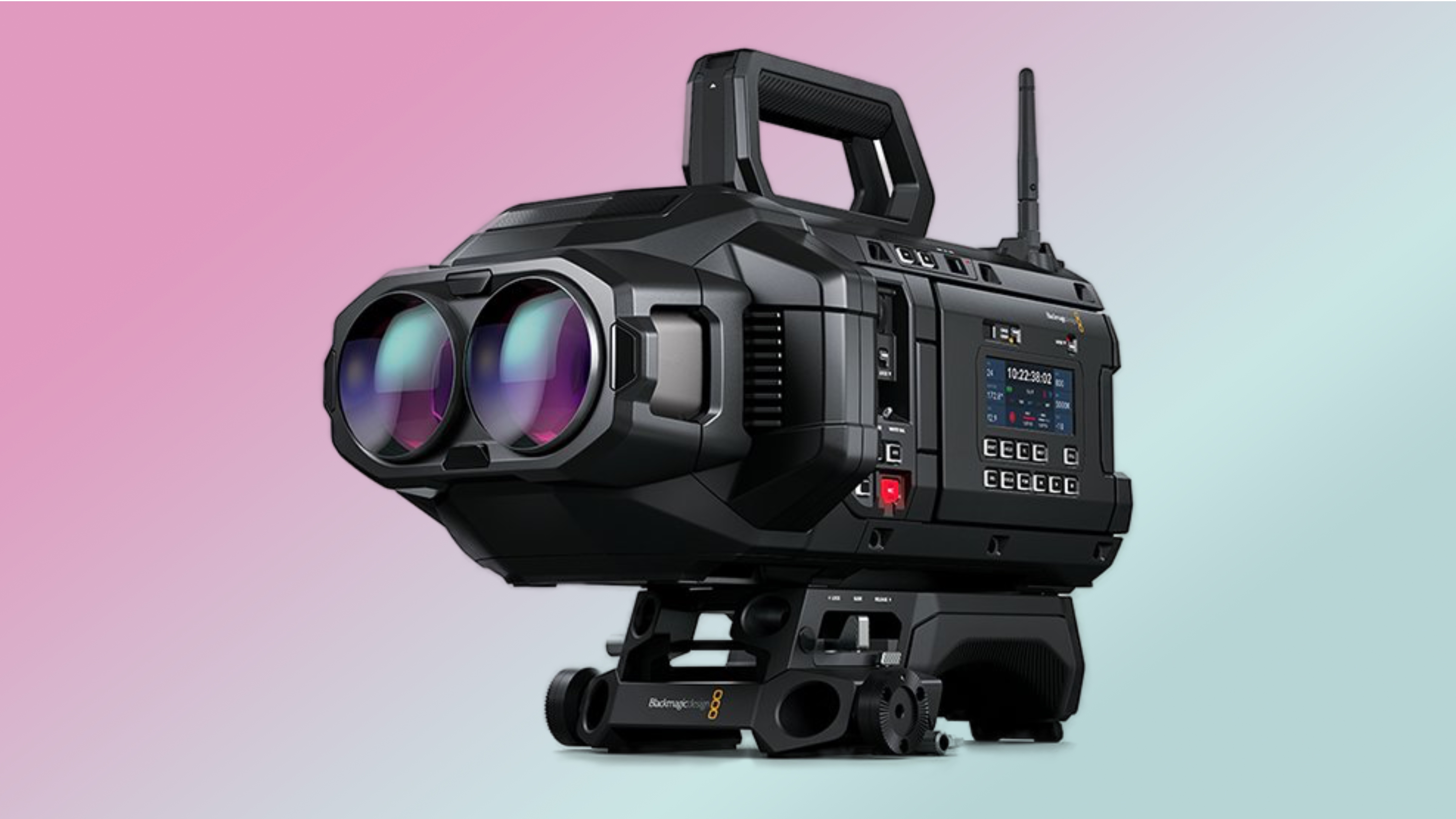
Blackmagic has announced a new version of its URSA Cine Immersive camera, the first commercial camera system designed to capture 3D content for the Vision Pro.
blackmagic-vision-pro.jpg

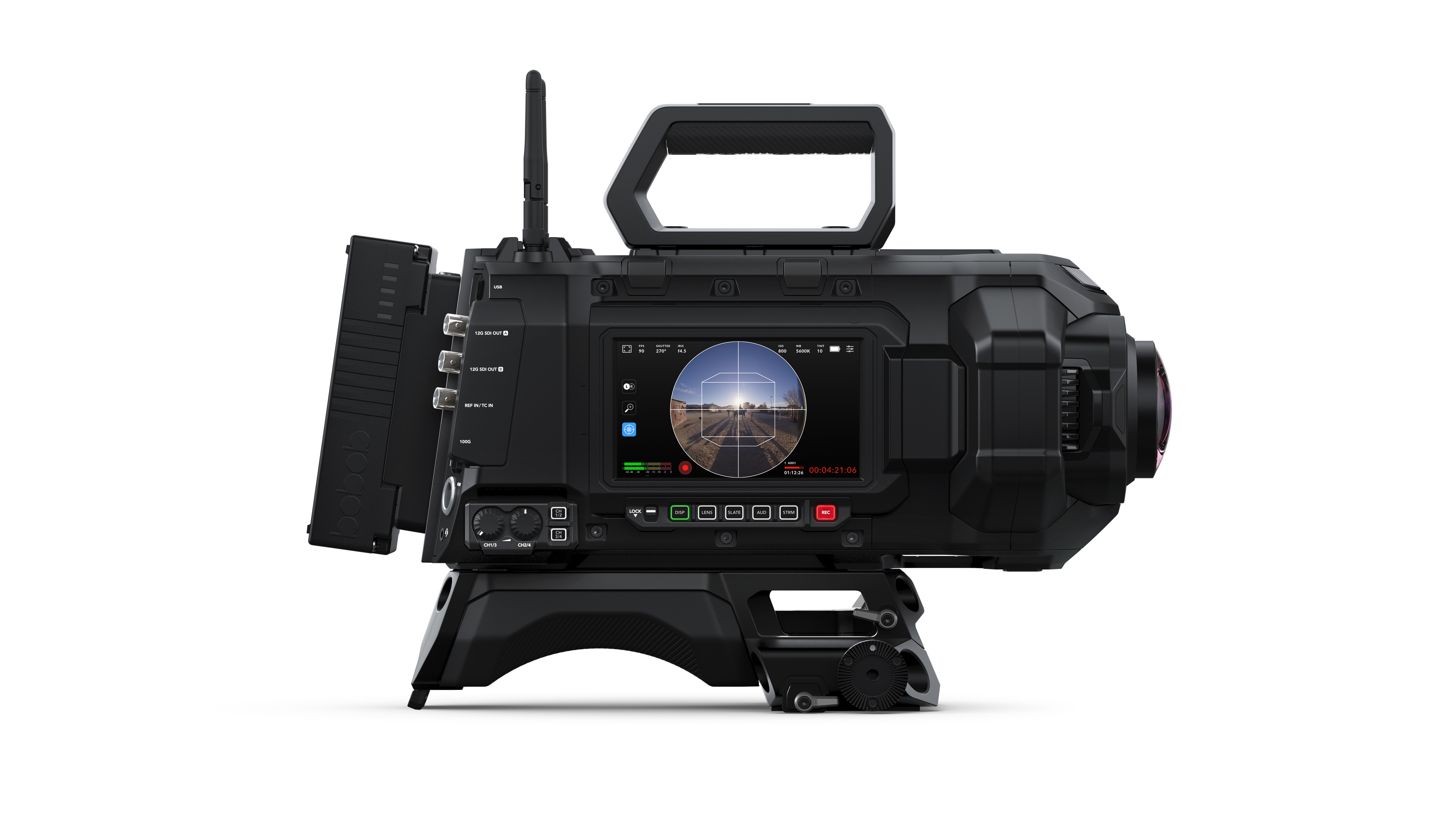
The URSA Cine Immersive 100G adds 100G Ethernet to the original camera to deliver the bandwidth needed to output live immersive video for the first time.

Blackmagic Design also announced the Blackmagic URSA Cine Live Encoder, a live processor module ($1,645) that compresses live immersive video into Apple ProRes for output as SMPTE-2110-22 IP video, allowing users to combine the stereo, high frame rate image streams into a single 100G Ethernet connection.

However, the capability is costly – Blackmagic is asking $29,145 for the device, which will be available in Q3 2026. The original Blackmagic URSA Cine Immersive remains available on the Blackmagic website for $27,495, down from the $30,000 price tag it carried when it was first unveiled in 2024.

Both cameras have a custom stereoscopic 3D lens system with dual 8K sensors, and can capture a 180-degree field of view with spatial audio support at up to 90 frames per second. Captured content features an 8,160 x 7,200 resolution per eye, and there are 16 stops of dynamic range for detail and color accuracy in every frame.

Dual 5-inch HDR touchscreens are also included, along with an external color status LCD screen. There are several other connectivity options aside from Ethernet, including 12G-SDI out, USB-C, and XLR audio ports, plus an 8-pin Lemo connector for power.
Blackmagic-URSA-Cine-Immersive-100G-Left.jpg

Blackmagic says URSA Cine Immersive has been used on a number of high-profile immersive productions, including MotoGP: Tour De Force, Debut at the BBC Proms, an upcoming documentary featuring Real Madrid, and NASA's recent Artemis II launch.

Article Link: Blackmagic Debuts $29K+ URSA Cine Immersive 100G for Vision Pro
 
I think I'll wait for Black Friday. 🙂

Jokes aside - if this is as a capable as it looks, I'm excited to see what filmmakers will be able to do with this. While out of reach of most consumers, this is cost effective enough for those with even a modest production budget to make use of it.
 
This is just an illustration of how out of sync the Apple infrastructure has become with the AR/VR Glasses space that is happening in the rest of the tech world. Vision Pro is a hobby, not a product, while many companies in China are developing fantastic useable products with real use cases - even Meta's very trailing edge product is more in step with the rest of the world than Apple. The lack of Apple Glasses could be the thing that finally gets people to drop the iPhone to be able to use these products.
 
This is just an illustration of how out of sync the Apple infrastructure has become with the AR/VR Glasses space that is happening in the rest of the tech world. Vision Pro is a hobby, not a product, while many companies in China are developing fantastic useable products with real use cases - even Meta's very trailing edge product is more in step with the rest of the world than Apple. The lack of Apple Glasses could be the thing that finally gets people to drop the iPhone to be able to use these products.
Spatial computing is a broad computing paradigm with you lauding more primitive solutions distinct from the headset category or far more severely compromised variants that arguably did more harm than good to the reputation of the category like Meta’s budget headsets.

Apple targeted devs, enterprise, and prosumers finally giving them a serious option to do serious meaningful computing with finally an opportunity to work on traditional and spatial professional quality content.

Blackmagic and other renowned prosumer hardware manufacturer finally have hardware for the paradigm to make sense for their core competency and their core audiences which are prosumers.

Apple is doing better with their niche of computer segments served than the other manufacturers serving theirs—especially compared to Meta.

Meta recent pivot to glasses is going well after their mediocre execution of headsets intended for mainstream use as well as their terribly executed prosumer headset after losing tens of billions of dollars per year.
 
This is just an illustration of how out of sync the Apple infrastructure has become with the AR/VR Glasses space that is happening in the rest of the tech world. Vision Pro is a hobby, not a product, while many companies in China are developing fantastic useable products with real use cases - even Meta's very trailing edge product is more in step with the rest of the world than Apple. The lack of Apple Glasses could be the thing that finally gets people to drop the iPhone to be able to use these products.
Um...you mean the same Meta that spent $80B on the metaverse? Oh, but NOW they are in sync!?! I think I'll wait for the final verdict on that one.

Apple can (and should) play the long game here and it is ENCOURAGING that one of the world's largest companies is pursuing and supporting niche technologies. There is a virtuous cycle of hardware (both Apple computers and Blackmagic/Canon cameras) and content...eventually creating enough content to drive the demand of Apple VR...which can and should revolutionize education and travel, not just entertainment.

Is this niche? Yes - at least for the foreseeable future. Which is why Apple released AVP before their suppliers even had the capacity to build more than a few hundred thousand units a year.

Folks - Quicktime was a niche technology for a very long time. But while nobody (I'm using that term loosely, so relax) remembers Windows Media Player or Real Player, the investments that Apple made in Quicktime have paid handsome dividends in the long run.

In summary, I applaud both Apple and Blackmagic here.
 
Large volume storage that can (continuously) keep up with a 100G connection will cost a pretty penny too
 
How many of these cameras do they actually expect to sell? Seems like a very niche market.
It’s a highly niche market and even Apple knew a heavy $3500 headset wouldn’t sell well (nor could it sell very well due to the very limited manufacturing capabilities for the displays). However, the Vision Pro does allow Apple to get a head start in the AR industry and building the Vision OS ecosystem will prove a massive advantage once AR technology catches up to the point of delivering a full Vision OS experience in glasses form.

In other words it’s niche… but just for now due to technology limitations. There’s so much R&D for AR displays in the various tech companies that it almost feels like a silent war getting ready to break out. Once they crack it (and it’s getting close) AR glasses will be a very big market.

The goal of Vision Pro was not to be successful in itself but to help make Vision OS as a AR platform successful and set the standard for an AR OS.
 
Really wish they had this at Coachella. Would have been a system seller streaming Coachella acts live on Vision Pro. Come on Trent Reznor aren't you like an Apple employee? Can't you get Apple to broadcast your Nine Inch Noize set on Vision Pro?
 
If only Apple sold a professional grade machine that could actually deal with 100Gb networking!

Something that could be upgraded with various, like, cards! Even industry standard ones!
 
  • Like
Reactions: innerproduct
Register on MacRumors! This sidebar will go away, and you'll see fewer ads.