
Got a tip for us?
Let us know
Become a MacRumors Supporter for $50/year with no ads, ability to filter front page stories, and private forums.
Core Duo/Core 2 Duo MacBook CPU Upgrading
- Thread starter dosdude1
- Start date
-
- Tags
- bga core 2 duo macbook
- Sort by reaction score
You are using an out of date browser. It may not display this or other websites correctly.
You should upgrade or use an alternative browser.
You should upgrade or use an alternative browser.

I can hook you up with BGA T9900's (SLGKH). Inbox me.I would really like to find a good source for these, as the upgrade really is worth doing. I have managed to find some other Chinese sources, but they want around $300 for these chips normally. I found one seller offering them for $216, but that's about as good as I could find. Unless someone were willing to pay me like $450 to buy the chip and perform the upgrade (highly unlikely, and probably not worth that price for such an old system), it's probably not going to happen.

maison197
macrumors newbie
I can hook you up with BGA T9900's (SLGKH). Inbox me.
yes i want to get some slgkh T9900, can you hook me up?

ahartrum
macrumors newbie
Hi everyone! I was just randomly googling and stumbled upon this thread. I recently purchased the White Macbook 7,1. It's my favorite macbook in terms of design! I upgraded the ram and put an ssd in there, and I'm loving it, but the idea of boosting the CPU from the 2.4ghz Core 2 Duo to something a little more powerful sounds so amazing. Are these modifications discussed here possible with 7,1?

No, I've tried a Q9000 already, the system won't boot an OS with it installed.@dosdude1 Fantastic work!
Theoretically speaking, is the PGA/BGA difference the only limitation of why, say, a dual-core core 2 extreme couldn't be installed (like a X9100)? Maybe its a pipe dream but it would be so cool to see quad core, like a QX9300.

im_to_hyper
macrumors 65816
Darn, that sucks to hear! Would have been a super fun project. Uhhhh by the way, would you have any interest in doing a custom mod to upgrade the board (like you did) then install it into a Black MacBook?!
If so.... what would the cost of said modding service be!? (Because this. This is my dream machine. A fast Black MacBook that can run High Sierra.... with... well... your mod I suppose!)
If so.... what would the cost of said modding service be!? (Because this. This is my dream machine. A fast Black MacBook that can run High Sierra.... with... well... your mod I suppose!)

LegacyUser12
macrumors member
Thanks for the work you do and unrelenting patience!Well, I've done a CPU upgrade yet again. This time, I upgraded a Late-2008 Aluminum Unibody MacBook (MacBook5,1) from its original 2.0 GHz Core 2 Duo P7350 CPU, to the best CPU that board can possibly support; a 3.06 GHz Core 2 Duo T9900! The performance improvement is huge, and it also makes this machine the world's fastest MacBook5,1! Here is the Geekbench result with the original CPU installed, and here is the result after performing the 3.06 GHz upgrade. The results shown in the video are a bit skewed, as it turns out I forgot to tighten one of the heatsink screws when assembling the machine, causing it to thermal throttle. All in all, quite a successful and worthwhile upgrade!
patsonator
macrumors newbie
Hello and respect for the hard work. I bring a possible solution which consists in simply installing windows on the mac because windows will surely start it. Thank you.No, I've tried a Q9000 already, the system won't boot an OS with it installed.
im_to_hyper
macrumors 65816
No, I've tried a Q9000 already, the system won't boot an OS with it installed.
What are the differences between the Q9900 and the X9000 in terms of bus speed? I'm aware the X9000 works on a Dell D630 with a Core 2 Duo Penryn shipping processor -- but would be neat to see it working in a MacBook too of the same era.
Hello and respect for the hard work. I bring a possible solution which consists in simply installing windows on the mac because windows will surely start it. Thank you.
The Q9900 is a quad core CPU and I'm thinking its bus speed will also be incompatible with that DDR2 chipset. The X9000 is dual-core and may be the highest supported CPU, similar in nature to the D630.
Curious to find out either way, but its a lot of work thanks to the soldering involved.

rusavv
macrumors newbie

im_to_hyper
macrumors 65816
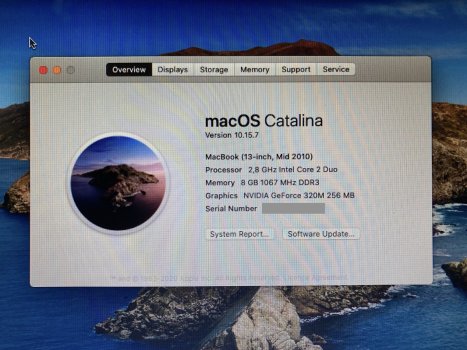
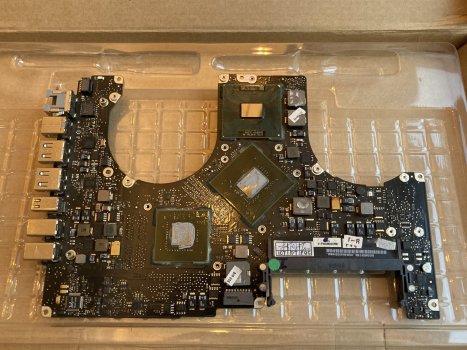
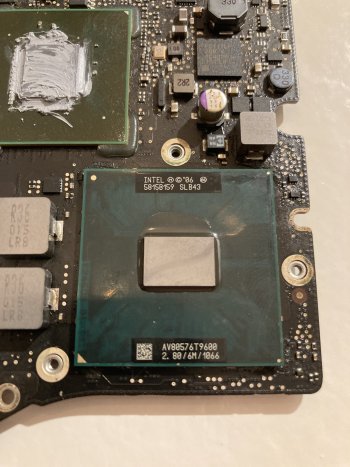
Thanks to dosdude1 and this thread, I've upgraded CPU in my Mid 2010 A1342 to T9600 2.8 ghz. It works very smooth for a 12-years old laptop. Also upgraded it using Catalina Patcher ;-)
OH MY GOSH, THAT IS AMAZING!!!!!!!!!
Now it just needs 16GB of 1333MHz RAM!!! xD
(oh and a 1TB SSD)
and then POOF you have MANY more years of life out of it!
Great work!
What did you do for the re-ball of the CPU?!
rusavv
macrumors newbie
Well, I'll add more ram but refuse of 1 TB SSD - 256 R0 config is working great for me. Especially it's just a tiny fun project.OH MY GOSH, THAT IS AMAZING!!!!!!!!!
Now it just needs 16GB of 1333MHz RAM!!! xD
(oh and a 1TB SSD)
and then POOF you have MANY more years of life out of it!
Great work!
What did you do for the re-ball of the CPU?!
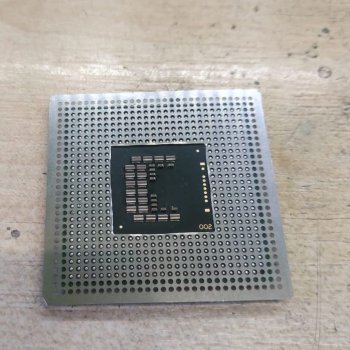
I've purchased an old 2009 MBP logic board and payed it to a guy who reballed 2.8 GHz CPU to my A1342.
Attachments
This is awesome. Any cooling issues (assuming it’s the original heat sink and fan)?Thanks to dosdude1 and this thread, I've upgraded CPU in my Mid 2010 A1342 to T9600 2.8 ghz. It works very smooth for a 12-years old laptop. Also upgraded it using Catalina Patcher ;-)
rusavv
macrumors newbie
Yep, CPU temp has risen for about 10 deg. I've replaced fan to a newer from A1278 (left on the photo) and increased default speed to 2400 RPM - so it's still silent and cool.This is awesome. Any cooling issues (assuming it’s the original heat sink and fan)?
Attachments
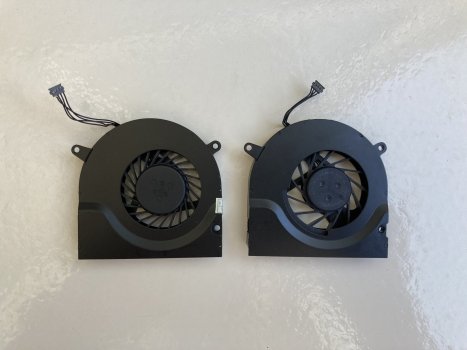
That's cool! i have a Mid2010 White macbook and want to do the same upgrade u did! how much improvement you have? i have no technical skills, but i should find someone who can do this 😀Yep, CPU temp has risen for about 10 deg. I've replaced fan to a newer from A1278 (left on the photo) and increased default speed to 2400 RPM - so it's still silent and cool.
Where did you get the P9600?? i looked on aliexpress but every processor has PINs.
Thanks in advance!!

Alfilde
macrumors newbie
What about upgrading also the GPU?Well, I'll add more ram but refuse of 1 TB SSD - 256 R0 config is working great for me. Especially it's just a tiny fun project.
I've purchased an old 2009 MBP logic board and payed it to a guy who reballed 2.8 GHz CPU to my A1342.
Not possible, as it’s not a dedicated GPU. These use either the GeForce 9400M, or 320M, which is the integrated graphics of the nVidia MCP79 and MCP89 chipsets, respectively.What about upgrading also the GPU?
I was about to write that one can take a PGA chip and desolder the pins effectively converting it to the BGA variant, and then I recalled I've seen a video with that process some time ago, went through the history and… of course it was one your videos (the one about Axiotron ModBook) 😁Where'd you find a chip though? I could do it as long as I have a chip to use LOL. Not worth removing from another logic board, needs to be a new/new old stock/used chip.
Btw, have you seen this another video addressing the issue of smaller pads on the BGA chip?
Can NullCPUPowerManagement kext fix the issue?No, I've tried a Q9000 already, the system won't boot an OS with it installed.
im_to_hyper
macrumors 65816
Not possible, as it’s not a dedicated GPU. These use either the GeForce 9400M, or 320M, which is the integrated graphics of the nVidia MCP79 and MCP89 chipsets, respectively.
I saw this and then wondered "could a person do a full chipset swap? Salvage an MCP89 and put it onto an MCP79?"
- MCP79 is 65nm 12w and MCP89 is 40nm 8w.
- It seems that the features: FSB, PCIe, PCI, USB port support, SATA 3gbps align.
- MCP79 is 940 pins, MCP89 is 1078 pins
sooooooo unless someone could find OG chipset documentation to wire up a middle layer: no salvaging could be done.
(Figured I would walk through my thought process here in case someone else has the same thought)
I've found another article (seems to be a translation) where they claim to upgrade Core 2 Duo on MacBooks by taking a PGA478 CPU and converting it to the BGA variant by desoldering the pins and reballing the chip:The PGA version is readily available, but I have yet to find a source for a BGA version that's not removal from another MacBook logic board, and that is most definitely not viable in the long term. Installing a PGA socket is one way to kind of work around this, but as I mentioned previously in that post, it's extremely impractical as it makes it impossible to put the machine back together


I tried this, the issue is the pads on the PGA CPUs are a lot larger than the ones on the BGA versions, so the solder balls sit too low to clear the gap created by the capacitors in the middle of the chip. Though I think reballing it twice, along with tinning the pads on the board before soldering, may be enough to make it work. Will probably try it again doing so.I've found another article (seems to be a translation) where they claim to upgrade Core 2 Duo on MacBooks by taking a PGA478 CPU and converting it to the BGA variant by desoldering the pins and reballing the chip:
Yes, the author of the video I posted above (Wenting Zhang) had the same issue (though not with a MacBook), but he solved it in a different way using a custom-made pass-through PGA-BGA interposer.I tried this, the issue is the pads on the PGA CPUs are a lot larger than the ones on the BGA versions, so the solder balls sit too low to clear the gap created by the capacitors in the middle of the chip.
FWIW, here is the link with the correct time code to the part where he describes it: www.youtube.com/watch?v=coJdBNazXuA&t=497s
And here's the interposer PCB design on his GitHub: https://github.com/zephray/Pants479