

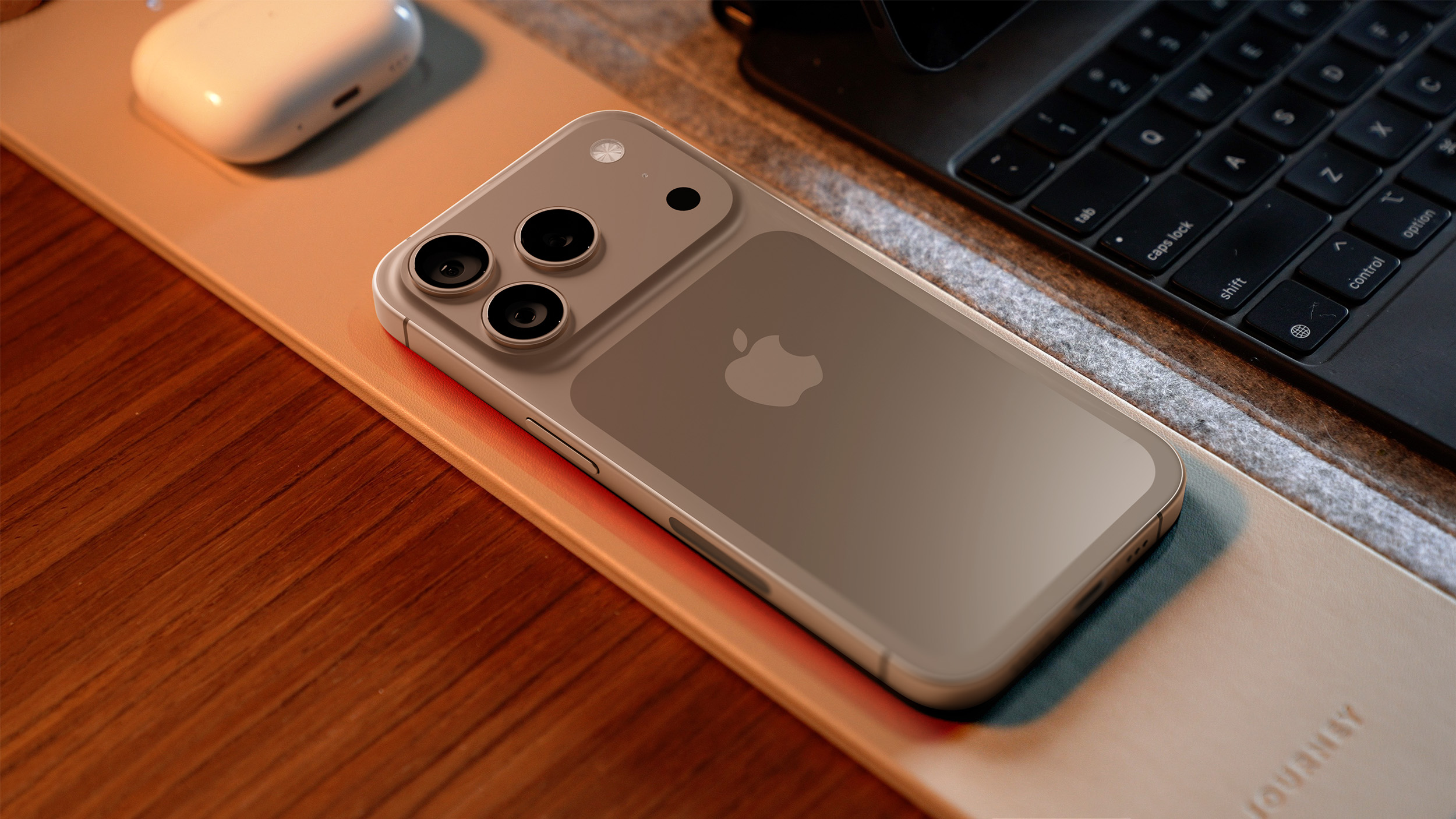
iPhone 17 models will "likely" be more expensive than iPhone 16 models in the U.S., according to Jeff Pu, an analyst at investment firm GF Securities.


I suppose you have to start somewhere, just whatever taco doing right now is not the way to do it. Like, you don’t have to shatter the world to prove your points, but taco strongly disagrees and mock people who says otherwise.Well if taco just would of left things alone prices would not go up but no things will get more expensive because of him assemble iPhones in the US not going to happen like they want just look at the Moto X now there is a story of what happens when you try to manufacture a phone in the US🤨

A $200 difference between the base iPhone and the Air is unlikely imo. Or put another way, a $100 increase to the Plus (which the Air replaces) and $0 increase to the base iPhone doesn't make much sense considering that Apple likes evenly spaced upgrade tiers. The only way (imo) that the base iPhone doesn't see a price jump is if the the Air comes in at $949 or less and Apple switches to $150 price intervals instead of $100.Seems likely to me that the regular 17 will stay the same at $799, the new iPhone air will take the previously flagship $999 price slot, and the Pros get bumped to $1199 and $1299 respectively.
Not only does this make sense from a tariff point of view, it also makes sense because Samsung‘s ultra has been $1299 the last two years.
Hardly basic Econ 101. That doesn't cover stuff like switching costs, social and peer influence, lock-in tactics and monthly payment plans that mask the true cost to consumers. If basic Econ 101 was what applied here and elsewhere, we wouldn't be seeing an increased debt burden on the working poor and a consolidation of wealth at the top. The phone market doesn't act like a free market, especially since the government literally blocks some of the competition at the border... Smartphone demand is fairly inelastic as they've become an essential item and Samsung is more than happy to go along with any price increases Apple's interested in. We've seen some lengthening of upgrade cycles over time, but demand has been relatively steady.Non issue. You have newer tech things and the latest & greatest, you pay a higher premium/price until the the tech goes mainstream or fails at which point the price drops.
Basic Econ 101.


Apple didn't take that class.Non issue. You have newer tech things and the latest & greatest, you pay a higher premium/price until the the tech goes mainstream or fails at which point the price drops.
Basic Econ 101.
I’m not sure, there’s only $200 between the 16e and the 16.A $200 difference between the base iPhone and the Air is unlikely imo. Or put another way, a $100 increase to the Plus (which the Air replaces) and $0 increase to the base iPhone doesn't make much sense considering that Apple likes evenly spaced upgrade tiers. The only way (imo) that the base iPhone doesn't see a price jump is if the the Air comes in at $949 or less and Apple switches to $150 price intervals instead of $100.


because tech usually gets cheaper over time and we are all used to that.Just wondering how a price increase is political? Even if it’s due to tariffs, that’s no politics… we here it’s going to be more expensive ever year. I do believe it will be 256GB to make any price increase justified and not “due to tariffs.”

Someone who knew basic economics would know what a tariff actually means. Sadly Taco isnt very bright.Non issue. You have newer tech things and the latest & greatest, you pay a higher premium/price until the the tech goes mainstream or fails at which point the price drops.
Basic Econ 101.
All non factors in the price of tech. There are plenty of alternatives to iOS. There is no social/peer pressure to buy a piece of tech.Hardly basic Econ 101. That doesn't cover stuff like switching costs, social and peer influence, lock-in tactics and monthly payment plans that mask the true cost to consumers.
Yawn. Irrelevant political leanings to the topic at hand.If basic Econ 101 was what applied here and elsewhere, we wouldn't be seeing an increased debt burden on the working poor and a consolidation of wealth at the top
If they want to block Chinese spyware masquerading a cheap Android alternative (Huawei) from infesting the United States then I'm fully behind them.The phone market doesn't act like a free market, especially since the government literally blocks some of the competition at the border... Smartphone demand is fairly inelastic as they've become an essential item and Samsung is more than happy to go along with any price increases Apple's interested in. We've seen some lengthening of upgrade cycles over time, but demand has been relatively steady.
Well you're quite optimistic. Hope you're right.There will not be price increase...the 17 pro will still starts from $999 like the 13" Macbook air
