

Become a MacRumors Supporter for $50/year with no ads, ability to filter front page stories, and private forums.

MacRumors

macrumors bot
Original poster


Apple's iPhone 17 Pro has been named the fastest-charging phone overall in a new CNET lab test covering 33 smartphones, with Samsung's Galaxy S26 Ultra taking the top spot for wired charging speed.
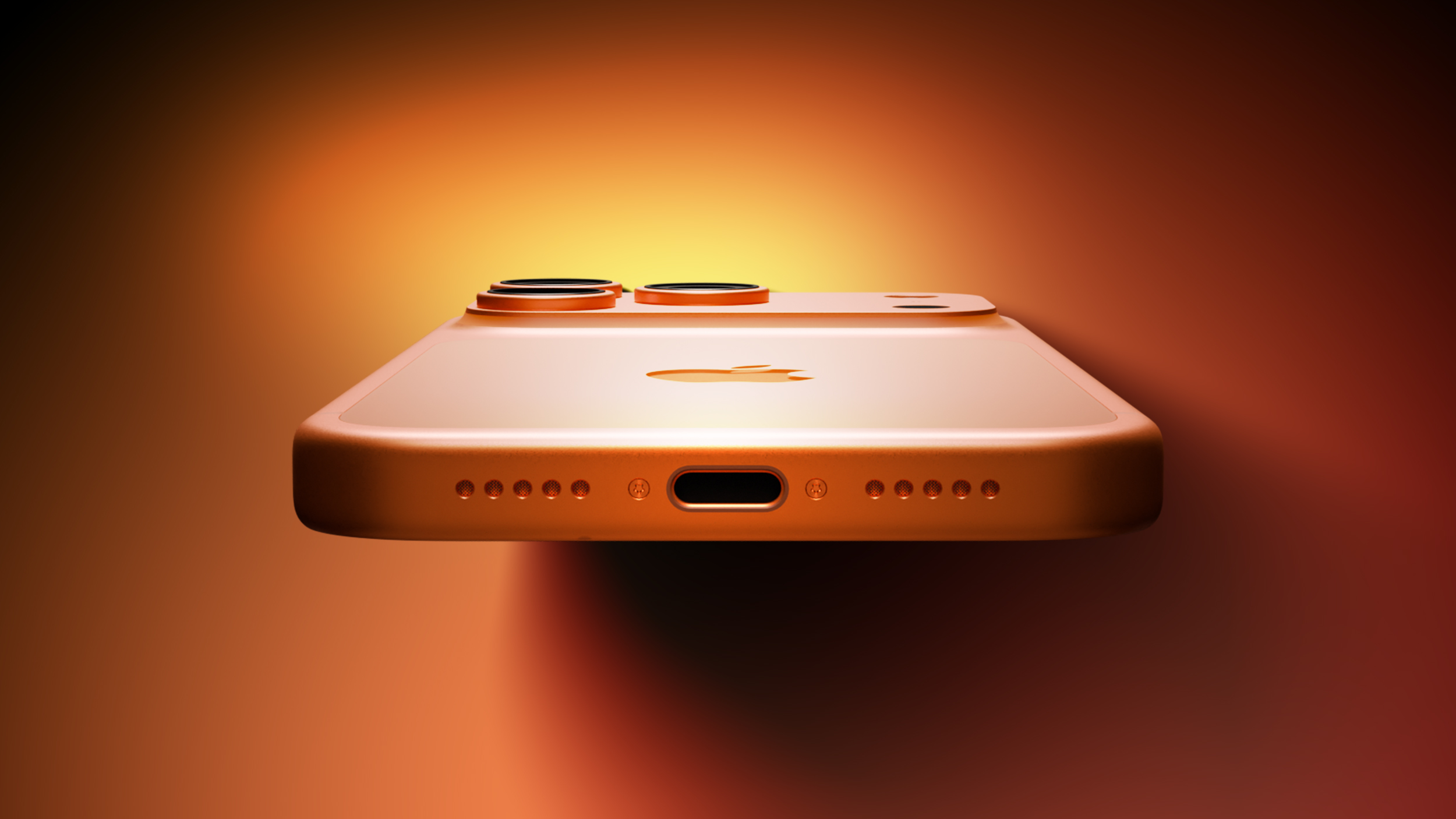
iPhone-17-Pro-USB-C-Port.jpg

To determine the rankings, CNET's lab team ran each phone through a 30-minute wired charging test starting at 10% battery or less, using the phone's included cable and a wall charger rated at or above the device's maximum supported speed. Phones that support wireless charging went through a matching 30-minute wireless test using a Qi (7.5W), Qi2 (15W), or Qi2.2 (25W) charger matched to the phone's peak supported speed. CNET then averaged the wired and wireless results into an overall charging score.

The iPhone 17 Pro's win in the overall category is partly a function of its relatively compact 4,252mAh battery, which is smaller than the 5,000mAh or larger capacities common among competing flagships. With less capacity to fill, the 17 Pro charges faster in absolute terms, and it supports both 40-watt wired charging and 25-watt Qi2.2 wireless charging. CNET notes that battery size is just one factor in overall battery life, alongside processor and software efficiency, and in its battery life testing, the iPhone 17 Pro Max came out on top for endurance.

For wired charging, Samsung's Galaxy S26 Ultra took the top spot, adding 76% charge in 30 minutes via its 60-watt wired charging speed, the fastest of any Samsung flagship to date. The iPhone 17 Pro came in second at 74%, tied with Motorola's Moto G Stylus (2025). The OnePlus 15 followed with 72%, while the iPhone 17, iPhone 17 Pro Max, and Samsung Galaxy S25 FE each reached 69%.

Apple's iPhone 17 Pro also claimed the fastest wireless charging result, gaining 55% in 30 minutes. The iPhone 17 Pro Max added 53%, followed by the iPhone 17 at 49%, the iPhone Air at 47%, and the Galaxy S26 Ultra at 39%. CNET again attributes the 17 Pro's edge over the 17 Pro Max largely to its smaller battery, since both devices share the same A19 Pro chip and software.

Across all brands tested, Apple had the most consistent fast-charging performance by a considerable margin, averaging 54.6% across the four iPhone 17 models and the iPhone Air. Samsung's nine-phone average came in at 38.5%, with the Galaxy S26 Ultra as its strongest performer and the Galaxy Z Fold 7 as its weakest at 29%.

Silicon-carbon batteries, which use a silicon-based anode rather than graphite to enable higher capacities and faster charge rates, appeared among several of the top performers. The OnePlus 15, for example, recharged 72% of its 7,300mAh silicon-carbon battery in 30 minutes using a proprietary 80-watt charger. Silicon-carbon phones in the U.S. remain limited to OnePlus, RedMagic, and Poco. Apple, Samsung, and Google have not yet adopted the technology.

Article Link: iPhone 17 Pro Named Fastest-Charging Smartphone
 
Sure, the result should be normalized to hours usage gained by the charging.
If say oneplus has a large battery to compensate for high drain rate during usage then the scores would change. But I am not so sure, Apple usually uses the smallest battery that can last a day in order to keep devices slim. oneplus runs a lot longer on a full charge than an apple and so I would think a normalization of the test into usable hours would not help apple's score
 
This is dumb. So let me get this straight..if a company wants to win this battle, they can put the smallest battery they want into the phone and it will charge to 100% more quickly? Much better if they measured actual power added to the phone…not the percentage.
To be fair to MR they did state this discrepancy this in the article, but it is great though how incredibly fast the 17 Pro charges to 80% in about 35 minutes ish with my 40watt GaN charger, not to mention its overall battery life in general which is the best I ever had.
 
  • Love
Reactions: SFjohn
I can't believe this site would also post this stupid article from CNET. Maybe it's all just for the engagement of all of us to agree it's the dumbest article ever written. As I said on the "other" site, the only way I could see this being useful is if all phones in this test are all rated to last the same amount of time, say maybe the screen on time are all rated at 5 hours, then it could be useful. I doubt that's the case here though, and this is just idiotic and meaningless.
 
While charging speed is nice, the real issue is that we're comparing vastly different battery capacities and chemistries. Most advanced silicon-carbon batteries are locked in Chinese phones unavailable in the US. A phone charging 70% of a 7,300mAh battery isn't the same as charging 70% of a 4,200mAh one.
 
This is dumb. So let me get this straight..if a company wants to win this battle, they can put the smallest battery they want into the phone and it will charge to 100% more quickly? Much better if they measured actual power added to the phone…not the percentage.

The iPhone Air 2 with its 50mAh “humming bird” battery will take the crown next year.
 
To be fair to MR they did state this discrepancy this in the article, but it is great though how incredibly fast the 17 Pro charges to 80% in about 35 minutes ish with my 40watt GaN charger, not to mention its overall battery life in general which is the best I ever had.
My 2018 Huawei Mate 20 Pro probably achieved similar results with its included charger so there is nothing incredible about this in 2026.
 
It's because using lithium-ion also the capacity even not 5k mah really hope Apple step up with new battery but i doubt that because Apple watch even worse than iPhone
 
  • Disagree
Reactions: SFjohn
the iPhone 17 Pro takes the "fastest overall charging" crown despite losing the wired race to the Samsung Galaxy S26 Ultra and getting utterly obliterated by the Honor Magic 8 Pro on wireless. Biased review
 
A reason why the iPhone 17 Pro has surprisingly good charging speed is likely the use of Apple's own 45/60 watt charger that the Power Delivery 3.2 SPR AVS charging standard, a standard that I haven't seen any other device charger manufacturer implement. If you use chargers from the likes of Anker, Baseus, Belkin or Ugreen, they will max out at 45 watts charging rate on the iPhone 17 Pro models and the charging level from 10% for 30 minutes will likely be around 67-68 percent.
 
“Why doesn’t Apple use that special snazzy new battery technology?”
This. This is why. By the time it makes a big enough difference, it should be reliable enough to go into hundreds of millions of iPhones. I mean, Qualcomm/Mediatek will eventually have solutions as performant and efficient as Apple Silicon… right?

Otherwise, the competition may just continue to use ever more esoteric battery and charging tech to feed the inefficient processors they use while Apple just… stays put.
 
Just pull this article MR. This feels like posting for the sake of posting. Low effort stuff.
It’s better than reporting the lower effort stuff that comes out of Gurman. “Apple is thinking about making a better phone in 2028!” Actually, looking at the calendar, it’s probably about time for him to spout something about Apple TV. It’s kinda predictable. 🙂
 
It’s better than reporting the lower effort stuff that comes out of Gurman. “Apple is thinking about making a better phone in 2028!” Actually, looking at the calendar, it’s probably about time for him to spout something about Apple TV. It’s kinda predictable. 🙂
lol the hate for Gurman will never cease to entertain me. Randoms on twitter have better insight.
 
What a dumb test. A almost twice as big battery as an iPhone takes longer to charge than it's micro battery. Shocker!

View attachment 2630146
The publication doing the testing is US based, AFIK Oppo is only here via grey market so not really a relevant test in their comparison.

Your complaint is valid, but akin to Car and Driver not testing a Korea or China market only car in a US car comparison test. Irrelevant data to the context of the article.
 
“Why doesn’t Apple use that special snazzy new battery technology?”
Simple: silicon carbon batteries when they start to fail can physically expand at a much higher level than a failing lithium-ion battery. You really wonder will Oppo realize this issue with their new smartphones that use this new battery technology.

This is why I think Apple is more likely investigating the use of solid-state batteries for future iPhones, iPads and MacBook models.
 
2026 tech "reviews", folks. Corporate boardroom slop, like everything else in tech 🤮

Now search for Apple product reviews on YouTube and look at how many shills a $4T megacorp can buy off.
 
My 17PM sits at 38W, maybe 39 for a min on my 100W Anker. Battery max capacity still 100% since September 2025, 158 cycles.

Includes a lot of plugged in time in rental cars on road trips. Also wireless car play in my own car with the MagSafe battery on the back of it.
 
Register on MacRumors! This sidebar will go away, and you'll see fewer ads.