

Become a MacRumors Supporter for $50/year with no ads, ability to filter front page stories, and private forums.

MacRumors

macrumors bot
Original poster


The storage capacity options for Apple's upcoming book-style foldable iPhone have allegedly leaked, along with their approximate pricing.
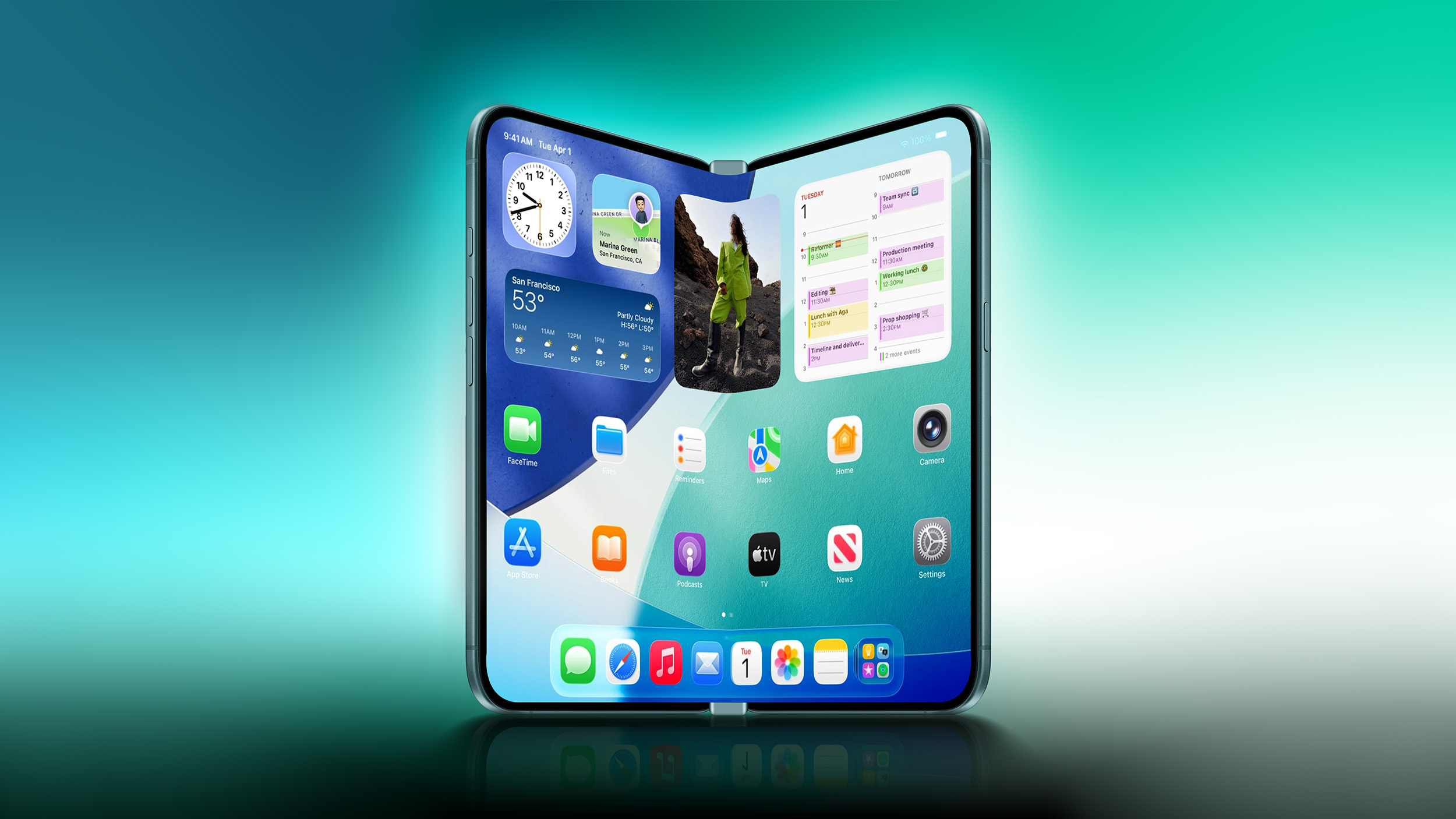
Apple-Foldable-Thumb.jpg

According to the Weibo-based leaker Instant Digital, Apple will offer iPhone Fold storage capacities in the following three tiers:
  • 256GB – ~$2,320
  • 512GB – ~$2,610
  • 1TB – ~$2,900
For context, Apple presently offers the iPhone 17 Pro in the same three storage options – 256GB, 512GB, and 1TB – with the iPhone 17 Pro Max offered in a fourth 2TB storage option costing $1,999. Note that the corresponding storage prices shown above are approximate USD conversions from Chinese yuan at the current exchange rate, and shouldn't be taken as reflective of the final price in the U.S. As such, consider them ballpark figures.

The starting price of the foldable iPhone could be nearly twice as much as the iPhone 17 Pro Max, and Apple could put it somewhere between $1,800 and $2,500, which is double what the iPhone 17 Pro costs. The latest rumors suggest it will be on the higher side of that estimate, and these approximate storage tier prices appear to bear that out.

Instant Digital has a good track record for Apple rumors and has provided some strikingly accurate information ahead of time, such as the imminent launch of 2023's Yellow iPhone 14, the frosted back glass of the iPhone 15 and iPhone 15 Plus.

Notably, for the iPhone 17 Pro, the leaker accurately reported the device's 256GB base storage configuration and its improved telephoto camera, as well as its improved battery life, thermal design, and display brightness, so it's worth taking these purported storage capacities seriously.

Apple is expected to launch its first foldable iPhone this September.

Article Link: iPhone Fold Said to Come in These Three Storage Options
 
Apple didn't launch a $599 laptop and a $2,300 phone independently. They extended every ladder in both directions simultaneously. Neo anchors the bottom of the Mac lineup. MacBook Ultra anchors the top. iPhone Fold anchors the top of the iPhone lineup. iPhone 17e anchors the bottom.

This is what a complete product architecture looks like. Every rung deliberate. Every gap intentional. Every price point defended by what sits above and below it.

The most revealing thing about the iPhone Fold's price isn't that it's expensive. It's that it makes everything below it feel more accessible by comparison. That's not an accident either.

Apple isn't launching products. They're calibrating desire across an entire ecosystem simultaneously. The $499 student with a Neo and the $2,300 Fold buyer are both exactly where Apple wants them.
 
Anything over $1999 will kill the product line for Apple.

Considering good options are under that and Apple’s software on the phone is just about the bottom of the barrel now, they can’t handle the high spot in the market.
I agree, and I am a lifelong "fanboy" as they say. But when the software isn't up to par with the actual hardware that's a problem. I have a Fold 7 as my work phone, which I use more than my iPhone on a daily basis (obviously) and multitasking on this thing is a beast. Switching between the two phones, I often find myself looking to use the same functionality on my iPhone like I do for the Fold, but it just isn't there. I know I know, 2 different use cases but even the simplest of things the iPhones software hasn't adopted for years could be implemented but Apple just refuses too. Sad state of affairs in the Apple software department these days.
 
Apple’s software on the phone is just about the bottom of the barrel now.
Of course it’s near the bottom. It’s a barrel of basically two items — Android and iOS. Android is at the bottom and iOS on top of Android. In that sense iOS is both "just about the bottom" and the top of the barrel.

For the record -- I have an iPhone 16 Pro and a Pixel 10. Android is fine, but it’s not nearly as good overall as iOS. There are a few things I like better about Android, but I think iOS is more refined and coherently functional. iOS 26 also looks significantly better than Android 16, in my opinion. As for general functioning, iOS 26 has been just about perfect for me. Android 16 has also been just about perfect. I simply prefer iOS to Android.

As for other skins of Android (Samsung’s, etc.) — they are bloated. I recently got rid of a Samsung phone and got the Pixel instead in part because of how 'spammy' and bloated the Samsung was. Core Android is much better than what most phone manufacturers are shipping on their Android devices.
 
Last edited:
They just guaranteed I’ll never buy it. Not that the folding phone concept appealed to me anyway, but at this point less than 2TB of storage is not even an option.
 
  • Like
Reactions: miq, 3Rock and Huck
Too bad its just another iOS device..no ipadOS, no success ..probably they want to milk it for 2-3 generations until they chose ipadOS as the inner display OS
 
How does the pricing compare to competitors?
The Samsung Z Fold7 is $2000 but can be had for less on sales. The Pixel 10 Pro Fold is $1800, but can be had for less.

iPhones can also be had for less on sale and through cell provider deals. I've never yet paid close to full price for an iPhone, so it's likely there would be various deals for it.

Something to keep in mind. Many people were convinced the original iPad would be released for $800 to $1000. The $500 was a shock. More recently, many people were expecting the MacBook Neo was going to be $700 or $800.

None of us really know the price Apple will release this phone at. Anything right now is just guessing. People complaining before anything is known are just complaining to complain.
 
Last edited:
Captain Obvious, reporting in.
I will stick with my 15 Pro.

What probably keeps me in this ecosystem is the fact that my M1 iPad Air does not (usually) need me to turn on the hotspot on my phone. At some point, I might become not-so-lazy and go somewhere else instead.

Thankfully those two devices have plenty of time before planned obsolescence.
 
Apple didn't launch a $599 laptop and a $2,300 phone independently. They extended every ladder in both directions simultaneously. Neo anchors the bottom of the Mac lineup. MacBook Ultra anchors the top. iPhone Fold anchors the top of the iPhone lineup. iPhone 17e anchors the bottom.

This is what a complete product architecture looks like. Every rung deliberate. Every gap intentional. Every price point defended by what sits above and below it.

The most revealing thing about the iPhone Fold's price isn't that it's expensive. It's that it makes everything below it feel more accessible by comparison. That's not an accident either.

Apple isn't launching products. They're calibrating desire across an entire ecosystem simultaneously. The $499 student with a Neo and the $2,300 Fold buyer are both exactly where Apple wants them.
iPhone E still way too expensive. The SE cost less then 400 dollars.
If we think about it, it's crazy that the newest "SEs" cost as much as a Neo.
 
iPhone E still way too expensive. The SE cost less then 400 dollars.
If we think about it, it's crazy that the newest "SEs" cost as much as a Neo.
The SE was always the anomaly in Apple's pricing history. A genuinely cheap iPhone that punched well above its price. The 17e is more expensive because the SE's architecture doesn't work anymore. You can't build a cheap iPhone around old chips and a small screen in 2026 and call it competitive. The floor had to move. Whether Apple moved it to the right place is a reasonable debate. But the ladder exists because every rung has to be defensible. If the 17e is too expensive it's not because Apple got greedy. It's because the floor of what a useful iPhone costs in 2026 is higher than it was in 2020.
 
Register on MacRumors! This sidebar will go away, and you'll see fewer ads.