


Apple announced the original Mac Pro 20 years ago today, with the anniversary landing five months after the company discontinued the machine for good.
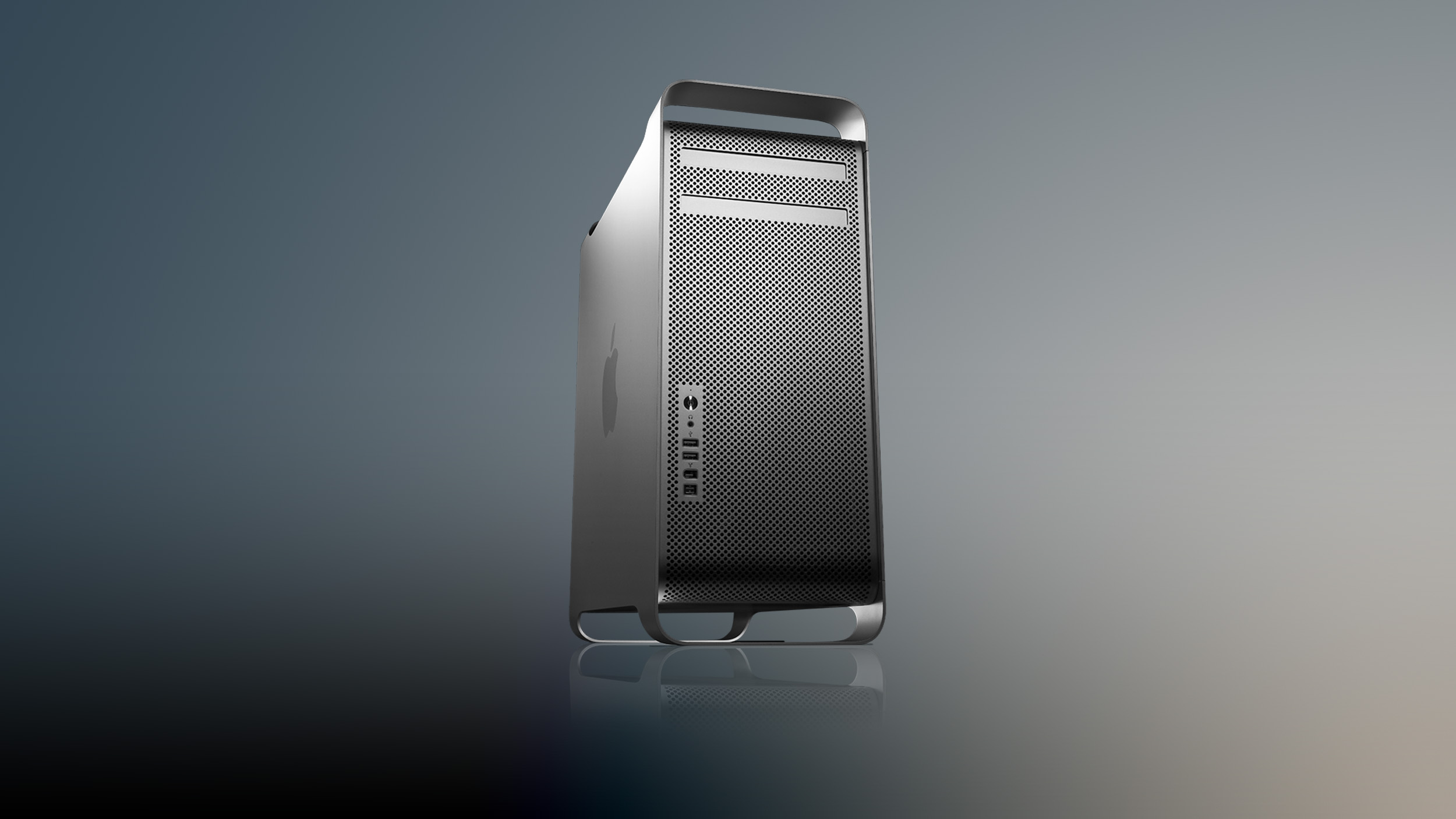
On August 7, 2006, Apple unveiled the first Mac Pro, powered by two dual-core 64-bit Xeon processors that Apple said made it up to twice as fast as the Power Mac G5 it replaced. It was the last Mac to complete Apple's transition from PowerPC to Intel chips, and it launched with PCI Express expansion slots and a $2,499 starting price.
The Mac Pro quickly became the machine of choice for video editors, audio engineers, and other creative professionals, particularly those running Final Cut Studio, the editing suite Apple positioned squarely at the same audience. Its four internal drive bays, tool-free case, and PCIe expansion slots made it easy to configure for demanding workloads, and Apple kept the pace of updates brisk in its early years, adding an eight-core configuration in April 2007 and following with a refreshed base model in January 2008. That steady cadence of upgrades continued through 2012, a sharp contrast to the long droughts that would define the machine's later years.
The Mac Pro remained as Apple's professional flagship for almost the next two decades since its launch. That positioning kept the machine niche, and Apple's attention to it was inconsistent.
The clearest example came in 2013, when Apple replaced the classic tower with a radically redesigned cylindrical model nicknamed the "trash can" Mac Pro, built around a single central "unified thermal core." The trash can went unrefreshed for six years, a lifetime in computing terms, before Apple apologized to its pro user base and essentially admitted the design was a mistake.
In a 2017 interview, Craig Federighi said Apple had "designed ourselves into a bit of a thermal corner," having built the machine around GPU workloads that never materialized as broadly as the company expected. A more conventional tower, with eight PCIe slots, arrived in 2019.
Even after that redesign, the Mac Pro's position kept eroding. The Mac Studio delivered nearly identical performance in a smaller, far cheaper package. Once the Mac Pro moved to Apple silicon with the M2 Ultra chip in June 2023, add-in cards like the Afterburner lost support, leaving PCIe expansion as close to its only remaining edge over the Studio, a slim advantage for a machine that started at $6,999.
Apple discontinued the Mac Pro on March 26, 2026, pulling it from its website. The company said it has no plans to design a new version, and no future model is coming.
The announcement landed three months before Apple raised prices on 14 products, including Macs and iPads, to offset the rising cost of memory chips. The Mac Studio's M3 Ultra configuration jumped $1,300, from $3,999 to $5,299, while the entry-level MacBook Pro rose $300, from $1,699 to $1,999.
Apple CEO Tim Cook said that "price increases are unavoidable," adding that Apple had tried to shield customers from rising memory costs but "the situation has become unsustainable." Cook likened the shortage to "a hundred-year flood," saying he had "never seen anything like it in any area in over 40 years."
Applying that same roughly 33% jump seen on the M3 Ultra Mac Studio to the Mac Pro's $6,999 starting price would have pushed a base configuration above $9,300, with no extra RAM, storage, or GPU cores factored in, a price unlikely to move many units of a machine that was already selling in small numbers.
With the Mac Pro gone, the Mac Studio is now Apple's most powerful desktop, though it lacks the tower's internal PCIe expansion slots. Apple's next Mac Studio refresh is expected to bring the M5 Max and M5 Ultra chips to the machine.
Article Link: Mac Pro Turns 20 Today, Five Months After Apple Killed It
Last edited:


