Become a MacRumors Supporter for $50/year with no ads, ability to filter front page stories, and private forums.

SpaceJello

macrumors 6502
Original poster
It is now more obvious than ever all the iPads with the M series and some of the A series can definitely run Mac OS.

With each iteration of the OS’s, their UI are becoming more and more alike if not practically the same. The M series chips in the iPads are overkill, and the app developers are moving onto iPad OS in a snail pace (I am looking at you Adobe).

Given how lacklustre iPad OS is in some aspects when compared to Mac OS, would Apple ever a) allow Mac OS on iPad or b) finally merge the two OS’s?

I can see how this would turn the market upside down again.
 
Think there are too many gotchas. iPadOS is a touch first device in a closed environment. macOS is a mouse first device in an open environments. iPads don’t have the airflow to cool the processor for heavy extended use. And on and on.
The Neo and air also don't have the airflow...

I think a pared down MacOS would work better on an ipad than the current pared up iOS. Especially on the 13" iPad Pro
 
I’ll be honest and say that i prefer iPad os on iPads and Mac OS/windows on Macs and they should stay how they are.

Ipad OS in particular has really come a long way, it’s so much better and fully featured with ipad os 26 and will keep improving. iPad's (especially M powered) can essentially do everything now. The new iPad air M4 is now the ipad for the masses at £599 with the m4 and 12 gb ram, specs the Neo can only dream of really, but will probably get close to with the neo 2.
 
Here you go, ~9000 posts on the topic, covering every conceiveable angle:

If any particular detail has been missed, you can probably find it here:

I think this subject has been beaten to death and resurrected more than any other on the forums. Just about everything that can be said about it has been said - hundreds of time.
 
Was that ever a question?
No. It was always a case of whether Apple chose to support it or not.
The first Apple Silicon Mac was the Developer Transition Kit which had an A-series processor.

iOS has always been essentially macOS with a different UI.

The limitation has always been that the iPad worked best as a touch-screen device and iOS/iPadOS was optimised for that. iOS limited things like user/3rd-party app multitasking that might have been too much for early iPhones but - as you say - that was at the UI, 3rd-party API level and it was always a full Unix-like OS kernel under the hood.

The iPad is a great tablet - put a keyboard and pointing device and it becomes a poor laptop that you can't even use on your lap.

If Apple wanted a 2-in-one device (note - if) then a touchscreen Mac (maybe with some flip/swivel arrangement on the screen) would be a better solution given that MacOS can already run iOS and iPadOS Apps natively (where publishers enable it).
 
I think a pared down MacOS would work better on an ipad than the current pared up iOS. Especially on the 13" iPad Pro

Most apps for MacOS aren't designed with touch in mind. A pared down MacOS only works if someone has a keyboard+trackpad/mouse permanently connected to their iPad.

I know a lot of MacRumors users go the whole hog and get all the accessories like Magic Keyboard. However, not all 13" iPad Pro owners use keyboards with their iPads.

Im not against MacOS on iPad as an option for those who want it. I don't think it should be the default OS though.
 
a quibble, prove implies axiomatic argument, an observational approach implies something is more probable - otherwise I'm in favor a nasally fitted fire
 
When I saw what iPadOS 26 could do with the menu bar, the mouse support etc I too thought for a while that macOS and iPadOS would “melt”. One definite advantage for Apple would be cost saving in having to support one OS less.

The downside to it all is that customers could buy a single device (an iPad Pro) and do both their macOS and iPadOS work on a single device. So, Apple would lose hardware sales.

Another thing to keep in mind is that running iPadOS on an iPad gives it - roughly - 10 hours of battery life. If you compare battery sizes in an iPad Pro 13”, Neo and Air then you’ll see that the iPad Pro has the smallest battery. No one knows how macOS and iPadOS are optimized but I’m pretty sure that running macOS on an iPad Pro would not get that same 10 hours of battery life.

A possibility would be a laptop with a fully rotating hinge that runs a hybrid OS. An OS that switches from a touch layout to a regular/keyboard/mouse layout depending in how you use it. The iPad Pro is pretty thin now, so a fully hinging laptop used in tablet mode would be a lot thicker and heavier. Who wants that? Feels like a step back.

Truth is that no company has cracked this problem so far. Maybe it can’t solved. Maybe Apple is happy with the way things are and doesn’t want to solve it. Or maybe Apple will solve it and we’ll see new hardware and a new OS to tackle all the problems mentioned above.
 
I don’t think the operating systems will ever converge, but I do think Apple will continue to push universal apps more and more.
And by universal, I mean between iPadOS and macOS.
The latest version of iWork just introduced in January is universal between the platforms, as far as I know other than specific OS changes, the apps are identical function for function.
So far, Apple hasn’t really done anything to incentivize universal applications, but as iPads get more expensive and Macs get cheaper I would not be surprised to see them start.

But the operating systems will still be too fundamentally different operating systems. Even as they share more and more, the Mac will always still run the more open more traditional macOS, while the iPad still runs iPadOS. I don’t think anything is going to change this, I don’t even think a touchscreen on a MacBook Pro is going to change this, the magic keyboard on the iPad hasn’t changed this.

As for the original topic, this shouldn’t come as a shock to anyone. iPads have been just as technically powerful as some Macs for at least 10 years now. Throughout most of the second half of the 2010s the iPad benchmark either about the same or better than the equivalent Intel MacBook Air of that year, and this was before Apple Silicon on the Mac. It’s Never been a question of processing power, and always a question of form factor. If Apple ever had any interest in optimizing a version of macOS for the iPad, they would have done it by now.
 
  • Like
Reactions: Populus
So far, Apple hasn’t really done anything to incentivize universal applications, but as iPads get more expensive and Macs get cheaper I would not be surprised to see them start.
If I remember correctly … if you start a new project in Xcode for an iPad app and don’t touch its settings then that app automatically runs on macOS. So Apple sort of gives you that for free.
 
  • Like
Reactions: Basic75
One definite advantage for Apple would be cost saving in having to support one OS less.
Everything below the UI layer has been the same OS since the first iPhone, the rest is just branding. They can't have one fewer OS because they only have one. The Mac can run iPad applications. The iPad can run iPhone applications.
 
  • Like
Reactions: Timpetus
Everything below the UI layer has been the same OS since the first iPhone, everything else is just branding. They can't have one fewer OS because they only have one. The Mac can run iPad applications. The iPad can run iPhone applications.
I don't think that's entirely the case.

They have a common core of macos, to be sure, but they each use different frameworks, ios and ipados are locked down/sandboxed. Macos has broader hardware support. Then there's the background tasks and services, there's more in macos then ios/ipados.

In other words they share a common heritage, but ios isn't macos with a different UI
 
Everything below the UI layer has been the same OS since the first iPhone, the rest is just branding. They can't have one fewer OS because they only have one. The Mac can run iPad applications. The iPad can run iPhone applications.
True but at the same time Apple has different people working on iOS, visionOS, macOS, watchOS and iPadOS.

I’ll try and rephrase: if the UI layer for iPadOS and macOS would be “liquid” (as in: resize itself and its controls depending on touch use or not) then there would be one UI layer less.

Of course, that single UI layer might be more complex so there might not be savings at all.
 
  • Like
Reactions: jchap and G5isAlive
They have a common core of macos, to be sure, but they each use different frameworks, ios and ipados are locked down/sandboxed. Macos has broader hardware support. Then there's the background tasks and services, there's more in macos then ios/ipados.
Look at the developer documentation and tell me which non-UI frameworks are not shared. I'm sure the list is very short. Hardware support isn't that different. Like you can plug a USB Ethernet adapter into your iPhone and it will work just as in macOS. Same for mass storage and HID. Perhaps macOS has a few more drivers included, but that doesn't make it a new OS. iOS forbidding "normal" applications without a sandbox, limiting access to some features, and possibly running fewer services are just a few entries in some config file.
 
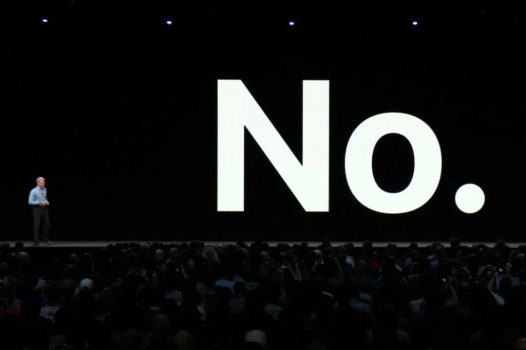
Apple already gave their answer at WWDC 2018. This is due to usability and business reasons.

1775663600494.png
 
iPad is too cramped up to run Mac OS. Look at the MBA how hot they can get, iPad Pro doesn’t have that kind of thermal footprint. MacBook Neo proves that iPhone chips are powerful in a small form factor with iOS and equally workable on MacBook with full fledged os.
 
Everything below the UI layer has been the same OS since the first iPhone, the rest is just branding. They can't have one fewer OS because they only have one. The Mac can run iPad applications. The iPad can run iPhone applications.
Not at all true. iOS/Ipad OS kernel is very different than macOS. memory management, handling of tasks are more aggressive in iOS and Mac OSX maintains lot of the Linux like kernel. It’s not hard to look it up, Apple kernel is published on GitHub.
 
if not practically the same.
One thing where they're not even close to the same: on iPad touch is primary, while on MacOS touch doesn't currently even exist. This is a critical difference.

And that difference isn't just about the OS itself, it's about the entire application ecosystem. iPad apps are designed with the expectation that most people are touching them, not using a keyboard/trackpad. The iPad was always designed as a content consumption device you would hold and manipulate with your hands, just like a book or a magazine.

That's what makes it a unique device valuable in a way distinguishing it from a Mac.

I don't have a problem with iPadOS taking on more MacOS-like functionality so that it's more laptop-like when attached to the Magic Keyboard. But the touch experience had better not decay one iota. If app devs start to assume you'll have the MK attached, and the experience becomes crippled if you're holding the iPad unattached in your hands, then we're going to have a real problem.

And you certainly wouldn't want to run MacOS as-is (which is completely designed for keyboard-trackpad/mouse) on iPad, which would utterly destroy the iPad experience.
 
Last edited:
Register on MacRumors! This sidebar will go away, and you'll see fewer ads.