Become a MacRumors Supporter for $50/year with no ads, ability to filter front page stories, and private forums.
Does actually anyone want the touch screen option? I hate the smudges on my screen and I'm even trying to touch that on purpose. It would make sense if the device would be 2-in-1 and thinner in design so it could be used as a tablet on the go (but it wouldn't be an Ultra in the sense that it would be more powerfull than Pro). I just don't get why I would like to have a regular laptop with touch screen.
Plenty of Windows laptops feature touch screens and certain people really like them. I personally don't want one, but there's clearly a market for them. More than anything, I think this is a generational thing. Young people have all grown up on touch, not the mouse. That said, I think it's a bit strange to add a touch screen to the top of the line MacBook first. Young people are buying Neos and Airs, not high-end MBPs. While I do believe there's a demographic that wants a touch screen Mac, I don't think it's the Ultra's potential buyers.

The thing I'd personally love to see are:

- 5g modem with esim for connectivity on the go
- faceId would be nice even tho I get it might not be possible due to physical constraints
Same here. These two features would convince me to buy a new MBP.

The things from the article I don't care too much:

- touchscreen+thinner design as i mentioned
- m6 - the generation doesn't matter as much as Pro/Max variants do
- dynamic island - it might happen to be more in line with phones, but i just don't see it as a feature to be able to see 10px of background above the cam
Agreed, especially the silly dynamic island. It's a completely useless UI parlor trick, not functional and really serves no purpose. It was a dumb idea on the phone and it's an even worse idea on a Mac.
 
  • Like
Reactions: BSDnostalgia
or even better, the very deep 2008 Unibody MacBook Pro's keyboard, or even better, the ergonomically-scalloped keys of the 2006 MacBook Pro's keyboard.
I like your thinking. I am so done with "thin", and sacrificing functionality for the sake of "thin". IBM Selectric should be the guiding light.
Weird they are not mentioning the modem. I am sitting the M5 MBP gen out and sold my M4 Max while it was still worth something and using an M5 Air as a stop gap for the cellular wait. Hope it wasn't in vain to sell it lol.
Cell modem is the one thing almost everybody on this thread is agreed with. Why not, Apple?
Plenty of Windows laptops feature touch screens and certain people really like them. I personally don't want one, but there's clearly a market for them.
What I don't like is the way everything, from the system settings to the apps, gets big and infantilized to accommodate finger touch control. Touch screen is a rathole. We don't need it, we don't want it. Sure, fingerprints on the screen are annoying, but, far worse is the dumbed down effect on everything.
 
To me that would be the killer feature. I don't need it anymore, but I could have used it for 30 years of commuting instead of a few years of tethering. Ending up using the company ipad because it had celluar. Obviously cellular laptops would not be a big technical lift. I suspect the problem is either the carriers won't offer it or if they did it would be prohibitively expensive.
Cellular-capable laptops are already available from Lenovo, HP, Dell, Panasonic, GPD, MNT, and others. They usually have a SIM tray and will take any SIM that is set up for data service.
 
  • Like
Reactions: BSDnostalgia
It's actually a term for very light/compact laptops, more commonly used 10-15 years ago... at the time it was around, the 12" was considered an ultrabook class laptop.
And before that (circa 2001), Tadpole would sell you an "Ultrabook" that had the guts of a Sun UltraSPARC workstation inside it. Those were anything but thin and light.
 
OLED Display: I'm ambivalent about this (currently on a maxed out MBP 16" nano with brightness enhancement app)

Personally for my use I'm ambivalent towards an OLED panel on my MBP. If I'm using the MBP, I'm out in the concrete jungle and the viewing conditions aren't ideal anyway. When I'm at home doing work, I'm connected to a much bigger screen so it doesn't matter so much.

As someone who is very near sighted, has visual snow syndrome and ocular rosacea, I love the nano-textured glass on the MBP screens. I remember when glossy screens were an option MBPs and I hated them. I feel that the touch MacBook Ultra will be glossy only which could be a deal breaker.
 
  • Like
Reactions: BSDnostalgia
Does actually anyone want the touch screen option? I hate the smudges on my screen and I'm even trying to touch that on purpose. It would make sense if the device would be 2-in-1 and thinner in design so it could be used as a tablet on the go (but it wouldn't be an Ultra in the sense that it would be more powerfull than Pro). I just don't get why I would like to have a regular laptop with touch screen.

The thing I'd personally love to see are:

- 5g modem with esim for connectivity on the go
- faceId would be nice even tho I get it might not be possible due to physical constraints

The things from the article I don't care too much:

- touchscreen+thinner design as i mentioned
- m6 - the generation doesn't matter as much as Pro/Max variants do
- dynamic island - it might happen to be more in line with phones, but i just don't see it as a feature to be able to see 10px of background above the cam
I'd want it if and only if it would be a hybrid: an iPad on the go, an attachable keyboard turns it into a a laptop, and you could just connect it via Thunderbolt to turn it into a stationary with screen and mouse - with MacOS, of course.
 
  • Like
Reactions: eifelbube
And no cellular modem?
Rhetorically speaking, I don't see the point given we're already carrying an iPhone we can tether to. I know tethering eats more phone battery but chances are we already have the means to charge the phone within our daily environments.
 
1) Laptops require keyboard usage, so touching a key for touch I.D. is an effortless step.
2) Face I.D. happens without intentional user activity. Many businesses [IMO wisely] prohibit such autonomous laptop authorization.
3) Face I.D. requires an always-on camera. Many businesses and government entities prohibit such cameras for obvious security reasons.
1. Not necessarily. Some people - often older people - have problems with finger prints. Another problem is that many of us use a different keyboard, but that would also apply to the faceID.
2. No more so than on a phone or in the ipad.
3. No, it only needs to enable itself when an ID is needed.

That said, some organizations might disallow any camera at all. And phones.

The real reason is that it takes vertical space that is not available.
 
  • Like
Reactions: BSDnostalgia
Does actually anyone want the touch screen option?
Yes.

I love my iPad and wish I could use it as my daily driver. However, the limit on pro apps is a deal breaker. The MacBook Ultra is another step towards this Mac/ iPad hybrid that could be the best of both worlds.

The rumours suggest the MBU is thinner. If thinner this could lend to the possibility of it folding 270 degrees like a tablet. I would be surprised if this was the case (pun not intended), but converting it to a tablet-like format would solve the inherent ergonomic challenges of a touch-screen laptop.

Also to discredit this wishful thinking I think it's safe to assume that Apple would prefer to sell us multiple devices rather than one device that does everything we need.

c468cd6d-fac3-42c4-ba45-7b05a0f26938-1.png
 
Last edited:
1. Not necessarily. Some people - often older people - have problems with finger prints. Another problem is that many of us use a different keyboard, but that would also apply to the faceID.
I almost never have a problem with Face ID. It works 99.9% of the time for me on the first try. With Touch ID, I have to delete and re-add my fingerprints on a regular basis, sometimes several times per week, especially in the winter. Touch ID is not very forgiving of skin changes.
 
  • Like
Reactions: xyz01
Problem in making the expensive "Ultra" the only touchscreen is that the youngest, poorest generation of users expect touchscreens. Gen Z and Gen Alpha have been brought up using tablets at home and touchscreen Chromebooks in school. As a teacher I have watched most Gen Z's get frustrated when the MacBook they are presented with only works with a touchpad. They get annoyed when the screen on the MacBook Neo or Air their parents gave them doesn't do anything when they touch the screen to scroll or hit a link.

I have no doubt there is some percentage of sales that Apple is losing to touchscreen indoctrinated Gen Z's.

If the the $1500-$2000+ Ultra is the only touchscreen Mac, then Apple is not solving their potential generational problem. Gen Z nor their parents will pay for that at this point in their lives.
 
That is a very nice way of saying it massively flopped and very few actually enjoyed using it.
One key reason for this was that Apple kept it an exclusive feature for some models, rather than making available across the range.
 
Making a product thinner doesn't 'justify the name'. If anything I'd want a chunkier laptop with extra cooling.

If you go style over substance you're gonna get the 2013 Mac Pro problems all over again.
 
  • Like
Reactions: BSDnostalgia
I almost never have a problem with Face ID. It works 99.9% of the time for me on the first try. With Touch ID, I have to delete and re-add my fingerprints on a regular basis, sometimes several times per week, especially in the winter. Touch ID is not very forgiving of skin changes.
Do you have a job that is hard on your hands? If not, maybe you should have your doctor take a look. Or maybe wash your hands more often.
 
  • Disagree
Reactions: macshmack
Addressed previously in this or another thread, a laptop that Apple really should be looking at. Not for sale in the US. I wonder how much it costs, and, whether a user can install Linux on it (specified with Windows ARM, using SnapDragon X Elite, performance similar to an Apple Silicon M2 overall, but, slower single thread performance, but more ALU throughput):

Honor Magicbook

This is the laptop with the detachable webcam, which ought to make Apple designers happy, since it allows "97%" screen to body ratio with no notch, aluminum and magnesium body, symmetric no-dumb-numpad keyboard, 3120x2080 120 Hz OLED "Eye-Comfort" touch-screen display, and a "full selection of essential ports" (almost IMHO) including HDMI 2.1 (4K at 60 Hz), two USB-C, USB-A, and audio.

A few things missing: the USB-C ports are only USB-C 3.2 Gen2(10Gbps), HDMI is only 60 Hz, no Ethernet. Honestly, it is specified an awful lot like a Mac, except that you can't run MacOS on it.

It almost makes me wish I could stand Windows.

(Edited)
 
Last edited:
The thing I'd personally love to see are:

- 5g modem with esim for connectivity on the go
Could someone explain to me the benefit of having a cell modem in a MBP as opposed to simply tethering it to the iPhone that's already in your pocket? Is it a speed issue or battery life issue?

Given most people will have an iPhone in their pocket already, the cell modem feature seems redundant. 🤷‍♂️
 
I almost never have a problem with Face ID. It works 99.9% of the time for me on the first try. With Touch ID, I have to delete and re-add my fingerprints on a regular basis, sometimes several times per week, especially in the winter. Touch ID is not very forgiving of skin changes.
Touch ID works flawlessly for me. Maybe there's some strange anomaly with your fingerprint or maybe oily fingers? Ironically I'd prefer face ID on MBPs and touchID on the phones.


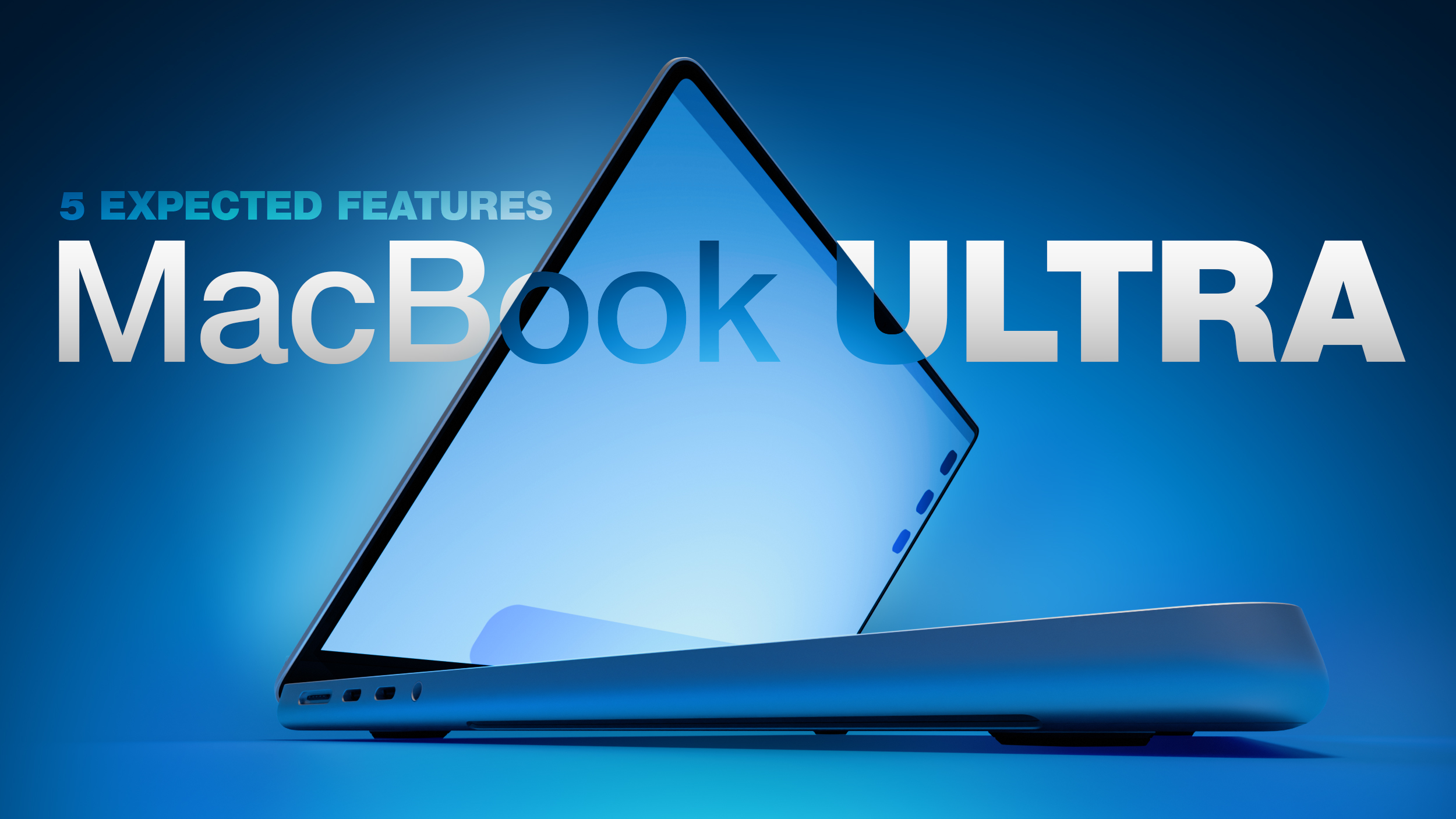
Reports and rumors suggest the next MacBook Pro that Apple will release might not be a ‌MacBook Pro‌ at all. It could actually be something altogether new and more exciting – a "MacBook Ultra" – positioned above the Pro as Apple's top-tier laptop, suggesting that the current M5 Pro and M5 Max models will remain on sale when it launches.

MacBook-Ultra-5-Expected-Features-That-Could-Justify-the-Name-Feature.jpg

The MacBook would be just the latest Apple product to carry the Ultra name, which already spans the Apple Watch Ultra and CarPlay Ultra (not forgetting Apple's top-end Ultra-designated silicon chips). This is likely to bring a markedly higher price point for the new machines. It fits into a broader trend at Apple, where the company is seeking to offer more models at more price points, such as the new MacBook Neo at an unprecedented $599 price point.

Below, we've listed the features we are expecting in the MacBook Ultra, which is likely to go on sale either later this year or in early 2027. As things stand, the latter time frame is now looking more likely, owing to the global memory chip shortage.

OLED Display

Bloomberg's Mark Gurman and analyst Ming-Chi Kuo say Apple is readying OLED technology for these models, and industry reports corroborate their claims. Samsung Display is said to be making the panels, and the supplier has invested heavily in an 8.6-generation OLED production line in South Korea. The line recently reached a key milestone for mass production.

The MacBook Pro will utilize hybrid OLED technology, similar to that used in Apple's latest iPad Pro. This display technology combines a glass substrate with thin-film encapsulation, offering improved brightness, contrast, and power efficiency compared to current MacBook Pro models, which use LCD displays with mini-LED backlighting.

Touch Screen

The new ‌MacBook Pro‌ is expected to become the first Mac to support touch input directly on the display. It's a notable shift from Apple's longstanding position against bringing touchscreen functionality to the Mac.

Apple previously experimented with touch controls through the OLED Touch Bar on earlier ‌MacBook Pro‌ models, but the feature was ultimately discontinued following a lukewarm reception. Rather than positioning the ‌MacBook Pro‌ as a touch-centric device like the ‌iPad‌, Apple is reportedly planning to let users move seamlessly between touch and traditional trackpad or mouse input across the system.

This will require updates to macOS to make it more touch friendly, and users will reportedly be able to tap or click on-screen elements, and controls will change based on input method. If a user taps on a menu bar item, for example, it will display a larger set of controls optimized for touch.

Thinner Design

Gurman has reported that Apple is working to make the OLED MacBook Pro significantly thinner, as part of the company's plan to create "the thinnest and lightest products in their categories across the whole tech industry." (Think the latest iPad Pro and iPad Air – two of the thinnest devices the company has ever made.) Indeed, the reporter has said there's a good chance that the next MacBook Pro model will represent a "true overhaul" for the laptop, thanks to the combination of the OLED display and thinner design.

Notably, the MacBook Pro got thicker and heavier with its most recent redesign in 2021. A major highlight was the reintroduction of several ports that were removed in previous iterations in favor of chassis thinness. How Apple will make its redesigned MacBook Pro thinner without removing the functionality it reintroduced fairly recently is the big question.

Dynamic Island

Apple's highly anticipated OLED MacBook Pro could ditch the current notch for a display cutout potentially similar to the iPhone's Dynamic Island, according to Bloomberg. Such a move would mirror Apple's iPhone evolution, since the iPhone's notch became the current Dynamic Island starting with the iPhone 14 Pro models in 2022.

As with the iPhone‌, the Mac ‌Dynamic Island‌ will be interactive and it will contextually expand based on the app or Mac feature in use. The change should address long-standing user complaints about the notch, which physically ingresses into the macOS menu bar.

M6 Processor Architecture

The redesigned MacBook Pro models are expected to boast M6 Pro and M6 Max chips, which could adopt a completely new packaging based on TSMC's 2nm process that allows components such as the CPU, GPUs, DRAM, and Neural Engine to be more tightly integrated.

Terms like "3nm" and "2nm" describe generations of chip manufacturing technology, each with its own set of design rules and architecture. As these numbers decrease, they generally indicate smaller transistor sizes. Smaller transistors allow more to be packed onto a single chip, typically resulting in increased processing speed and improved power efficiency.

Based on where the industry's headed, Apple is likely to heavily market the processors as optimized for AI workflows.

Article Link: MacBook Ultra: 5 Features That Could Justify the Name

A couple features are missing to be considered as ultra or ultimate MacBook Pro. It is a cellular capability and removable touchable screen that can function as a table that completely put it on the most distinct from the rest of the MacBook Pro. The touchscreen is nice but not quite well without capability of removable screen for functioning as a tablet. With these features, iPad is no longer necessary as the laptop can be indeed a tablet too without needing to buy a separate keyboard and have a true whole computer or laptop power.
 
cellular capability
We are agreed on that, anyway.

An actual completely removable stand alone display would require a high bandwidth RF connection, requiring the display to have, say, WiFi, its own partial GPU, large battery, etc.. weighing quite a bit and adding a lot of weight to the whole MacBook. In fact, it would end up with many/most of the components of an iPad. So, why not just get an iPad, instead?
 
"Mark Gurman has suggested the new Macs will come with up to a whopping 32GB of RAM" He's quoted as saying "This is unprecedented in a top tier 2027 product - I'm very excited"
“Whopping” — I would consider 32GB the minimum I’d purchase on any laptop I wanted to keep for more than 1-2 years. My current MBP has 48GB and frankly, sometimes it seems like this isn’t more than adequate!

I don’t know whether it Apple not optimizing system resource usage well, or other software, but it is disappointing to find my 2024 MBP with a so-called ‘Max’ chip hardly seems more powerful than my old recently dead iMac nee 2013!
 
I mean, that's a great option for professionals, but to the rest of us broke plebs, all I can say is I'd rather buy a new (used) car with the money this thing will likely cost.

If you're not evaluating this machine in terms of ROI you don't need it.

For a business buying these it is a simple case of "will this make my team faster or more capable" and its likely with regards to projects worth tens/hundreds of millions of dollars with hundreds of staff.

The machine cost is a rounding error.
 
Register on MacRumors! This sidebar will go away, and you'll see fewer ads.