

Become a MacRumors Supporter for $50/year with no ads, ability to filter front page stories, and private forums.

MacRumors

macrumors bot
Original poster


A new book by New York Times labor reporter Noam Scheiber argues that Apple's decade-long erosion of its retail workforce directly contributed to the disappointing launch of the Apple Vision Pro in early 2024 (via WIRED).
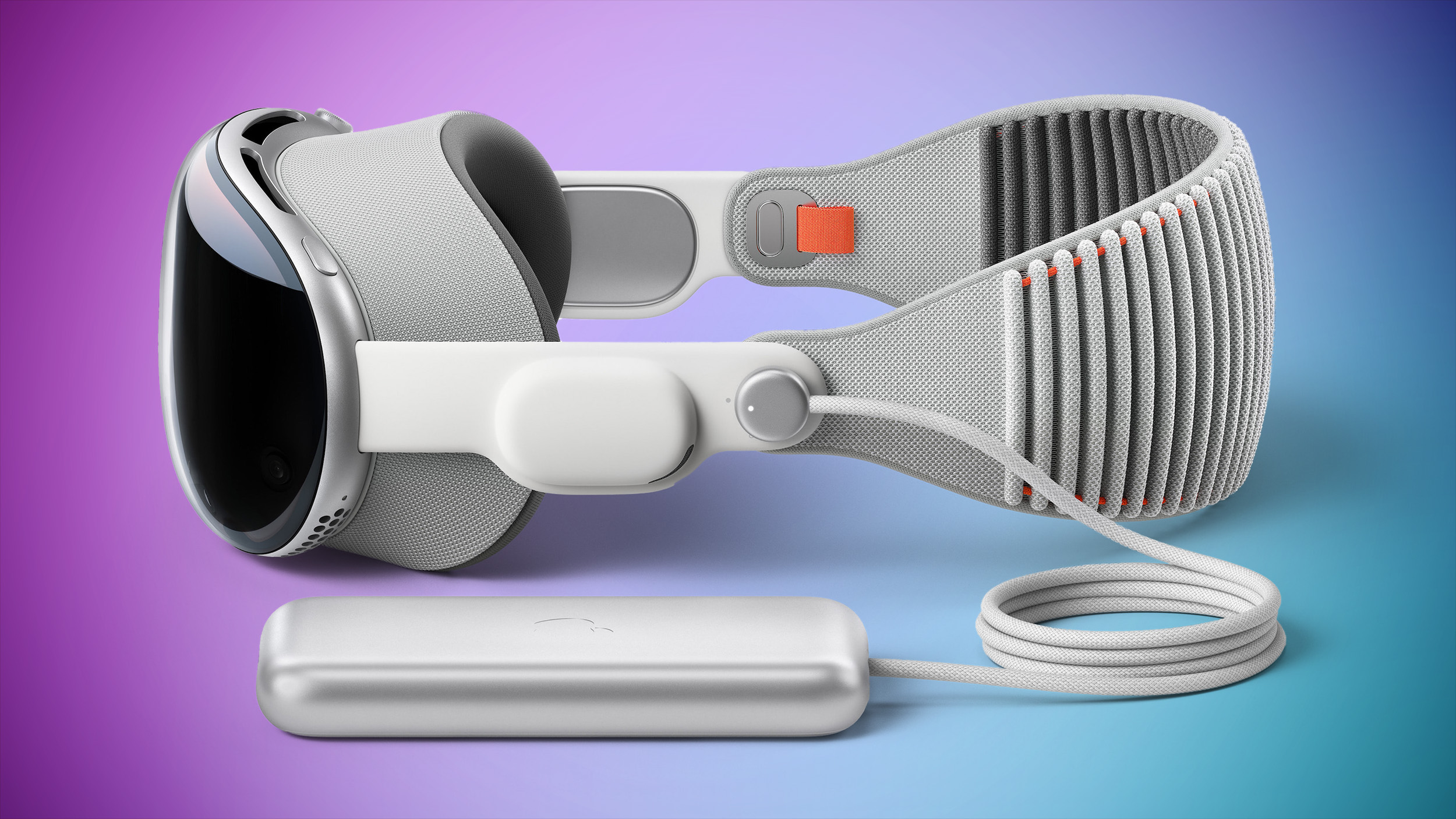
Apple-Vision-Pro-with-battery-Feature-Blue-Magenta.jpg

The book, Mutiny: The Rise and Revolt of the College-Educated Working Class, draws on interviews with Apple Store employees to document how staffing cuts, reduced training, and a shift toward aggressive sales metrics left Apple retail staff ill-equipped to demo the Vision Pro.

Apple flew hundreds of retail employees to Cupertino in early 2024 for secretive Vision Pro training, requiring NDAs, phone confiscation, and strict silence between colleagues at different stages of the program, to preserve the "novelty" of the experience. Upon their return to their stores, they were tasked with leading four-hour workshops, but many salespeople received only minimal preparation, with some given as little as a 20-minute demo and limited time to rehearse a complex script before presenting to customers. The challenge was compounded by a workforce that included many recently converted employees with little prior experience of scripted product launches, leaving some ill-equipped to deliver the carefully choreographed demonstrations.

The demo itself was technically demanding. Employees had to scan customers' faces, select from roughly 25 different light seals, and guide users through eye- and hand-based controls before working through a script that ran to more than a dozen screens. The training was so haphazard that many employees who received early demos were unknowingly seeing blurry content, the result of small fitting errors that nobody had caught. With stores staffed so leanly, managers struggled to pull employees off the floor for the preparation time Apple corporate had intended, and demo quality varied enormously. Some employees noticed a disconnect between Cupertino's expectations and floor-level reality.

Scheiber traces the deterioration to the transition from Steve Jobs to Tim Cook. Jobs built Apple retail around a permanently employed, generously compensated workforce, on the theory that any worker who felt second-class would make customers feel the same way. Under Cook, that model was progressively unwound: contractor numbers grew, training shifted from multi-week instructor-led programs to brief self-guided modules, and leadership rotated toward cost control. After an unsuccessful attempt to slash staffing under John Browett, Cook installed Angela Ahrendts, whose sensibility was closer to the Jobs era, but her 2019 departure brought in Deirdre O'Brien, who pushed stores toward conventional retail metrics: device activations, accessory attachment rates, and AppleCare+ sign-ups. The "creative" role tracked a similar trajectory, shrinking from unlimited one-on-one customer tutorials to group sessions to what some employees described as barely disguised product marketing.

Apple sold fewer than 500,000 Vision Pro units in 2024, compared to roughly 10 million Apple Watches in their first year on sale and more than 200 million iPhones annually. The book notes that Apple had originally projected first-year Apple Watch sales at around 40 million units before slashing that forecast by more than 70% and that it was store employees who helped rescue the launch, surfacing the health and fitness angle through daily floor-level conversations with managers. This time the dynamic ran in reverse. Whereas retail staff had once helped pull Apple out of a stumbling product launch, the book argues, this time they made one worse.

The Vision Pro's own limitations played a significant role in the shortfall, such as a roughly 1.5-pound weight, a limited selection of apps, and a $3,500 base price rising to around $4,000 with common upgrades and accessories. Because few employees could afford the device even with their 25% staff discount, they had little opportunity to build familiarity with it outside of work. About a week after launch, managers in many stores quietly allowed salespeople to read the demo script from an iPad rather than deliver it from memory, which some staff said degraded the experience.

A few months later, many stores abandoned the script altogether. Managers began asking staff to recruit customers for demos on the floor, and some informally lowered the minimum age requirement from 13. The Vision Pro's sales performance at store level told its own story. By late May 2024, employees at the Towson store were reporting weeks in which they sold no units at all, and occasionally recorded negative sales figures after processing returns.

Mutiny: The Rise and Revolt of the College-Educated Working Class is out now from Farrar, Straus and Giroux. See the full excerpt in WIRED for more information.

Article Link: New Book Details Vision Pro's Troubled Launch in Apple Stores
 
As an Amazon Associate, MacRumors earns a commission from qualifying purchases made through links in this post.
Now this sounds like some interesting reading.

"VisionFlopPro: The story from the frontlines"

The numbers speak for themselves on this product 👇

The Vision Pro's sales performance at store level told its own story. By late May 2024, employees at the Towson store were reporting weeks in which they sold no units at all, and occasionally recorded negative sales figures after processing returns.
 
This is utterly fascinating. It tracks that Cook “unwound” what sounded like a wonderful retail arm. He was the “supply chain” guy before being ceo. Was always about optimising costs. Tunnel vision for the bottom line.


Also this is just wild.
Because few employees could afford the device even with their 25% staff discount, they had little opportunity to build familiarity with it outside of work.
 
the mystery of the $3500 device with no specialized content

but sure, better sales people would have totally turned it around and made it sell on par with the $400-500 Apple Watch, why not

(note: I still believe spatial computing will be a thing, just not sure when, by whom, and in what exact form factor)
 
This is utterly fascinating. It tracks that Cook “unwound” what sounded like a wonderful retail arm. He was the “supply chain” guy before being ceo. Was always about optimising costs. Tunnel vision for the bottom line.

no matter how many times it happens, optimizing for efficiency too much always comes at a cost that the management is totally surprised by
 
That's a lot of words to describe something that was not the problem.

Price, lack of content, lack of comfort, non desirability of this type of experience for many people...

It's hard to find a part of the offering that wasn't a problem.

In its current form, with what it offers for what it costs, and with how they have supported it content wise, it never should have launched.
 
The Apple Vision Pro is still 100x better than any Meta Quest.

A solid turd left on the sidewalk is better than diarrhea, but they are both still crap. (I almost stepped in poop on the way out of the parking garage today, so it's on my mind 😆).

Jokes aside, my buddy had both, and him and his kids still gravitated to the meta quest. A big one is that is took HDMI inputs, and his kids love to plug their Switch into it. He ended up selling the AVP after months of it not being even turned on.

Edit: Oh yea, my buddy and kids can SHARE the Quest. What a marvelous concept!
 
Last edited:
so basically this ignores the price point.

That, surely, is by far the number 1 reason for its poor sales.

I very much doubt that most customers who walked into a store who had not already pre-determined that they were able and willing to part with 3,500 were swayed either way by a staff members demo.
 
  • Like
Reactions: zeus423 and StuBeck
The Apple Vision Pro is still 100x better than any Meta Quest.
It’s an incredible piece of tech, but it’s also very niche with an extremely high price tag for mass adoption. The problem for Apple is that they’re too large to toss out developer/proof of concept products without them being tagged as disappointing or failures due to lower sales volumes. There’s tons of innovation in the Vision Pro, which will likely trickle down to its AR/AI products in the near future, but it’s just not a mass-market device.
 
It’s an incredible piece of tech, but it’s also very niche with an extremely high price tag for mass adoption. The problem for Apple is that they’re too large to toss out developer/proof of concept products without them being tagged as disappointing or failures due to lower sales volumes. There’s tons of innovation in the Vision Pro, which will likely trickle down to its AR/AI products in the near future, but it’s just not a mass-market device.

Tons of innovation and incredible tech ≠ great product.

All of that innovation and tech should have just stayed in the lab until a better product could be made with it.
 
Blaming retail for this is idiotic. The product launched in the middle of a massive inflation crisis and directly after a pandemic where people were forced to stay inside. Strapping a useless overpriced $3500 brick to our faces was the last thing on peoples minds. It’s only real use case at the time (and probably still now) is watching movies. You can get a nice tv and sound system for the same money and actually be able to SHARE THE EXPERIENCE WITH OTHERS while not looking ridiculous.

It’s the wrong product at the wrong time. Period.
 
Blaming retail for this is idiotic. The product launched in the middle of a massive inflation crisis and directly after a pandemic where people were forced to stay inside. Strapping a useless overpriced $3500 brick to our faces to watch a movie (it’s only real usewas the last thing on peoples minds.

It’s the wrong product at the wrong time. Period.

Surely the iPhone Mini gets the same pass then, yeah?

(literally launched during the pandemic, both models)
 
Now this sounds like some interesting reading.

"VisionFlopPro: The story from the frontlines"

The numbers speak for themselves on this product 👇
But notice the reason why the author states the flop happened! Citing Crook’s conversion from great well compensated employees to less trained and less compensated employees. Crook gets $50m to $100m per year in stock alone. Steve never took anything but $1! This is the shift that is ruining Apple’s talent and why everyone leaves Apple for greener pastures. You don’t want to work for “the man” and have the man screw you over too. This is what has happened with Apple and I cannot wait until this money-hungry scoundrel is gone.
 
And I think we can probably say this about some of the other product lines too.
It's very concerning long term.

Yes, when a company shifts focus to immediate profit gains and shareholder happiness, it’s all too easy to loose sight of what the company’s success was actually built upon.

I wouldn’t say Apple has totally lost sight of that — they are still producing some excellent products. But I would say they have lost a lot of genuine love and loyalty over the years. All this effort to push us towards monthly subscriptions and the move to populate their services with advertising, when we already paid a premium for the hardware — these are things that are gradually eroding the Apple brand.

I do hope the next CEO can start to reverse that trend and make it clear that Apple’s customers come before their shareholders — because ultimately, even the shareholders rely on happy customers.
 
I think some of y'all are heavily discounting how much Apple revolutionized the retail experience and how hard they excelled at marketing products to hook people in better than anyone else in the 2000s.

Much of what you see today in the retail and marketing space was basically copied from Apple. To be fair on the marketing side, Apple basically just borrowed Big Tobacco's strategy but on the retail side that was a big deal, still is.

So i think while the price point was certainly high, I believe it had the potential to sell much better than it did and I think there are some great points here.

Personally I think Apple's marketing has lost a step or two but it's still better than average. I also think it tracks that a degraded retail experience led by insufficient training and opportunity for retail staff to know its products is going to have a pretty negative impact on sales, particularly on devices that are unique and people will want to experience properly before buying.

The average person is shockingly daft when it comes to tech, even with something like an iPhone so imagine a visionpro. Phones mostly sell themselves at this point but other tech can really benefit from knowledgeable retail staff.
 
Last edited:
Register on MacRumors! This sidebar will go away, and you'll see fewer ads.