

Become a MacRumors Supporter for $50/year with no ads, ability to filter front page stories, and private forums.

MacRumors

macrumors bot
Original poster


Samsung has officially unveiled the Exynos 2600, the world's first 2 nanometer mobile system-on-a-chip (SoC), built on the company's Gate-All-Around (GAA) process. The 10-core ARM-based design aims to deliver improved performance and efficiency for flagship devices like the upcoming Galaxy S26 series.
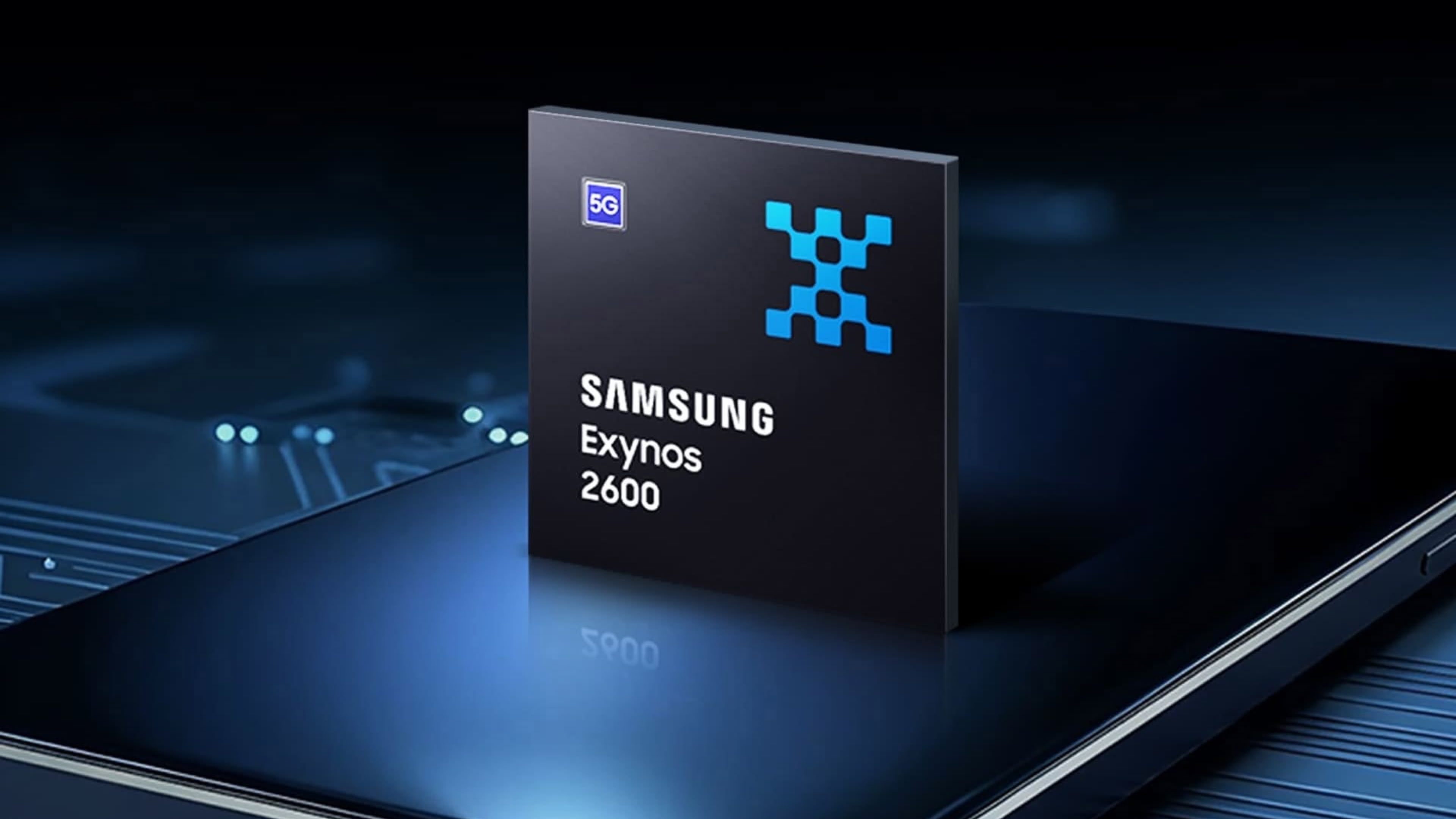
samsung-exynos-2600-2nm@2x.jpg

The chip uses Arm's latest cores and supports new instructions for improved CPU speed and on-device AI, with Samsung claiming up to a 39 percent boost in CPU performance and 113 percent faster NPU performance, enabling larger and more efficient AI workloads. Its GPU is based on the latest Xclipse design, which Samsung says doubles previous graphics performance and boosts ray tracing by up to 50 percent.

Earlier Exynos processors earned a poor reputation for running hot and throttling performance, particularly when compared with competing chips from Apple. To address those shortcomings, Samsung has introduced a new thermal approach called Heat Path Block (HPB). The technique uses a High-k EMC material to improve heat dissipation, enabling the Exynos 2600 to maintain higher performance levels for longer periods, even under sustained heavy workloads, claims Samsung.

Apple is widely expected to adopt the 2nm process node for several devices in 2026, albeit using TSMC's 2nm (N2) process. Apple has reportedly secured a significant portion of TSMC's initial N2 production capacity, with the A20 and A20 Pro chips for the iPhone 18 lineup expected to be the first Apple silicon built on this node. The N2-based processors would succeed Apple's A17 Pro through A19 Pro chips, fabricated using TSMC's series of 3nm processes.

Compared to current 3nm chips, TSMC's 2nm process promises up to 15 percent higher performance at the same power level, or 25 to 30 percent lower power consumption at the same performance level. The process also achieves approximately 15 percent higher transistor density, allowing more functionality to be packed into the same physical space.

Apple's first 2nm chips are likely to debut in iPhone 18 Pro models and Apple's first foldable iPhone, all of which are expected to launch in late 2026. Beyond iPhones, Apple's M6 series for future Macs could also use TSMC's 2nm process, although we haven't heard any specific rumors that this will be the case.

Article Link: Samsung Announces World's First 2nm Mobile Chip Ahead of Apple
 
Last edited:
Personally, I hope Samsung is very successful with the exynos 2600 SOC. As competition between TSMC and Samsung will help to keep 2nm SOC prices more reasonable.

Eventhough TSMC SOCs are the clear leaders at the moment. Its interesting to see Samsung be first to use the GAA process which even TSMC is atill striving to eventually move too.


Samsung has officially unveiled the Exynos 2600, the world's first 2 nanometer mobile system-on-a-chip (SoC), built on the company's Gate-All-Around (GAA) process. The 10-core ARM-based design aims to deliver improved performance and efficiency for flagship devices like the upcoming Galaxy S26 series.

samsung-exynos-2600-2nm@2x.jpg

The chip uses Arm's latest cores and supports new instructions for improved CPU speed and on-device AI, with Samsung claiming up to a 39 percent boost in CPU performance and 113 percent faster NPU performance, enabling larger and more efficient AI workloads. Its GPU is based on the latest Xclipse design, which Samsung says doubles previous graphics performance and boosts ray tracing by up to 50 percent.

Earlier Exynos processors earned a poor reputation for running hot and throttling performance, particularly when compared with competing chips from Apple. To address those shortcomings, Samsung has introduced a new thermal approach called Heat Path Block (HPB). The technique uses a High-k EMC material to improve heat dissipation, enabling the Exynos 2600 to maintain higher performance levels for longer periods, even under sustained heavy workloads, claims Samsung.

Apple is widely expected to adopt the 2nm process node for several devices in 2026, albeit using TSMC's 2nm (N2) process. Apple has reportedly secured a significant portion of TSMC's initial N2 production capacity, with the A20 and A20 Pro chips for the iPhone 18 lineup expected to be the first Apple silicon built on this node. The N2-based processors would succeed Apple's A17 Pro through A19 Pro chips, fabricated using TSMC's series of 3nm processes.

Compared to current 3nm chips, TSMC's 2nm process promises up to 15 percent higher performance at the same power level, or 25 to 30 percent lower power consumption at the same performance level. The process also achieves approximately 15 percent higher transistor density, allowing more functionality to be packed into the same physical space.

Apple's first 2nm chips are likely to debut in iPhone 18 Pro models and Apple's first foldable iPhone, all of which are expected to launch in late 2026. Beyond iPhones, Apple's M6 series for future Macs could also use TSMC's 2nm process, although we haven't heard any specific rumors that this will be the case.

Article Link: Samsung Announces World's First 2nm Mobile Chip Ahead of Apple
Good on them!

Be interesting to see how it stacks up against the A19 and A19 Pro!
 
The 2nm part of the story is fine. Nice to see another fab in competition, and as a possible future partner.

But... the CPU is 113 39% faster. Ok. That's an entirely meaningless number in a vacuum. I don't follow Samsung... 113 39% faster than which CPU? How many nm was their previous CPU? What was that chip's performance like? Will a 113 39% boost to that performance still make it a slowpoke compared to Apple's chips, or will it actually compete?

The article does nothing to help sort out any questions.

edit: Someone noted I'd mixed up the percentages. Oops. Point still stands, numbers in a vacuum are meaningless.
 
Last edited:
The Samsung 2nm is actually closer to TSMC 3nm then 2nm. Although it does have GAA, so think of it as 2.5nm
 
I understand the arms race, but how much of a difference does it make before someone switches systems because of performance? The one time I switched to Windows, it was because Diablo wasn't available on the Mac. 😎
The better question is how does this die process compare to that of TSMC N3P that was applied to the iPhone 18 Pro Max chip and M5 chip?
 
T
I understand the arms race, but how much of a difference does it make before someone switches systems because of performance? The one time I switched to Windows, it was because Diablo wasn't available on the Mac. 😎
his has nothing to do with users switching. It’s just a big technological feat being reported on.
If performance per nm would be a big selling point everyone would be using iPhone, iPads and Macs.
Apparently performance of modern phones is so good, we see bigger improvements in battery technology.
 
Personally, I hope Samsung is very successful with the exynos 2600 SOC. As competition between TSMC and Samsung will help to keep 2nm SOC prices more reasonable.

Eventhough TSMC SOCs are the clear leaders at the moment. Its interesting to see Samsung be first to use the GAA process which even TSMC is atill striving to eventually move too.

Competition would only exist if the Exynos 2600 was used in numerous devices. Samsung won’t even use it exclusively for their Galaxy 26, and will rely on Qualcomm for major markets around the world.

Samsung simply doesn’t sell enough of these to make them competitive.

Now if they could convince companies like Xiaomi, OPPO and others to use their processors then Qualcomm would have some competition.

Neither of these companies trying to outdo each other has any effect on Apple, who are playing in their own league.
 
Register on MacRumors! This sidebar will go away, and you'll see fewer ads.